Kirjojen hintavertailu. Mukana 11 342 296 kirjaa ja 12 kauppaa.

Kirjahaku

Etsi kirjoja tekijän nimen, kirjan nimen tai ISBN:n perusteella.

17 kirjaa tekijältä Wayne Koestenbaum

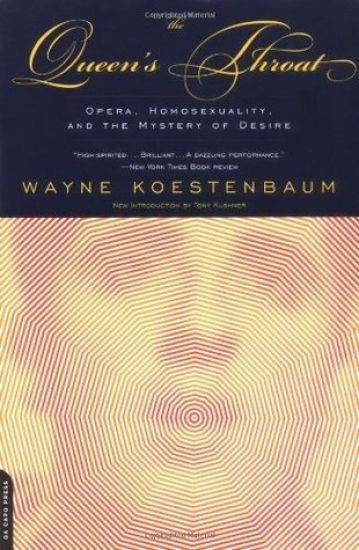
Queen's Throat

Queen's Throat

Wayne Koestenbaum

Da Capo Press Inc
2001
pokkari
This passionate love letter to opera, lavishly praised and nominated for a National Book Critics Circle Award when it was first published, is now firmly established as a cult classic. In a learned, moving, and sparklingly witty melange of criticism, subversion, and homage, Wayne Koestenbaum illuminates mysteries of fandom and obsession, and has created an exuberant work of personal meditation and cultural history.
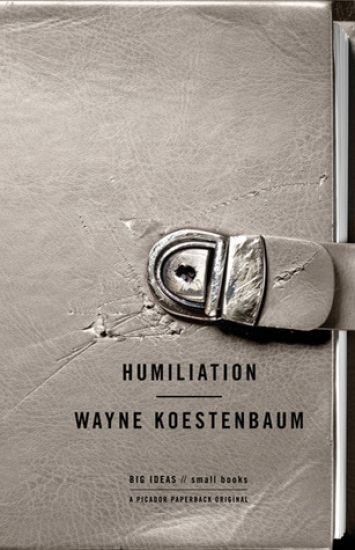
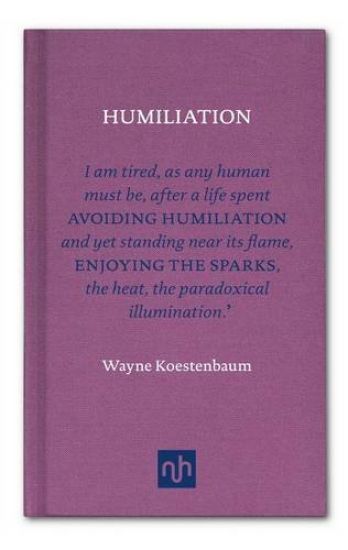
Humiliation

Humiliation

Wayne Koestenbaum

St Martin's Press
2011
pokkari
Wayne Koestenbaum considers the meaning of humiliation in this eloquent work of cultural critique and personal reflection.The lives of people both famous and obscure are filled with scarlet-letter moments when their dirty laundry sees daylight. In these moments we not only witness the reversibility of "success," of prominence, but also come to visceral terms with our own vulnerable selves. We can't stop watching the scene of shame, identifying with it and absorbing its nearness, and relishing our imagined immunity from its stain, even as we acknowledge the universal, embarrassing predicament of living in our own bodies. With an unusual, disarming blend of autobiography and cultural commentary, noted poet and critic Wayne Koestenbaum takes us through a spectrum of mortifying circumstances in history, literature, art, current events, music, film, and his own life. His generous disclosures and brilliant observations go beyond prurience to create a poetics of abasement. Inventive, poignant, erudite, and playful, "Humiliation "plunges into one of the most disquieting of human experiences, with reflections at once emboldening and humane."
Jackie Under My Skin: Interpreting an Icon

Jackie Under My Skin: Interpreting an Icon

Wayne Koestenbaum

Picador USA
2009
nidottu
"Jackie Under My Skin "is a passionate investigation of the ways Jacqueline Kennedy Onassis transformed America's definition of celebrity, identity, and style. In a gallery of fantasies and tableaux, Wayne Koestenbaum explains the late first lady's hold on Americans by examining the myths and metaphors that we've attached to her. An exuberant paean to a great star, "Jackie Under My Skin" is also a meditation on fame, mortality, and the difficulty of defining desire.
My 1980s & Other Essays

My 1980s & Other Essays

Wayne Koestenbaum

Fsg Originals
2013
nidottu
Wayne Koestenbaum returns with a zesty and hyper-literate collection of personal and critical essays on the 1980s, including essays on major cultural figures such as Andy Warhol and Brigitte Bardot. Wayne Koestenbaum has been described as "an impossible lovechild from a late-night, drunken three-way between Joan Didion, Roland Barthes, and Susan Sontag" (Bidoun). In My 1980s and Other Essays, a collection of extravagant range and style, he rises to the challenge of that improbable description. My 1980s and Other Essays opens with a series of manifestos--or, perhaps more appropriately, a series of impassioned disclosures, intellectual and personal. It then proceeds to wrestle with a series of major cultural figures, the author's own lodestars and lodestones: literary (John Ashbery, Roberto Bola o, James Schuyler), artistic (Diane Arbus, Cindy Sherman, Andy Warhol), and simply iconic (Brigitte Bardot, Cary Grant, Lana Turner). And then there is the personal--the voice, the style, the flair--that is unquestionably Koestenbaum. It amounts to a kind of intellectual autobiography that culminates in a string of passionate calls to creativity; arguments in favor of detail and nuance, and attention; a defense of pleasure, hunger, and desire in culture and experience. Koestenbaum is perched on the cusp of being a true public intellectual--his venues are more mainstream than academic, his style is eye-catching, his prose unfailingly witty and passionate, his interests profoundly wide-ranging and popular. My 1980s should be the book that pushes Koestenbaum off that cusp and truly into the public eye.
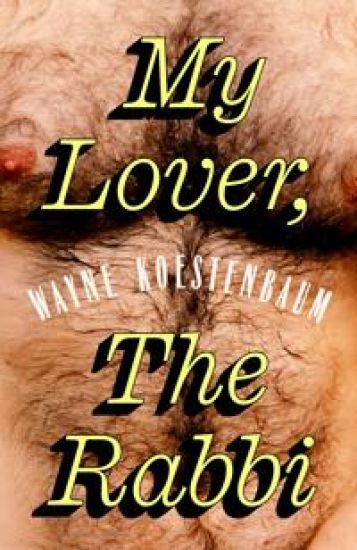
My Lover, the Rabbi

My Lover, the Rabbi

Wayne Koestenbaum

Fsg Originals
2026
nidottu
A psychosexual relationship between a rabbi and the man devoted to him goes off the rails in this explosive novel. The rabbi is, to the untrained eye, far from desirable. Lofty and disorderly, aging and constantly losing members of his flock, he is nonetheless the singular object of obsession for the self-abjecting narrator of My Lover, the Rabbi. From the start of their psychosexual affair, the two men torment, pleasure, and manipulate each other with ardor. When they're apart, the narrator manically contemplates every element of the rabbi's being: his alluring adopted son, his false erudition, his patrilineage, his broken-down Pontiac, his out-of-state husband (who the narrator has also slept with), and, maybe most of all, the universe between the rabbi's legs. Spending time together in the narrator's bed, in a tiny town near Hoboken, New Jersey, that our narrator is "devastated to admit is my personal address," a tender, volatile intimacy brews and curdles. To sustain it, the narrator continues on an unrelenting, increasingly urgent quest to understand the mercurial, ardent rabbi's mysterious past--that is, until he begins to question reality itself. In the process, conflicting truths about the rabbi emerge, with drastic consequences for both men and those around them. The first novel in nearly twenty years from one of our most acclaimed stylists, Wayne Koestenbaum's My Lover, the Rabbi is a sui generis spiral of lascivious thrills and uncanny hilarity, exposing in delirious detail the dangers--and spoils--of true love.
Double Talk

Double Talk

Wayne Koestenbaum

Routledge
2017
sidottu
Sigmund Freud and Josef Breuer on hysteria, J.A. Symonds and Havelock Ellis on sexuality, a novel by Ford Madox Ford and Joseph Conrad, The Waste Land of T.S. Eliot (and Ezra Pound), even the Lyrical Ballads of Wordsworth and Coleridge: men making books together. Wayne Koestenbaum's startling interpretation of literary collaboration focuses on homosexual desire: men write together, he argues, in order either to express or to evade homosexual feelings. Their writing becomes a textual intercourse, the book at once a female body they can share and the child of their partnership. These man-made texts steal a generative power that women's bodies seem to represent.Seen as the site of a struggle between homosexual and homophobic energies, the texts Koestenbaum explores – works of psychoanalysis, sexology, fiction, and poetry – emerge as more complex, more revealing. They crystallize and refract the anxiety of male sexuality at the end of the last century, and open up a deeper understanding of connections today between the erotic and the literary. Drawing upon the work of feminist critics, Koestenbaum connects male collaboration and the exchange of women within patriarchy: he peers into both medical texts and imaginative literature, disturbing our ready acceptance of the co-authored work. This strong and unsettling book transforms our understanding of the creative process, providing a new sense of what both collaborative and solitary artistry mean.
Double Talk

Double Talk

Wayne Koestenbaum

Routledge
2018
nidottu
Sigmund Freud and Josef Breuer on hysteria, J.A. Symonds and Havelock Ellis on sexuality, a novel by Ford Madox Ford and Joseph Conrad, The Waste Land of T.S. Eliot (and Ezra Pound), even the Lyrical Ballads of Wordsworth and Coleridge: men making books together. Wayne Koestenbaum's startling interpretation of literary collaboration focuses on homosexual desire: men write together, he argues, in order either to express or to evade homosexual feelings. Their writing becomes a textual intercourse, the book at once a female body they can share and the child of their partnership. These man-made texts steal a generative power that women's bodies seem to represent.Seen as the site of a struggle between homosexual and homophobic energies, the texts Koestenbaum explores – works of psychoanalysis, sexology, fiction, and poetry – emerge as more complex, more revealing. They crystallize and refract the anxiety of male sexuality at the end of the last century, and open up a deeper understanding of connections today between the erotic and the literary. Drawing upon the work of feminist critics, Koestenbaum connects male collaboration and the exchange of women within patriarchy: he peers into both medical texts and imaginative literature, disturbing our ready acceptance of the co-authored work. This strong and unsettling book transforms our understanding of the creative process, providing a new sense of what both collaborative and solitary artistry mean.
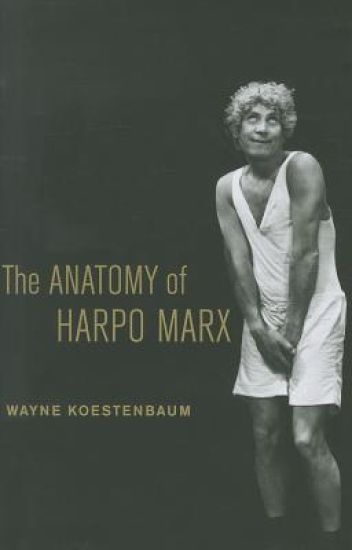
The Anatomy of Harpo Marx

The Anatomy of Harpo Marx

Wayne Koestenbaum

University of California Press
2012
sidottu
"The Anatomy of Harpo Marx" is a luxuriant, detailed play-by-play account of Harpo Marx's physical movements as captured on screen. Wayne Koestenbaum guides us through the thirteen Marx Brothers films, from "The Cocoanuts" in 1929 to "Love Happy" in 1950, to focus on Harpo's chief and yet heretofore unexplored attribute - his profound and contradictory corporeality. Koestenbaum celebrates the astonishing range of Harpo's body - its kinks, sexual multiplicities, somnolence, Jewishness, "cute" pathos, and more. In a virtuosic performance, Koestenbaum's text moves gracefully from insightful analysis to cultural critique to autobiographical musing, and provides Harpo with a host of odd bedfellows, including Walter Benjamin and Barbra Streisand.
The Anatomy of Harpo Marx

The Anatomy of Harpo Marx

Wayne Koestenbaum

University of California Press
2012
pokkari
"The Anatomy of Harpo Marx" is a luxuriant, detailed play-by-play account of Harpo Marx's physical movements as captured on screen. Wayne Koestenbaum guides us through the thirteen Marx Brothers films, from "The Cocoanuts" in 1929 to "Love Happy" in 1950, to focus on Harpo's chief and yet heretofore unexplored attribute - his profound and contradictory corporeality. Koestenbaum celebrates the astonishing range of Harpo's body - its kinks, sexual multiplicities, somnolence, Jewishness, "cute" pathos, and more. In a virtuosic performance, Koestenbaum's text moves gracefully from insightful analysis to cultural critique to autobiographical musing, and provides Harpo with a host of odd bedfellows, including Walter Benjamin and Barbra Streisand.
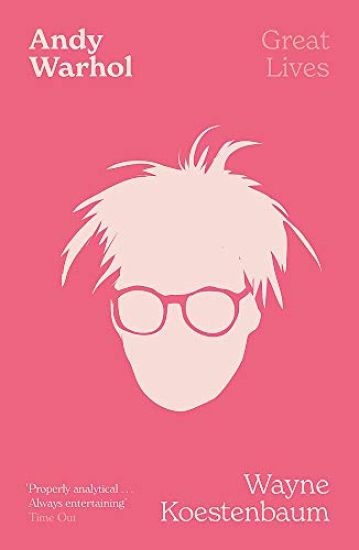
Andy Warhol

Andy Warhol

Wayne Koestenbaum

Weidenfeld Nicolson
2021
pokkari
'Properly analytical ... always entertaining' TIME OUT'Should tempt both those generally familiar with Andy Warhol and, even more, young people who have trouble imagining how popular art can challenge the status quo' L A TIMESPainter, filmmaker, photographer, philosopher, all-round celebrity, Andy Warhol is an outstanding cultural icon. He revolutionised art by bringing to it images from popular culture - such as the Campbell's soup can and Marilyn Monroe's face - while his studio, the Factory, where his free-spirited cast of 'superstars' mingled with the rich and famous, became the place of origin for every groundswell shaping American culture.In many ways he can be seen as the precursor to today's 'celebrity artists' such as Tracey Emin and Damian Hirst. But what of the man behind the white wig and dark glasses? Koestenbaum gives a fascinating, revealing and thought-provoking picture of pop art's greatest icon.
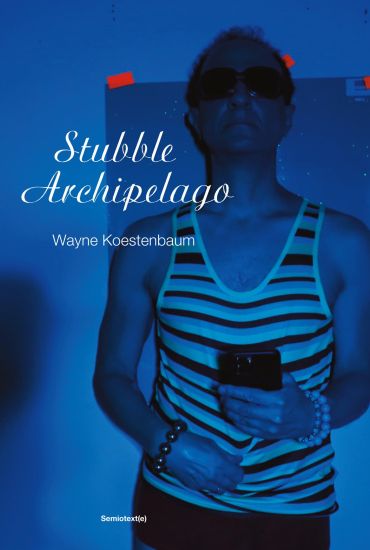
Stubble Archipelago

Stubble Archipelago

Wayne Koestenbaum

Semiotext (E)
2024
nidottu
Wild new adventures in word-infatuated fl nerie from a celebrated literary provocateur. This book of thirty-six poetic bulletins by the humiliation-advice-giver Wayne Koestenbaum will teach you how to cruise, how to dream, how to decode a crowded consciousness, how to find nuggets of satisfaction in unaccustomed corners, and how to sew a language glove roomy enough to contain materials gathered while meandering. Koestenbaum wrote many of these poems while walking around New York City. He'd jot down phrases in a notebook or dictate them into his phone. At home, he'd incorporate these fragmented gleanings into overflowing quasi sonnets. Therefore each poem functions as a coded diary entry, including specific references to sidewalk events and peripatetic perceptions. Flirting, remembering, eavesdropping, gazing, squeezing, sequestering: Koestenbaum invents a novel way to cram dirty liberty into the tight yet commodious space of the sonnet, a fourteen-lined cruise ship that contains ample suites for behavior modification, libidinal experiment, aura-filled memory orgies, psychedelic Bildungsromane, lap dissolves, archival plunges, and other mental saunterings that conjure the unlikely marriage of Kenneth Anger and Marianne Moore. Carnal pudding, anyone? These engorged lyrics don't rhyme; and though each builds on a carapace of fourteen lines, many of the lines spawn additional, indented tributaries, like hoop earrings dangling from the stanzas' lobes. Koestenbaum's poems are comic, ribald, compressed, symphonic. They take liberties with ordinary language, and open up new pockets for sensation in the sorrowing overcoat of the "now." Imagine: the training wheels have been removed from poetry's bicycle, and the wheeling fl neur is finally allowed a word pie equal to fantasy's appetite. Stubble--a libidinal detail--matters when you're stranded on the archipelago of your most unsanctioned yet tenaciously harbored impulses.
Ultramarine

Ultramarine

Wayne Koestenbaum

Nightboat Books
2022
pokkari
The chromatic, linguistically playful, erotic conclusion to Wayne Koestenbaum’s acclaimed trance poem trilogy. Ultramarine distills gleanings from four years of Koestenbaum’s trance notebooks (2015-2019) into a series of tightly-sewn collage-poems, filled with desiring bodies, cultural touchstones, and salty memories. Beyond Proust’s madeleine we head toward a “deli” version of utopia, crafted from hamantaschen, cupcake, and cucumber. Interludes in Rome, Paris, and Cologne permit spells of fevered play with Italian, French, and German. Painting and its processes bring bright colors to the surface, as if the poet were trying to figure out anew the nature of blue, pink, orange. Ultramarine reaches across memory, back to Europe, beyond the literal world into dream-habitats conjured through language’s occult structures.
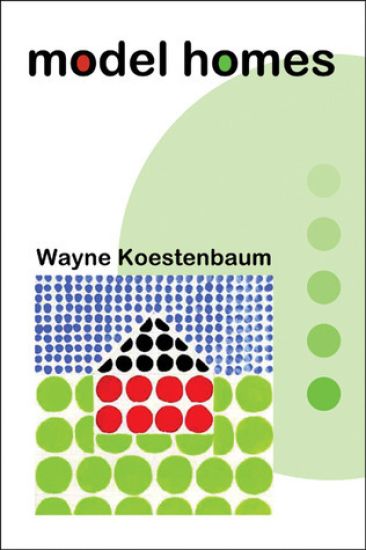
Model Homes

Model Homes

Wayne Koestenbaum

BOA Editions, Limited
2004
pokkari
Wayne Koestenbaum knows how to drop the language in the blender of the imagination and hit frappe! The 13 ottava rima cantos in Model Homes present a neo-Freudian tale of the goings-on in the poet's present home and various events from his childhood. Modulating a voice that is urbane and ribald, melancholic and wry, Koestenbaum puts a memorable spin on the status quo notion of domestic arrangements. Wayne Koestenbaum holds a Ph.D. in English from Princeton University. He was co-winner of the 1989 Discovery/The Nation poetry contest, has published three books of poetry and three books of prose, and writes frequently for The New York Times Magazine, The London Review of Books and other periodicals. He lives in New York, NY.
Pink Trance Notebooks

Pink Trance Notebooks

Wayne Koestenbaum

Nightboat Books
2015
nidottu
The Pink Trance Notebooks is the product of the year Wayne Koestenbaum stopped keeping the traditional journal he had maintained for three decades and began a series of "trance notebooks" as a way to reflect an intensified, unmoored consciousness. The resulting sequence of 34 assemblages reflects Koestenbaum's unfettered musings, findings, and obsessions. Freed from the conventions of prose, this concatenation of the author's intimate observations and desires lets loose a poetics of ecstatic praxis - voiced with aplomb and always on point. "Wayne Koestenbaum is one of the most original and relentlessly obsessed cultural spies writing today. His alarmingly focused attention to detail goes beyond lunacy into hilarious and brilliant clarity." - John Waters
Camp Marmalade

Camp Marmalade

Wayne Koestenbaum

Nightboat Books
2018
nidottu
Camp Marmalade takes the freedoms of trance utterance—unfettered verbal association, explicit auto-ethnography, erotic bricolage—and applies a more stringent sense of time-as-emergency to this liberation-oriented poetic method. Part diary, part collage, part textbook for a new School of Impulse, Camp Marmalade assembles a perverse and giddy cultural archive, a Ferris wheel of aphorisms, depicting a queer body amidst a dizzying flow of sensations, dreams, and sex-and-death distillations—whether sugary, fruity, bitter, expired, or freshly jarred. “Like an impossible love child from a late-night, drunken three-way between Joan Didion, Roland Barthes, and Susan Sontag, Wayne Koestenbaum inherited all their stylistic wonder and laser-beam smarts, but with the added point-blank jolt of sex.”—Bruce Hainley, Bidoun
My Lover, the Rabbi

My Lover, the Rabbi

Wayne Koestenbaum

GRANTA BOOKS
2026
nidottu
To the untrained eye, the rabbi is far from desirable. He is lofty and unkempt, he is ageing and his congregation is ever diminishing. But to one man, he is the object of obsession. Our narrator adores the rabbi and worships the universe between his legs. But so too does he bristle at being relegated to the peripheries of the rabbi's life. When they're apart, he manically contemplates every element of the rabbi's being: his absent husband; his first (and only) wife and child, both now deceased; his unstable, yet alluring, adopted son. Until, in a bid to help sustain their relationship, our narrator embarks on an increasingly urgent quest to better understand his mercurial lover - one which threatens to upturn the lives of both men. Lavish and lascivious, My Lover, the Rabbi is an exuberant exploration of devotion and desire, as well as a careening Catherine wheel of a novel about queer family-making, one which is attuned to the mysterious constellations and patterns that shape our lives.