Kirjojen hintavertailu. Mukana 11 699 587 kirjaa ja 12 kauppaa.

Kirjahaku

Etsi kirjoja tekijän nimen, kirjan nimen tai ISBN:n perusteella.

26 kirjaa tekijältä Wendy Doniger

The Donigers of Great Neck – A Mythologized Memoir

The Donigers of Great Neck – A Mythologized Memoir

Wendy Doniger

Dartmouth College Press
2019
sidottu
"Many memories, many myths"-this is how Wendy Doniger begins the story of her parents' origins in Europe and sharply bifurcated life in America. Recalling their contrasting attitudes toward Judaism and religion in general-and acknowledging the mythologized narratives that keep bubbling up in those recollections-Doniger tells the story of their childhoods, their unusual marriage, their life in the post–World War II Jewish enclave of Great Neck, New York, and her own complex relationship with each of them.
The Donigers of Great Neck – A Mythologized Memoir

The Donigers of Great Neck – A Mythologized Memoir

Wendy Doniger

Dartmouth College Press
2019
nidottu
"Many memories, many myths"-this is how Wendy Doniger begins the story of her parents' origins in Europe and sharply bifurcated life in America. Recalling their contrasting attitudes toward Judaism and religion in general-and acknowledging the mythologized narratives that keep bubbling up in those recollections-Doniger tells the story of their childhoods, their unusual marriage, their life in the post–World War II Jewish enclave of Great Neck, New York, and her own complex relationship with each of them.
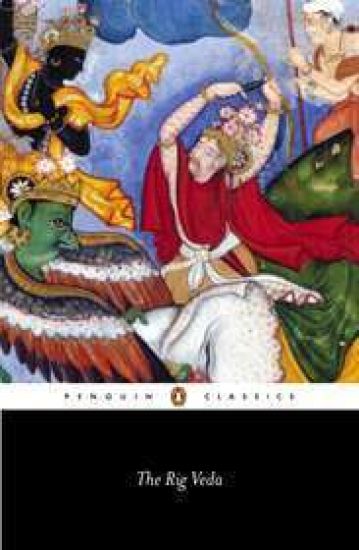
The Rig Veda

The Rig Veda

Wendy Doniger

Penguin Classics
2005
pokkari
Gathers Vedic hymns about creation, death, sacrifice, ritual, and the various gods and characters of Hindu mythology, in a definitive translation that includes an updated bibliography, comprehensive notes, and informative introduction to the texts. Reprint.
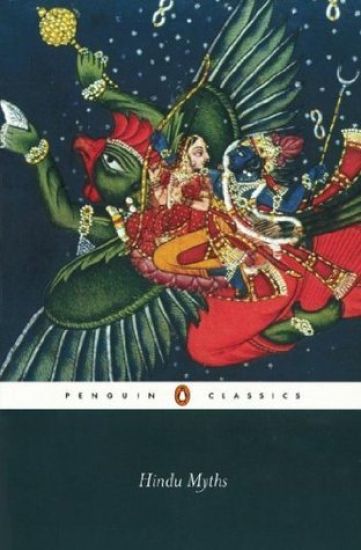
Hindu Myths

Hindu Myths

Wendy Doniger

Penguin Classics
2004
pokkari
Recorded in sacred Sanskrit texts, including the Rig Veda and the Mahabharata, Hindu Myths are thought to date back as far as the tenth century BCE. Here in these seventy-five seminal myths are the many incarnations of Vishnu, who saves mankind from destruction, and the mischievous child Krishna, alongside stories of the minor gods, demons, rivers and animals including boars, buffalo, serpents and monkeys. Immensely varied and bursting with colour and life, they demonstrate the Hindu belief in the limitless possibilities of the world - from the teeming miracles of creation to the origins of the incarnation of Death who eventually touches them all.
The Ring of Truth

The Ring of Truth

Wendy Doniger

Oxford University Press Inc
2017
sidottu
According to north Indian legend, there was once a Shah whose daughter was to marry a minister of the state of Sialkot. When the King heard of the girl's great beauty he tried to seduce her, but failed; he then planted his signet ring in her bed to trick her fiancé into thinking that he'd spoiled her chastity. Years later, the minister learned of the King's trickery, and decided to beg the forgiveness of the woman he had refused to marry--however, on his way to see her he fell dead. The Shah's daughter found out about his death, and her own vindication in his eyes, and went to lie with him on his funeral pyre--the site of their cremation is now a temple where the goddess Shila Mata is worshipped. The themes of this story--the spiteful king, the innocent woman, trickery, adultery (in this case presumed), and, above all, the ring symbolizing a sexual encounter--reverberate across time and cultures, so much so that you might think you've heard this story before, even if you've never heard of the goddess whose origin it describes. Why are sex and jewelry, particularly rings, so often connected? Why do rings keep appearing in stories about marriage and adultery, love and betrayal, loss and recovery, identity and masquerade? What is the mythology that makes finger rings symbols of true (or, as the case may be, untrue) love? In seeking answers to these questions, each chapter of this book, like a separate charm on a charm bracelet, considers a different constellation of stories. Most of the rings in the stories originally belong to men; indeed, just about all the jewelry that women have, they get from men. But it is the women who put the jewelry to work in the plots, and that is what this book is about. Beginning with a series of her own personal anecdotes about jewelry, Wendy Doniger expertly unfolds the cultural and historical significance of rings. The book does not move in a linear fashion but expands outward, as if from a prism, touching on ancient Sanskrit myth, Celtic lore, fairytales, literature, and modern song lyrics, to form a collection of stories as multifaceted as a diamond. The stories are all different but linked through a common cluster of meanings: the mutual imitation of real and fake, legal and illegal, marital and extra-marital jewelry; the circular form of rings and bracelets, miming the circle of eternity, which persists in the face of human ephemera. The Ring of Truth tells the story of jewelry that preserves (and sometimes erases) true and false memories, making promises that come true and that lie.
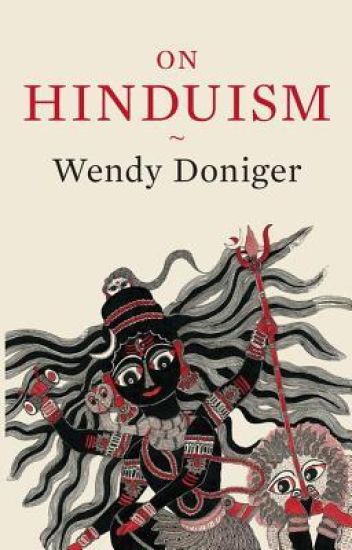
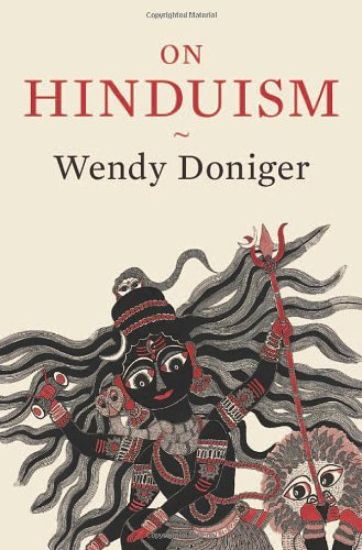
On Hinduism

On Hinduism

Wendy Doniger

Oxford University Press Inc
2016
nidottu
In this magisterial volume of essays, Wendy Doniger enhances our understanding of the ancient and complex religion to which she has devoted herself for half a century. This series of interconnected essays and lectures surveys the most critically important and hotly contested issues in Hinduism over 3,500 years, from the ancient time of the Vedas to the present day. The essays contemplate the nature of Hinduism; Hindu concepts of divinity; attitudes concerning gender, control, and desire; the question of reality and illusion; and the impermanent and the eternal in the two great Sanskrit epics, the Ramayana and the Mahabharata. Among the questions Doniger considers are: Are Hindus monotheists or polytheists? How can atheists be Hindu, and how can unrepentant Hindu sinners find salvation? Why have Hindus devoted so much attention to the psychology of addiction? What does the significance of dogs and cows tell us about Hinduism? How have Hindu concepts of death, rebirth, and karma changed over the course of history? How and why does a pluralistic faith, remarkable for its intellectual tolerance, foster religious intolerance? Doniger concludes with four concise autobiographical essays in which she reflects on her lifetime of scholarship, Hindu criticism of her work, and the influence of Hinduism on her own philosophy of life. On Hinduism is the culmination of over forty years of scholarship from a renowned expert on one of the world's great faiths.
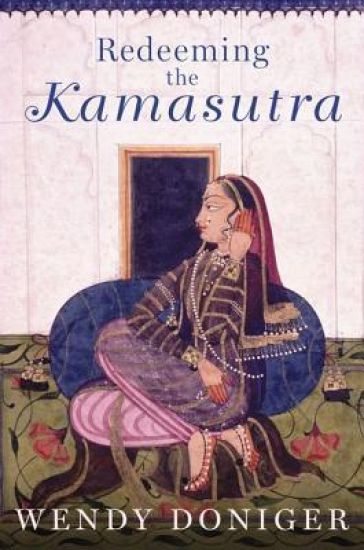
Redeeming the Kamasutra

Redeeming the Kamasutra

Wendy Doniger

Oxford University Press Inc
2016
sidottu
The Kamasutra, composed in the third century CE, is the world's most famous textbook of erotic love. There is nothing remotely like it even today, and for its time it was astonishingly sophisticated. Yet, it is all but ignored as a serious work in its country of origin--sometimes taken as a matter of national shame rather than pride--and in the rest of the world it is a source of amused amazement, and inspires magazine articles that offer "mattress-quaking sex styles" such as "the backstairs boogie" and "the spider web". In this scholarly and superbly readable book, one of the world's foremost authorities on ancient Indian texts seeks to restore the Kamasutra to its proper place in the Sanskrit canon, as a landmark of India's secular literature. She reveals fascinating aspects of the Kamasutra as a guide to the art of living for the cosmopolitan beau monde of ancient India: its emphasis on grooming and etiquette (including post-coital conversation), the study and practice of the arts (ranging from cooking and composing poetry to coloring one's teeth and mixing perfumes), and discretion and patience in conducting affairs (especially adulterous affairs). In its encyclopedic social and psychological narratives, it also displays surprisingly modern ideas about gender and role-playing, female sexuality, and homosexual desire. Even as she draws our attention to the many ways in which the Kamasutra challenges the conventions of its time (and often ours)--in dismissing fertility as the aim of sex, for instance--Doniger also shows us how it perpetuates attitudes that have continued to darken human intercourse: passages that twin passion with violence, for example, and those that explain away women's protests and exclamations of pain as ploys to excite their male partners. In these attitudes, as in its more enlightened observations on sexual love, we see the nearly two- thousand-year-old Kamasutra mirror twenty-first-century realities. In investigating and helping us understand a much celebrated but under-appreciated text, Wendy Doniger has produced a rich and compelling text of her own that will interest, delight, and surprise scholars and lay readers alike.
The Woman Who Pretended to Be Who She Was

The Woman Who Pretended to Be Who She Was

Wendy Doniger

Oxford University Press Inc
2004
sidottu
Many cultures have myths about self-imitation, stories about people who pretend to be someone else pretending to be them, in effect masquerading as themselves. This great theme, in literature and in life, tells us that people put on masks to discover who they really are under the masks they usually wear, so that the mask reveals rather than conceals the self beneath the self. In this book, noted scholar of Hinduism and mythology Wendy Doniger offers a cross-cultural exploration of the theme of self-impersonation, whose widespread occurrence argues for both its literary power and its human value. The stories she considers range from ancient Indian literature through medieval European courtly literature and Shakespeare to Hollywood and Bollywood. They illuminate a basic human way of negotiating reality, illusion, identity, and authenticity, not to mention memory, amnesia, and the process of aging. Many of them involve marriage and adultery, for tales of sexual betrayal cut to the heart of the crisis of identity. These stories are extreme examples of what we common folk In this book, noted scholar of Hinduism and mythology Wen oniger offers a cross-cultural exploration of the theme or us to become travesties of ourselves, particularly as we age and change. We often slip carelessly across the permeable boundary between the un-self-conscious self-indulgence of our most idiosyncratic mannerisms and the conscious attempt to give the people who know us, personally or publicly, the version of ourselves that they expect. Myths of self-imitation open up for us the possibility of multiple selves and the infinite regress of self-discovery. Drawing on a dizzying array of tales-some fact, some fiction-The Woman Who Pretended to Be Who She Was is a fascinating and learned trip through centuries of culture, guided by a scholar of incomparable wit and erudition.
The Woman Who Pretended to Be Who She Was

The Woman Who Pretended to Be Who She Was

Wendy Doniger

Oxford University Press Inc
2006
nidottu
Many cultures have myths about self-imitation, stories about people who pretend to be someone else pretending to be them, in effect masquerading as themselves. This great theme, in literature and in life, tells us that people put on masks to discover who they really are under the masks they usually wear, so that the mask reveals rather than conceals the self beneath the self. In this book, noted scholar of Hinduism and mythology Wendy Doniger offers a cross-cultural exploration of the theme of self-impersonation, whose widespread occurrence argues for both its literary power and its human value. The stories she considers range from ancient Indian literature through medieval European courtly literature and Shakespeare to Hollywood and Bollywood. They illuminate a basic human way of negotiating reality, illusion, identity, and authenticity, not to mention memory, amnesia, and the process of aging. Many of them involve marriage and adultery, for tales of sexual betrayal cut to the heart of the crisis of identity. These stories are extreme examples of what we common folk do, unconsciously, every day. Few of us actually put on masks that replicate our faces, but it is not uncommon for us to become travesties of ourselves, particularly as we age and change. We often slip carelessly across the permeable boundary between the un-self-conscious self-indulgence of our most idiosyncratic mannerisms and the conscious attempt to give the people who know us, personally or publicly, the version of ourselves that they expect. Myths of self-imitation open up for us the possibility of multiple selves and the infinite regress of self-discovery. Drawing on a dizzying array of tales-some fact, some fiction-The Woman Who Pretended to Be Who She Was is a fascinating and learned trip through centuries of culture, guided by a scholar of incomparable wit and erudition.
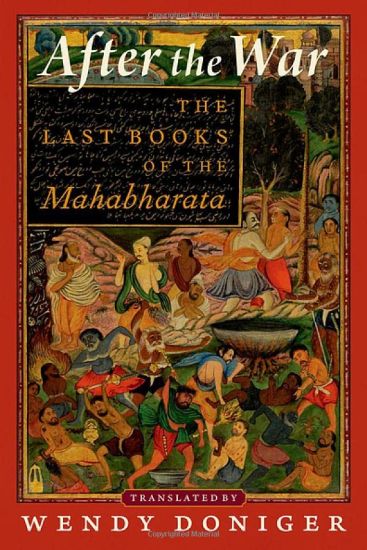
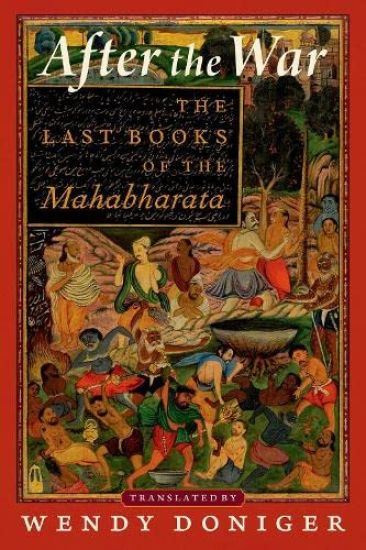
After the War

After the War

Wendy Doniger

OXFORD UNIVERSITY PRESS INC
2022
sidottu
After the War is a new translation of the final part of the Mahabharata, the great Sanskrit Epic poem about a devastating fraternal war. In this aftermath of the great war, the surviving heroes find various deaths, ranging from a drunken debacle in which they kill many of their own comrades to suicide through meditation and, finally, magical transportation to both heaven and hell. Bereaved mothers and widows on earth are comforted when their dead sons and husbands are magically conjured up from heaven and emerge from a river to spend one glorious night on earth with their loved ones. Ultimately, the bitterly opposed heroes of both sides are reconciled in heaven, but only when they finally let go of the vindictive masculine pride that has made each episode of violence give rise to another. Throughout the text, issues of truth and reconciliation, of the competing beliefs in various afterlives, and of the ultimate purpose of human life are debated. This last part of the Mahabharata has much to tell us both about the deep wisdom of Indian poets during the centuries from 300 BCE to 300 CE (the dates of the recension of this enormous text) and about the problems that we ourselves confront in the aftermath of our own genocidal and internecine wars. The author, a distinguished translator of Sanskrit texts (including the Rig Veda, the Laws of Manu, and the Kamasutra), puts the text into clear, flowing, contemporary prose, with a comprehensive but unintrusive critical apparatus. This book will delight general readers and enlighten students of Indian civilization and of great world literature.
After the War

After the War

Wendy Doniger

OXFORD UNIVERSITY PRESS INC
2022
nidottu
After the War is a new translation of the final part of the Mahabharata, the great Sanskrit Epic poem about a devastating fraternal war. In this aftermath of the great war, the surviving heroes find various deaths, ranging from a drunken debacle in which they kill many of their own comrades to suicide through meditation and, finally, magical transportation to both heaven and hell. Bereaved mothers and widows on earth are comforted when their dead sons and husbands are magically conjured up from heaven and emerge from a river to spend one glorious night on earth with their loved ones. Ultimately, the bitterly opposed heroes of both sides are reconciled in heaven, but only when they finally let go of the vindictive masculine pride that has made each episode of violence give rise to another. Throughout the text, issues of truth and reconciliation, of the competing beliefs in various afterlives, and of the ultimate purpose of human life are debated. This last part of the Mahabharata has much to tell us both about the deep wisdom of Indian poets during the centuries from 300 BCE to 300 CE (the dates of the recension of this enormous text) and about the problems that we ourselves confront in the aftermath of our own genocidal and internecine wars. The author, a distinguished translator of Sanskrit texts (including the Rig Veda, the Laws of Manu, and the Kamasutra), puts the text into clear, flowing, contemporary prose, with a comprehensive but unintrusive critical apparatus. This book will delight general readers and enlighten students of Indian civilization and of great world literature.
On Hinduism

On Hinduism

Wendy Doniger

Oxford University Press Inc
2014
sidottu
In this magisterial volume of essays, Wendy Doniger enhances our understanding of the ancient and complex religion to which she has devoted herself for half a century. This series of interconnected essays and lectures surveys the most critically important and hotly contested issues in Hinduism over 3,500 years, from the ancient time of the Vedas to the present day. The essays contemplate the nature of Hinduism; Hindu concepts of divinity; attitudes concerning gender, control, and desire; the question of reality and illusion; and the impermanent and the eternal in the two great Sanskrit epics, the Ramayana and the Mahabharata. Among the questions Doniger considers are: Are Hindus monotheists or polytheists? How can atheists be Hindu, and how can unrepentant Hindu sinners find salvation? Why have Hindus devoted so much attention to the psychology of addiction? What does the significance of dogs and cows tell us about Hinduism? How have Hindu concepts of death, rebirth, and karma changed over the course of history? How and why does a pluralistic faith, remarkable for its intellectual tolerance, foster religious intolerance? Doniger concludes with four concise autobiographical essays in which she reflects on her lifetime of scholarship, Hindu criticism of her work, and the influence of Hinduism on her own philosophy of life. On Hinduism is the culmination of over forty years of scholarship from a renowned expert on one of the world's great faiths.
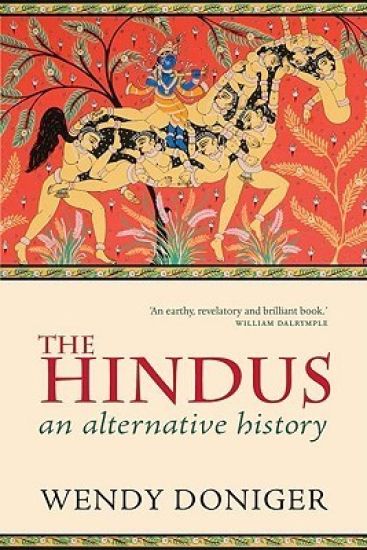
The Hindus

The Hindus

Wendy Doniger

Oxford University Press
2010
nidottu
An engrossing and definitive narrative account of history and myth that offers a new way of understanding one of the world's oldest major religions, The Hindus elucidates the relationship between recorded history and imaginary worlds. Hinduism does not lend itself easily to a strictly chronological account: many of its central texts cannot be reliably dated even within a century; its central tenets karma, dharma, to name just two arise at particular moments in Indian history and differ in each era, between genders, and caste to caste; and what is shared among Hindus is overwhelmingly outnumbered by the things that are unique to one group or another. Yet the greatness of Hinduism - its vitality, its earthiness, its vividness - lies precisely in many of those idiosyncratic qualities that continue to inspire debate today. Wendy Doniger is one of the foremost scholars of Hinduism in the world. With her inimitable insight and expertise Doniger illuminates those moments within the tradition that resist forces that would standardize or establish a canon. Without reversing or misrepresenting the historical hierarchies, she reveals how Sanskrit and vernacular sources are rich in knowledge of and compassion toward women and lower castes; how they debate tensions surrounding religion, violence, and tolerance; and how animals are the key to important shifts in attitudes toward different social classes. The Hindus brings a fascinating multiplicity of actors and stories to the stage to show how brilliant and creative thinkers - many of them far removed from Brahmin authors of Sanskrit texts - have kept Hinduism alive in ways that other scholars have not fully explored. In this unique and authoritative account, debates about Hindu traditions become platforms from which to consider the ironies, and overlooked epiphanies, of history.
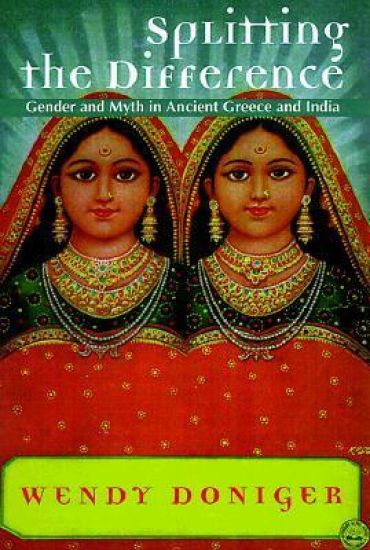
Splitting the Difference

Splitting the Difference

Wendy Doniger

University of Chicago Press
1999
nidottu
Hindu and Greek mythologies teem with stories of women and men who are doubled, who double themselves, who are seduced by gods doubling as mortals and whose bodies are split or divided. This text recounts and compares a vast range of these tales from ancient Greece and India, with occasional recourse to more recent "double features" from "Dr. Jekyll and Mr. Hyde" to "Face/Off." Wendy Doniger argues that myth responds to the complexities of the human condition by multiplying or splitting its characters into unequal parts, and these sloughed and cloven selves animate mythology's prodigious plots of sexuality and mortality. Doniger's comparisons show that ultimately differences in gender are more significant than differences in culture; Greek and Indian stories of doubled women resemble each other more than they do tales of doubled men in the same culture. In casting Hindu and Greek mythologies as shadows of each other, Doniger shows that culture is sometimes but the shadow of gender.
The Bedtrick

The Bedtrick

Wendy Doniger

University of Chicago Press
2005
nidottu
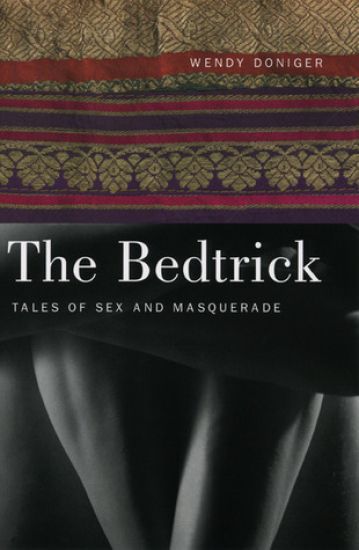
"Somehow I woke up one day and found myself in bed with a stranger." Meant literally or figuratively, this statement describes one of the best-known plots in world mythology and popular storytelling. In a tour that runs from Shakespeare to Hollywood and from Abraham Lincoln to Casanova, the erudite and irrepressible Wendy Doniger shows us the variety, danger, and allure of the "bedtrick," or what it means to wake up with a stranger. "The Bedtrick" brings together hundreds of stories from all over the world, from the earliest recorded Hindu and Hebrew texts to the latest items in the Weekly World News, to show the hilariously convoluted sexual scrapes that people get into and out of. Here you will find wives who accidentally commit adultery with their own husbands. You will learn that in Hong Kong the film "The Crying Game" was retitled "Oh No! My Girlfriend Has a Penis". And that President Clinton was not the first man to be identified by an idiosyncratic organ. Funny, sexy, and engaging, "The Bedtrick" is a masterful work of energetic story-telling and dazzling scholarship. Give it to your spouse and your lover.
The Implied Spider

The Implied Spider

Wendy Doniger

Columbia University Press
1998
sidottu
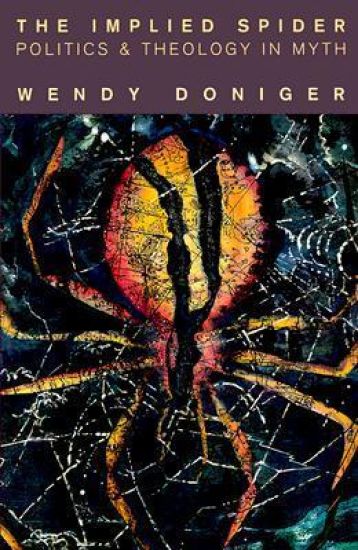
At this time of heightened political sensitivities, it may seem impossible to make serious comparisons among different cultures. And at a time when human difference is so relentlessly celebrated, it may even seem impossible to talk about the traditions and experiences that join us across race, religion, and nation. Wendy Doniger offers a powerful antidote to the paralysis of postcolonial intellectual life. In this spirited, enlightening book, she shows just how to make sense of, and learn from, the extraordinary diversity of cultures past and present. Tapping a wealth of traditions, from the Hebrew Bible to the Bhagavad Gita, Doniger crafts a new lens for examining other cultures, and finding in the world's myths--its sacred stories--a way to talk about experiences shared across time and space. "Of all things made with words," Doniger writes, "myths span the widest of human concerns, human paradoxes." Myths, she shows, bridge the cosmic and the familiar, the personal and the abstract, the theological and the political. They encourage us to draw various, even opposed, political meanings from a single text as it travels through different historical contexts. And she demonstrates how studying myths from cultures other than our own can be exhilarating and illuminating. Myth, Doniger shows, provides a near-perfect entree to another culture. Even if scholars such as Freud, Jung, and Joseph Campbell typically overstated the universality of major myths and suppressed the distinctive natures of other cultures, postcolonial critics are wrong to argue that nothing good can come from a systematic comparative study of human cultures. Doniger offers an engaged, expansive critical tool kit for doing just that. She suggests critical and responsible ways in which to compare stories--or texts or myths or traditions--from different cultures by revealing patterns of truth from themes that recur time and again. In this book, Doniger helps expand the arena of meaning we live in, leaping, in her words, "from myth to myth as if they were stepping stones over the gulf that seems to separate cultures." She enables us to see, at last, the "implied spider" that weaves the web of meaning that sustains all human cultures-the fabric of our shared humanity.
The Implied Spider

The Implied Spider

Wendy Doniger

Columbia University Press
1999
pokkari
At this time of heightened political sensitivities, it may seem impossible to make serious comparisons among different cultures. And at a time when human difference is so relentlessly celebrated, it may even seem impossible to talk about the traditions and experiences that join us across race, religion, and nation. Wendy Doniger offers a powerful antidote to the paralysis of postcolonial intellectual life. In this spirited, enlightening book, she shows just how to make sense of, and learn from, the extraordinary diversity of cultures past and present. Tapping a wealth of traditions, from the Hebrew Bible to the Bhagavad Gita, Doniger crafts a new lens for examining other cultures, and finding in the world's myths--its sacred stories--a way to talk about experiences shared across time and space. "Of all things made with words," Doniger writes, "myths span the widest of human concerns, human paradoxes." Myths, she shows, bridge the cosmic and the familiar, the personal and the abstract, the theological and the political. They encourage us to draw various, even opposed, political meanings from a single text as it travels through different historical contexts. And she demonstrates how studying myths from cultures other than our own can be exhilarating and illuminating. Myth, Doniger shows, provides a near-perfect entree to another culture. Even if scholars such as Freud, Jung, and Joseph Campbell typically overstated the universality of major myths and suppressed the distinctive natures of other cultures, postcolonial critics are wrong to argue that nothing good can come from a systematic comparative study of human cultures. Doniger offers an engaged, expansive critical tool kit for doing just that. She suggests critical and responsible ways in which to compare stories--or texts or myths or traditions--from different cultures by revealing patterns of truth from themes that recur time and again. In this book, Doniger helps expand the arena of meaning we live in, leaping, in her words, "from myth to myth as if they were stepping stones over the gulf that seems to separate cultures." She enables us to see, at last, the "implied spider" that weaves the web of meaning that sustains all human cultures-the fabric of our shared humanity.
The Implied Spider

The Implied Spider

Wendy Doniger

Columbia University Press
2010
sidottu
Wendy Doniger's foundational study is both modern in its engagement with a diverse range of religions and refreshingly classic in its transhistorical, cross-cultural approach. By responsibly analyzing patterns and themes across context, Doniger reinvigorates the comparative reading of religion, tapping into a wealth of narrative traditions, from the instructive tales of Judaism and Christianity to the moral lessons of the Bhagavad Gita. She extracts political meaning from a variety of texts while respecting the original ideas of each. A new preface confronts the difficulty of contextualizing the comparison of religions as well as controversies over choosing subjects and positioning arguments, and the text itself is expanded and updated throughout.
The Implied Spider

The Implied Spider

Wendy Doniger

Columbia University Press
2010
pokkari
Wendy Doniger's foundational study is both modern in its engagement with a diverse range of religions and refreshingly classic in its transhistorical, cross-cultural approach. By responsibly analyzing patterns and themes across context, Doniger reinvigorates the comparative reading of religion, tapping into a wealth of narrative traditions, from the instructive tales of Judaism and Christianity to the moral lessons of the Bhagavad Gita. She extracts political meaning from a variety of texts while respecting the original ideas of each. A new preface confronts the difficulty of contextualizing the comparison of religions as well as controversies over choosing subjects and positioning arguments, and the text itself is expanded and updated throughout.
Winged Stallions and Wicked Mares

Winged Stallions and Wicked Mares

Wendy Doniger

University of Virginia Press
2021
sidottu
Horses are not indigenous to India. They had to be imported, making them expensive and elite animals. How then did Indian villagers who could not afford horses and often had never even seen a horse create such wonderful horse stories and brilliant visual images of horses? In Winged Stallions and Wicked Mares, Wendy Doniger, called ""the greatest living mythologist,"" examines the horse's significance throughout Indian history from the arrival of the Indo-Europeans, followed by the people who became the Mughals (who imported Arabian horses) and the British (who imported thoroughbreds and Walers). Along the way, we encounter the tensions between Hindu stallion and Arab mare traditions, the imposition of European standards on Indian breeds, the reasons why men ride mares to weddings, the motivations for murdering Dalits who ride horses, and the enduring myth of foreign horses who emerge from the ocean to fertilize native mares.