Kirjojen hintavertailu. Mukana 12 016 292 kirjaa ja 12 kauppaa.

Kirjahaku

Etsi kirjoja tekijän nimen, kirjan nimen tai ISBN:n perusteella.

5 kirjaa tekijältä Wendy Larson

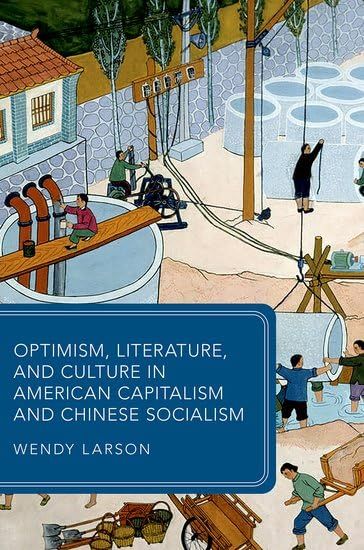
Optimism, Literature, and Culture in American Capitalism and Chinese Socialism
This book examines and interprets the uncanny similarity between capitalism and socialism over the twentieth century as both systems found ways to encourage happiness and optimism in their citizens. As inheritors of the Enlightenment's emphasis on scientific rationality, these cultures sought to instill in their citizens a belief in progress: in essence, history shows steady improvement, and the future will continue in this direction indefinitely. Optimism--which bears a temporal quality, a continual gaze to the future--is the favored state of mind in both capitalist and socialist societies, which have embraced progress as a theory of history. Related to optimism is happiness, which emphasizes the present. When progress as a theory of history is generally accepted, happiness becomes a transference of future advancement into present subjectivity, ultimately expressing acceptance of, and satisfaction with, society. Fundamentally a literary study strongly embedded in history, this project looks to fiction to show not only how imaginary characters became models for readers, but also how narrative encouraged readers to engage in a struggle for new values. Characters worked out--or failed to work out--questions related to the personal and larger cultural shaping of an ongoing optimism. At the same time, writers questioned these models and, purposefully or otherwise, displayed the downsides of excessive, mandated, or coerced optimism. They also challenged the way in which optimism encompassed a belief in progress that itself could be camouflaged, and the demands for a happiness that imposed everyone else's wellbeing before one's own. The book compares Yang Mo's famous Song of Youth (1958) with Horatio Alger Jr.'s Ragged Dick (1868), Eleanor Hodgman Porter's Pollyanna (1913), and Frederick Kohner's Gidget (1957); Wang Meng's Long Live Youth (written 1953) and A Young Man Arrives at the Organization Department (1956) are evaluated against Jack Kerouac's On the Road (1958). This study both incorporates and challenges various political and cultural theoretical concepts including revolutionary optimism, permanent revolution, the theory of literary typicality, the New Soviet Person and the positive hero, optimistic autosuggestion, cultural authenticity, and positive thinking.
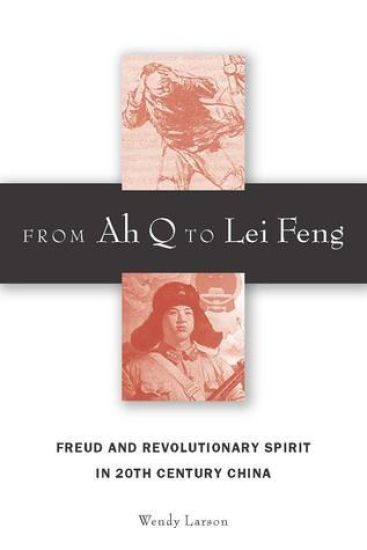
From Ah Q to Lei Feng

From Ah Q to Lei Feng

Wendy Larson

Stanford University Press
2008
sidottu
When Freudian sexual theory hit China in the early 20th century, it ran up against competing models of the mind from both Chinese tradition and the new revolutionary culture. Chinese theorists of the mind—both traditional intellectuals and revolutionary psychologists— steadily put forward the anti-Freud: a mind shaped not by deep interiority that must be excavated by professionals, but shaped instead by social and cultural interactions. Chinese novelists and film directors understood this focus and its relationship to Mao's revolutionary ethos, and much of the literature of twentieth-century China reflects the spiritual qualities of the revolutionary mind. From Ah Q to Lei Feng investigates the continual clash of these contrasting models of the mind provided by Freud and revolutionary Chinese culture, and explores how writers and filmmakers negotiated with the implications of each model. .
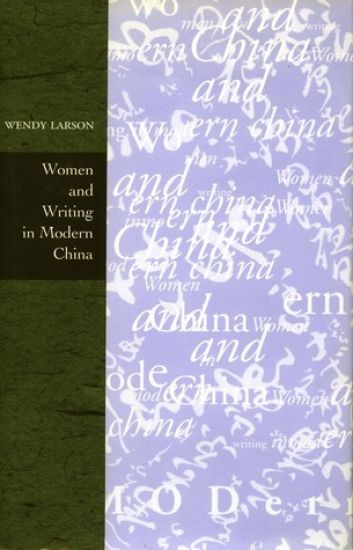
Women and Writing in Modern China

Women and Writing in Modern China

Wendy Larson

Stanford University Press
1998
sidottu
Analyzing the protracted cultural debate in modern China over what and how women should write, this book focuses on two concepts of great importance in Chinese literary modernization—the new, liberated woman and the new, autonomous writing. Throughout the Ming and Qing dynasties, women's moral virtue, or de, developed as a physical ordeal that meant sacrifices in the areas of freedom of movement (seclusion in either the father's or husband's house) and the body (chastity, fidelity, widow suicide). While physical concepts of virtue existed for men, they were not canonized nearly as extensively as they were for women and did not constitute a marker of masculinity. Posed against de was cai, or literary talent, a male-gendered practice that contained a variable content of profound lyricism, deep intellectuality, and analytical skill. The debate that began at the beginning of the twentieth century over the roles of women and literature was grounded in these traditional views. The author argues that in many modernizing countries traditional constrictions of women became a focus of struggle, and improvements in the treatment of women were considered a sign of national health. In China, however, the traditional emphasis on female virtue and male talent led to protests by women writers against the virtuous woman. Their writings emphasized not the modernizing virtues of equality in love and marriage, nor the mother as educator of a generation of nation-builders, but unconventional relationships and the refusal to marry. Moreover, although national strength demanded a strong female body to represent it, much fiction by women presented the female body as an obstacle to fulfillment or as a form weakened by sickness or death. Rather than emerging as a personal indicator of national health, as the modernizing discourse demanded, the female body in Chinese women's fiction reflected the old, anti-modern meaning of moral virtue through physical ordeal, which must be effaced.
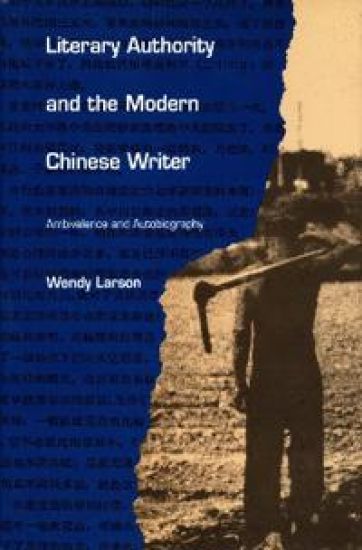
Literary Authority and the Modern Chinese Writer

Literary Authority and the Modern Chinese Writer

Wendy Larson

Duke University Press
1991
sidottu
Throughout the twentieth century, Chinese writers have confronted the problem of creating a new literary tradition that both maintains the culturally unique aspects of a rich heritage and succeeds in promoting a new modernity. In the first book-length treatment of the topic, Wendy Larson examines the contradictory forms of authority at work in the autobiographical texts of modern Chinese writers and scholars and the way these conflicts helped to shape and determine the manner in which writers viewed themselves, their texts, and their work.Larson focuses on the most famous writers associated with the May Fourth Movement, a group most active in the 1920s and 1930s, and their fundamental ambivalence about writing. She analyzes how their writing paradoxically characterized textual labor as passive, negative, and inferior to material labor and the more physical political work of social progress, and she describes the ways they used textual means to devalue literary labor.The impact of China’s increasing contact with the West-particularly the ways in which Western notions of “individualism” and “democracy” influenced Chinese ideologies of self and work-is considered. Larson also studies the changes in China’s social structure, notably those linked to the abolition in 1905 of the educational exam system, which subsequently broke the link between the mastery of certain texts and the attainment of political power, further denigrating the cultural role of the writer.