
Kirjojen hintavertailu. Mukana 11 717 486 kirjaa ja 12 kauppaa.

Kirjahaku

Etsi kirjoja tekijän nimen, kirjan nimen tai ISBN:n perusteella.

4 kirjaa tekijältä Wesley Moody

Hero of Fort Sumter Volume 80

Hero of Fort Sumter Volume 80

Wesley Moody

UNIVERSITY OF OKLAHOMA PRESS
2025
sidottu
As the commander of the U.S. garrison at Fort Sumter in the fateful early hours of April 12, 1861, Robert Anderson (1805–71) played a critical role in the unfolding of the Civil War. Although his leadership and his courage under fire catapulted him into national recognition, the attack on Fort Sumter was just one chapter in Anderson’s story. That story, told here in full for the first time, offers a unique lens on the development of the US military and the country itself before and during the Civil War. Anderson’s family, harking back to the nation’s founding, included William Clark (of Lewis and Clark fame) and Chief Justice John Marshal. His father crossed the Delaware with George Washington. And among his acquaintances were presidents ranging from the aged John Adams to seven-year-old Theodore Roosevelt. Historian Wesley Moody charts Robert Anderson’s path from an upbringing on the Kentucky frontier to a West Point education and a military career that saw him fighting in nearly every American conflict from the Black Hawk War to the Civil War—catching malaria fighting the Seminoles, taking several bullets while serving in Mexico, writing the textbook for field artillery used by both Union and Confederate forces, mentoring William Tecumseh Sherman. Central to Anderson’s story was his deft and decisive handling of the Fort Sumter crisis. Had Major Anderson been the aggressor, as many of his command urged, President Abraham Lincoln would have been unable to rally the Northern states to war. Had Anderson handed his command over to the Confederate troops, a demoralized North would have offered little resistance to secession. To understand this pivotal moment in U.S. history, one has to understand the man at its center; and to understand that man and his masterful performance under extraordinary pressure, one can do no better than to read Moody’s thoroughly absorbing, richly detailed biography.
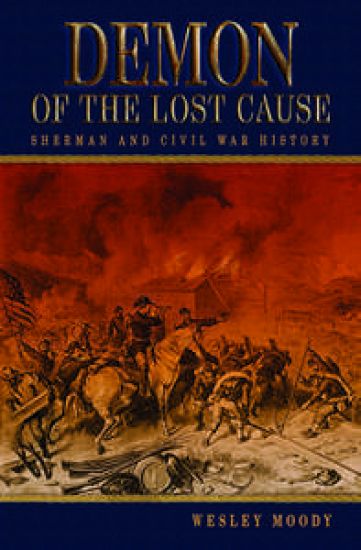
Demon of the Lost Cause

Demon of the Lost Cause

Wesley Moody

University of Missouri Press
2011
sidottu
At the end of the Civil War, Union general William Tecumseh Sherman was surprisingly more popular in the newly defeated South than he was in the North. Yet, only thirty years later, his name was synonymous with evil and destruction in the South, particularly as the creator and enactor of the 'total war' policy. In Demon of the Lost Cause, Wesley Moody examines these perplexing contradictions and how they and others function in past and present myths about Sherman. Throughout this fascinating study of Sherman's reputation, from his first public servant role as the major general for the state of California until his death in 1891, Moody explores why Sherman remains one of the most controversial figures in American history. Using contemporary newspaper accounts, Sherman's letters and memoirs, as well as biographies of Sherman and histories of his times, Moody reveals that Sherman's shifting reputation was formed by whoever controlled the message, whether it was the Lost Cause historians of the South, Sherman's enemies in the North, or Sherman himself. With his famous 'March to the Sea' in Georgia, the general became known for inventing a brutal warfare where the conflict is brought to the civilian population. In fact, many of Sherman's actions were official tactics to be employed when dealing with guerrilla forces, yet Sherman never put an end to the talk of his innovative tactics and even added to the stories himself. Sherman knew he had enemies in the Union army and within the Republican elite who could and would jeopardize his position for their own gain. In fact, these were the same people who spread the word that Sherman was a Southern sympathizer following the war, helping to place the general in the South's good graces. That all changed, however, when the Lost Cause historians began formulating revisions to the Civil War, as Sherman's actions were the perfect explanation for why the South had lost. Demon of the Lost Cause reveals the machinations behind the Sherman myth and the reasons behind the acceptance of such myths, no matter who invented them. In the case of Sherman's own mythmaking, Moody postulates that his motivation was to secure a military position to support his wife and children. For the other Sherman mythmakers, personal or political gain was typically the rationale behind the stories they told and believed. In tracing Sherman's ever-changing reputation, Moody sheds light on current and past understanding of the Civil War through the lens of one of its most controversial figures.
The Battle of Fort Sumter

The Battle of Fort Sumter

Wesley Moody

Routledge
2016
sidottu
On April 12, 1861, the long-simmering tensions between the American North and South exploded as Southern troops in the seceding state of South Carolina fired on the Federal forces at Fort Sumter in Charleston harbor. The battle of Fort Sumter marked the outbreak of Civil War in the United States. The attack provoked outrage in the North, consolidated support for the newly inaugurated President Lincoln, and fueled the onset of the war that would consume and reshape the country.In this concise narrative, Wesley Moody explores the long history of tensions that lead to the events at Fort Sumter, the details of the crisis and battle, the impact of Fort Sumter on the unfolding Civil War, and the battle's place in historical memory. Supplemented by primary documents including newspaper coverage, first-person accounts, letters, and government documents, and supported by a companion website, this book provides students with a nuanced understanding of both the long-term and immediate origins of the American Civil War.
The Battle of Fort Sumter

The Battle of Fort Sumter

Wesley Moody

Routledge
2016
nidottu
On April 12, 1861, the long-simmering tensions between the American North and South exploded as Southern troops in the seceding state of South Carolina fired on the Federal forces at Fort Sumter in Charleston harbor. The battle of Fort Sumter marked the outbreak of Civil War in the United States. The attack provoked outrage in the North, consolidated support for the newly inaugurated President Lincoln, and fueled the onset of the war that would consume and reshape the country.In this concise narrative, Wesley Moody explores the long history of tensions that lead to the events at Fort Sumter, the details of the crisis and battle, the impact of Fort Sumter on the unfolding Civil War, and the battle's place in historical memory. Supplemented by primary documents including newspaper coverage, first-person accounts, letters, and government documents, and supported by a companion website, this book provides students with a nuanced understanding of both the long-term and immediate origins of the American Civil War.