Kirjojen hintavertailu. Mukana 11 717 486 kirjaa ja 12 kauppaa.

Kirjahaku

Etsi kirjoja tekijän nimen, kirjan nimen tai ISBN:n perusteella.

6 kirjaa tekijältä Weyman Chan

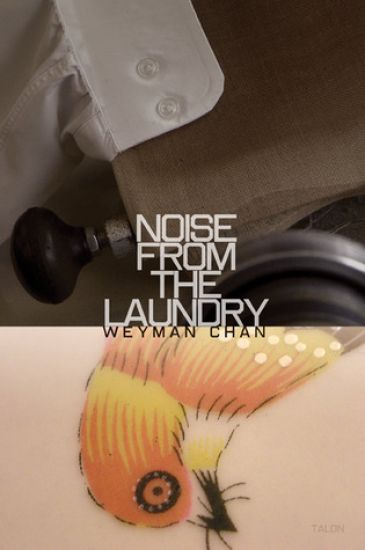
Noise from the Laundry

Noise from the Laundry

Weyman Chan

Talonbooks
2009
pokkari
Weyman Chan's second poetry collection elaborates his singular and solitary work on the renaissance of the contemporary lyric form. Unmistakably present in these poems are the sensibilities of Li Po, wherein the powers of nature illuminating a meticulously built landscape articulate a poignant, harmonious but fleeting epiphany; Keats' vision of beauty as an act of passion inscribed on a work of art for all time; and Ovid's understanding that our engagement with the world always demands of us a metamorphosis, the inescapably wondrous child of a marriage of the self and the other. The lyric voice of these poems, the sage of our hearts and minds, reveals a multiplicity of forms in shaded clearings between myth and mystery, and especially in the musicality encountered by the reader in the poet's carefully crafted score of the written word. Kissed and seanced into being, these subtle and seamless poems cast long shadows on our worldly marketplace of war, our arenas of competition and the haunting absence of our spiritually dispossessed gods. As Weyman Chan crafts words for his stratified layers of landscape across space and time, a path is made for the reader to follow.Beneath the narrative foliage of Chinese pre-history, family stories of love and survival, and wanderings from the compass point of the conventional, our sage "teaches all / and leaves none out"--what it takes to enter this new world is our willingness to travel with some unlikely spirit guides: a five-thousand-year-old, elixir-wearied Lunar rabbit; an old man who wears the sun's countenance; a microscopist in search of constellations in the illusion of darkness beyond death. This book is an intimate journey of rituals attempting to find their origin, where past and future are seen to conjoin to construct one biography in a fractured and disbelieving age.
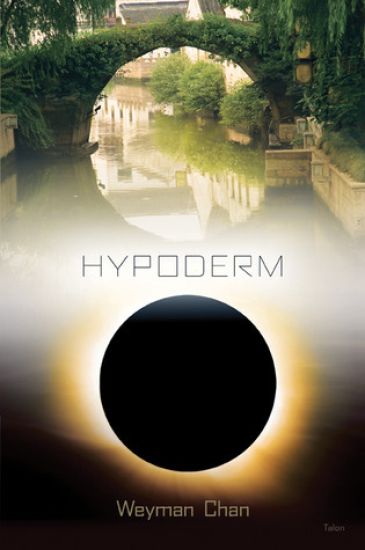
hypoderm

hypoderm

Weyman Chan

Talonbooks
2010
pokkari
The idea for this book, says Weyman Chan, is simple--approach the world as metaphor, and it will come to you. Subtitled "notes to myself," Hypoderm is a manifesto of observations, intimations and recognitions of mortality that get under the poet's skin--that remind the reader that poetry is documentation and speculation, not a sentimental fabrication of the rapture (rupture) of our "end times." We live in an age of anxiety, where social order and the imagination are as alienated as they have ever been, creating our estrangement from a sane and necessary privacy the cause of which the poet locates in the anthropocentric doctrine that man has been divinely ordained to take dominion over the earth. Chan's lines "What monster taught Adam / to see a bird and say the word" echo those of Blake; his "the name that can be named is not the real name" recall the words of Milton; his "shouldn't the ?nal / translation of any word in any language / be silence" invoke the teachings of Buddha.Drawing on cosmologies as disparate as molecular biology, Chinese and Mayan celestial cycles, and the conflict of Horus and Seth in Egyptian mythology, Chan finds everywhere the recognition that: "As all prey let out / sounds of deepest obligation / when they're caught, so / the binding surrounds." Every living thing is already looking over its shoulder in its necessarily parasitic conditions for existence. It is within this dance of coordinates, as biological drives encounter mental constructs, that these poems document how micro and macro worlds collide, and speculate that just as our somatic mitochondria were once free-?oating protozoa that got inside us and adapted to our metabolism, so the earth's green skin is being infected by the drills and dragnets of our Nietzschean will to power.
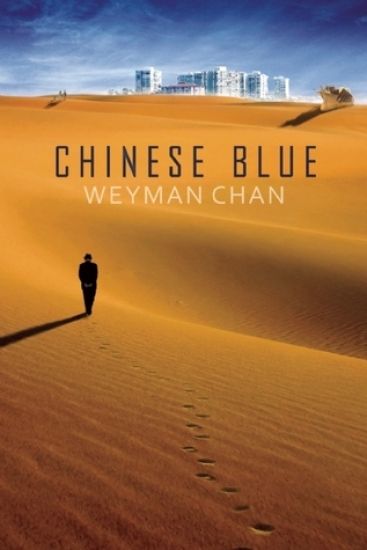
Chinese Blue

Chinese Blue

Weyman Chan

Talonbooks
2012
pokkari
Drawing on more than two thousand years of ancient Chinese tradition that present diverse philosophical modes of being, whether it be the spiritual teachings of Kong Zi or Lao Tzu, the military dicta of Sun Tzu, or the complex sensibilities expressed by poets such as Ssu-ma Hsiang-ju, Li Bai, Du Fu, and Wang Wei in the wake of a tumultuous imperial government, Weyman Chan restates these concerns of the past while addressing other "first world problems" in our own contemporary era. In Chinese Blue, the poet "character" sifts through the earth's long history of geological layering and forgetting, grappling with the perpetual fragmentation of identity. The poet struggles with the prospect of any inky blots that suggest the finished work of a creator, subject to expediencies--ambition, romance, betrayal--that leave us flawed and human, taking the reader on a spiritual quest burdened by an endless sea of flotsam.In a stoic attempt to reconcile biological drives with a stance of non-presence and to find a place beyond "perpetual worry" where he can accept ancestral mistakes while tentatively channelling the voices of advertising that condition our vernacular and massage our minds--offering a cliche happy ending to what remains of our physical existence--the poet finds himself wading through jazzily visionary delineations of the modern city, numbed and soundly crushed between "the word and the thing." Here is Weyman Chan at his most fiercely ironic, tracing a lineage he interprets subconsciously and through the intricacies of its raw genetic material, with keenly biting language that echoes the rhythms of Qu Yuan in contemplation of his own mortality beside the flowing waters of impermanence: "I would prefer to jump into the river and be entombed in the stomachs of fishes than to bow while purity is defiled by vulgar pestilence."
Human Tissue

Human Tissue

Weyman Chan

Talonbooks
2016
pokkari
These poems try to get along with each other -- but can't. The series of poems titled "Parables for Frankenstein", traces the socialization and making of a prototype misfit. "Panic Room", is a series of poems about a loner whose isolation at a house party starts taking a sinister turn. "Unboxing the Clone" deals precisely with the simultaneous interpenetration of terms that bombard the conscious moment to reshape the life that's being lived out -- a kind of proprioceptive kaleidoscope. Alienation arises from all the failed language-registers of our technocratic society, which continue to defy our powers of decryption. What's a monster to do? A recurring motif throughout the book is the overarching empty universal space surrounding life's not-knowing. If we think too hard on it -- why the statistical fluke that puts us here on this ball of dirt -- we'll have a stroke. Instead, read these poems.
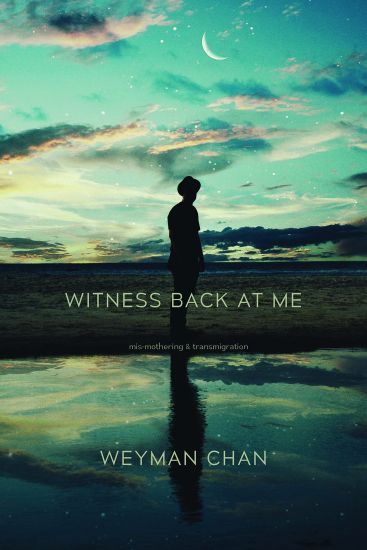
Witness Back at Me

Witness Back at Me

Weyman Chan

TALON BOOKS,CANADA
2023
pokkari
Poems drawing on the author's childhood loss of his mother, haunted by a search for nurturing. In Witness Back at Me, Weyman Chan continues to explore themes of dislocation and belonging by drawing on biography, myth, science, and the everyday. Chan's poetry is suffused with a collage-like immersion of stream-of-conscious voices, approximating the kaleidoscopic effect of interior thought. Witness Back at Me draws on the childhood loss of Chan's mother to breast cancer, as a survival mechanism towards an aesthetics of accepted disembodiment, always haunted by a search for nurturing and surrender to some greater being. The poems in this book intertwine polyvocally, building into a liminal biographical metanarrative: the whole point of existence, the author believes, is to luxuriate in the greater being of not-knowing. To accept the historical underpinnings, the brokenness of the world, inside and outside the self, but be in constant communication of both worlds, towards understanding and healing, is the one true meaningful quest.