Kirjojen hintavertailu. Mukana 11 627 220 kirjaa ja 12 kauppaa.

Kirjahaku

Etsi kirjoja tekijän nimen, kirjan nimen tai ISBN:n perusteella.

7 kirjaa tekijältä Wilkinson

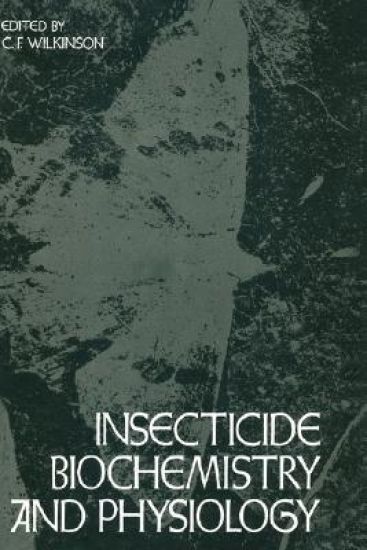
Insecticide Biochemistry and Physiology

Insecticide Biochemistry and Physiology

Wilkinson

Kluwer Academic/Plenum Publishers
1976
sidottu
Only four short decades ago, the control of insect pests by means of chemicals was in its early infancy. The pioneers in the area consisted largely of a group of dedicated applied entomologists working to the best of their abilities with a very limited arsenal of chemicals that included inorganics (arsenicals, fluorides, etc.), some botanicals (nicotine), and a few synthetic organics (dinitro-o-cresol, organothiocyanates). Much of the early research was devoted to solving practical problems associated with the formulation and application of the few existing materials, and although the discovery of new types of insecticidal chemicals was undoubtedly a pipe dream in the minds of some, little or no basic research effort was expended in this direction. The discovery of the insecticidal properties of DDT by Paul Miiller in 1939 has to be viewed as the event which marked the birth of modern insecticide chemistry and which has served as the cornerstone for its subse­ quent developement. DDT clearly demonstrated for the first time the dramatic potential of synthetic organic chemicals for insect control and provided the initial stimulus which has caused insecticide chemistry to become a field not only of immense agricultural and public health importance but also one that has had remarkable and unforseeable repercussions in broad areas of the physical, biological, and social sciences. Indeed, there can be few other synthetic chemicals which will be judged in history to have had such a broad and telling impact on mankind as has DDT.
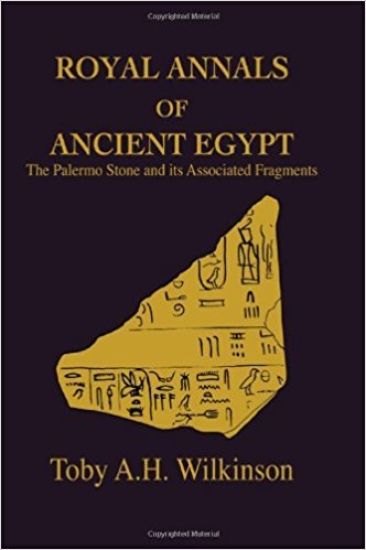
Royal Annals Of Ancient Egypt

Royal Annals Of Ancient Egypt

Wilkinson

Kegan Paul
2000
sidottu
First published in 2000. The kings of ancient Egypt’s first five dynasties were responsible for the creation of a unique and enduring civilisation, epitomised by its most impressive monuments, the pyramids. Yet what do we know about the reigns of these kings? Excavations have revealed much, but Egyptology has always been blessed with another rich source of information - the written texts and inscriptions composed by the ancient Egyptians themselves. For the history of the first five dynasties, one particular series of inscriptions has always been of prime importance. This is the collection of inscribed stone fragments known as the Royal An- nals. Now divided between museums in Palermo, Cairo and London, these documents from ancient Egypt have been the focus of countless studies in the century or so since they first came to light, for they seem to record the reigns of Egypt’s early kings on a reign-by-reign, year-by-year basis. The information they contain has been translated, interpreted and re-interpreted by generations of Egyptologists, in the hope of achieving a better understanding of the first great period of ancient Egyptian history. And yet amazingly for such crucial documents -- no complete edition of all seven surviving fragments has ever been published. Royal Annals of Ancient Egypt fills this gap. The text is accompanied by specially commissioned, detailed line-drawings of all the fragments.
No Argument for God

No Argument for God

Wilkinson

Inter-Varsity Press,US
2011
nidottu
Religion is irrational New atheists trumpet the claim loudly, so much so that it's become a sort of conventional wisdom. Professing your faith in God sounds increasingly like a confession of intellectual feebleness. Belief in God sounds as cute and quaint as it does pointless. John Wilkinson contends that the irrationality of faith is its greatest asset, because rationalism itself sets artificial limits on all that we've seen--which itself is hinting at something greater that can't be seen. In No Argument for God he turns the tables on the cult of reason, showing that it limits conversation to what happened, when what we really want is the why behind it. We settle for investigation when what we need is revelation--the answer to all our longings. Read this book and break though the gridlock of apologetic arguments to a life-giving encounter with the God who satisfies our minds and seeks our good.
A Lady's Life and Travels in Zululand and the Transvaal During Cetewayo's Reign
Title: A Lady's life and travels in Zululand and the Transvaal during Cetewayo's reign: being the African letters and journals of ... Mrs. Wilkinson.Publisher: British Library, Historical Print EditionsThe British Library is the national library of the United Kingdom. It is one of the world's largest research libraries holding over 150 million items in all known languages and formats: books, journals, newspapers, sound recordings, patents, maps, stamps, prints and much more. Its collections include around 14 million books, along with substantial additional collections of manuscripts and historical items dating back as far as 300 BC.The FICTION & PROSE LITERATURE collection includes books from the British Library digitised by Microsoft. The collection provides readers with a perspective of the world from some of the 18th and 19th century's most talented writers. Written for a range of audiences, these works are a treasure for any curious reader looking to see the world through the eyes of ages past. Beyond the main body of works the collection also includes song-books, comedy, and works of satire. ++++The below data was compiled from various identification fields in the bibliographic record of this title. This data is provided as an additional tool in helping to insure edition identification: ++++ British Library Wilkinson; 1882. viii. 264 p.; 8 . 10097.b.27.
Insecticide Biochemistry and Physiology

Insecticide Biochemistry and Physiology

Wilkinson

Springer-Verlag New York Inc.
2013
nidottu
Only four short decades ago, the control of insect pests by means of chemicals was in its early infancy. The pioneers in the area consisted largely of a group of dedicated applied entomologists working to the best of their abilities with a very limited arsenal of chemicals that included inorganics (arsenicals, fluorides, etc.), some botanicals (nicotine), and a few synthetic organics (dinitro-o-cresol, organothiocyanates). Much of the early research was devoted to solving practical problems associated with the formulation and application of the few existing materials, and although the discovery of new types of insecticidal chemicals was undoubtedly a pipe dream in the minds of some, little or no basic research effort was expended in this direction. The discovery of the insecticidal properties of DDT by Paul Miiller in 1939 has to be viewed as the event which marked the birth of modern insecticide chemistry and which has served as the cornerstone for its subse­ quent developement. DDT clearly demonstrated for the first time the dramatic potential of synthetic organic chemicals for insect control and provided the initial stimulus which has caused insecticide chemistry to become a field not only of immense agricultural and public health importance but also one that has had remarkable and unforseeable repercussions in broad areas of the physical, biological, and social sciences. Indeed, there can be few other synthetic chemicals which will be judged in history to have had such a broad and telling impact on mankind as has DDT.