

Kirjahaku
Etsi kirjoja tekijän nimen, kirjan nimen tai ISBN:n perusteella.
17 kirjaa tekijältä Willard M. Oliver

Policing in an Era of Homeland Security--now fully updated at a student-friendly price--offers a fuller understanding of how the concept of Homeland Security developed, what it means for the police, and where within the scope of a national Homeland Security framework the police fit. The first part of the book provides historical context about the era of policing since the 9/11 attacks, the creation of the Department of Homeland Security, and the expansive scope of the DHS. The second part of the book reviews the strategy of homeland security as it relates to state and local policing; the operational level concepts as they apply to policing and homeland security; and the tactical level methods and training necessary for police to achieve the goals and objectives of homeland security. Policing in an Era of Homeland Security offers coverage of first responder content, including disaster preparedness and incident command system information, and includes current events and policy initiatives in homeland security that relate to policing. This up-to-date, cutting-edge resource is designed to be used in a variety of policing related courses, including community policing, contemporary policing, advanced policing, intelligence-led policing, and homeland security policing, and as a supplement in homeland security and terrorism courses.
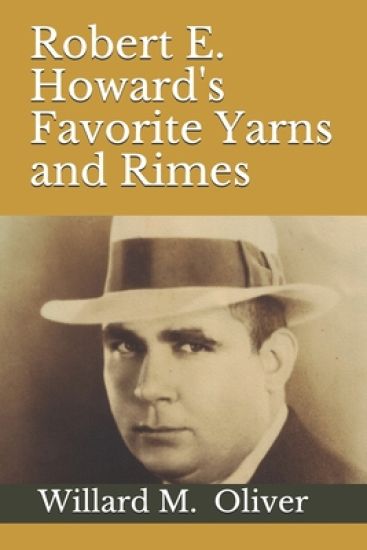
This edited collection compiles the stories and poems (yarns and rimes) that pulp author Robert E. Howard identified as being among his favorites.
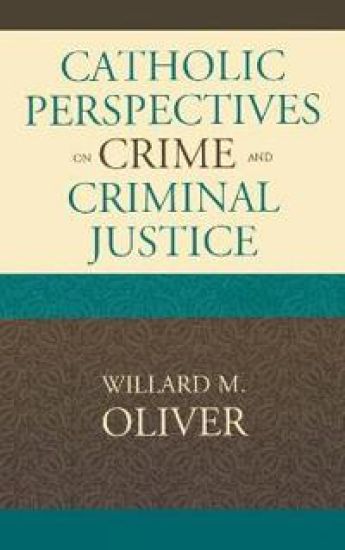
Drawing upon Catholic social teaching, traditional writings, and Sacred Scripture, this book presents a Catholic perspective of crime and criminal justice in America. Specifically, it presents a policy framework for the criminal justice system describing how and why police, courts, and corrections should adopt the tenets of restorative and community justice. In addition, it presents how certain crime-related issues would be addressed under a Catholic perspective, particularly focusing on the death penalty, abortion, euthanasia, and so-called victimless crimes.
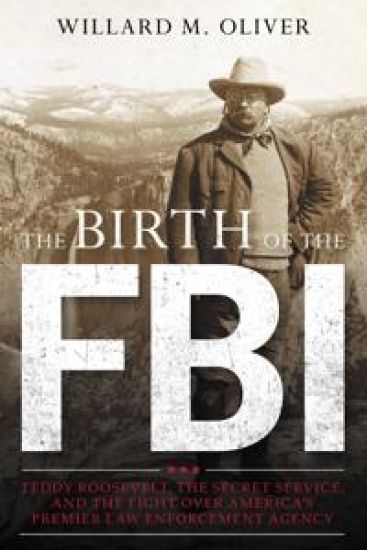
Most people believe the Federal Bureau of Investigation began under J. Edgar Hoover in the 1920s or 1930s. Many also naturally assume it was developed for the express purpose of fighting crime. However, the reality is very different. The reality is it began years earlier, in 1908, under President Theodore Roosevelt. In The Birth of the FBI: Teddy Roosevelt, the Secret Service, and the Fight Over America's Premier Law Enforcement Agency, Willard Oliver details the political fight that led to the birth of America’s premier law enforcement agency. Roosevelt was concerned about conservation and one issue he wanted enforced were the fraudulent land deals being perpetrated by many people, including some members of Congress. When he began using the Secret Service to investigate these crimes, Congress blocked him from doing so. The end result of this political spat was Roosevelt’s creation of the FBI, which heightened the political row between the two branches of government in the final year of Roosevelt’s presidency. The truth of the matter is, the premier law enforcement agency in the United States was actually created because of a political fight between the executive and legislative branches of government. The Birth of the FBI reveals the true story behind the birth of the FBI and provides some useful insight into an important part of our American history.
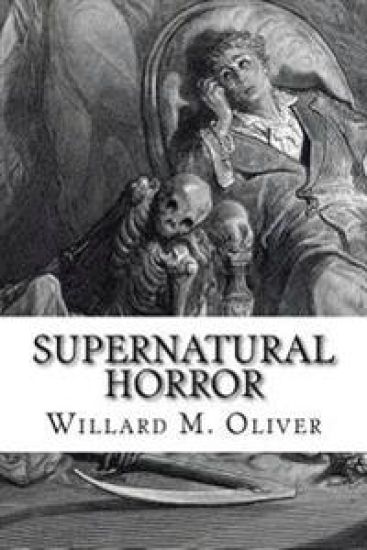
Supernatural Horror: An Edited Collection of Weird Tales, 1820 to 1920
Willard M. Oliver
Createspace Independent Publishing Platform
2016
nidottu
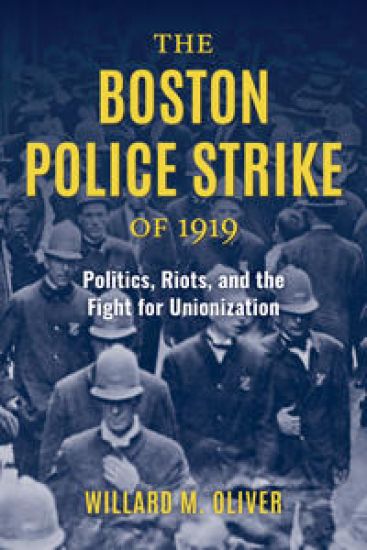
At 5:45 p.m. on September 9, 1919, Boston was effectively without a police force, leaving the city victim to four days of crime, looting, and violence. After a 24-hour vote, the Boston Police Department abandoned their posts, leading to the greatest tragedy in American policing, the Boston Police Strike of 1919.This is a compelling account of the historical antecedents that led to the strike and its complex political and societal ramifications. Through meticulous research, Oliver explores the perspectives and motivations of all involved, from the police officers attempting to unionize to the city’s leaders attempting to retain command and control of its patrolmen.
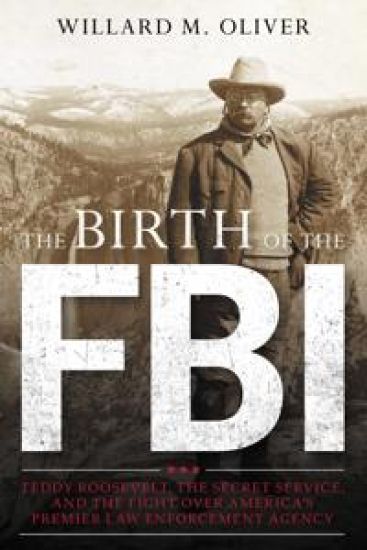
Most people believe the Federal Bureau of Investigation began under J. Edgar Hoover in the 1920s or 1930s. Many also naturally assume it was developed for the express purpose of fighting crime. However, the reality is very different. The reality is it began years earlier, in 1908, under President Theodore Roosevelt. In The Birth of the FBI: Teddy Roosevelt, the Secret Service, and the Fight Over America's Premier Law Enforcement Agency, Willard Oliver details the political fight that led to the birth of America’s premier law enforcement agency. Roosevelt was concerned about conservation and one issue he wanted enforced were the fraudulent land deals being perpetrated by many people, including some members of Congress. When he began using the Secret Service to investigate these crimes, Congress blocked him from doing so. The end result of this political spat was Roosevelt’s creation of the FBI, which heightened the political row between the two branches of government in the final year of Roosevelt’s presidency.The truth of the matter is, the premier law enforcement agency in the United States was actually created because of a political fight between the executive and legislative branches of government. The Birth of the FBI reveals the true story behind the birth of the FBI and provides some useful insight into an important part of our American history.

Supernatural Horror Vol. II
Willard M. Oliver
Createspace Independent Publishing Platform
2016
nidottu

Supernatural Horror Vol. III
Willard M. Oliver
Createspace Independent Publishing Platform
2017
nidottu
The genre of supernatural horror began with the early efforts of Washington Irving in his classic tale "The Legend of Sleepy Hollow" and was perfected by Edgar Allen Poe with the likes of "The Fall of the House of Usher." Between 1820 and the early 1920s, the tales of supernatural horror developed into their own genre, but they were a genre without a home. It was not until March of 1923, with the first publication of the pulp magazine Weird Tales, that the authors of these tales had a definitive outlet for their stories of the weird, strange, and macabre. This collection, Supernatural Horror Vol. III, gathers some of the finest offerings in the first 100 years of this unique genre of weird tales.

Supernatural Horror Vol. VI
Willard M. Oliver
Createspace Independent Publishing Platform
2017
nidottu

Robert E. Howard (1906–1936) is most widely known today as the creator of Conan the Cimmerian, more popularly referred to as Conan the Barbarian. However, he also wrote across a wide array of genres for the pulp magazines of the 1920s and 1930s, including westerns, sports stories (boxing), adventures, supernatural horror, and even humor. Howard also created many other popular characters such as King Kull, Bran Mak Morn, Solomon Kane, Steve Costigan, and Breckenridge Elkins. More importantly, he created two specific subgenres of fiction: sword and sorcery (sometimes referred to as heroic fantasy) and weird westerns. Born and raised in Texas, Robert E. Howard began his writing career after his family settled in the small Central Texas town of Cross Plains. His first professional sale came from the pulp magazine Weird Tales in 1925, and over the next eleven years he wrote hundreds of stories and an equal number of poems. With this prolific body of stories, he was among the most lauded pulp authors of that era. It has been said, and rightly so, that the secret to his success was that there was a bit of Howard in every one of his characters, and because Howard was a Texan, even Conan shows elements of the Texan in his persona. Robert E. Howard: The Life and Times of a Texas Author details the many trials and tribulations he faced as he became—and remained—a full-time writer while dealing with an aging father and caring for a mother who was dying of tuberculosis. The book both chronicles his personal life and demonstrates how the one driving force in Robert E. Howard’s life—forming the foundation for all of his characters and stories—was his personal pursuit of freedom. He lived for his freedom, he wrote as a means to attain that freedom, and, while it may sound strange, he also died tragically by his own hand in that very same pursuit at the young age of 30.

Supernatural Horror Vol. VII
Willard M. Oliver
Createspace Independent Publishing Platform
2017
nidottu
The genre of supernatural horror began with the early efforts of Washington Irving in his classic tale "The Legend of Sleepy Hollow" and was perfected by Edgar Allan Poe with the likes of "The Fall of the House of Usher." Between 1820 and the early 1920s, the tales of supernatural horror developed into their own genre, but they were a genre without a home. It was not until March of 1923, with the first publication of the pulp magazine Weird Tales, that the authors of these tales had a definitive outlet for their stories of the weird, strange, and macabre. This special Christmas issue, Supernatural Horror Vol. VII, gathers some of the finest offerings in the first 100 years of this unique genre of weird tales.
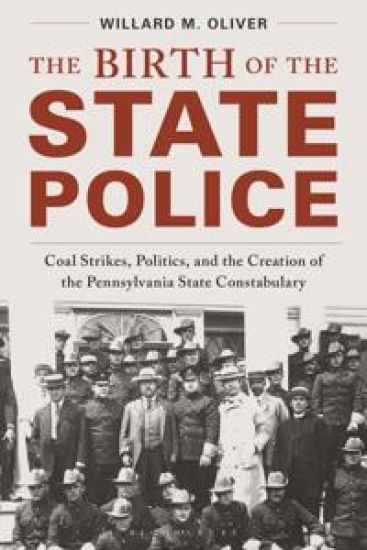
On May 2, 1905, Pennsylvania Governor Samuel W. Pennypacker signed the bill that created the Pennsylvania State Police, America’s first modern state police agency. This action soon led to every other state in the nation, save Hawaii, adopting their own. After decades of bloodshed and violence centered on Pennsylvania’s coal mines and the late 19th century struggles between labor and capital, the state of Pennsylvania led the way with its adoption of a state constabulary. The issue became pressing not long after the end of America’s Civil War, as workers fought for the right to unionize. Strikes themselves often turned violent, and the coal mining industry soon looked to the state for protection. The initial response was to create the Coal and Iron Police, authorized by the state of Pennsylvania’s government and given state powers of arrest, the new police force was administratively controlled by the coal mining industry. This led to an extensive abuse of powers resulting in worsening relations between labor and capital. President Theodore Roosevelt, breaking with tradition of federal non-interference in state matters, stepped in and mediated the dispute, resulting in a resolution that returned the coal miners to work and the creation of a state police agency, the first of its kind.

This book offers an analysis of every American presidential assassination and various attempted assassinations, examining the events surrounding each event and the people involved. The assassinations and attempted assassinations of American presidents were pivotal events that reverberated throughout the nation, even in cases where the murder was botched. The individuals behind each plot are often fascinating studies in obsession and distorted perception of reality—like President James Garfield's assassin, who spent an extra dollar on the gun he chose for the act simply because it would look better in a museum display after the event. For the first time under one cover, this text offers a concise study of every presidential assassination, attempt, and rumor. Each chapter focuses on a single American assassination, providing an analysis of the president, the assassin, and the events that shaped their arrival at that place in time. The chapter then describes the assassination or attempt itself and the long-term impacts of the crime. Accounts of the more contemporary incidents involving Presidents John F. Kennedy, Richard Nixon, Jimmy Carter, Ronald Reagan, George H.W. Bush, Bill Clinton, and George W. Bush especially demonstrate the evolution of the monumental task of protecting the U.S. president in a free and open society.

Introduction To Homeland Security
Willard M. Oliver; Nancy E. Marion; Joshua B. Hill
Jones and Bartlett Publishers, Inc
2014
sidottu
After the terrorist attacks of September 11, 2001, and with the establishment of the Department of Homeland Security, the academic field of Homeland Security has grown exponentially. Until now, no text existed that addressed the need for a definitive textbook on this rapidly expanding field. Suitable for undergraduate students entering the field of Homeland Security, and for Criminal Justice students studying their role in a post-9/11 world, Introduction to Homeland Security: Policy, Organization, and Administration is a comprehensive but accessible text designed for students seeking a thorough overview of the policies, administrations, and organizations that fall under Homeland Security. The only text of its kind available on the market, Introduction to Homeland Security offers grounding in the basic issues of homeland security, the history and context of the field, and what the future of the field might hold. Students will come away with a solid understanding of the central issues surrounding Homeland Security, including policy concepts and political and legal responses to Homeland Security. Authored by leading experts in the field, Introduction to Homeland Security: Policy, Organization, and Administration is the essential text on understanding Homeland Security in America today.

Introduction to Homeland Security: Policy, Organization, and Administration
Willard M. Oliver; Nancy E. Marion; Joshua B. Hill
Jones and Bartlett Publishers, Inc
2019
nidottu
After the terrorist attacks of September , 2 , and with the establishment of the Department of Homeland Security, the academic field of Homeland Security has grown exponentially. Until now, no text existed that addressed the need for a definitive textbook on this rapidly expanding field. Suitable for undergraduate students entering the field of Homeland Security, and for Criminal Justice students studying their role in a post-9/ world, Introduction to Homeland Security: Policy, Organization, and Administration, Second Edition is a comprehensive but accessible text designed for students seeking a thorough overview of the policies, administrations, and organizations that fall under Homeland Security.The only text of its kind available on the market, Introduction to Homeland Security, Second Edition offers grounding in the basic issues of homeland security, the history and context of the field, and what the future of the field might hold. Students will come away with a solid understanding of the central issues surrounding Homeland Security, including policy concepts and political and legal responses to Homeland Security. Authored by leading experts in the field, Introduction to Homeland Security: Policy, Organization, and Administration, Second Edition is the essential text on understanding Homeland Security in America today.