Kirjojen hintavertailu. Mukana 11 244 527 kirjaa ja 12 kauppaa.

Kirjahaku

Etsi kirjoja tekijän nimen, kirjan nimen tai ISBN:n perusteella.

12 kirjaa tekijältä William A. Cook

The 1919 World Series

The 1919 World Series

William A. Cook

McFarland Co Inc
2001
pokkari
One of baseball's infamous events is the 1919 World Series between the Chicago White Sox and the Cincinnati Reds. Overshadowed by the suspicion cast upon, and the subsequent indictment of, eight White Sox players for throwing the games, the 1919 World Series has often been simplistically and inaccurately portrayed by the popular media in the decades since. This book takes an objective look at the series, players, managers, owners, and on-field events to separate fact from fiction in regard to the outcome. The Reds would probably have emerged victorious no matter how the game was played because they were, in fact, an excellent team capable of beating the seemingly superhuman White Sox. Included are various statistical references that include line and box scores as well as comparative statistical charts of batting averages, pitching and team records, and other relevant information.
The Summer of '64

The Summer of '64

William A. Cook

McFarland Co Inc
2002
pokkari
The 1964 season, highlighted by two significant trades, a game-winning home run, and three no-hitters, was a dramatic one for the National League. But even more thrilling was that season's final week and the race for the pennant. All the drama of the 1964 National League season through the Cardinals' league championship is in this book. It covers Johnny Callison's All-Star game-winning home run, Duke Snider's trade from the New York Mets to the San Francisco Giants and Lou Brock's trade from the Cubs to the Cardinals, Reds manager Fred Hutchinson's battle with cancer (and his replacement, and death in November 1964), the controversial remarks made by Giants manager Alvin Dark about African American and Latin players on his own team, the no-hitters pitched by Sandy Koufax of the Dodgers, Jim Bunning of the Phillies, and Ken Johnson of the Colt .45s (later the Astros), the opening of Shea Stadium, and the demolition of the Polo Grounds. Special attention is given to the final weeks of the season when the Phillies collapsed with a six and a half game lead and twelve games to go, while battling it out with the Cardinals and the Reds.
Pete Rose

Pete Rose

William A. Cook

McFarland Co Inc
2003
pokkari
On September 11, 1985, with a sell-out crowd of 52,000 fans on hand at Cincinnati's Riverfront Stadium and millions of others watching on television, Pete Rose collected hit number 4,192 of his career and passed Ty Cobb as the all-time career hits leader. As he reached first base, thousands of cameras flashed, his teammates mobbed him, fireworks exploded and the crowd overwhelmed him with a seven-minute standing ovation. Rose was on top of the world. Less than four years later, he would be banned for life from baseball for allegedly betting on major league games, roundly criticized in the press by both fans and fellow players, and then convicted for tax evasion. In 2003, fourteen years after he was made ineligible for the Hall of Fame, Commissioner Bud Selig took up Rose's application for reinstatement, igniting once again an intense debate about his legacy and baseball's long-standing zero-tolerance policy on gambling. This book gathers the available facts of Rose's life and career, as well as the scandals he was embroiled in, leaving the reader a more informed participant in the ongoing discussion.
Waite Hoyt

Waite Hoyt

William A. Cook

McFarland Co Inc
2004
nidottu
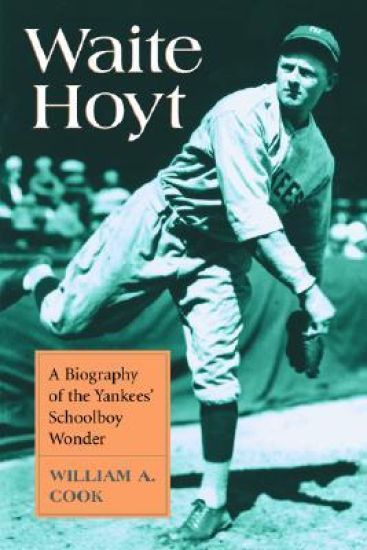
Waite Hoyt was much more than a baseball player. A multi-faceted, sometimes troubled man, Hoyt was a vaudevillian, a mortician, a writer, a painter, and (of course) a Hall of Fame pitcher. He was also an alcoholic who overcame his demons and became one of the first players to make the transition to the announcer's booth. His teammates and managers were among the all-time greats, but he'll always be associated with his friend Babe Ruth. He was there when Ruth hit 29 homers for a new record in 1919; when Ruth hit his 60th in 1927; when the Babe hit his 714th, and last, home run; he was even a pallbearer at Ruth's funeral. His career on the mound and as the Cincinnati Reds announcer lasted from 1915 to 1965, and to walk in his footsteps is to journey through the history of baseball in the 20th century. This biography of Waite Hoyt involves many great moments in baseball history, and includes some of the classic tales that Hoyt, a natural-born storyteller, would tell about his teammates. It follows his transition from a career on the field to his career behind the microphone, and his struggles with alcoholism that almost cost him his dream of working as a broadcaster. Later chapters chronicle his years in the announcer's booth, his induction into Cooperstown, and his longtime championing of Babe Ruth as beyond compare, even as Ruth's most prominent records fell to Maris and Aaron.
The Louisville Grays Scandal of 1877

The Louisville Grays Scandal of 1877

William A. Cook

McFarland Co Inc
2005
pokkari
By the mid-1870s, gambling in baseball threatened the public's confidence in the sport and its very existence as a professional enterprise. Recognizing this, Chicago owner William A. Hulbert and seven of his colleagues formed the National League, dedicating it to such high-minded ideals as preventing contract jumping and, most importantly, eliminating gambling from the sport. Hulbert's new league was severely threatened in 1877 by a gambling scandal that rocked its foundation. In mid-season, the Louisville Grays were the league's hottest team, but a disastrous eastern road trip caused vice president Charles Chase to question the efforts of some of his players. Sure-handed infielders were making inexplicable errors, and pitcher Jim Devlin was suddenly not as sharp as he had been previously. Chase's investigation found Devlin, A.H. Nichols, W.H. Carver, and George Hall had "sold" games, and the four were banned from the league. This work focuses first on the formation of the National League and the changing nature of professional baseball in the 1870s. The early seasons of the league are covered, and the author gives a detailed account of the Grays' 1877 season and the evidence against the four players. Also fully explored are the impact of the Grays scandal and its lasting influence on the governance of the sport.
August "Garry" Herrmann

August "Garry" Herrmann

William A. Cook

McFarland Co Inc
2007
pokkari
August Garry Herrmann entered the murky waters of 19th century machine politics in Cincinnati, serving as a trusted lieutenant to one of the most powerful political bosses in the country, George B. Cox. Herrmann, a gifted man who introduced modern management principles to municipal government and oversaw the committee that built Cincinnati's modern water works system, eventually did for baseball what he did for his home town, guiding it into a new century. Along with George B. Cox and Cincinnati mayor Julius Fleischmann, Herrmann bought the Cincinnati Reds from John T. Brush in 1902. By 1903 he had chaired the peace conference between the leagues that ushered in the modern game. With the leagues united, Herrmann was selected to head up the National Commission, a three-person ruling body that governed major league baseball in the years before the commissionership.
King of the Bootleggers

King of the Bootleggers

William A. Cook

McFarland Co Inc
2008
pokkari
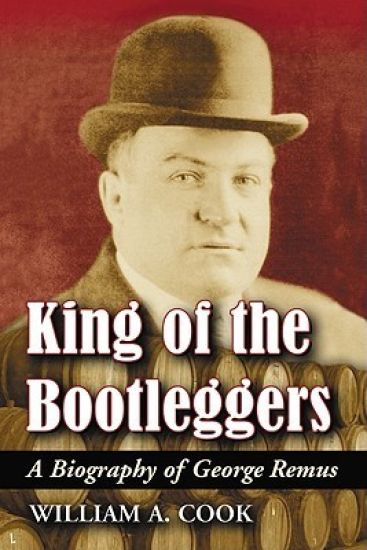
As a pharmacist turned lawyer turned master prohibition era bootlegger, George Remus is now remembered as one of the most notorious figures of the American prohibition. Even though he was a lifelong teetotaler, Remus built one of the nation's largest illegal liquor empires with little regard to disguises or secrecy. This biography tells the complete story of Remus' private life and public persona, focusing especially on the turbulent rise and fall of his bootlegging kingdom. It begins with an overview of Remus' early life and careers in pharmacy and law, and covers his bootlegging career, including his overwhelmingly successful early business ventures, his 1922 bootlegging conviction, his murder of wife Imogene (after she had a well-publicized affair with prohibition agent Franklin Dodge), and Remus' subsequent trial for her murder.
Jim Thorpe

Jim Thorpe

William A. Cook

McFarland Co Inc
2011
pokkari
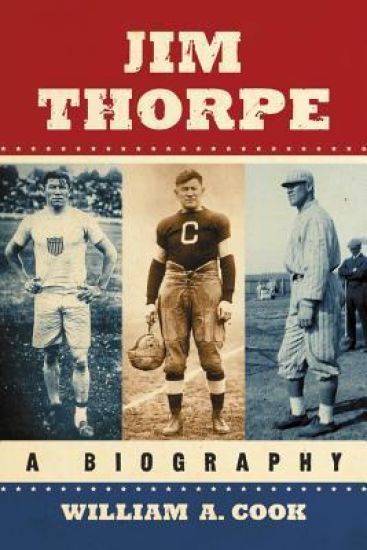
Most biographies of Jim Thorpe (1888-1953) emphasize his Olympic glory and his remarkable abilities in track and football. Thorpe's 1912 gold medals in the decathalon and pentathalon and his talent on the gridiron rank him high among outstanding athletes of the twentieth century. That Thorpe also played brilliantly on the baseball diamond is an often overlooked facet of his career. This narrative of Thorpe's rise and fall in American sports pays particular attention to his time in the major and minor leagues, including his stormy relationship with New York Giants manager John McGraw and baseball's role in stripping Thorpe of his Olympic medals. By chronicling Thorpe's involvement in baseball, football and track concurrently, this profile offers a complete portrait of one of the most versatile athletes in sports history.
Big Klu

Big Klu

William A. Cook

McFarland Co Inc
2012
pokkari
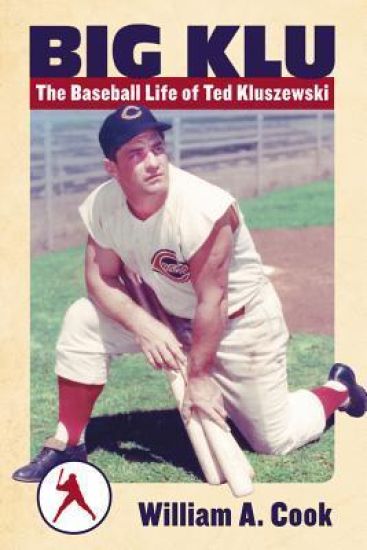
During the mid-1950s, an unlikely star stood alongside baseball standouts Mickey Mantle, Henry Aaron and Willie Mays--a slugger with a funny name and muscles so bulging that he had to cut the sleeves off his uniform to swing freely. Ted Kluszewski played little baseball in his youth, making a name for himself instead as a hard-hitting football player at Indiana University before showing potential on the diamond and being signed by the Cincinnati Reds. Between 1953 and 1956, no other player in major league baseball hit more home runs than Kluszewski. If not for a back injury, he might have gone down in major league history as one its greatest players. With detailed statistics from both his football and baseball careers, this biography chronicles the unusual odyssey that took Kluszewski to the big leagues and ultimately made him a ballgame icon in the 1950s.
Bibb Falk

Bibb Falk

William A. Cook

McFarland Co Inc
2015
pokkari
Born in Austin, Texas, in 1899, Bibb August Falk was the classic stereotype of a Texan, standing six feet. He brimmed with confidence and played the game of baseball with swagger. He played three years of varsity football and baseball at the University of Texas before being signed by the Chicago White Sox following graduation in 1920. Falk reported to the Sox that summer without having played a single minor league game. In just a couple of months, he--an untested rookie--would confront the challenge of replacing Shoeless Joe Jackson, newly banned from organized ball for complicity in the 1919 World Series scandal. Retiring from the major leagues in 1931 after a brilliant career, Falk returned to the University of Texas in 1940 as head baseball coach and became a Longhorn legend. During his 25 years as head coach, his teams won two National Championships, 15 Southwest Conference titles and four co-championships. When Bibb Falk died in June 1989, at the age of 90, he was the last surviving member of the 1920 Chicago White Sox.
Johnny Temple

Johnny Temple

William A. Cook

McFarland Co Inc
2016
pokkari
Cincinnati Reds leadoff hitter Johnny Temple batted over .300 three times between 1954 and 1959. A tobacco chewing and tough-talking hustler, he had a fiery disposition on the field, which led many sportswriters, teammates and opposing players to refer to him as a throwback to baseball's early days--an Eddie Stanky or Enos Slaughter type who would challenge anyone to a fight. He and Milwaukee Braves shortstop Johnny Logan engaged in one of the Major League's longest-running feuds. Temple was an expert glove man, forming one of the premier double play combinations of the 1950s with shortstop Roy McMillan. Following his retirement in 1964, making ends meet became a daily struggle. Temple's life ended in disappointment and disgrace.