Kirjojen hintavertailu. Mukana 11 244 527 kirjaa ja 12 kauppaa.

Kirjahaku

Etsi kirjoja tekijän nimen, kirjan nimen tai ISBN:n perusteella.

4 kirjaa tekijältä William B Rouse

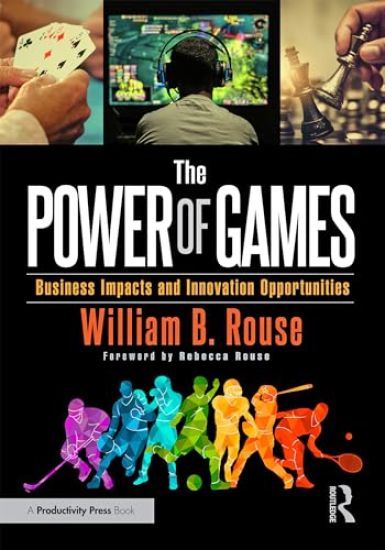
The Power of Games

The Power of Games

William B Rouse

TAYLOR FRANCIS LTD
2024
nidottu
Games have long played a central role in society – actually a central role in the animal kingdom. Their play provides primary behavioral mechanisms that enable animals to learn and socialize. Indeed, "play" is a core animal activity. The principal focus of this book is on how games foster human playing, learning, and competing, including how we can design games to do this better. The author provides a wealth of real-world examples of how he created games for clients in the domains of education, energy, healthcare, national security, and transportation. He has focused on training and aiding for strategic thinking, product planning, technology development, and business operations. The technologies underlying these games became increasingly sophisticated. This has taken on greater significance as the gaming industry has grown and prospered. Gaming revenues now dwarf film and theater. New games released gain millions of sales within a few days of release. What makes games so appealing? What is the psychology of gaming? Does it vary for card games, board games, simulation games, and online games? What makes a game successful over years? What about sports games? What sociological roles do they play in our society? Why do they claim such energy and devotion? Why are sports stars able to earn enormous contracts? What is the business of these games? Why is it expected to be increasingly lucrative? What strategies might succeed or fail? Who might be the losers and winners? This book addresses all of these questions as well as an overarching question for society – Can online games fundamentally enhance the education of employees and students? The author is convinced they can. This requires, however, that games be designed to achieve these ends. This book is intended to contribute to understanding how to create and evaluate such games. Essentially, games enable employees and managers to play, learn, compete, and achieve in terms of knowledge and skills gained, competencies attained, customers attracted, and economic outcomes. This book explains, illustrates, and motivates investments in these pursuits to these ends.
The Power of Games

The Power of Games

William B Rouse

TAYLOR FRANCIS LTD
2024
sidottu
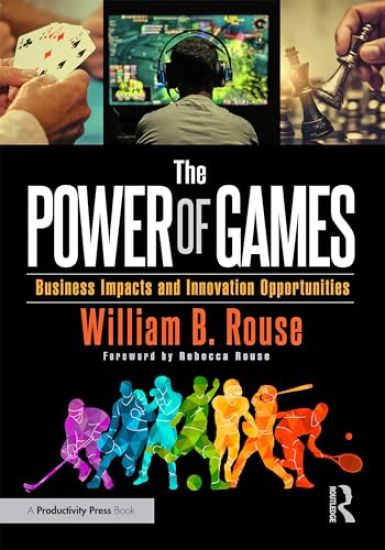
Games have long played a central role in society – actually a central role in the animal kingdom. Their play provides primary behavioral mechanisms that enable animals to learn and socialize. Indeed, "play" is a core animal activity. The principal focus of this book is on how games foster human playing, learning, and competing, including how we can design games to do this better. The author provides a wealth of real-world examples of how he created games for clients in the domains of education, energy, healthcare, national security, and transportation. He has focused on training and aiding for strategic thinking, product planning, technology development, and business operations. The technologies underlying these games became increasingly sophisticated. This has taken on greater significance as the gaming industry has grown and prospered. Gaming revenues now dwarf film and theater. New games released gain millions of sales within a few days of release. What makes games so appealing? What is the psychology of gaming? Does it vary for card games, board games, simulation games, and online games? What makes a game successful over years? What about sports games? What sociological roles do they play in our society? Why do they claim such energy and devotion? Why are sports stars able to earn enormous contracts? What is the business of these games? Why is it expected to be increasingly lucrative? What strategies might succeed or fail? Who might be the losers and winners? This book addresses all of these questions as well as an overarching question for society – Can online games fundamentally enhance the education of employees and students? The author is convinced they can. This requires, however, that games be designed to achieve these ends. This book is intended to contribute to understanding how to create and evaluate such games. Essentially, games enable employees and managers to play, learn, compete, and achieve in terms of knowledge and skills gained, competencies attained, customers attracted, and economic outcomes. This book explains, illustrates, and motivates investments in these pursuits to these ends.

Innovation Ecosystems

Innovation Ecosystems

William B Rouse

TAYLOR FRANCIS LTD
2024
nidottu
This book is about geography, economics, society, and innovation. Why did different regions evolve in different ways? What caused economic priorities and activities to go in one direction or another? The author believes that happenstance played a relatively minor role in this process. There were and are driving forces, as well as success factors.In each ecosystem, ambitious immigrants arrived, displaced native populations, and proceeded to develop and exploit the geography of their ecosystem, which included leveraging water resources for transportation, commerce, irrigation, etc. They often invented the means of development and exploitation, unfortunately including slavery, but also various technical methods, tools, and devices. Inventions that became innovations enabled industries, revenues, profits, and economic growth, initially for the ecosystem and then more broadly.The impacts of geography and economics are profound. Available resources strongly affect the options available for sustainable economic growth. This growth is fueled by technological innovations that are significantly affected by the physical, economic, and social characteristics of the ecosystem of interest.The eight case studies in this book illustrate how patterns of these characteristics impact innovation. They also depict changes over centuries, rather than just decades or years. Today’s crises are often just blips in the ongoing evolution of an innovation ecosystem. There are ups and downs, but the physical, economic, and social characteristics of the ecosystems dominate their evolution. These factors largely determine what potential innovations are pursued, who leads these pursuits, and why they think they can succeed. People and organizations dominate the factors influencing success.
Innovation Ecosystems

Innovation Ecosystems

William B Rouse

TAYLOR FRANCIS LTD
2024
sidottu
This book is about geography, economics, society, and innovation. Why did different regions evolve in different ways? What caused economic priorities and activities to go in one direction or another? The author believes that happenstance played a relatively minor role in this process. There were and are driving forces, as well as success factors.In each ecosystem, ambitious immigrants arrived, displaced native populations, and proceeded to develop and exploit the geography of their ecosystem, which included leveraging water resources for transportation, commerce, irrigation, etc. They often invented the means of development and exploitation, unfortunately including slavery, but also various technical methods, tools, and devices. Inventions that became innovations enabled industries, revenues, profits, and economic growth, initially for the ecosystem and then more broadly.The impacts of geography and economics are profound. Available resources strongly affect the options available for sustainable economic growth. This growth is fueled by technological innovations that are significantly affected by the physical, economic, and social characteristics of the ecosystem of interest.The eight case studies in this book illustrate how patterns of these characteristics impact innovation. They also depict changes over centuries, rather than just decades or years. Today’s crises are often just blips in the ongoing evolution of an innovation ecosystem. There are ups and downs, but the physical, economic, and social characteristics of the ecosystems dominate their evolution. These factors largely determine what potential innovations are pursued, who leads these pursuits, and why they think they can succeed. People and organizations dominate the factors influencing success.