Kirjojen hintavertailu. Mukana 11 699 587 kirjaa ja 12 kauppaa.

Kirjahaku

Etsi kirjoja tekijän nimen, kirjan nimen tai ISBN:n perusteella.

20 kirjaa tekijältä William C. Davis

Warnings from the Far South

Warnings from the Far South

William C. Davis

Praeger Publishers Inc
1995
sidottu
This work examines three advanced Latin American republics with long records of democracy, political stability, and economic prosperity which degenerated into instability and military dictatorship—and issues a warning for other democratic peoples. Although not beset by overpopulation, serious racial diversity, or widespread illiteracy, in recent decades the people of Uruguay, Argentina, and Chile destroyed much of the good life and many of the freedoms they formerly enjoyed. Electing too few statesmen and too many politicians, they demanded more from their governments than they were willing to pay for. Rejecting sound economic policies, they engaged in unrealistic practices which led to exorbitant inflation. In contrast to traditional respect for individual freedoms, the military governments they brought in to solve their problems committed gross violations of human rights. The political and economic blunders and their unfortunate consequences should serve as a warnings to the citizens of all democracies.
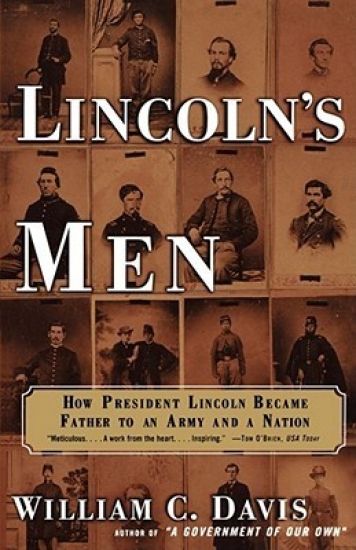
Lincoln's Men

Lincoln's Men

William C. Davis

The Free Press
2000
pokkari
No American president has enjoyed as intimate a relationship with the soldiers in his army as did the man they called "Father Abraham." In Lincoln's Men, historian William C. Davis draws on thousands of unpublished letters and diaries -- the voices of the volunteers -- to tell the hidden story of how a new and untested president became "Father" throughout both the army and the North as a whole. How did Lincoln inspire the faith and courage of so many shattered men, as they wandered the inferno of Shiloh or were entrenched in the siege of Vicksburg? Why did soldiers visiting Washington feel free to stroll into the White House as if it were their own home? In this through and authoritative work, Davis removes layers of mythmaking to recapture the real moods and feelings of an army facing one of history's bloodiest conflicts. Lincoln's Men casts a new light on our most famous president and on America's revolution -- on our country's father and its rebirth.
The Union That Shaped the Confederacy

The Union That Shaped the Confederacy

William C. Davis

University Press of Kansas
2001
sidottu
Born into different social classes, Robert Toombs and Alexander H. Stephens, became fast friends and together changed the course of the South. They dominated the formation of the Confederacy and served as its vice president and secretary of state.
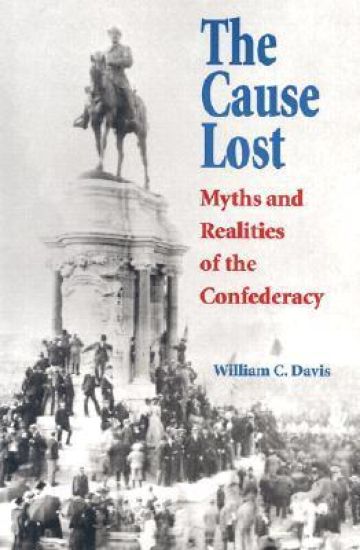
The Cause Lost

The Cause Lost

William C. Davis

University Press of Kansas
1996
nidottu
For nearly a quarter of a century, Pulitzer Prize nominee William C. Davis has been one of our best writers on the Civil War. His books—including Breckinridge: Statesman, Soldier, Symbol; Jefferson Davis: The Man and His Hour; and "A Government of Our Own": The Making of the Confederacy—have garnered numerous awards and enlightened and entertained an avid readership. The Cause Lost extends that tradition of excellence with provocative new insights into the myths and realities of an endlessly fascinating subject.In these pages, Davis brings into sharp focus the facts and fictions of the South's victories and defeats, its tenacious struggle to legitimize its cause and defeat an overpowering enemy, and its ultimate loss of will. He debunks long-standing legends, offers irrefutable evidence explaining Confederate actions, and contemplates the idealism, naiveté, folly, and courage of the military leadership and would-be founding fathers.Among the most misunderstood, Davis contends, was Jefferson Davis. Often branded as enigmatic and incompetent, the Confederate president was simply a decent and committed leader whose mistakes were magnified by the war's extraordinary demands. Davis scrutinizes Jefferson Davis' relationship with his generals-most of whom were unproved talents or cronies with proven deficiencies-and reveals why only Robert E. Lee succeeded in winning Davis' confidence through flattery, persuasion, and a sense of responsibility. He also examines the myths and memories of the nearly deified Stonewall Jackson and John C. Breckinridge, the only effective Confederate secretary of war.Davis also illustrates why the cause of the war—a subject of long-standing controversy—boils down to the single issue of slavery; why Southerners, ninety percent of whom didn't own slaves, were willing to join in the battle to defend their homeland; how the personalities, tactics, and styles of the armies in the turbulent West differed greatly from those in the East; what real or perceived turning points influenced Southern decision making; and how mythology and misinterpretations have been perpetuated through biography, history, literature, and film.Revealing the Confederacy's myths for what they really are, Davis nevertheless illustrates how much those myths inform our understanding of the Civil War and its place in Southern and American culture.
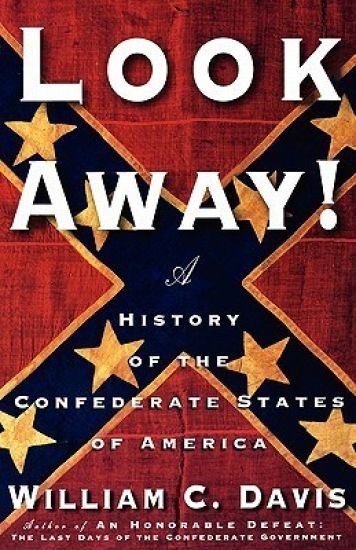
Look Away!

Look Away!

William C. Davis

The Free Press
2003
pokkari
William C. Davis, "one of the best and most prolific historians of the American Civil War" (James M. McPherson, author of Battle Cry of Freedom), offers a definitive portrait of the Confederacy unlike any other. Drawing on decades of writing and research among an unprecedented number of archives, ranging from the 800-odd newspapers in operation during the war to the personal writings of more than 100 leaders and common citizens, Davis reveals the Confederacy through the words of the Confederates themselves. Look Away! recounts all the epic sagas -- as well as those little-known and long-forgotten -- about a desperate government that socialized the salt industry, rangers and marauders who preyed on their fellow Confederates, and the systematic breakdown of law and order in some states. A dramatic, definitive account of one of our nation's most searing episodes, Look Away! shows us a South divided against itself, unable to stand.
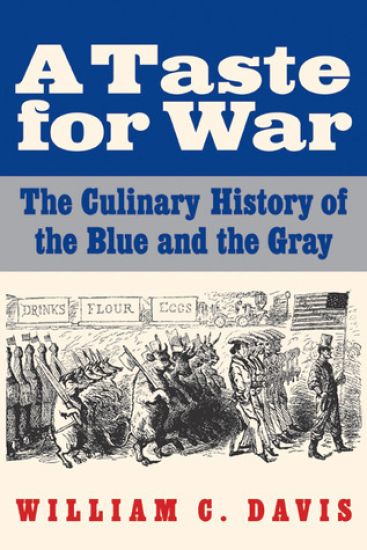
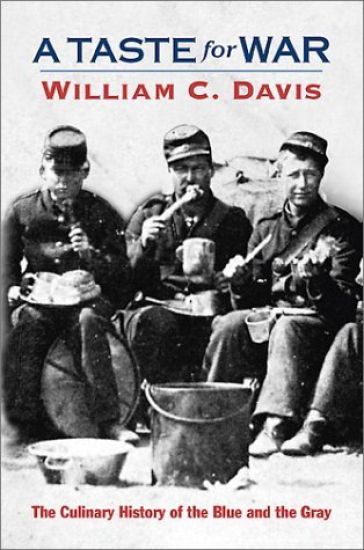
A Taste for War

A Taste for War

William C. Davis

Bison Books
2011
pokkari
For soldiers in all wars, mealtime is a focal point of the day. Armies do indeed "march on their stomachs," as Napoleon said. Soldiers of the Civil War armies, many away from home and mothers' and wives' cooking for the first time, were thrown back on their own resources both to prepare their own meals and often to stock their larders. No one in America, North or South, was prepared for the massive task of acquiring and distributing the uncountable tons of foodstuffs necessary to keep almost three million men fed. And yet food and mealtime were the dominant topics of interest and conversation, and the fodder for a great deal of the war lore. A Taste for War looks at what soldiers ate during the Civil War, where they got it, how they prepared it, and what they thought of it. Leavened with first-person accounts of finding and preparing food, A Taste for War includes more than two hundred recipes drawn from soldiers' letters and diaries and from the few cookery guides furnished them by their governments. The recipes are adapted with instructions for modern preparation that allow readers to recreate the distinctive flavors and aromas of the Civil War.
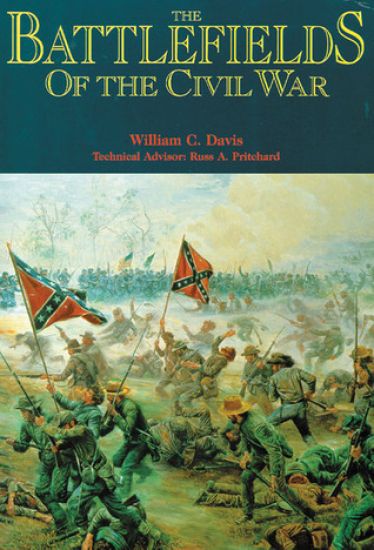
The Battlefields of the Civil War

The Battlefields of the Civil War

William C. Davis

University of Oklahoma Press
1996
nidottu
Tells the story of 13 of the most important battles of the American Civil War from the first, Manassas in 1861, to the battle of Nashville in 1864, describing not just the events and outcomes of these engagements but also the characters of the army commanders.
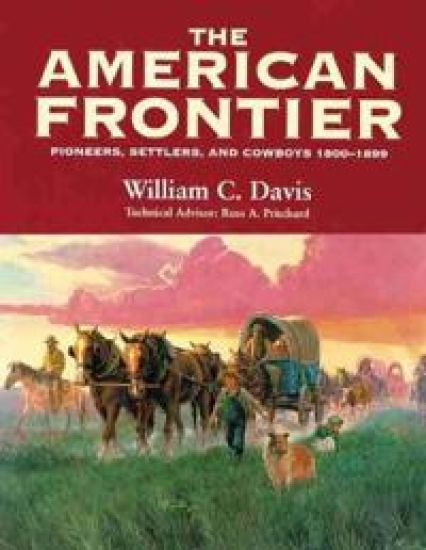
The American Frontier

The American Frontier

William C. Davis

University of Oklahoma Press
1999
nidottu
In The American Frontier, historian William C. Davis masterfully chronicles the history of the territory beyond the Mississippi, with particular attention to exploration, expansion, conflict, and settlement. The first bold steps of Lewis and Clark in 1804 inspired the emergence of a nation in a momentous century of migration and settlement. During the next few decades, while Texas and California fought to be free of Mexican rule, the slow spread westward began: the Mormons in Utah, the '49ers in California, and the development of stage routes, railways, and other overland trails. With the end of the Civil War, in 1865, people of all nations and tongues sped to the West--the pioneers, trappers, entrepreneurs, buffalo hunters, miners, soldiers, gamblers, cowboys, lawmen, gunfighters.
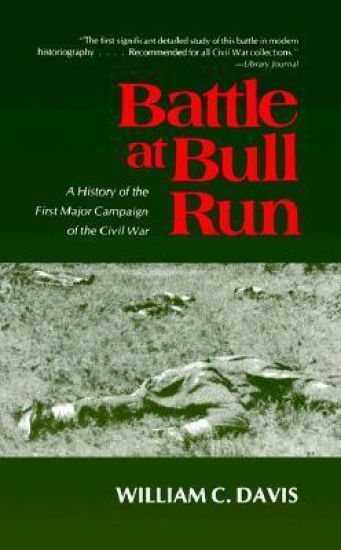
Battle at Bull Run

Battle at Bull Run

William C. Davis

Louisiana State University Press
1981
nidottu
From the first passage in William C. Davis' book about ""the twilight of America's innocence: to the last, the reader is carried through what many in the 1860s believed would be the only major conflict between North and South. So optimistic were the people in Washington that a crowd of civilians came from the city with picnic hampers to witness the crushing defeat of the upstart ""rebels."" The following day, however, the mood would shatter in a battle that confounded the expectations of both sides, the first Battle at Bull Run.It was a training ground for some of America's most colourful military figures: P.G.T. Beauregard, Joe Johnson, Irvin McDowell, and ""Stonewall"" Jackson. It also marked the first strategic use of railroads and was perhaps the first time the horrors of battle were photographed for the people back home. Drawing from a wealth of material, old letters, journals, memoirs, and military records, Davis brings to life a vivid and vital chapter in American history.
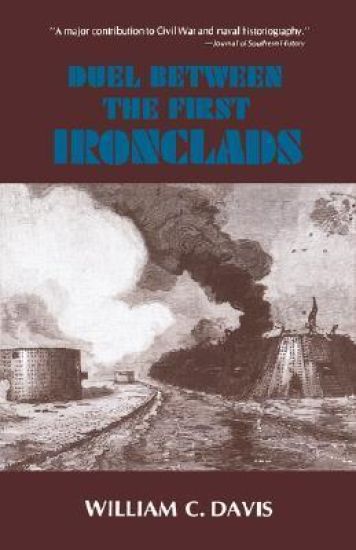
Duel Between the First Ironclads

Duel Between the First Ironclads

William C. Davis

Louisiana State University Press
1981
nidottu
One was called ""a tin can on a shingle""; the other, ""a half-submerged crocodile."" Yet, on a March day in 1862 in Hampton Roads, Virginia, after a five-hour duel, the U.S.S. Monitor and the C.S.S. Virginia(formerly the U.S.S. Merrimack) were to change the course of not only the Civil War but also naval warfare forever. Using letters, diaries, and memoirs of men who lived through the epic battle of the Monitor and the Merrimack and of those who witnessed it from afar, William C. Davis documents and analyses this famous confrontation of the first two modern warships. The result is a full-scale history that is as exciting as a novel. Besides a thorough discussion of the designs of each ship, Davis portrays come of the men involved in the building and operation of America's first ironclads, John Ericsson, supreme egoist and engineering genius who designed the Monitor; John Brooke, designer of the Virginia; John Worden, the well-loved captain of the Monitor; Captain Franklin Buchanan of the Virginia; and a host of other men on both Union and Confederate sides whose contributions make this history as much a story of men as of ships and war.
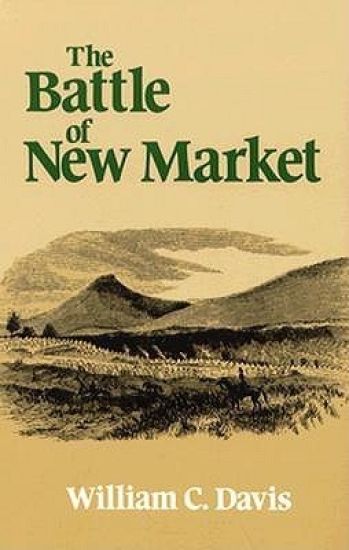
The Battle of New Market

The Battle of New Market

William C. Davis

Louisiana State University Press
1983
nidottu
In this book, William C. Davis narrates one of the most memorable and crucial of the engagements fought for control of the strategically vital Shenandoah Valley - a battle that centered on the farming community of New Market. There, Confederate forces under the command of General John C. Breckinridge defeated the numerically superior army commanded by the Union's hapless General Franz Sigel. Outnumbered by a margin of four to one at the beginning of the conflict, Breckinridge was desperate for additional men. He sent out a call for assistance to the Virginia Military Institute, and the school responded by sending 258 members of its Corps of Cadets into battle - some of them as young as fifteen years old. In the action that followed, 57 of them would be killed or wounded.In vivid detail, The Battle of New Market tells of Breckinridge's audacious domination of the battlefield and of Sigel's tragic ineptitude; of the opposing troops, both seasoned and untried; of the fate of prisoners and of the wounded; and, perhaps most memorably, of the gallantry of the cadets who marched from the classrooms of VMI directly into the heat of battle.
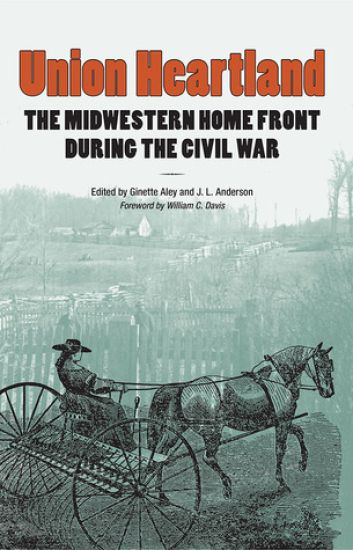
Union Heartland

Union Heartland

William C. Davis

Southern Illinois University Press
2013
sidottu
Historians have broadened the interpretation of the US Civil War as a battle between the North and the South by revealing the “many Souths” that made up the Confederacy, but the “North” has remained largely undifferentiated as a geopolitical term. In this welcome collection, seven Civil War scholars offer a unique regional perspective on the Civil War by examining how a specific group of Northerners—Midwesterners, known as Westerners and Middle Westerners during the 1860s—experienced the war on the home front. From the exploitation of Confederate prisoners in Ohio to wartime college enrolment in Michigan, these essays reveal how Midwestern men, women, families, and communities became engaged in myriad war-related activities and support.Agriculture figures prominently in the collection, with several contributors exploring the agricultural power of the region and the impact of the war on farming, farm families, and farm women. Contributors also consider student debates and reactions to questions of patriotism, the effect of the war on military families’ relationships, issues of women’s loyalty and deference to male authority, as well as the treatment of political dissent and dissenters.
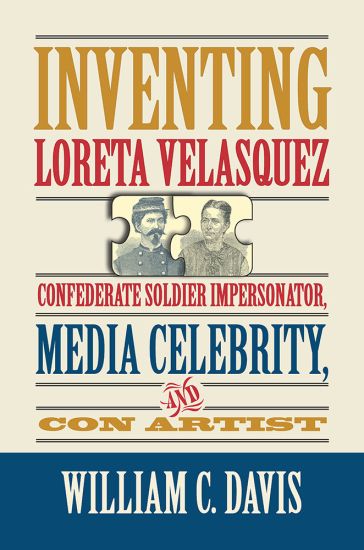
Inventing Loreta Velasquez

Inventing Loreta Velasquez

William C. Davis

Southern Illinois University Press
2016
sidottu
This groundbreaking biography of Loreta Janeta Velasquez delves into the life of one of America’s early celebrities. She claimed to have posed as a man to fight for the Confederacy, but this book reveals a startling reality that's even more implausible than the myths she created.
A Taste for War

A Taste for War

William C. Davis

Stackpole Books
2003
sidottu
We know the uniforms they wore, the weapons they carried, and the battles they fought, but what did they eat and, of even greater curiosity, was it any good? Now, for the very first time, the food that fuelled the armies of the North and the South and the soldiers' opinions of it - ranging from the sublime to just slime - is front and centre in a biting, fascinating look at the Civil War as written by one of its most respected historians. There's even a comprehensive 'cookbook' of actual recipes included for those intrepid enough to try a taste of the Civil War.
Thomas Reid's Ethics

Thomas Reid's Ethics

William C. Davis

Continuum International Publishing Group Ltd.
2006
sidottu
Thomas Reid (1710-96) was one of the most daring and original thinkers of the eighteenth century. His work became the cornerstone of the Scottish School of Common Sense Philosophy, and was highly influential in nineteenth-century America; it also anticipated the thinking of such twentieth-century figures as Moore and Wittgenstein. Now, after a long period of neglect, his philosophy is again the subject of increasing attention across the world. For Reid, knowing about ethics is a matter of having 'good evidence' supplied by a sense-like moral faculty. William Davis's book shows how such a view can be both consistent and plausible in the twenty-first century. "Thomas Reid's Ethics" begins by characterizing the state of moral epistemology at the time when Reid was writing. It goes on to recount Reid's central claims about the moral sense, and describes the various problems that confront those who would explain and defend his views. Davis lays the foundation for resolving these difficulties by detailing an epistemological conception of evidence, which parallels the legal conception of evidence used by the Scottish courts of Reid's day. He, then, shows how Reid's claims about evidence and self-evidence are best understood in light of this legal model. The book concludes by responding to recent worries about 'moral sense' theories, and offers a final assessment of the success of Reid's ethical project. The book will be of substantial interest not only to Reid scholars and historians of philosophy, but also to specialists and students in contemporary ethics.
Monoclonal Antibody Protocols

Monoclonal Antibody Protocols

William C. Davis

Humana Press Inc.
1995
nidottu
Since the initial description of techniques to immortalize anti­ body-producing B-lymphocytes by fusion with tissue culture-adapted myeloma cells, methods have been developed to produce monoclonal antibodies of defined specificity in multiple animal species. Stable hybrids can be readily produced in mice using a number of myeloma and hybridoma cell lines. To obviate the problem of identifying fusion partners in other animal species, xenohybrids have been produced using B-lymphocytes from the relevant species and mouse myeloma cells. The use of xenohybrids has minimized the problem of obtain­ ing stable antibody-producing hybrids in all species examined thus far. Although alternative techniques are being developed to produce monoclonal antibodies by molecular methods, hybridoma technol­ ogy will remain the technology of choice for producing monoclonal antibodies for a variety of applications in research and industry. The objective of Monoclonal Antibody Protocols is to provide investigators with a set of methods for producing and using mono­ clonal antibodies in biomedical, agricultural, and biological sciences. The book is not intended to provide methodology for all possible applications, but rather a series of methods presented in an easy-- follow format that can be used by new and established investiga­ tors, graduate and postgraduate fellows, and technical staff.
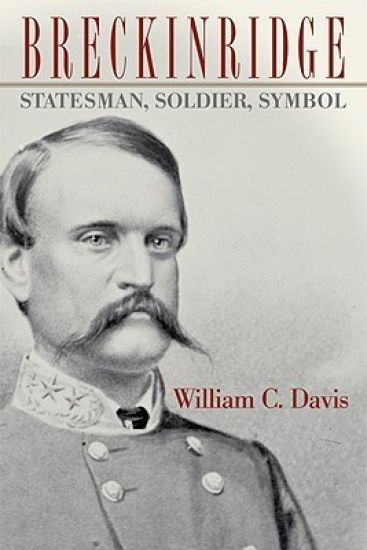
Breckinridge

Breckinridge

William C. Davis

The University Press of Kentucky
2010
nidottu
John C. Breckinridge rose to prominence during one of the most turbulent times in our nation's history. Widely respected, even by his enemies, for his dedication to moderate liberalism, Breckinridge's charisma and integrity led to his election as Vice President at age 35, the youngest ever in America's history. After a decade of being out-of-print, Breckinridge: Statesman, Soldier, Symbol returns as the quintessential biography of one of Kentucky's great moderates. Historian William C. Davis sheds light on Breckinridge's life throughout three key periods, spanning his career as a celebrated statesman, heroic soldier, and proponent of the reconciliation. A true Kentucky hero, "Old Breck's" bravery in battle, dedication to the pursuit of truth, and unique ability to win the loyalty of others rank him alongside Henry Clay and Simon Kenton. Drawing from a remarkable collection of sources, including previously unknown documents and letters, as well as the papers of his associates and extensive aid from the Breckinridge family, Davis presents the legacy of a man often overlooked.
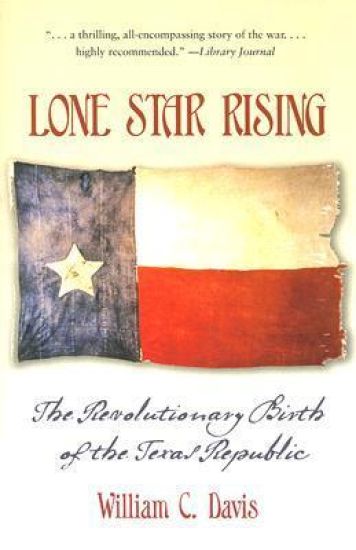
Lone Star Rising

Lone Star Rising

William C. Davis

Texas A M University Press
2006
nidottu
In the whirlwind of revolutions in the Americas, the Texas Revolution stands at the confluence of northern and southern revolts. On the battlefield and in the political aftermath, settlers from the United States struggled with those who brought revolutionary ideas from Latin America and arms from Mexico. In the midst of the conflict stood the Tejanos who had made Texas home for generations. This masterpiece of narrative and analysis, first published in hardback in 2004, brings the latest scholarship to bear on the oldest questions. Well-known characters such as Sam Houston, Stephen F. Austin, and General Santa Anna - and the cultures they represented - are etched in sharp and very human relief as they carve out the republic whose Lone Star rose in 1836 and changed the course of a continent.