Kirjojen hintavertailu. Mukana 11 244 527 kirjaa ja 12 kauppaa.

Kirjahaku

Etsi kirjoja tekijän nimen, kirjan nimen tai ISBN:n perusteella.

6 kirjaa tekijältä William C. Reeve

Kleist's Aristocratic Heritage and Das Käthchen von Heilbronn

Kleist's Aristocratic Heritage and Das Käthchen von Heilbronn

William C. Reeve

McGill-Queen's University Press
1991
sidottu
Kleist was an important dramatist at the beginning of the nineteenth century and Kathchen was one of his greatest stage successes. Reeve presents a brief outline of the Kleist family involvement in the Prussian aristocracy and Kleist's reactions to his background. He also surveys the literary critics' attempts to come to terms with Kathchen, noting a revisionist trend which associates Kleist with the bourgeois liberalism of his time. While acknowledging the influence of the German Enlightenment, Reeve argues that the most significant influence on Kleist was his noble heritage. Reeve's close textual analysis of Das Kathchen von Heilbronn uses the model of the aristocrat which draws upon Nietzsche's Was ist vornehm? and the works of Anthony Ludovici, John H. Kautsky, and others, a model which has remained virtually unchanged since the Middle Ages. Reeve examines Kleist's use of symbolic and descriptive names in Kathchen, showing how they emphasize his ties to the aristocratic, and compares Kleist's drama to two other plays featuring socially forbidden love, Friedrich Schiller's Kabale und Liebe and Friedrich Hebbel's Agnes Bernauer. Despite his efforts to the contrary, Heinrich von Kleist was unable to ignore or deny his aristocratic heritage. It left an indelible mark on his works, especially, as Reeve demonstrates, Das Kathchen von Heilbronn.

Kleist on Stage, 1804-1987

Kleist on Stage, 1804-1987

William C. Reeve

McGill-Queen's University Press
1993
sidottu
Since an account of every known staging would require several volumes, Kleist on Stage is limited to major productions in Germany, Austria, and Switzerland that attracted more than the usual press coverage, and to interpretations and adaptations outside the German-speaking countries. Reeve presents a chronological stage history of each of the plays, beginning with Die Familie Schroffenstein and ending with Prinz Friedrich von Homburg. He also discusses some of the problems faced by a director attempting to put a Kleistian drama on stage, and pleads for greater understanding and cooperation between the academic and theatrical traditions.
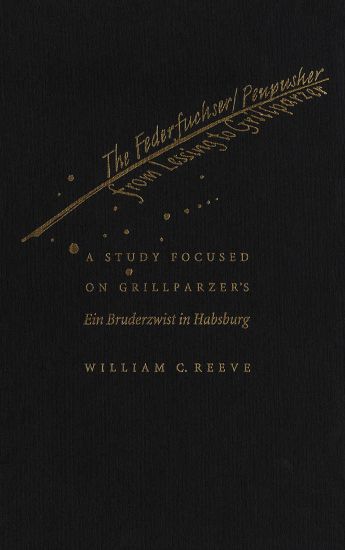
The Federfuchser/Penpusher from Lessing to Grillparzer

The Federfuchser/Penpusher from Lessing to Grillparzer

William C. Reeve

McGill-Queen's University Press
1995
sidottu
Reeve provides a detailed discussion of Klesel's importance in Ein Bruderzwist in Habsburg and examines possible predecessors for the Federfuchser: Wurm from Friedrich von Schiller's Kabale und Liebe, the Sekretar in Johann Wolfgang von Goethe's Die naturliche Tochter, and Leonhard in Friedrich Hebbel's Maria Magdalene. He focuses on the features they share, such as deep-seated resentment of social superiors who, by a mere accident of birth, have power over them and, above all, the cunning that they use to overcome their social disqualifications.
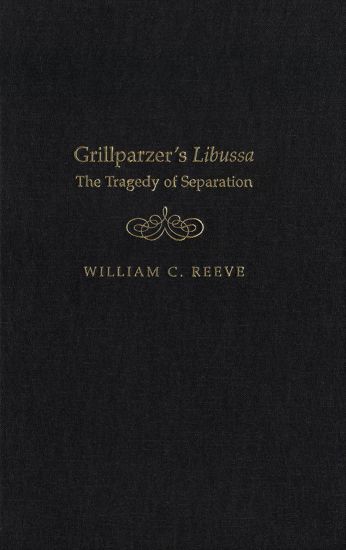
Grillparzer's Libussa

Grillparzer's Libussa

William C. Reeve

McGill-Queen's University Press
1999
sidottu
Reeve not only offers a close textual analysis of the drama from the aspect of separation but shows how Libussa and its author fit into the development of the history of ideas in nineteenth-century Europe. He contends that Grillparzer's work reflects Bachofen, Neumann, Nietzsche, Freud, and Lacan. Using Freudian psychoanalysis, Neumann's investigation of the female archetype, and anthropological studies, Reeve argues that Grillparzer's tragedy portrays the struggle between matriarchy and patriarchy, nurturers and warriors, and rural and urban cultures. Since Libussa proves unable to overcome the gender bias of here male subjects, the play concludes with a symbolic statement of masculine superiority as man and woman remain intellectually and physically apart. Reeve's analysis draws parallels with Grillparzer's other two completed posthumous tragedies, Ein Bruderzwist in Habsburg and Die Judin von Toledo, relating his findings to the greater context of nineteenth-century German drama.
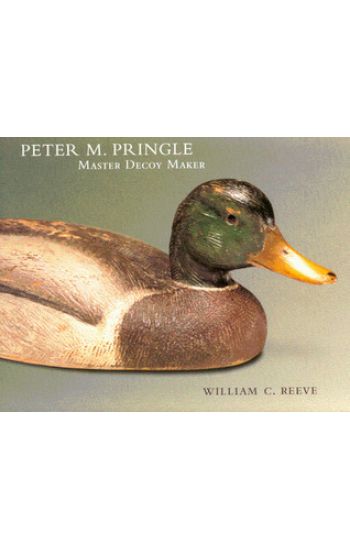
Peter M. Pringle, Master Decoy Maker

Peter M. Pringle, Master Decoy Maker

William C. Reeve

McGill-Queen's University Press
2002
sidottu
An avid outdoorsman, Pringle began carving decoys in 1898 and in 1928 set himself the goal of producing the best rig of decoys in the world. Between 1929 and 1946, employing his skills as a commercial artist and going to great lengths to ensure the utmost accuracy, he fashioned approximately 120 of what many now consider to be among the finest examples of decoy art. But because he carved exclusively for his own use and made only a few for close friends, Pringle's birds remained largely unknown until recently.
In Pursuit of Power

In Pursuit of Power

William C. Reeve

UNIVERSITY OF TORONTO PRESS
1987
pokkari
A number of striking parallels link the lives and careers of Machiavelli and Kleist. This study of the influence of one on the work of the other begins with an outline of those parallels, and of the Machiavellian atmosphere in Kleist’s first play, Die Familie Schroffenstein. Reeve goes on to focus on the protagonists of Kleist’s plays, beginning with Licht in Der zerbrocheme Krug. He exposes the skill of Licht’s behind-the-scenes direction of the course of events to his own advantage and to the detriment of his superior, Adam. Next Reeve offers a detailed analysis of Die Hermannsschlacht, in which he demonstrates how Hermann embodies those qualities – the cunning of the fox and the strength of the lion – demanded by Machiavelli in a successful ruler. With these traits Hermann has brought the German princes, his own tribe, his rival Marbod, his wife, and even the Romans to a point where, unwittingly, the have all worked towards the establishment of a united Germany under his leadership. The chapter n Prinz Friedrich von Homburg singles out the underhand manoeuvers of the sadistic Hohenzolern who plots to embarrass publicly both the Elector and the Prince as a subtle manifestation of his personal power over the two leading contenders for political supremacy. The fragment Robert Guiskard contains two Machiavellian protagonists, an older more accomplished practitioner and an up-and-coming young threat, and treats another issue addressed in Il Principe: what occurs when an ideal leader at the height of his powers is cut down by a disabling illness? Indicative of the beginning and the end of Kleist’s opus, half of his plays contain the figure of the clandestine schemer who plans the social or political elimination of a rival and, by stealth and skillful manipulation of others, directs the course of events at almost every turn. Reeve concludes with an attempt to explain the presence of the Machiavellian in Kleist’s works as the indirect influence of Shakespeare’s three villains, the direct example of Napoleon, or the dramatist’s own independent insight into the less admirable aspects of the human mind.