Kirjojen hintavertailu. Mukana 11 342 296 kirjaa ja 12 kauppaa.

Kirjahaku

Etsi kirjoja tekijän nimen, kirjan nimen tai ISBN:n perusteella.

72 kirjaa tekijältä William Clark

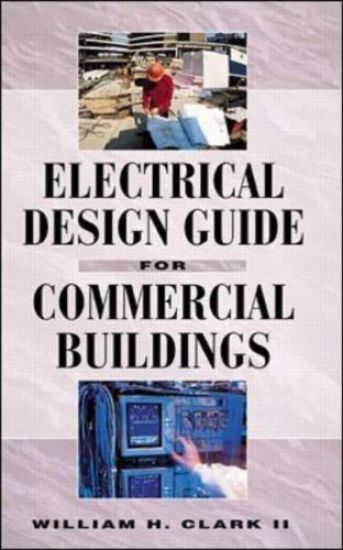
Electrical Design Guide for Commercial Buildings

Electrical Design Guide for Commercial Buildings

William Clark

McGraw-Hill Professional
1998
sidottu
Publisher's Note: Products purchased from Third Party sellers are not guaranteed by the publisher for quality, authenticity, or access to any online entitlements included with the product.With this authoritative, easy-to-follow guide, you can design and specify electrical systems for virtually any commercial building easily, efficiently, and accurately. You'll be able to submit lower bids, foster greater client satisfaction, and encounter fewer problems during construction. Electrical Design Guide for Commercial Buildings shows you step by step how to organize, layout and circuit, and complete the design of electrical power and telephone/communications systems for commercial and industrial buildings. This handy guide gives you all the information and tables you need within a comprehensive step-by-step map of the entire design process. You also get a rich assortment of schematics, sample details, typical floor plans, and model documents, the 10 most-used NEC tables, pro-level tips on energy conservation and cost cutting, and help withÑand even source code forÑfrequently used computer applications. Whether pro or novice, you'll find the key to better, faster, and cheaper electrical design for commercial buildings inside this book.
Academic Charisma and the Origins of the Research University

Academic Charisma and the Origins of the Research University

William Clark

University of Chicago Press
2006
sidottu
Tracing the transformation of early modern academics into modern researchers from the Renaissance to Romanticism. "Academic Charisma and the Origins of the Research University" uses the history of the university and reframes the "Protestant Ethic" to reconsider the conditions of knowledge production in the modern world. William Clark argues that the research university - which originated in German Protestant lands and spread globally in the nineteenth and twentieth centuries - developed in response to market forces and bureaucracy, producing a new kind of academic whose goal was to establish originality and achieve fame through publication. With an astonishing wealth of research, "Academic Charisma and the Origins of the Research University" investigates the origins and evolving fixtures of academic life: the lecture catalog, the library catalog, the grading system, the conduct of oral and written exams, the roles of conversation and the writing of research papers in seminars, the writing and oral defense of the doctoral dissertation, the ethos of "lecturing with applause" and "publish or perish," and the role of reviews and rumor. This is a grand, ambitious book that should be required reading for every academic.
Academic Charisma and the Origins of the Research University

Academic Charisma and the Origins of the Research University

William Clark

University of Chicago Press
2007
nidottu
Tracing the transformation of early modern academics into modern researchers from the Renaissance to Romanticism, Academic Charisma and the Origins of the Research University uses the history of the university and reframes the "Protestant Ethic" to reconsider the conditions of knowledge production in the modern world. William Clark argues that the research university - which originated in German Protestant lands and spread globally in the nineteenth and twentieth centuries - developed in response to market forces and bureaucracy, producing a new kind of academic whose goal was to establish originality and achieve fame through publication. Drawing on an astonishing wealth of research, he investigates the origins and evolving fixtures of academic life: the lecture catalog, the library catalog, the grading system, the conduct of oral and written exams, the roles of conversation and the writing of research papers in seminars, the writing and oral defense of the doctoral dissertation, the ethos of "lecturing with applause" and "publish or perish," and the role of reviews and rumor. This is a grand, ambitious book that should be required reading for every academic.
Dear Brother

Dear Brother

William Clark

Yale University Press
2003
pokkari
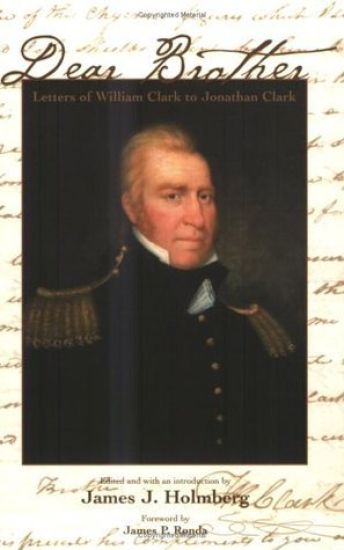
Over the course of his career, American explorer William Clark (1770–1838) wrote at least forty-five letters to his older brother Jonathan, including six that were written during the epic Lewis and Clark Expedition. This book publishes many of these letters for the first time, revealing important details about the expedition, the mysterious death of Meriwether Lewis, the status of Clark’s slave York (the first African American known to have crossed the continent from coast to coast), and other matters of historical significance.There are letters concerning the establishment of the Corps of Discovery’s first winter camp in December 1803, preparations for setting out into the country west of Fort Mandan in 1805, and Clark’s 1807 fossil dig at Big Bone Lick, Kentucky. There are also letters about Lewis’s disturbed final days that shed light on whether he committed suicide or was murdered. Still other letters chronicle the fate of York after the expedition; we learn the details of Clark and York’s falling out and subsequent alienation. Together the letters and the richly informative introductions and annotations by James J. Holmberg provide valuable insights into the lives of Lewis and Clark and the world of Jeffersonian America.Published in association with The Filson Historical Society
Hope and the Approaching Apocalypse

Hope and the Approaching Apocalypse

William Clark

IngramSpark
2022
pokkari
Hope and the Approaching Apocalypse is a book that certainly gets one's attention. William Clark does much more than presenting an apocalyptic belief based on prophecy and science. He weaves the state of the world and society with the facts of prophecy and science to demonstrate a true connection with the upcoming apocalypse. Over seven years ago, I met Bill Clark where he was the pastor of a local church in Indiana. I was part of the music program, and even though Bill was the pastor, he also helped with the music. He is a Biblical preacher, which is indicative in the book. Bill and I became friends, and we also talked about many situations over lunch and coffee. We are advised not to read the end of a book first. It's like watching only the end of a movie. After reading each intriguing chapter, Bill emphatically gives a power punch at the end of the book. The churched and the unchurched will appreciate the message that we should all be prepared. In every chapter you can feel the concern that the author has for the state of the world and for our personal well-being. If you like to read or listen to the news, you won't want to put down the urgent messages in "The Approaching Apocalypse".
Scottish Sphinx

Scottish Sphinx

William Clark

Independently Published
2019
pokkari
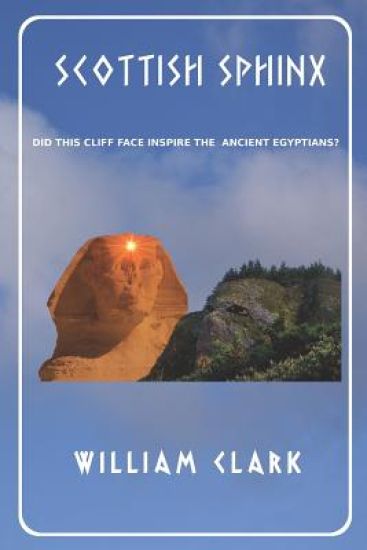
Silver seahorses surge majestically across golden sands. With a final, soothing sigh they swish the shingle fringes of a massive rocky outcrop. As they have done for millennia. High on its heather-clad summit, summer breezes caress your forehead. Lingering scents of sea and wild-flowers enchant. Lower your gaze from blue skies and misty mountains. Focus on the stones of ancient Berigon scattered at your feet. Mysterious... magical... mythical? Legends proclaim this site as the home of the Stone of Destiny and ancient capital of Scottish royalty. Their noble descendants still grace the throne of Britain. A magnificent setting. A stunning view. But was this the scene of bloody battles, cannibalism, and dark, lustful deeds? A History of the Scottish People by Hector Boece, appeared in 1527. This learned scholar described a fierce people warring with Picts, Romans, and Britons. Sometimes up, sometimes down. But ... did these exciting events happen in quiet, remote Benderloch, Argyll.Was Hector mistaken - or even making it up?Were Ancient Egyptian ambassadors visitors to Berigon?Did the locals worship Isis and the bull god Apis of Ancient Egypt?Why has the origin of Berigon's name created so many heated disputes?How and why was it vitrified - the stones burned to glass?Until recently, scholars tended to dismiss Boece's history as fable. But it long influenced how Scots saw themselves and others saw them.In this book, the author reveals the amazing discovery of the head of a giant sphinx in a towering rock face. Known long ago as Cragan Righ - The King's Rock - it rises seawards, close to Berigon.Did ancient Egyptian visitors shape it?Or is the cliff a remarkable work of Nature?Could there be a connection with the Great Sphinx of Giza? Does it mean our Hector wasn't havering, after all? Follow William Clark as he explores the facts, fancies, and fictions to find answers - serious, and amusing.
Catalogue of the Osteological Portions of Specimens Contained in the Anatomical Museum of the University of Cambridge
William Clark was Professor of Anatomy at Cambridge for nearly fifty years, collecting many specimens of bones for use in the study of comparative anatomy, physiology and osteology. These formed a principal part of the collection that eventually became the university's Museum of Zoology. He wished to support students of natural sciences in acquiring knowledge from direct observation of well arranged and accurately identified specimens. The 1,289 items, catalogued in 1862, include 128 from humans of various races and dates. These include masks of the faces of Isaac Newton, William Pitt and Benjamin Franklin. This focus reflects, in part, the nineteenth-century fascination with phrenology. A regular participant in the influential Cambridge Philosophical Society, in May 1860 William Clark made there what Darwin perceived to be a 'savage onslaught' on his recently published On the Origin of Species. This book reveals Clark's very different approach to studying the tree of life.