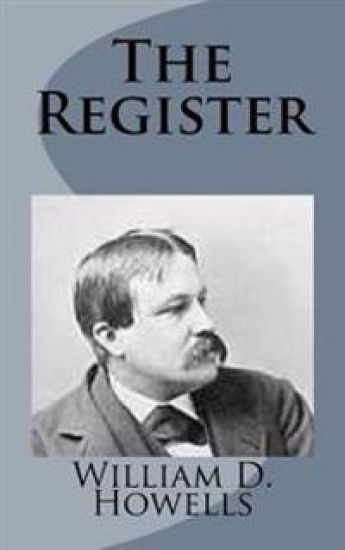
The story takes place in the late 19th century at Jocelyn's hotel on the beach outside of Newport, Rhode Island, and is told through the voice of a third person narrator. At the hotel croquet court we meet a sickly woman named Louise Maynard and her physician, Dr. Grace Breen. Breen is a graduate of the New York homeopathic school, who has become a doctor to make a difference and prove her worth as a woman. She is cool toward men because the love of her life ran off with her best friend. Near the verge of a bold promontory stands the hotel, and looks southeastward over a sweep of sea unbroken to the horizon. Behind it stretches the vast forest, which after two hundred years has resumed the sterile coast wrested from it by the first Pilgri William Dean Howells March 1, 1837 - May 11, 1920 was an American realist novelist, literary critic, and playwright. Nicknamed "The Dean of American Letters", he was particularly known for his tenure as editor of the Atlantic Monthly as well as his own prolific writings, including the Christmas story "Christmas Every Day", and the novels The Rise of Silas Lapham and A Traveler from Altruria.
The Sleeping Car is a farce play in three parts by William Dean Howells, first published in the United States in 1883. This play takes place entirely within a 24-hour period on a railway sleeping car, and revolves around a woman's late night confusion regarding the premature appearance of her husband and brother. This work is one of Howells' minor works, but reflects the same tendencies towards literary realism as many of Howells' more famous works, including The Rise of Silas Lapham and A Modern Instance. This play is not well-read amongst modern readers, and is often overlooked in literary discussion due to its relative contemporary obscurity Currently, this work is not being published by any publishing houses, but is available free through Project Gutenberg or other websites. *Plot* This story begins with Mrs. Roberts, her baby son, and her Aunt Mary headed Westbound on the Boston and Albany Railroad. They are on their way to meet Mrs. Roberts' husband and brother in Boston. Mrs. Roberts has not seen her brother in twelve years, and is nervous about how he will react to seeing her. In the time since they last saw each other, she has married and birthed a child, and has heard little from her brother except for infrequent telegraphs. The porter informs Mrs. Roberts and her aunt that the berths are now ready for them to sleep in, but the conversation continues. Mrs. Roberts worries that her husband Edward will not receive Willis well, or vice versa, because Willis is a Californian and Edward has never encountered one before. Mrs. Roberts laments that her life would be a wreck if her husband and brother do not get along nicely, and states "I do hope they're sitting down to a hot supper." A voice from an adjacent berth interjects and sarcastically tells Mrs. Roberts to be quiet. She acquiesces for a moment, but then reverts to conversation, stating how they must go to bed. Aunt Mary insists that Mrs. Roberts and the child take the bottom bunk, because she is afraid that the child will roll off of the top bunk and injure himself. She calls the porter over to help her into the upper berth, and after successfully entering the berth, exchanges "good-night" with Mrs. Roberts. After a few minutes, Mrs. Roberts rekindles the conversation, and expresses her concern regarding the safety of the train on which they're riding. Her aunt reassures her that the road is safe, and that the train has implemented safety measures to prevent accidents. Mrs. Roberts then goes on to discuss where her Aunt left the drinking glass in their luggage, until she is interrupted by a man from the next berth. This man politely requests silence from Mrs. Roberts, citing that he has come straight through from San Francisco and would very much like some rest. Mrs. Roberts responds apologetically, but starts conversing with this man, inquiring about California, her brother Willis, and if he has ever met his acquaintance. Midway through their conversation, a man in the upper berth sarcastically interjects and asks for quiet. The Californian takes offense to the man's tone towards Mrs. Roberts, and the two get into a verbal argument over it. Eventually, the Californian gets the man in the upper berth to back down ("You beg that lady's pardon, or I'll have you out of there before you know yourself "). Part I ends with the Californian and Mrs. Roberts finally going to bed, with only the sounds of Aunt Mary's snoring audible.... William Dean Howells (March 1, 1837 - May 11, 1920) was an American realist novelist, literary critic, and playwright. Nicknamed "The Dean of American Letters", he was particularly known for his tenure as editor of The Atlantic Monthly as well as his own prolific writings, including the Christmas story "Christmas Every Day", and the novels The Rise of Silas Lapham and A Traveler from Altruria.
A Counterfeit Presentment is a play written by American author and playwright William Dean Howells in 1877. The play is a realistic comedy and tells the story of a chance encounter between a young woman, Constance, and a man whom she mistakes for her ex lover, Bartlett. However, Bartlett is not completely aware of Constance's neurotic behavior until he gets to know her a bit more. Her true personality is only truly expressed after she forces Bartlett to stay with her in the hotel so she can pretend he is her former beau. Howell's uses comedy to reveal the deeper issue of the plight of unmarried middle and upper class women in the 19th century. Act One: An Extraordinary Resemblance edit] Set at the Ponkwasset Hotel in Boston, the first act begins with Bartlett and his friend Cummings having a conversation about Bartlett's love life. Bartlett is depressed and has turned into a misanthrope because a girl he went on a date with was not interested in him anymore. As Bartlett is cursing all women and voicing his anger toward the entire female race, Cummings tries to cheer his friend up. He tells him the story of a girl who is still miserable about a break up that happened two years ago in hopes to prove to Bartlett that women do, indeed, have hearts. While they are speaking, General Wyatt, barges in yelling and cursing at Bartlett, ordering him to leave the hotel immediately. Then, when Constance and her mother enter the room, Constance faints at first sight of Bartlett. However, as General Wyatt approaches Bartlett he realizes that he has made the terrible mistake of yelling at a man he has never met before. Nevertheless, Bartlett is very upset and disturbed at the entire situation and storms out of the hotel. Cummings stays to speak with General Wyatt and realizes the general is terribly sorry for his earlier behavior. Once they are alone, General Wyatt tells Cummings the reason why he acted the way he did. Two years ago, Mrs. Wyatt brought Constance to Paris and Constance fell in love with an American man. However, when General Wyatt met the man he was very skeptical about him and soon found out that he was actually married. As a result of this unfortunate discovery, General Wyatt forced this man to end all relations with Constance, leaving her absolutely miserable and harboring a great deal of resentment towards her father, which has lasted for the past two years. Ironically, this was the same exact story that Cummings was telling Bartlett about just a few minutes ago. Although General Wyatt initially insisted that Bartlett leave the hotel premises to protect Constance, when Bartlett returns the general begs him to stay at Constance's request. Despite some initial skepticism, Bartlett agrees to stay..... William Dean Howells ( March 1, 1837 - May 11, 1920) was an American realist novelist, literary critic, and playwright, nicknamed "The Dean of American Letters". He was particularly known for his tenure as editor of The Atlantic Monthly, as well as for his own prolific writings, including the Christmas story "Christmas Every Day" and the novels The Rise of Silas Lapham and A Traveler from Altruria. Early life and family: William Dean Howells was born on March 1, 1837 in Martinsville, Ohio (now known as Martins Ferry, Ohio) to William Cooper Howells and Mary Dean Howells, the second of eight children. His father was a newspaper editor and printer who moved frequently around Ohio. In 1840, the family settled in Hamilton, Ohio, where his father oversaw a Whig newspaper and followed Swedenborgianism.Their nine years there were the longest period that they stayed in one place. The family had to live frugally, although the young Howells was encouraged by his parents in his literary interests. He began at an early age to help his father with typesetting and printing work, a job known at the time as a printer's devil. In 1852, his father arranged to have one of his poems published in the Ohio State Journal without telling him.
William Dean Howells ( March 1, 1837 - May 11, 1920) was an American realist novelist, literary critic, and playwright, nicknamed "The Dean of American Letters". He was particularly known for his tenure as editor of The Atlantic Monthly, as well as for his own prolific writings, including the Christmas story "Christmas Every Day" and the novels The Rise of Silas Lapham and A Traveler from Altruria. Early life and family: William Dean Howells was born on March 1, 1837 in Martinsville, Ohio (now known as Martins Ferry, Ohio) to William Cooper Howells and Mary Dean Howells, the second of eight children. His father was a newspaper editor and printer who moved frequently around Ohio. In 1840, the family settled in Hamilton, Ohio, where his father oversaw a Whig newspaper and followed Swedenborgianism.Their nine years there were the longest period that they stayed in one place. The family had to live frugally, although the young Howells was encouraged by his parents in his literary interests. He began at an early age to help his father with typesetting and printing work, a job known at the time as a printer's devil. In 1852, his father arranged to have one of his poems published in the Ohio State Journal without telling him. Early career: In 1856, Howells was elected as a clerk in the State House of Representatives. In 1858, he began to work at the Ohio State Journal where he wrote poetry and short stories, and also translated pieces from French, Spanish, and German. He avidly studied German and other languages and was greatly interested in Heinrich Heine. In 1860, he visited Boston and met with writers James Thomas Fields, James Russell Lowell, Oliver Wendell Holmes, Sr., Nathaniel Hawthorne, Henry David Thoreau, and Ralph Waldo Emerson. He became a personal friend to many of them, including Henry Adams, William James, Henry James, and Oliver Wendell Holmes, Jr. In 1860 Howells wrote Abraham Lincoln's campaign biography Life Of Abraham Lincoln and subsequently gained a consulship in Venice. He married Elinor Mead on Christmas Eve 1862 at the American embassy in Paris. She was a sister of sculptor Larkin Goldsmith Mead and architect William Rutherford Mead of the firm McKim, Mead, and White. Among their children was architect John Mead Howells. Editorship and other literary pursuits: The Howells returned to America in 1865 and settled in Cambridge, Massachusetts. He wrote for various magazines, including the Atlantic Monthly and Harper's Magazine. In January 1866, James Fields offered him a position as assistant editor at the Atlantic Monthly; he accepted after successfully negotiating for a higher salary, though he was frustrated by Fields' close supervision. Howells was made editor in 1871, after five years as assistant editor, and he remained in this position until 1881. In 1869, he met Mark Twain with whom he formed a longtime friendship. But his relationship with journalist Jonathan Baxter Harrison was more important for the development of his literary style and his advocacy of Realism. Harrison wrote a series of articles for the Atlantic Monthly during the 1870s on the lives of ordinary Americans.Howells gave a series of twelve lectures on "Italian Poets of Our Century" for the Lowell Institute during its 1870-71 season. He published his first novel Their Wedding Journey in 1872, but his literary reputation soared with the realist novel A Modern Instance (1882), which described the decay of a marriage. His 1885 novel The Rise of Silas Lapham became his best known work, describing the rise and fall of an American entrepreneur of the paint business. His social views were also strongly represented in the novels Annie Kilburn (1888), A Hazard of New Fortunes (1890), and An Imperative Duty (1891).....
Dr. Breen's Practice is a novel, one of the earlier works by American author and literary critic William Dean Howells. Houghton Mifflin originally published the novel in 1881 in both Boston and New York. Howells wrote in the realist style, creating a faithful representation of the commonplace, and in this case describing everyday mannerisms that embody the daily lives of middle-class people. PLOT: The story takes place in the late 19th century at Jocelyn's hotel on the beach outside of Newport, Rhode Island, and is told through the voice of a third person narrator. At the hotel croquet court we meet a sickly woman named Louise Maynard and her physician, Dr. Grace Breen. Breen is a graduate of the New York homeopathic school, who has become a doctor to make a difference and prove her worth as a woman. She is cool toward men because the love of her life ran off with her best friend. When Mr. Libby, an old friend of Mrs. Maynard's, asks her to go sailing, Dr. Breen insists it will be bad for her health but Mrs. Maynard to goes anyway. The weather takes a turn for the worst and the boat capsizes in the bitter waters. Mrs. Maynard blames Dr. Breen for allowing her to go out into the storm. After this incident, Mrs. Maynard's condition worsens and she trusts Dr. Breen even less than she did before. She requests a consultation from a male doctor, so Dr. Breen decides to contact Dr. Rufus Mulbridge, a local allopathic physician. Miss Gleason, another women staying at the hotel, insists that Dr. Breen is the best option for Mrs. Maynard, and that if she calls for a consultation from Dr. Mulbridge she will be making it harder for female physicians to act without a man's assistance. When Dr. Breen arrives at Dr. Mulbridge's office, the reader sees that while he has an established place of business, she works and lives at a hotel, and while he has many patients, she only treats one woman. After relinquishing Mrs. Maynard's case to Dr. Mulbridge, Dr. Breen assumes the role of nurse under his instruction. He diagnoses Mrs. Maynard with pneumonia, Dr. Breen telegraphs Mr. Maynard, who is out in Wyoming working on a ranch, telling him of his wife's condition. 1] Mr. Libby and Dr. Breen take a boat ride to New Leyden to receive a telegraph from Mr. Maynard. Mr. Libby professes his love for Dr. Breen. In spite of his mother's disdain of the professional woman, Dr. Mulbridge also professes his love for Dr. Breen, and proposes to her. However, since he doesn't believe in women's rights or women being able to take men's positions in the world, and he is a mannerless oaf, Mrs. Mulbridge correctly predicts that she will reject him. When Mr. Maynard arrives at Jocelyn's he suggests that Dr. Breen and Mrs. Maynard come out to Wyoming to live with him., where Dr. Breen could have her own practice. However, she decides that she wasted her time training to become a doctor, and that she would rather go to the opera, ballets, and eventually travel to Italy. She professes her love to Mr. Libby, and they walk down the beach in the moonlight together. Dr. Mulbridge comes back to Jocelyn's to again ask Dr. Breen to marry him, but she is now an engaged woman. Grace goes on to marry Mr. Libby and they live in southern New Hampshire near his mills. While Mr. Libby works at the mills, Dr. Breen indulges herself by going to plays and shows in Boston, but she also decides to continue practicing medicine..... William Dean Howells ( March 1, 1837 - May 11, 1920) was an American realist novelist, literary critic, and playwright, nicknamed "The Dean of American Letters". He was particularly known for his tenure as editor of The Atlantic Monthly, as well as for his own prolific writings, including the Christmas story "Christmas Every Day" and the novels The Rise of Silas Lapham and A Traveler from Altruria.....
The Sleeping Car is a farce play in three parts by William Dean Howells, first published in the United States in 1883. This play takes place entirely within a 24-hour period on a railway sleeping car, and revolves around a woman's late night confusion regarding the premature appearance of her husband and brother. This work is one of Howells' minor works, but reflects the same tendencies towards literary realism as many of Howells' more famous works, including The Rise of Silas Lapham and A Modern Instance. This play is not well-read amongst modern readers, and is often overlooked in literary discussion due to its relative contemporary obscurity. Currently, this work is not being published by any publishing houses, but is available free through Project Gutenberg or other websites. PLOT: This story begins with Mrs. Roberts, her baby son, and her Aunt Mary headed Westbound on the Boston and Albany Railroad. They are on their way to meet Mrs. Roberts' husband and brother in Boston. Mrs. Roberts has not seen her brother in twelve years, and is nervous about how he will react to seeing her. In the time since they last saw each other, she has married and birthed a child, and has heard little from her brother except for infrequent telegraphs. The porter informs Mrs. Roberts and her aunt that the berths are now ready for them to sleep in, but the conversation continues. Mrs. Roberts worries that her husband Edward will not receive Willis well, or vice versa, because Willis is a Californian and Edward has never encountered one before. Mrs. Roberts laments that her life would be a wreck if her husband and brother do not get along nicely, and states "I do hope they're sitting down to a hot supper." A voice from an adjacent berth interjects and sarcastically tells Mrs. Roberts to be quiet. She acquiesces for a moment, but then reverts to conversation, stating how they must go to bed. Aunt Mary insists that Mrs. Roberts and the child take the bottom bunk, because she is afraid that the child will roll off of the top bunk and injure himself. She calls the porter over to help her into the upper berth, and after successfully entering the berth, exchanges "good-night" with Mrs. Roberts. After a few minutes, Mrs. Roberts rekindles the conversation, and expresses her concern regarding the safety of the train on which they're riding. Her aunt reassures her that the road is safe, and that the train has implemented safety measures to prevent accidents. Mrs. Roberts then goes on to discuss where her Aunt left the drinking glass in their luggage, until she is interrupted by a man from the next berth. This man politely requests silence from Mrs. Roberts, citing that he has come straight through from San Francisco and would very much like some rest. Mrs. Roberts responds apologetically, but starts conversing with this man, inquiring about California, her brother Willis, and if he has ever met his acquaintance. Midway through their conversation, a man in the upper berth sarcastically interjects and asks for quiet. The Californian takes offense to the man's tone towards Mrs. Roberts, and the two get into a verbal argument over it. Eventually, the Californian gets the man in the upper berth to back down ("You beg that lady's pardon, or I'll have you out of there before you know yourself "). Part I ends with the Californian and Mrs. Roberts finally going to bed, with only the sounds of Aunt Mary's snoring audible...... William Dean Howells ( March 1, 1837 - May 11, 1920) was an American realist novelist, literary critic, and playwright, nicknamed "The Dean of American Letters". He was particularly known for his tenure as editor of The Atlantic Monthly, as well as for his own prolific writings, including the Christmas story "Christmas Every Day" and the novels The Rise of Silas Lapham and A Traveler from Altruria.
A Modern Instance is a realistic novel written by William Dean Howells, and published in 1882 by J. R. Osgood & Co. The novel is about the deterioration of a once loving marriage under the influence of capitalistic greed. It is the first American novel by a canonical author to seriously consider divorce as a realistic outcome of marriage. PLOT: The novel explores the deterioration of what could have been an otherwise healthy marriage through industrial enterprise and capitalistic greed. The story chronicles the rise and fall of the romance between Bartley Hubbard and Marcia Gaylord, who migrate from Equity, Maine, to Boston, Massachusetts, following their marriage. The reader believes at the beginning of the story that their love for each other is unbreakable, but as the plot advances, more and more troubles arise, alienating the couple. Soon their entire marriage collapses, inundated with problems from a wide array of areas. Marcia Hubbard, lost and desolate in the gloom of her husband's abandonment, is offered solace in the comforting touch of her friend Ben Halleck, who secretly is attracted to her. However, he worries that she may reject him, unable to move on from her previous partner. The story concludes in a meaningless vortex of isolation representing modern society. Marcia Hubbard, still attached to Bartley, confines herself to her father's home in Equity, Maine, from which she never leaves. Bartley, on the other hand, has died. Ben Halleck stands hesitantly, unable to determine whether or not he should seize the chance and propose to her........... William Dean Howells ( March 1, 1837 - May 11, 1920) was an American realist novelist, literary critic, and playwright, nicknamed "The Dean of American Letters". He was particularly known for his tenure as editor of The Atlantic Monthly, as well as for his own prolific writings, including the Christmas story "Christmas Every Day" and the novels The Rise of Silas Lapham and A Traveler from Altruria.
In "A Woman's Reason," Howells has given us a study of a few eventful years of a woman's life, characterized by his unequalled knowledge of the mysterious working of woman's mind and heart, and told with great power and truth to nature..... William Dean Howells ( March 1, 1837 - May 11, 1920) was an American realist novelist, literary critic, and playwright, nicknamed "The Dean of American Letters". He was particularly known for his tenure as editor of The Atlantic Monthly, as well as for his own prolific writings, including the Christmas story "Christmas Every Day" and the novels The Rise of Silas Lapham and A Traveler from Altruria. Early life and family: William Dean Howells was born on March 1, 1837 in Martinsville, Ohio (now known as Martins Ferry, Ohio) to William Cooper Howells and Mary Dean Howells, the second of eight children. His father was a newspaper editor and printer who moved frequently around Ohio. In 1840, the family settled in Hamilton, Ohio, where his father oversaw a Whig newspaper and followed Swedenborgianism.Their nine years there were the longest period that they stayed in one place. The family had to live frugally, although the young Howells was encouraged by his parents in his literary interests. He began at an early age to help his father with typesetting and printing work, a job known at the time as a printer's devil. In 1852, his father arranged to have one of his poems published in the Ohio State Journal without telling him. Early career: In 1856, Howells was elected as a clerk in the State House of Representatives. In 1858, he began to work at the Ohio State Journal where he wrote poetry and short stories, and also translated pieces from French, Spanish, and German. He avidly studied German and other languages and was greatly interested in Heinrich Heine. In 1860, he visited Boston and met with writers James Thomas Fields, James Russell Lowell, Oliver Wendell Holmes, Sr., Nathaniel Hawthorne, Henry David Thoreau, and Ralph Waldo Emerson. He became a personal friend to many of them, including Henry Adams, William James, Henry James, and Oliver Wendell Holmes, Jr. In 1860 Howells wrote Abraham Lincoln's campaign biography Life Of Abraham Lincoln and subsequently gained a consulship in Venice. He married Elinor Mead on Christmas Eve 1862 at the American embassy in Paris. She was a sister of sculptor Larkin Goldsmith Mead and architect William Rutherford Mead of the firm McKim, Mead, and White. Among their children was architect John Mead Howells. Editorship and other literary pursuits: The Howells returned to America in 1865 and settled in Cambridge, Massachusetts. He wrote for various magazines, including the Atlantic Monthly and Harper's Magazine. In January 1866, James Fields offered him a position as assistant editor at the Atlantic Monthly; he accepted after successfully negotiating for a higher salary, though he was frustrated by Fields' close supervision. .............
Tuscan Cities is a fascinating novel of the period and will appeal greatly to the historian............. William Dean Howells ( March 1, 1837 - May 11, 1920) was an American realist novelist, literary critic, and playwright, nicknamed "The Dean of American Letters". He was particularly known for his tenure as editor of The Atlantic Monthly, as well as for his own prolific writings, including the Christmas story "Christmas Every Day" and the novels The Rise of Silas Lapham and A Traveler from Altruria. Early life and family: William Dean Howells was born on March 1, 1837 in Martinsville, Ohio (now known as Martins Ferry, Ohio) to William Cooper Howells and Mary Dean Howells, the second of eight children. His father was a newspaper editor and printer who moved frequently around Ohio. In 1840, the family settled in Hamilton, Ohio, where his father oversaw a Whig newspaper and followed Swedenborgianism.Their nine years there were the longest period that they stayed in one place. The family had to live frugally, although the young Howells was encouraged by his parents in his literary interests. He began at an early age to help his father with typesetting and printing work, a job known at the time as a printer's devil. In 1852, his father arranged to have one of his poems published in the Ohio State Journal without telling him. Early career: In 1856, Howells was elected as a clerk in the State House of Representatives. In 1858, he began to work at the Ohio State Journal where he wrote poetry and short stories, and also translated pieces from French, Spanish, and German. He avidly studied German and other languages and was greatly interested in Heinrich Heine. In 1860, he visited Boston and met with writers James Thomas Fields, James Russell Lowell, Oliver Wendell Holmes, Sr., Nathaniel Hawthorne, Henry David Thoreau, and Ralph Waldo Emerson. He became a personal friend to many of them, including Henry Adams, William James, Henry James, and Oliver Wendell Holmes, Jr. In 1860 Howells wrote Abraham Lincoln's campaign biography Life Of Abraham Lincoln and subsequently gained a consulship in Venice. He married Elinor Mead on Christmas Eve 1862 at the American embassy in Paris. She was a sister of sculptor Larkin Goldsmith Mead and architect William Rutherford Mead of the firm McKim, Mead, and White. Among their children was architect John Mead Howells. Editorship and other literary pursuits: The Howells returned to America in 1865 and settled in Cambridge, Massachusetts. He wrote for various magazines, including the Atlantic Monthly and Harper's Magazine. In January 1866, James Fields offered him a position as assistant editor at the Atlantic Monthly; he accepted after successfully negotiating for a higher salary, though he was frustrated by Fields' close supervision...............
Indian Summer is an 1886 novel by William Dean Howells. Though it was published after The Rise of Silas Lapham, it was written before The Rise of Silas Lapham. The setting for this novel was inspired by a trip Howells had recently taken with his family to Europe. Howells was a realist writer who wanted "his characters to be honest, ordinary people, as he might find in his strata of society, flawed and well-meaning, good-hearted and self-effacing, bound by the conventions and the restrictions of their day but quietly dreaming of a little local heroism in their souls." All of this is encompassed in the character Theodore Colville. PLOT: Theodore Colville is a respected newspaperman in Des Vaches, Indiana. He is the editor of the Democratic-Republican, which he bought from his brother. But after a bad political move his fans criticize him and his pride cannot withstand that. A new opposing newspaper is made and Colville decides to just give up the newspaper business so he sells his newspaper to the new paper. They merge to become the Post Democratic-Republican. Colville decides that he needs to take a long vacation so he travels to Florence. Colville hasn't been in Florence in almost 20 years. At that time he was a young architect "with an inclination toward the literary side of his profession". 3] He travelled all over Italy and in Venice he met a young American girl whom he followed to Florence. In Florence Jenny Wheelwright broke Theodore Colville's heart. He was distraught so when his brother wrote to him to come to Des Vaches, Colville happily accepted the offer for a change in scenery. In Des Vaches he got drawn into the newspaper business, which he happily stayed in for 15 years. In Florence he runs into a person he wasn't eager to ever see again: Mrs. Bowen. Mrs. Bowen, whom he once knew as Lina Ridgely, was best friends with Jenny, the girl who broke Colville's heart 20 years prior. She is a widow and has a young daughter Effie Bowen. They have a surprisingly pleasant chat and she invites him to a gathering at her home, Palazzo Pinti, that evening. He accepts the invitation. Colville hasn't done much socializing but at the gathering he falls right into it nicely. When he comes in he notices a beautiful, young, blonde girl that's about twenty and asks Mrs. Bowen to introduce him to her. Her name is Imogene Graham and she is staying with Mrs. Bowen that winter. At last Mrs. Bowen takes Colville to meet Miss Graham. She is with a young clergyman, Mr. Morton, whom Mrs. Bowen drags away. Miss Graham and Colville have a pleasant chat. After all the guest leave Colville stays behind to sit with Mrs. Bowen, Miss Graham, and young Effie by the fire. Effie, Mrs. Bowen's young daughter, is enchanted with Colville. Before Colville bids the women good night, Mrs. Bowen tells him he is welcome to drop by anytime.On Thursday, the day Mrs. Bowen receives guests, Colville comes by the Palazzo Pinti. Unfortunately, Mrs. Bowen has a headache and won't come down to greet the guests. But after all the guests leave and she hears Colville's voice, she does come down to greet him. They invite Colville to a dance party the next night, and he accepts the invitation. The next night, Colville picks up the women to go to Madame Uccelli's dance party. Miss Graham is a wonderful dancer and makes Colville dance the Lancers. Unfortunately Colville is awful at Lancers and makes a fool of himself. He doesn't dance for the rest of the night..... William Dean Howells ( March 1, 1837 - May 11, 1920) was an American realist novelist, literary critic, and playwright, nicknamed "The Dean of American Letters". He was particularly known for his tenure as editor of The Atlantic Monthly, as well as for his own prolific writings, including the Christmas story "Christmas Every Day" and the novels The Rise of Silas Lapham and A Traveler from Altruria....
William Dean Howells ( March 1, 1837 - May 11, 1920) was an American realist novelist, literary critic, and playwright, nicknamed "The Dean of American Letters". He was particularly known for his tenure as editor of The Atlantic Monthly, as well as for his own prolific writings, including the Christmas story "Christmas Every Day" and the novels The Rise of Silas Lapham and A Traveler from Altruria. Early life and family: William Dean Howells was born on March 1, 1837 in Martinsville, Ohio (now known as Martins Ferry, Ohio) to William Cooper Howells and Mary Dean Howells, the second of eight children. His father was a newspaper editor and printer who moved frequently around Ohio. In 1840, the family settled in Hamilton, Ohio, where his father oversaw a Whig newspaper and followed Swedenborgianism.Their nine years there were the longest period that they stayed in one place. The family had to live frugally, although the young Howells was encouraged by his parents in his literary interests. He began at an early age to help his father with typesetting and printing work, a job known at the time as a printer's devil. In 1852, his father arranged to have one of his poems published in the Ohio State Journal without telling him. Early career: In 1856, Howells was elected as a clerk in the State House of Representatives. In 1858, he began to work at the Ohio State Journal where he wrote poetry and short stories, and also translated pieces from French, Spanish, and German. He avidly studied German and other languages and was greatly interested in Heinrich Heine. In 1860, he visited Boston and met with writers James Thomas Fields, James Russell Lowell, Oliver Wendell Holmes, Sr., Nathaniel Hawthorne, Henry David Thoreau, and Ralph Waldo Emerson. He became a personal friend to many of them, including Henry Adams, William James, Henry James, and Oliver Wendell Holmes, Jr. In 1860 Howells wrote Abraham Lincoln's campaign biography Life Of Abraham Lincoln and subsequently gained a consulship in Venice. He married Elinor Mead on Christmas Eve 1862 at the American embassy in Paris. She was a sister of sculptor Larkin Goldsmith Mead and architect William Rutherford Mead of the firm McKim, Mead, and White. Among their children was architect John Mead Howells. Editorship and other literary pursuits: The Howells returned to America in 1865 and settled in Cambridge, Massachusetts. He wrote for various magazines, including the Atlantic Monthly and Harper's Magazine. In January 1866, James Fields offered him a position as assistant editor at the Atlantic Monthly; he accepted after successfully negotiating for a higher salary, though he was frustrated by Fields' close supervision. Howells was made editor in 1871, after five years as assistant editor, and he remained in this position until 1881. In 1869, he met Mark Twain with whom he formed a longtime friendship. But his relationship with journalist Jonathan Baxter Harrison was more important for the development of his literary style and his advocacy of Realism. Harrison wrote a series of articles for the Atlantic Monthly during the 1870s on the lives of ordinary Americans.Howells gave a series of twelve lectures on "Italian Poets of Our Century" for the Lowell Institute during its 1870-71 season. He published his first novel Their Wedding Journey in 1872, but his literary reputation soared with the realist novel A Modern Instance (1882), which described the decay of a marriage. His 1885 novel The Rise of Silas Lapham became his best known work, describing the rise and fall of an American entrepreneur of the paint business. His social views were also strongly represented in the novels Annie Kilburn (1888), A Hazard of New Fortunes (1890), and An Imperative Duty (1891).............
Trieste Publishing has a massive catalogue of classic book titles. Our aim is to provide readers with the highest quality reproductions of fiction and non-fiction literature that has stood the test of time. The many thousands of books in our collection have been sourced from libraries and private collections around the world.The titles that Trieste Publishing has chosen to be part of the collection have been scanned to simulate the original. Our readers see the books the same way that their first readers did decades or a hundred or more years ago. Books from that period are often spoiled by imperfections that did not exist in the original. Imperfections could be in the form of blurred text, photographs, or missing pages. It is highly unlikely that this would occur with one of our books. Our extensive quality control ensures that the readers of Trieste Publishing's books will be delighted with their purchase. Our staff has thoroughly reviewed every page of all the books in the collection, repairing, or if necessary, rejecting titles that are not of the highest quality. This process ensures that the reader of one of Trieste Publishing's titles receives a volume that faithfully reproduces the original, and to the maximum degree possible, gives them the experience of owning the original work.We pride ourselves on not only creating a pathway to an extensive reservoir of books of the finest quality, but also providing value to every one of our readers. Generally, Trieste books are purchased singly - on demand, however they may also be purchased in bulk. Readers interested in bulk purchases are invited to contact us directly to enquire about our tailored bulk rates.