Kirjojen hintavertailu. Mukana 12 016 292 kirjaa ja 12 kauppaa.

Kirjahaku

Etsi kirjoja tekijän nimen, kirjan nimen tai ISBN:n perusteella.

29 kirjaa tekijältä William Doyle

PT 109: An American Epic of War, Survival, and the Destiny of John F. Kennedy
The extraordinary World War II story of shipwreck and survival that paved John F. Kennedy's path to power - hailed as a "breathtaking account" by James Patterson, "masterfully written" by historian Douglas Brinkley, and "the finest book" ever written on the subject by Lt. Commander William Liebenow, the man who rescued JFK and the PT 109 crew in August 1943.In the early morning darkness of August 2, 1943, during a chaotic nighttime skirmish amid the Solomon Islands, the Japanese destroyer Amagiri barreled through thick fog and struck the U.S. Navy's motor torpedo boat PT 109, splitting the craft nearly in half and killing two American sailors instantly. The sea erupted in flames as the 109's skipper, John F. Kennedy, and the ten surviving crewmen under his command desperately clung to the sinking wreckage; 1,200 feet of ink-black, shark-infested water loomed beneath. "All hands lost," came the reports back to the Americans' base: no rescue was coming for the men of PT 109. Their desperate ordeal was just beginning--so too was one of the most remarkable tales of World War II, one whose astonishing afterlife would culminate two decades later in the White House.Drawing on original interviews with the last living links to the events, previously untapped Japanese wartime archives, and a wealth of archival documents from the Kennedy Library, including a lost first-hand account by JFK himself, bestselling author William Doyle has crafted a thrilling and definitive account of the sinking of PT 109 and its shipwrecked crew's heroics. Equally fascinating is the story's second act, in which Doyle explores in new detail how this extraordinary episode shaped Kennedy's character and fate, proving instrumental to achieving his presidential ambitions: "Without PT 109, there never would have been a President John F. Kennedy," declared JFK aide David Powers.Featuring castaways on a deserted island, a spy network of Solomon Island natives, an Australian coast watcher hidden on the side of a volcano, an S.O.S. note carved into a coconut, and a daring rescue attempt led by Kennedy's fellow American PT boats, PT 109 is an unforgettable American epic of war and destiny.

The Old European Order 1660-1800

The Old European Order 1660-1800

William Doyle

Oxford University Press
1992
sidottu
This survey of European history covers a period of one and a half centuries which witnessed the beginnings of the contemporary world. In his account of the economic, social, intellectual, and governmental structure and development of pre-revolutionary Europe, the author stresses throughout the importance of economic and social trends, and places emphasis on the analysis of the structure of society as well as the narration of events. He shows how the contradictions of the old order contributed to a crisis which affected several of the major states in the late eighteenth century, when the growth of governmental power led to a series of clashes between governments and governing classes. Out of these conflicts, particularly in France, arose a revolutionary crisis. The nature of this crisis, and the impact of the change it produced, are examined in detail in the final section of the book. For this second edition, Professor Doyle has revised the text of the book, and comprehensively updated the Bibliography.
The Old European Order 1660-1800

The Old European Order 1660-1800

William Doyle

Oxford University Press
1992
nidottu
This survey of European history covers a period of 140 years which witnessed the beginnings of the contemporary world. In his account of the economic, social, intellectual and governmental structure and development of pre-revolutionary Europe, the author stresses economic and social trends.
Venality

Venality

William Doyle

Clarendon Press
1996
sidottu
In ancien régime France almost all posts of public responsibility had to be bought or inherited. Rather than tax their richer subjects directly, French kings preferred to sell them privileged public offices, which further payments allowed them to sell or bequeath at will. By the eighteenth century there were 70,000 venal offices, comprising the entire judiciary, most of the legal profession, officers in the army, and a wide range of other professions - from financiers handling the king's revenues down to auctioneers and even wigmakers. Though now yielding diminishing returns to the king, offices were more in demand than ever for the privileges and prestige, profit and power, that they conferred; and although it was widely accepted that selling public authority was undesirable, nobody imagined that those who had invested in offices could ever be bought out. The Revolution brought an unexpected opportunity to do so, but the legacy of venality has marked French institutions down to our day. William Doyle, one of the foremost historians of early modern Europe, has written the first comprehensive history of the last century of venality. He traces the evolution and dissolution of a system which was fundamental to the workings of state and society in France for over three centuries.
Origins of the French Revolution

Origins of the French Revolution

William Doyle

Oxford University Press
1999
nidottu
First published in 1980, this book rapidly established itself as the indispensable guide to what brought about the French Revolution, and to the debates of historians about the issue. It combined a full critical account of recent controversies with a fresh interpretation taking stock of where the debate had led. Since 1980 discussion among historians has continued as lively as ever, and has moved in directions scarcely explored at that time. The `revisionist' criticism which destroyed the classic mid-century consensus emphasizing the Revolution's social and economic origins has opened the way to a `post-revisionist' approach focused on cultural change. This new edition brings the subject up to date with an extensisively rewritten survey of the historiography up to the present day, and a revised interpretation modified in the light of research by a new generation of scholars. It will thus remain the starting point for any serious study of the greatest of all revolutions, which lies at the root of the modern political world. `important book . . . readable and perceptive analysis', Times Higher Education Supplement `His book is excellent, achieving the rare distinction of being both useful and revealing', Spectator `brief, clear, and thoughtful', Journal of Modern History
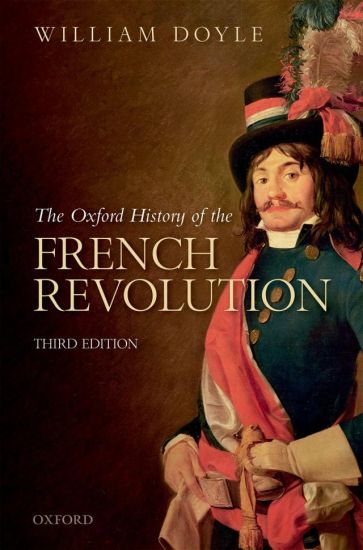
The Oxford History of the French Revolution

The Oxford History of the French Revolution

William Doyle

Oxford University Press
2018
nidottu
Since its first publication to mark the bicentenary of the French Revolution in 1989, this Oxford History has established itself as the Revolution's most authoritative and comprehensive one-volume history in English, and has recently been translated into Chinese. Running from the accession of Louis XVI in 1774, it traces the history of France through revolution, terror, and counter-revolution to the final triumph of Napoleon in 1802. It also analyses the impact of events in France upon the rest of Europe and the world beyond. The study shows how a movement which began with optimism and general enthusiasm soon became a tragedy, not only for the ruling orders, but also for the millions of ordinary people whose lives were disrupted by religious upheaval, economic chaos, and civil and international war. Now in its third edition, this volume has been fully updated in the light of current research, and includes an appendix surveying the past and present historiography of the revolutionary period.
The French Revolution

The French Revolution

William Doyle

Oxford University Press
2019
nidottu
The French Revolution is a time of history made familiar from Dickens, Baroness Orczy, and Tolstoy, as well as the legends of let them eat cake, and tricolours. Beginning in 1789, this period of extreme political and social unrest saw the end of the French monarchy, the death of an extraordinary number of people beneath the guillotine's blade during the Terror, and the rise of Napoleon, as well as far reaching consequences still with us today, such as the enduring ideology of human rights, and decimalization. In this Very Short Introduction, William Doyle introduces the French old regime and considers how and why it collapsed. Retelling the unfolding events of the revolution, he analyses why the revolutionaries quarrelled with the king, the church and the rest of Europe, why this produced Terror, and finally how it accomplished rule by a general. Doyle also discusses how and why the revolution destroyed the age-old cultural, institutional, and social structures in France and beyond. In this new edition, Doyle includes new sections highlighting the main developments in the field since the first edition, before exploring the legacy of the revolution in the form of rationality in public affairs and responsible government. ABOUT THE SERIES: The Very Short Introductions series from Oxford University Press contains hundreds of titles in almost every subject area. These pocket-sized books are the perfect way to get ahead in a new subject quickly. Our expert authors combine facts, analysis, perspective, new ideas, and enthusiasm to make interesting and challenging topics highly readable.
Aristocracy

Aristocracy

William Doyle

Oxford University Press
2010
nidottu
Aristocracies or nobilities dominated the social, economic, and institutional history of all European counties until only a few generations ago. The relics of their power, in traditions and behaviour, in architecture and the arts, are still all around us. This short introduction shows how ideas of aristocracy originated in ancient times, were transformed in the middle ages, and have only fallen apart over the last two centuries. The myths in which aristocracies have always sought to shroud themselves are stripped away, but the true sources of their enduring power are also revealed. Their outlook and behaviour affected the rest of society in innumerable and sometimes surprising ways, but perhaps most surprising was the way in which a centuries-old aristocratic hegemony crumbled away over the last two hundred years. In this Very Short Introduction William Doyle considers why this happend and what remains today. ABOUT THE SERIES: The Very Short Introductions series from Oxford University Press contains hundreds of titles in almost every subject area. These pocket-sized books are the perfect way to get ahead in a new subject quickly. Our expert authors combine facts, analysis, perspective, new ideas, and enthusiasm to make interesting and challenging topics highly readable.
Aristocracy and its Enemies in the Age of Revolution

Aristocracy and its Enemies in the Age of Revolution

William Doyle

Oxford University Press
2009
sidottu
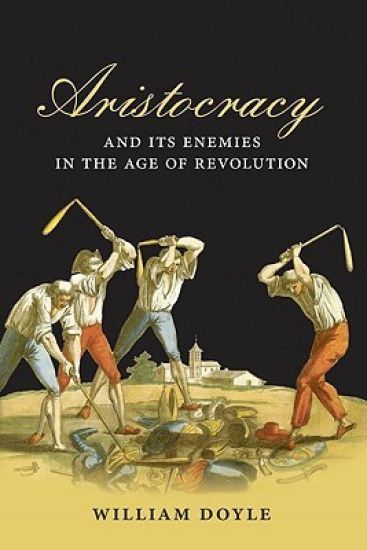
Since time immemorial Europe had been dominated by nobles and nobilities. In the eighteenth century their power seemed better entrenched than ever. But in 1790 the French revolutionaries made a determined attempt to abolish nobility entirely. 'Aristocracy' became the term for everything they were against, and the nobility of France, so recently the most dazzling and sophisticated elite in the European world, found itself persecuted in ways that horrified counterparts in other countries. Aristocracy and its Enemies traces the roots of the attack on nobility at this time, looking at intellectual developments over the preceding centuries, in particular the impact of the American Revolution. It traces the steps by which French nobles were disempowered and persecuted, a period during which large numbers fled the country and many perished or were imprisoned. In the end abolition of the aristocracy proved impossible, and nobles recovered much of their property. Napoleon set out to reconcile the remnants of the old nobility to the consequences of revolution, and created a titled elite of his own. After his fall the restored Bourbons offered renewed recognition to all forms of nobility. But nineteenth century French nobles were a group transformed and traumatized by the revolutionary experience, and they never recovered their old hegemony and privileges. As William Doyle shows, if the revolutionaries failed in their attempt to abolish nobility, they nevertheless began the longer term process of aristocratic decline that has marked the last two centuries.
The Ancien Regime

The Ancien Regime

William Doyle

Red Globe Press
2001
nidottu
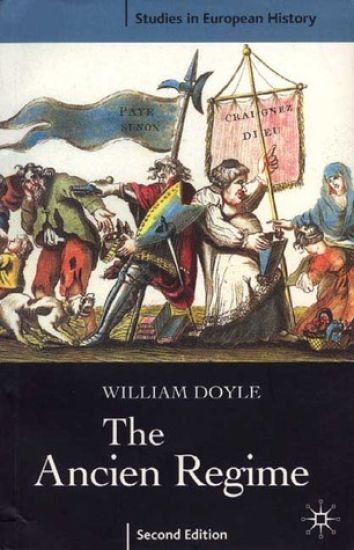
First published in 1986 as one of the first titles in the Studies in European History series, this book quickly established itself as the most concise and accessible guide to the meanings and hidden complexities of an apparently straightforward historical category, both in the history of France and Europe as a whole. The second edition now incorporates material which has widened and advanced the historical debate in the intervening years, and includes a completely revised and expanded bibliography.
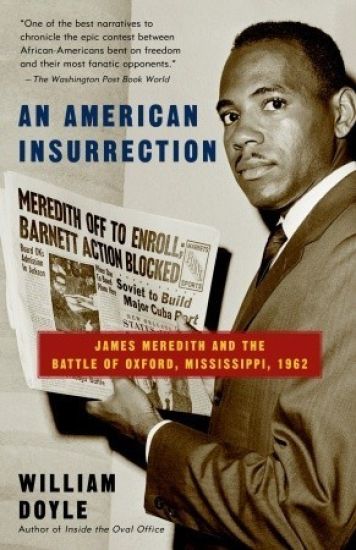
An American Insurrection: James Meredith and the Battle of Oxford, Mississippi, 1962
A definitive account of a key event in American history describes James Meredith's efforts to become the first African-American student at the University of Mississippi, the battle of radical segregationist Governor Ross Barnett to block it, the influx of government combat troops, and the armed rebellion that resulted. Reprint. 17,500 first printing.
A Soldier's Dream

A Soldier's Dream

William Doyle

New American Library
2012
pokkari
For six months in 2006, a charismatic young U.S. Army captain and Arab linguist named Travis Patriquin unleashed a diplomatic and cultural charm offensive upon the Sunni Arab sheiks of Anbar province, the heart of darkness of the Iraqi insurgency. He galvanized American support for the "Sunni Awakening," the tribal revolt against Al Qaeda that spread through the province and eventually across Iraq, a turning point that led to dramatically lower levels of violence in the country.The Awakening may not have succeeded without Patriquin, who was so beloved by Iraqis that they adopted him into their tribes and loved him as a brother. This is the true story of a man who loved Iraq, and a soldier who helped engineer the turning point of the Iraq War.It is the story of America's T.E. Lawrence--Travis Patriquin.
Napoleon Bonaparte: pocket GIANTS

Napoleon Bonaparte: pocket GIANTS

William Doyle

The History Press Ltd
2015
nidottu
In the space of less than twenty years, Napoleon turned Europe upside down. Rising from obscure origins to supreme power by a mixture of luck, audacity and military genius, he was able to harness the energies released by the French Revolution to resolve the internal problems which it had created, before turning his restless ambition to remodeling the political structure of the whole continent in a series of brilliant military victories. He was never able to finally subdue all his foreign enemies, and in the end they came together to bring him down; but by then it was impossible to restore what he had destroyed, or, in France, to destroy much of what he had created. The memory of his epic exploits, carefully refashioned during his last years in exile, haunted Europe for over a century, while the more distant effects of his career changed the whole destiny of the Americas and of the world.
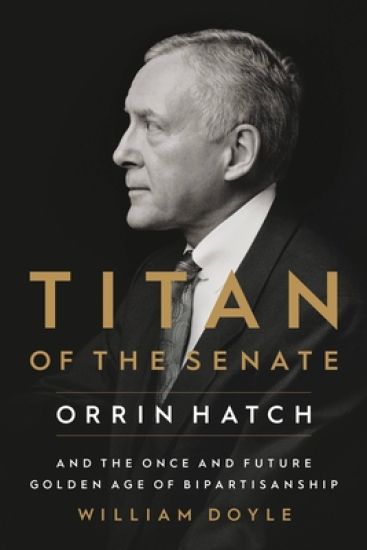
Titan of the Senate: Orrin Hatch and the Once and Future Golden Age of Bipartisanship
If greatness is measured by achievement, Orrin Hatch was the greatest U.S. senator of modern times--discover the life and career of the senator through archival material, original research, and exclusive interviews. This is the dramatic story of a conservative champion who shaped modern America--by leading a Golden Age of Bipartisanship and passing more legislation than any other Senator in the post-Vietnam era. Senator Orrin Hatch co-wrote the most sweeping civil rights bill since the 1960s, launched a health insurance program for 25,000,000 uninsured children, co-created the generic drug industry, and championed the greatest HIV/AIDS legislation in American history, while sponsoring or co-sponsoring over 750 pieces of legislation. Based on interviews with Hatch and many of his Senate colleagues plus over 10,000 pages of research from the U.S. Senate Historian's files, this is also the story of a leader who envisions a New Golden Age of Bipartisanship for the future of American politics.