Kirjojen hintavertailu. Mukana 12 016 292 kirjaa ja 12 kauppaa.

Kirjahaku

Etsi kirjoja tekijän nimen, kirjan nimen tai ISBN:n perusteella.

10 kirjaa tekijältä William Easterly

The White Man's Burden: Why the West's Efforts to Aid the Rest Have Done So Much Ill and So Little Good
Argues that western foreign aid efforts have done little to stem global poverty, citing how such organizations as the International Monetary Fund and the World Bank are not held accountable for ineffective practices that the author believes intrude into the inner workings of other countries. By the author of The Elusive Quest for Growth. Reprint. 50,000 first printing.
The White Man's Burden

The White Man's Burden

William Easterly

Oxford University Press
2007
nidottu
We are all aware of the extreme hunger and poverty that afflict the world's poor. We hear the facts, see the images on television, buy the T-shirt and are moved as individuals and governments to dig deep into our pockets. Yet what happens to all this aid? Why after 50 years and $2.3 trillion are there still children dying for lack of twelve cents medicine? Why are there so many people still living on less than $1 a day without clean water, food, sanitation, shelter, education or medicine? In The White Man's Burden William Easterly, acclaimed author and former economist at the World Bank, addresses these twin tragedies head on. While recognising the energy and compassion behind the campaign to make poverty history he argues urgently and powerfully that grand plans and good intentions are a part of the problem not the solution. Giving aid is not enough, we must ensure that it reaches the people who need it most and the only way to make this happens is through accountability and by learning from past experiences. Without claiming to have all the answers, William Easterly chastises the complacent and patronising attitude of the West that attempts to impose solutions from above. In this book, which is by turns angry, moving, irreverent but always rigorous, he calls on each and everyone of us to take responsibility, whether donors, aid workers or ordinary citizens, so that more aid reaches the people it is supposed to help, the mother who cannot feed her children, the little girl who has to collect firewood rather than go to school, the father who cannot work because he has been crippled by war.
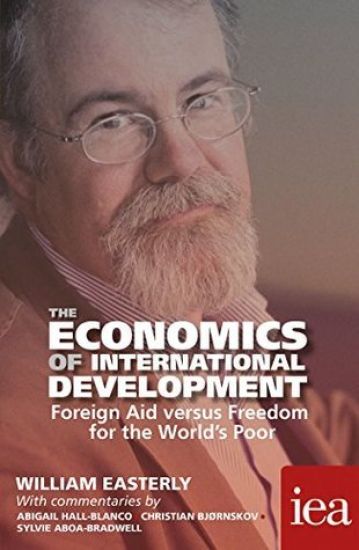
The Economics of International Development: Foreign Aid versus Freedom for the World's Poor
Foreign aid and overseas military intervention have been important and controversial political topics for over a decade. The government's controversial target to spend 0.7 per cent of national income on foreign aid has been widely welcomed by some, but strongly criticised by others. Furthermore, the controversy of the Iraq war rumbles on, even today. This is all happening amongst much instability in many parts of the world. In this short book, a number of authors challenge the assumption that we can bring about economic development and promote liberal democracies through direct foreign intervention - whether economic or military intervention. The lead author, William Easterly, drawing on his wide experience at the World Bank and as an academic, is a renowned sceptic of intervention. He points out that solutions proposed now to the problem of poverty are identical to solutions proposed decades ago - but the plans of rich governments simply do not successfully transform poor countries. Academics Abigail Hall-Blanco and Christian Bjornskov add further context and put forward empirical evidence that backs up Easterly's argument. Syvlie Aboa-Bradwell draws upon her own practical experience to give examples of how people in poor countries can be assisted to promote their own development. This book is essential reading for students, teachers and all interested in better understanding how to help - and how not to help - the world's most disadvantaged peoples.
Violent Saviors

Violent Saviors

William Easterly

John Murray Press
2025
sidottu
Development of the "Third World" is usually thought to be an idea that emerged in the 1950s as colonialism was ending. But the development idea emerged centuries earlier. Thinkers in the West had formulated a Development Right of Conquest, in which the West justified itself taking lands in the Rest because it offered higher material income to the people on those lands.Liberal thinkers questioned whether higher material income really improved well-being when people did not have the right to consent to their own progress. Economists from Adam Smith to Milton Friedman and Amartya Sen advocated commerce as a voluntary alternative to conquest.Liberal ideas eventually registered tremendous victories: the abolition of slavery, the end of colonialism, the decline of Communism, and the surge of trade between the West and the Rest.
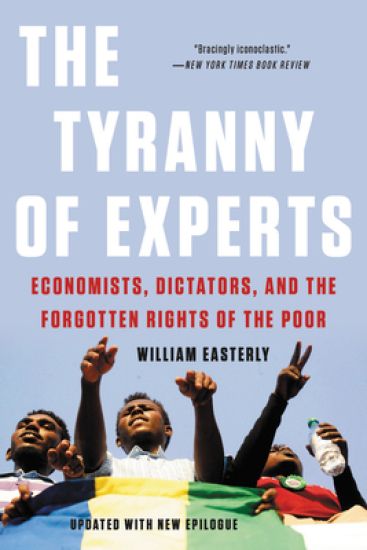
The Tyranny of Experts (Revised)

The Tyranny of Experts (Revised)

William Easterly

Basic Books
2021
pokkari
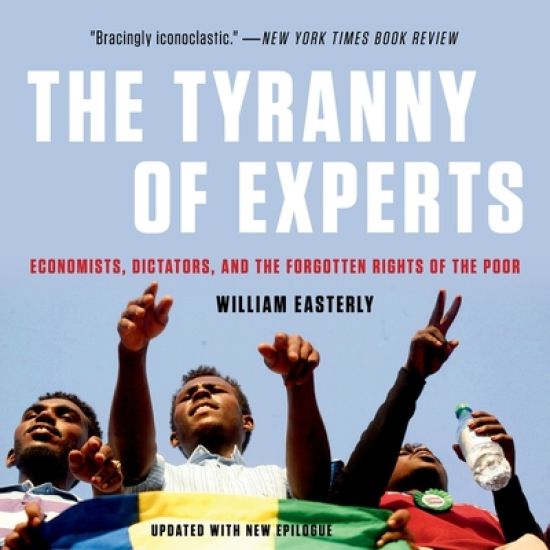
In The Tyranny of Experts, renowned economist William Easterly uncovers our failing efforts to fight global poverty. The expert approved, top-down approach to development has not only made little lasting progress, but has proven a convenient rationale for generations of human rights violations perpetrated by colonialists, post-colonial dictators, and US foreign policymakers. Easterly presents a devastating critique of the blighted record of authoritarian development, demonstrating how traditional anti-poverty tactics have both trampled the freedom of the world's poor and suppressed a vital debate about alternative approaches to solving global poverty. Although relief agencies, such as the World Bank and the Gates Foundation, are still regarded as both well-meaning and effective, they're founded on the mistaken belief that wise technocrats from the West will be the saviors of helpless victims from the Rest. They too often support dictators, hoping that economic development will lead naturally to democracy.In this revised edition, Easterly brings in new research that update his masterful critiques for the present. He reveals the fundamental errors inherent in the long-celebrated top-down approach, and offers a new model for Western relief agencies and developing countries alike: a model that, because it is predicated on respect for the rights of poor people, has the power to end global poverty once and for all.
Violent Saviors: The West's Conquest of the Rest
A celebrated economist argues that economic development is not really development unless everyone has the right to consent to their own progress For centuries, the developed Western world has exploited the less-developed "Rest" in the name of progress, conquering the Americas, driving the Atlantic slave trade, and colonizing Africa and Asia. Throughout, the West has justified this global conquest by the alleged material gains it brought to the conquered. But the colonial experiment unintentionally revealed how much of a demand there was for self-determination, and not just for relief from poverty. In Violent Saviors, renowned economist William Easterly examines how the demand for agency has always been at the heart of debates on development. Spanning nearly four centuries of global history, Easterly argues that commerce, rather than conquest, could meet the need for equal rights as well as the need for prosperity. Looking to the liberal economic ideas of thinkers like Adam Smith, Milton Friedman, and Amartya Sen, Easterly shows how the surge in global trade has given agency to billions of people for the first time. Narrating the long debate between conquest and commerce, Easterly offers a new and urgent perspective on global economics: the demands for agency, dignity, and respect must be at the center of the global fight against poverty.
The Tyranny of Experts Lib/E: Economists, Dictators, and the Forgotten Rights of the Poor
In this "bracingly iconoclastic" book (New York Times Book Review), a renowned economics scholar breaks down the fight to end global poverty and the rights that poor individuals have had taken away for generations.In The Tyranny of Experts, renowned economist William Easterly examines our failing efforts to fight global poverty, and argues that the "expert approved" top-down approach to development has not only made little lasting progress, but has proven a convenient rationale for decades of human rights violations perpetrated by colonialists, postcolonial dictators, and US and UK foreign policymakers seeking autocratic allies. Demonstrating how our traditional antipoverty tactics have both trampled the freedom of the world's poor and suppressed a vital debate about alternative approaches to solving poverty, Easterly presents a devastating critique of the blighted record of authoritarian development. In this masterful work, Easterly reveals the fundamental errors inherent in our traditional approach and offers new principles for Western agencies and developing countries alike: principles that, because they are predicated on respect for the rights of poor people, have the power to end global poverty once and for all.
The Tyranny of Experts: Economists, Dictators, and the Forgotten Rights of the Poor
In this "bracingly iconoclastic" book (New York Times Book Review), a renowned economics scholar breaks down the fight to end global poverty and the rights that poor individuals have had taken away for generations.In The Tyranny of Experts, renowned economist William Easterly examines our failing efforts to fight global poverty, and argues that the "expert approved" top-down approach to development has not only made little lasting progress, but has proven a convenient rationale for decades of human rights violations perpetrated by colonialists, postcolonial dictators, and US and UK foreign policymakers seeking autocratic allies. Demonstrating how our traditional antipoverty tactics have both trampled the freedom of the world's poor and suppressed a vital debate about alternative approaches to solving poverty, Easterly presents a devastating critique of the blighted record of authoritarian development. In this masterful work, Easterly reveals the fundamental errors inherent in our traditional approach and offers new principles for Western agencies and developing countries alike: principles that, because they are predicated on respect for the rights of poor people, have the power to end global poverty once and for all.