Kirjojen hintavertailu. Mukana 12 016 292 kirjaa ja 12 kauppaa.

Kirjahaku

Etsi kirjoja tekijän nimen, kirjan nimen tai ISBN:n perusteella.

5 kirjaa tekijältä William G. Howell

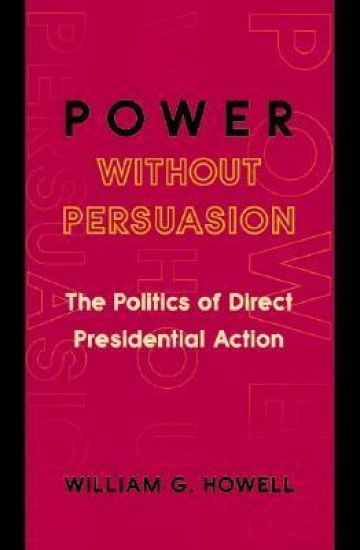
Power without Persuasion

Power without Persuasion

William G. Howell

Princeton University Press
2003
pokkari
Since the early 1960s, scholarly thinking on the power of U.S. presidents has rested on these words: "Presidential power is the power to persuade." Power, in this formulation, is strictly about bargaining and convincing other political actors to do things the president cannot accomplish alone. Power without Persuasion argues otherwise. Focusing on presidents' ability to act unilaterally, William Howell provides the most theoretically substantial and far-reaching reevaluation of presidential power in many years. He argues that presidents regularly set public policies over vocal objections by Congress, interest groups, and the bureaucracy. Throughout U.S. history, going back to the Louisiana Purchase and the Emancipation Proclamation, presidents have set landmark policies on their own. More recently, Roosevelt interned Japanese Americans during World War II, Kennedy established the Peace Corps, Johnson got affirmative action underway, Reagan greatly expanded the president's powers of regulatory review, and Clinton extended protections to millions of acres of public lands. Since September 11, Bush has created a new cabinet post and constructed a parallel judicial system to try suspected terrorists. Howell not only presents numerous new empirical findings but goes well beyond the theoretical scope of previous studies. Drawing richly on game theory and the new institutionalism, he examines the political conditions under which presidents can change policy without congressional or judicial consent. Clearly written, Power without Persuasion asserts a compelling new formulation of presidential power, one whose implications will resound.
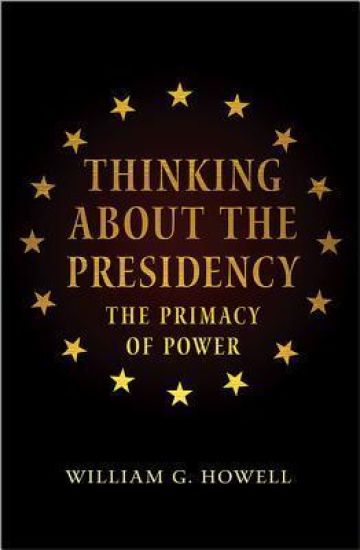
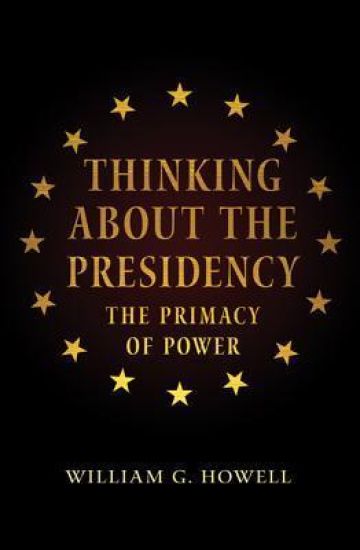
Thinking about the Presidency

Thinking about the Presidency

William G. Howell

Princeton University Press
2013
sidottu
All American presidents, past and present, have cared deeply about power--acquiring, protecting, and expanding it. While individual presidents obviously have other concerns, such as shaping policy or building a legacy, the primacy of power considerations--exacerbated by expectations of the presidency and the inadequacy of explicit powers in the Constitution--sets presidents apart from other political actors. Thinking about the Presidency explores presidents' preoccupation with power. Distinguished presidential scholar William Howell looks at the key aspects of executive power--political and constitutional origins, philosophical underpinnings, manifestations in contemporary political life, implications for political reform, and looming influences over the standards to which we hold those individuals elected to America's highest office. Howell shows that an appetite for power may not inform the original motivations of those who seek to become president. Rather, this need is built into the office of the presidency itself--and quickly takes hold of whoever bears the title of Chief Executive. In order to understand the modern presidency, and the degrees to which a president succeeds or fails, the acquisition, protection, and expansion of power in a president's political life must be recognized--in policy tools and legislative strategies, the posture taken before the American public, and the disregard shown to those who would counsel modesty and deference within the White House. Thinking about the Presidency assesses how the search for and defense of presidential powers informs nearly every decision made by the leader of the nation.
Thinking About the Presidency

Thinking About the Presidency

William G. Howell

Princeton University Press
2015
pokkari
All American presidents, past and present, have cared deeply about power--acquiring, protecting, and expanding it. While individual presidents obviously have other concerns, such as shaping policy or building a legacy, the primacy of power considerations--exacerbated by expectations of the presidency and the inadequacy of explicit powers in the Constitution--sets presidents apart from other political actors. Thinking about the Presidency explores presidents' preoccupation with power. Distinguished presidential scholar William Howell looks at the key aspects of executive power--political and constitutional origins, philosophical underpinnings, manifestations in contemporary political life, implications for political reform, and looming influences over the standards to which we hold those individuals elected to America's highest office. Howell shows that an appetite for power may not inform the original motivations of those who seek to become president. Rather, this need is built into the office of the presidency itself--and quickly takes hold of whoever bears the title of Chief Executive. In order to understand the modern presidency, and the degrees to which a president succeeds or fails, the acquisition, protection, and expansion of power in a president's political life must be recognized--in policy tools and legislative strategies, the posture taken before the American public, and the disregard shown to those who would counsel modesty and deference within the White House. Thinking about the Presidency assesses how the search for and defense of presidential powers informs nearly every decision made by the leader of the nation. In a new preface, Howell reflects on presidential power during the presidency of Barack Obama.
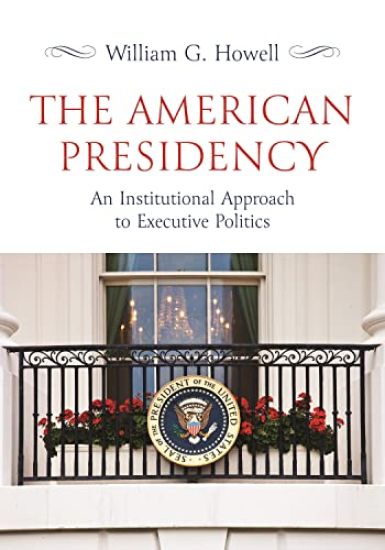
The American Presidency

The American Presidency

William G. Howell

PRINCETON UNIVERSITY PRESS
2023
pokkari
How institutions shape the American presidencyThis incisive undergraduate textbook emphasizes the institutional sources of presidential power and executive governance, enabling students to think more clearly and systematically about the American presidency at a time when media coverage of the White House is awash in anecdotes and personalities. William Howell offers unparalleled perspective on the world’s most powerful office, from its original design in the Constitution to its historical growth over time; its elections and transitions to governance; its interactions with Congress, the courts, and the federal bureaucracy; and its persistent efforts to shape public policy. Comprehensive in scope and rooted in the latest scholarship, The American Presidency is the perfect guide for studying the presidency at a time of acute partisan polarization and popular anxiety about the health and well-being of the republic.Focuses on the institutional structures that presidents must navigate, the incentives and opportunities that drive them, and the constraints they routinely confrontShows how legislators, judges, bureaucrats, the media, and the broader public shape the contours and limits of presidential powerEncourages students to view the institutional presidency as not just an object of study but a way of thinking about executive politicsHighlights the lasting effects of important historical moments on the institutional presidencyEnables students to grapple with enduring themes of power, rules, norms, and organization that undergird democracy
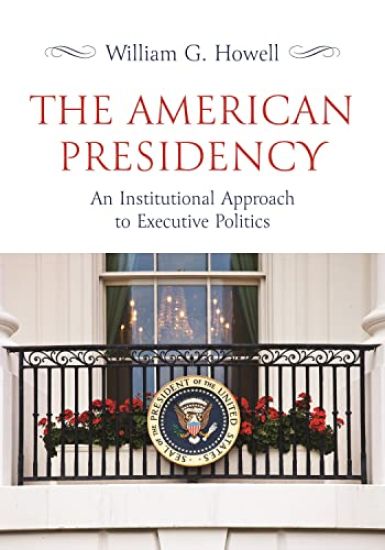
The American Presidency

The American Presidency

William G. Howell

PRINCETON UNIVERSITY PRESS
2023
sidottu
How institutions shape the American presidencyThis incisive undergraduate textbook emphasizes the institutional sources of presidential power and executive governance, enabling students to think more clearly and systematically about the American presidency at a time when media coverage of the White House is awash in anecdotes and personalities. William Howell offers unparalleled perspective on the world’s most powerful office, from its original design in the Constitution to its historical growth over time; its elections and transitions to governance; its interactions with Congress, the courts, and the federal bureaucracy; and its persistent efforts to shape public policy. Comprehensive in scope and rooted in the latest scholarship, The American Presidency is the perfect guide for studying the presidency at a time of acute partisan polarization and popular anxiety about the health and well-being of the republic.Focuses on the institutional structures that presidents must navigate, the incentives and opportunities that drive them, and the constraints they routinely confrontShows how legislators, judges, bureaucrats, the media, and the broader public shape the contours and limits of presidential powerEncourages students to view the institutional presidency as not just an object of study but a way of thinking about executive politicsHighlights the lasting effects of important historical moments on the institutional presidencyEnables students to grapple with enduring themes of power, rules, norms, and organization that undergird democracy