Kirjojen hintavertailu. Mukana 11 699 587 kirjaa ja 12 kauppaa.

Kirjahaku

Etsi kirjoja tekijän nimen, kirjan nimen tai ISBN:n perusteella.

4 kirjaa tekijältä William G. Mayer

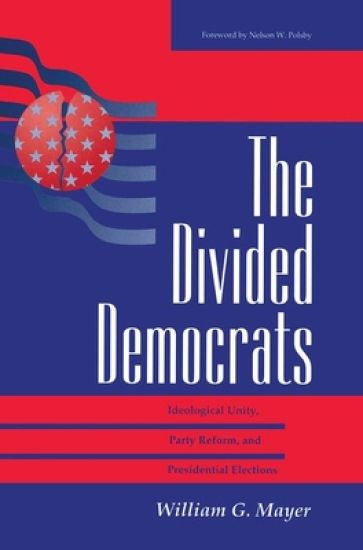
The Divided Democrats

The Divided Democrats

William G. Mayer

Routledge
2019
sidottu
Why have the Democrats lost five of the last seven presidential elections, even though polls consistently show that more Americans identify with that party than with the Republican party? And why are Democratic presidential nomination races usually so much more bitter and fractious than those held by the Republicans?The answer, argues William Mayer
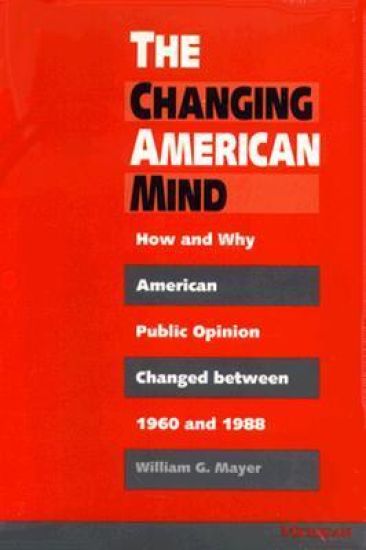
The Changing American Mind

The Changing American Mind

William G. Mayer

The University of Michigan Press
1992
nidottu
Have Americans become more or less tolerant of racial discrimination? More or less supportive of abortion? Is a new tax revolt underway? Did a "new conservative mood" dominate elections and policy discussions in the early 1980s?Popular and academic discussions about the past and future of American politics often turn on the question of whether and how public opinion has changed. Yet for all the talk about such matters, observes political scientist William G. Mayer, there is surprisingly little hard evidence on many of these questions. The Changing American Mind is designed to fill that gap, by presenting a comprehensive history of American public opinion over the last three decades: how it changed, why it changed, and what difference that makes for American politics.The Changing American Mind is important reading for all who are interested in American politics and public opinion. Its appendixes, which include the results of more than 250 survey questions that have been asked regularly of national samples over the last three decades, make it an indispensable reference source for everyone who studies or participates in American politics.
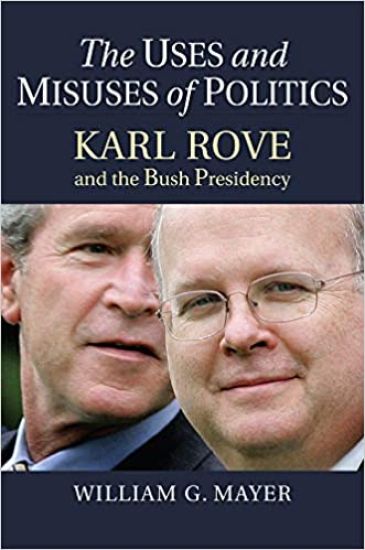
The Uses and Misuses of Politics

The Uses and Misuses of Politics

William G. Mayer

University Press of Kansas
2021
sidottu
The Uses and Misuses of Politics is a detailed examination of the politics of George W. Bush's presidency, focusing on the work-and the mistakes-of presidential political advisor Karl Rove. In his role as political advisor Karl Rove stands apart from his numerous counterparts in modern American politics in three major ways. The first measure of Rove's distinctiveness is the totality of his direction over Bush's political career. Simply put, George W. Bush never won an election, of any kind, in which Rove was not the dominant, even sole campaign strategist. A second important difference between Karl Rove and other major presidential campaign strategists was the role that Rove played in helping formulate policy after Bush became president. In fact, Rove became the first presidential aide to both provide political advice to a sitting president while at the same time controlling the policy levers inside the White House, especially as an advocate for his own agenda in the areas of domestic policy. Finally, Karl Rove is noteworthy for the scope of his ambitions: his goal for the Bush presidency was to create a durable Republican majority that would dominate American politics for the next several decades.,br>Even though theories of party systems and realignments have received serious challenges, Karl Rove was a believer; providing a key insight into how he approached his work with the Bush presidency. Where previous realignments were the result of historical accidents and recognized only after the fact, Karl Rove believed he could engineer the next one.In The Uses and Misuses of Politics William G. Mayer analyzes Karl Rove's performance as presidential advisor: the roles he played, the advice he gave, and how the Republican Party fared with Rove as its principal strategist. By offering the reader a comprehensive assessment, Mayer provides valuable insight into the larger, enduring, and critical questions: What is the proper role of politics in the contemporary presidency? When does politics enhance a nation's long-term welfare, and what does it detract from it? And what positive contributions can political advisors make to a modern-day president?
The Divided Democrats

The Divided Democrats

William G. Mayer

Westview Press Inc
1996
nidottu
Do Democrats have greater difficulty maintaining party unity than Republicans? William Mayer argues that they do, chiefly because the Democrats are a more ideologically diverse, less cohesive party. After extensively documenting the Democrats' traditional problems of division and disagreement, Mayer presents evidence suggesting that the Republican advantage over the Democrats has finally started to narrow—raising important questions about the future of the Republican coalition.