Kirjojen hintavertailu. Mukana 11 420 598 kirjaa ja 12 kauppaa.

Kirjahaku

Etsi kirjoja tekijän nimen, kirjan nimen tai ISBN:n perusteella.

6 kirjaa tekijältä William G. Robbins

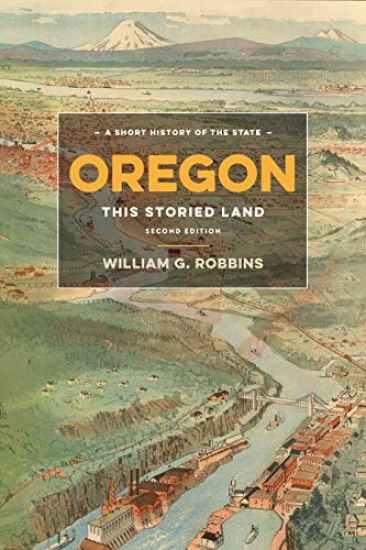
Oregon

Oregon

William G. Robbins

University of Washington Press
2020
pokkari
Oregon's landscape boasts brilliant waterfalls, towering volcanoes, productive river valleys, and far-reaching high deserts. People have lived in the region for at least twelve thousand years, during which they established communities; named places; harvested fish, timber, and agricultural products; and made laws and choices that both protected and threatened the land and its inhabitants.William G. Robbins traces the state's history of commodification and conservation, despair and hope, progress and tradition. This revised and updated edition features a new introduction and epilogue with discussion of climate change, racial disparity, immigration, and discrimination. Revealing Oregon's rich social, economic, cultural, and ecological complexities, Robbins upholds the historian's commitment to critical inquiry, approaching the state's past with both open-mindedness and a healthy dose of skepticism about the claims of Oregon's boosters.
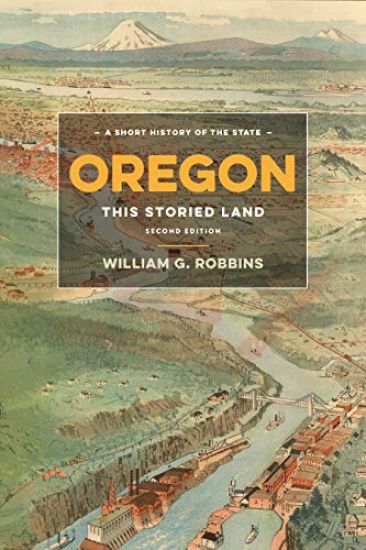
Oregon

Oregon

William G. Robbins

University of Washington Press
2020
sidottu
Oregon's landscape boasts brilliant waterfalls, towering volcanoes, productive river valleys, and far-reaching high deserts. People have lived in the region for at least twelve thousand years, during which they established communities; named places; harvested fish, timber, and agricultural products; and made laws and choices that both protected and threatened the land and its inhabitants.William G. Robbins traces the state's history of commodification and conservation, despair and hope, progress and tradition. This revised and updated edition features a new introduction and epilogue with discussion of climate change, racial disparity, immigration, and discrimination. Revealing Oregon's rich social, economic, cultural, and ecological complexities, Robbins upholds the historian's commitment to critical inquiry, approaching the state's past with both open-mindedness and a healthy dose of skepticism about the claims of Oregon's boosters.
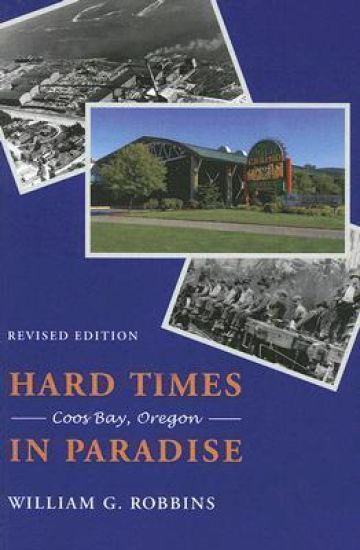
Hard Times in Paradise

Hard Times in Paradise

William G. Robbins

University of Washington Press
2006
pokkari
Blessed with vast expanses of virgin timber, a good harbor, and a San Francisco market for its lumber, the Coos Bay area once dubbed itself "a poor man's paradise." A new Prologue and Epilogue by the author bring this story of gyppo loggers, longshoremen, millwrights, and whistle punks into the twenty-first century, describing Coos Bay's transition from timber town to a retirement and tourist community, where the site of a former Weyerhaeuser complex is now home to the Coquille Indian Tribe's The Mill Casino.
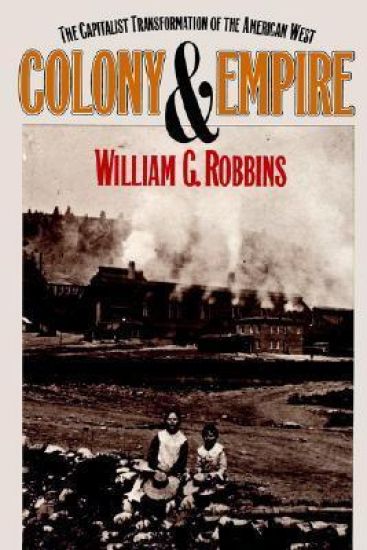
Colony and Empire

Colony and Empire

William G. Robbins

University Press of Kansas
1994
nidottu
This work surveys the way that capitalist ideology and institutions have transformed the West. It focuses on how a region of traders and hunters became an area driven by industrialism.
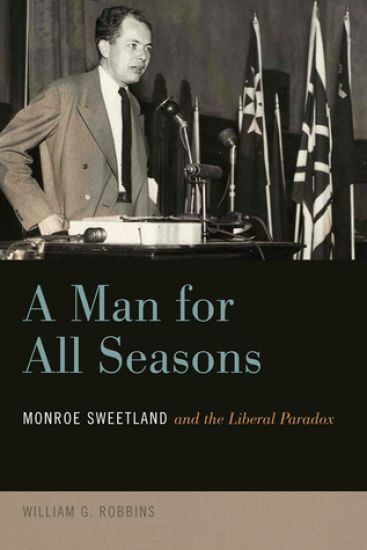
A Man for All Seasons

A Man for All Seasons

William G. Robbins

Oregon State University
2015
nidottu
The life of prominent Oregon political leader Monroe Sweetland spans the spectrum of 20th-century America. Through seven decades, Sweetland experienced the economic collapse of the Great Depression, the unparalleled violence of a nation at war, the divisiveness of Cold War politics, and the cultural and political turmoil of the Vietnam War.Historian William G. Robbins illuminates the wrenching transformation of American political culture in A Man for All Seasons. Racial and economic inequalities motivated much of Sweetland’s civic life, including his lifelong memberships in the American Civil Liberties Committee, the National Association for the Advancement of Colored People, the Urban League, the Japanese American Citizens League, and the Red Cross, where Sweetland worked repatriating American prisoners of war after Japan’s surrender.Robbins’ portrait is holistic, exploring Sweetland’s socialist beginnings, inconsistencies in his politics—especially during the Cold War—and his regional legacy. He was the most important person in the resurgence of the modern, liberal Oregon Democratic Party from the late 1940s to the 1960s. He joined the National Education Association in 1964 and became the driving force behind the Bilingual Education Act of 1968 and the fight for the age-18 vote, achieved in the ratification of the 26th amendment in 1971. Monroe Sweetland was a nationally prominent figure, whose fights bequeathed to modern America important legislation that shaped its political landscape.
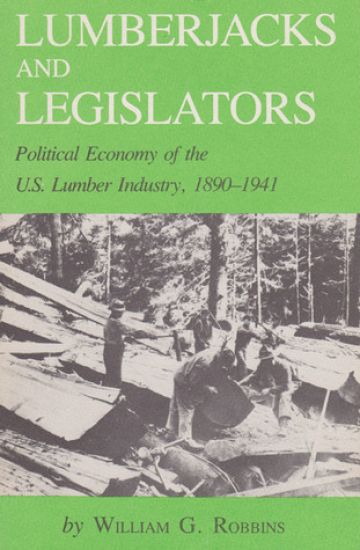
Lumberjacks and Legislators

Lumberjacks and Legislators

William G. Robbins

Texas A M University Press
2000
nidottu
For years the logging industry and the rich timberlands of the East and West coasts have evoked images of Jigger Jones and Paul Bunyan, lusty lumbermen of folk history. Behind these myths, however, lie the realities of ruthless competition, heedless exploitation of forestlands, and massive overproduction that once threatened to destroy the lumber industry. William G. Robbins reveals a sharply revisionist view of the lumber industry in the first half of the twentieth century, a period of drastic growth and change. He offers a unique national perspective on the dominant figures in logging--the large-scale plant, mill, and timberland owners whose decisions were shaped by profit seeking. It is a story of unbalanced production, economic gains and losses, the slow maturation of industrial capitalism, and the alarming toll in social and human costs. Modernizers in the industry developed trade associations as a means of controlling the widespread disorder. But these associations, dependent of voluntary and cooperative efforts, were relatively ineffective in the early years of the twentieth century. The fortunes of the lumber industry continued to fluctuate wildly until the Second World War, when lumbermen gained much of the legislative support they had sought so long from the federal government. This account will especially appeal to students of lumber and forest history as well as to historians, political scientists, and economists seeking a new approach to American political economy.