
Kirjahaku
Etsi kirjoja tekijän nimen, kirjan nimen tai ISBN:n perusteella.
21 kirjaa tekijältä William Gay

It's 1952, and E.F. Bloodworth is finally coming home to Ackerman's Field, Tennessee. Itinerant banjo picker and volatile vagrant, he's been gone ever since he gunned down a deputy thirty years before. Two of his sons won't be home to greet him: Warren lives a life of alcoholic philandering down in Alabama, and Boyd has gone to Detroit in vengeful pursuit of his wife and the peddler she ran off with. His third son, Brady, is still home, but he's an addled soothsayer given to voodoo and bent on doing whatever it takes to keep E.F. from seeing the wife he abandoned. Only Fleming, E.F.'s grandson, is pleased with the old man's homecoming, but Fleming's life is soon to careen down an unpredictable path hewn by the beautiful Raven Lee Halfacre. In the great Southern tradition of Faulkner, Styron, and Cormac McCarthy, William Gay wields a prose as evocative and lush as the haunted and humid world it depicts. Provinces of Night is a tale redolent of violence and redemption-a whiskey-scented, knife-scarred novel whose indelible finale is not an ending nearly so much as it is an apotheosis.
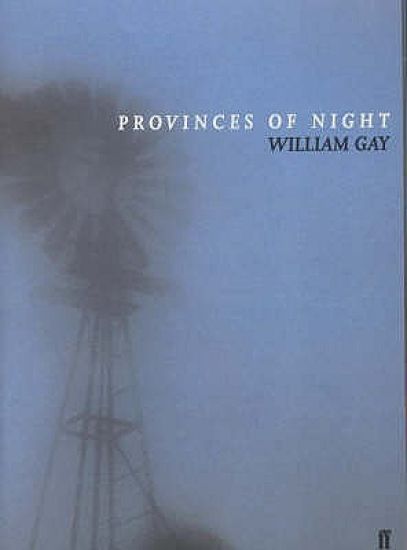
The year is 1952, and E.F. Bloodworth has returned to his home - a forgotten corner of Tennessee - after twenty years of roaming. The wife he walked out on has withered and faded. His three sons are grown and angry. Warren is a womanising alcoholic; Boyd is driven by jealousy to hunt down his wife's lover; and Brady puts hexes on his enemies from his mother's porch. Only Fleming, the old man's grandson, treats him with respect and sees past all the hatred, realising the way it can poison a man's soul. It is ultimately the love of Raven Lee, a sloe-eyed beauty from another town, that gives Fleming the courage to reject his family's curse.In a tale redolent with the crumbling loyalties and age-old strife of the post-war American South made familiar to us by Cormac McCarthy, Gay's characters inhabit a world driven by blood ties that strangle as they bind. A coming of age novel, a love story, and a portrait of a family torn apart, Provinces of Night introduced a distinctive new voice in American fiction and a superb cast of characters.

Billy Edgewater, discharged from the Navy and touched by a rising desperation, sets out hitchhiking home to East Tennessee, where his father is slowly dying. On the road, separately, are Sudy and Bradshaw, brother and sister, and a one-armed con man named Roosterfish. All, in one way or another, have their pasts and futures embroiled with D.L. Harkness, a predator in all the ways there are. Hounded at every turn by scams, vigilantes, grievous loss, and violence, Edgewater navigates the long road home, searching for a place that may be nothing more than memory.Hailed by the New York Times Book Review as 'a seemingly effortless storyteller', with this novel William Gay once again shows why his work is often talked about alongside the great Southern novelists, William Faulkner, Flannery O'Connor and Cormac McCarthy.

Little Sister Death is the stunning 'lost' horror novel of the late William Gay. Inspired by the famous 19th Century Bell Witch haunting of Tennessee, it follows the unravelling life of David Binder, a writer who moves his young family to a haunted farmstead to try and find inspiration for his faltering work.Beautifully written and structured, Little Sister, Death is a loving and faithful addition to the field of classic horror writing, eschewing any notions of irony or post-modern tricks as it aims, instead, straight for your soul.

William Gay established himself as "the big new name to include in the storied annals of Southern Lit" (Esquire) with his debut novel, The Long Home, and his highly acclaimed follow-up, Provinces of Night. Like Faulkner's Mississippi and Cormac McCarthy's American West, Gay's Tennessee is redolent of broken souls. Mining that same fertile soil, his debut collection, I Hate to See That Evening Sun Go Down, brings together thirteen stories charting the pathos of interior lives. Among the colorful people readers meet are: old man Meecham, who escapes from his nursing home only to find his son has rented their homestead to "white trash"; Quincy Nell Qualls, who not only falls in love with the town lothario but, pregnant, faces an inescapable end when he abandons her; Finis and Doneita Beasley, whose forty-year marriage is broken up by a dead dog; and Bobby Pettijohn -- awakened in the night by a search party after a body is discovered in his back woods. William Gay expertly sets these conflicted characters against lush backcountry scenery and defies our moral logic as we grow to love them for the weight of their human errors.


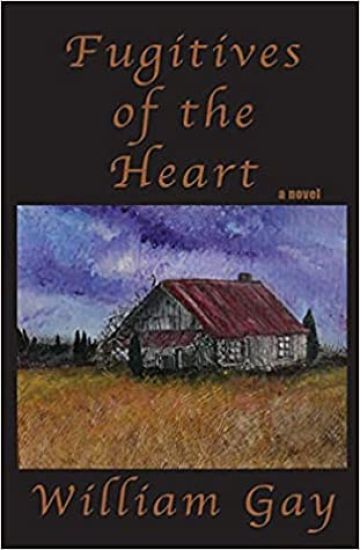
In this, William Gay's last posthumous novel, we have his homage to Twain's Huckleberry Finn. Set in post-World War II Tennessee, in Gay's familiar "Harrikan" area. Marion Yates is a teenager recently orphaned when his notoriously licentious mother dies. When Yates eyes a pocketknife at the local grocery-hardware store, he is befriended by Black Crowe, who buys the knife for him. Yates in turn nurses Crowe through a work explosion, and the two form a seemingly lasting friendship. Yates falls in love, of course, and of course the love is thwarted. First love, racism, and betrayal-these are all topped with Gay's signature wry humor in his signature Tennessee fictional setting. Gay again proves himself a master of prose.
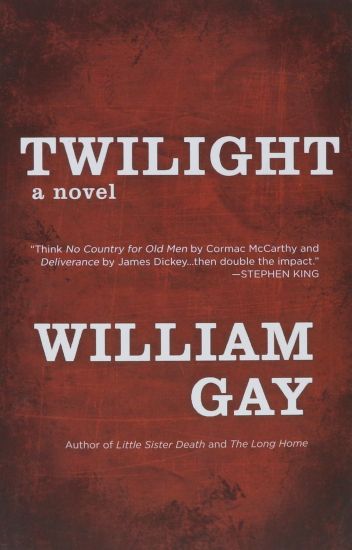
Suspecting that something is amiss with their father s burial, teenager Kenneth Tyler and his sister Corrie venture to his gravesite and make a horrific discovery: their father, a whiskey bootlegger, was not actually buried in the casket they bought for him. Worse, they learn that the undertaker, Fenton Breece, has been grotesquely manipulating the dead. Armed with incriminating photographs, Tyler becomes obsessed with bringing the perverse undertaker to justice. But first he must outrun Granville Sutter, a local strongman and convicted murderer hired by Fenton to destroy the evidence. What follows is an adventure through the Harrikin, an eerie backwoods filled with tangled roads, rusted machinery, and eccentric squattersold men, witches, and families among themwho both shield and imperil Tyler as he runs for safety. With his poetic, haunting prose, William Gay rewrites the rules of the gothic fairytale while exploring the classic Southern themes of good and evil."
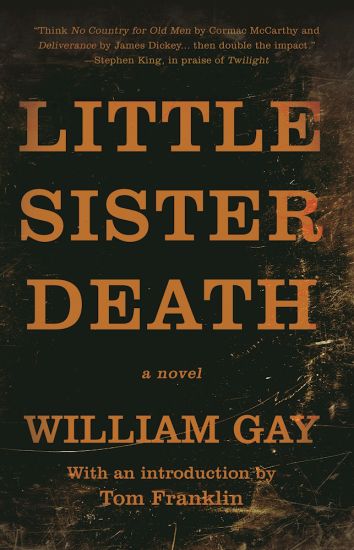
David Binder is a young, successful writer living in Chicago and suffering from writer's block. He stares at the blank page, and the blank page stares back -- until inspiration strikes in the form of a ghost story that captivated him as a child. With his pregnant wife and young daughter in tow, he sets out to explore the myth of Virginia Beale, Faery Queen of the Haunted Dell. But as his investigation takes him deeper and deeper into the legacy of blood and violence that casts its shadow over the old Beale farm, Binder finds himself obsessed with a force that's as wicked as it is seductive. A stirring literary rendition of Tennessee's famed Curse of the Bell Witch, Little Sister Death skillfully toes the line between Southern Gothic and horror, and further cements William Gay's legacy as not only one of the South's finest writers, but among the best that American literature has to offer.
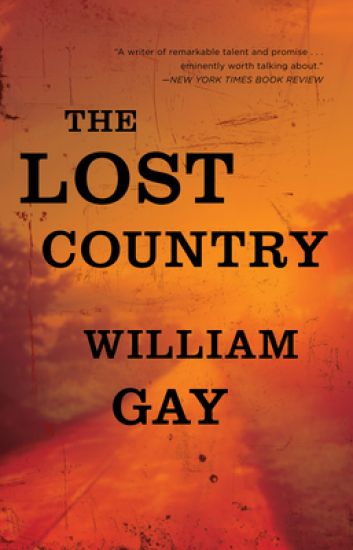
Ten years after it was first announced, Dzanc is proud to deliver the lost novel from a master of the Southern Gothic--the work William Gay fans have anticipated for a decade.Billy Edgewater is a harbinger of doom. Estranged from his family, discharged from the Navy, and touched by a rising desperation, he sets out hitchhiking home to East Tennessee, where his father is slowly dying. On the road, separately, are Sudy and Bradshaw, brother and sister, and a one-armed con man named Roosterfish. All, in one way or another, have their pasts and futures embroiled with D.L. Harkness, a predator in all the ways there are. Hounded at every turn by scams, vigilantes, grievous loss, and unspeakable violence, Edgewater navigates the long road home, searching for a place that may be nothing but memory. Hailed as "a seemingly effortless storyteller" by the New York Times Book Review and "a writer of striking talent" by the Chicago Tribune, William Gay, with this long-awaited novel, secures his place alongside Faulkner, O'Connor, and McCarthy as one of the greatest novelists in the Southern Gothic tradition.
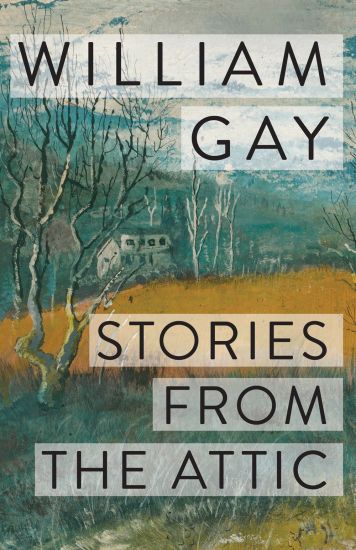
From a celebrated master of the Southern Gothic comes a last collection of hard-hitting short fiction, his final posthumous work Beloved for his novels Twilight, The Long Home, and The Lost Country and his groundbreaking collection I Hate to See That Evening Sun Go Down, William Gay returns with one final posthumous collection of short stories, adapted from the archive found after his death in February 2012. In addition to previously unpublished short stories, Stories from the Attic includes fragments from two of the unpublished novels that were works in progress at the time of his death. Marked by his signature skill and bare-knuckled insight, this collection is a must-read for William Gay devotees and fans of Southern short fiction.
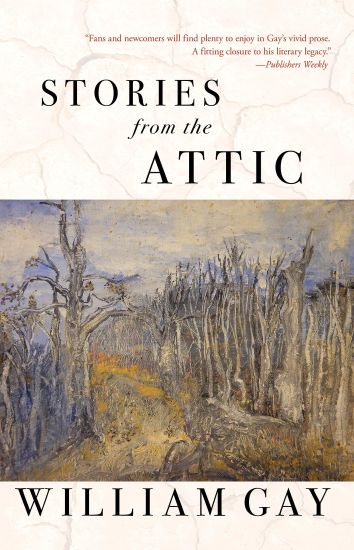
From a celebrated master of the Southern Gothic comes a last collection of hard-hitting short fiction, his final posthumous work Beloved for his novels Twilight, The Long Home,and The Lost Country ,and his groundbreaking collection I Hate to See That Evening Sun Go Down, William Gay returns with one final posthumous collection of short stories, adapted from the archive found after his death in February 2012. In addition to previously unpublished short stories, Stories from the Attic includes fragments from two of the unpublished novels that were works in progress at the time of his death. Marked by his signature skill and bare-knuckled insight, this collection is a must-read for William Gay devotees and fans of Southern short fiction.




Året är 1952, och gamle E.F. Bloodworth är slutligen på väg tillbaka till Ackerman’s Field – ett bortglömt hörn av Tennessee – efter tjugo år ute på vägarna som banjospelande bluesman. Två av hans söner, nu fullvuxna och arga, kommer inte vara där för att välkomna honom: Warren lever ett liv som alkoholiserad kvinnojägare nere i Alabama, och Boyd är i Detroit på jakt efter sin hustrus älskare. Den tredje sonen, Brady, är fortfarande kvar, en siare som förhäxar sina fiender med voodoo och som är beredd att göra vad som helst för att förhindra att E.F. träffar hustrun han övergav. Endast Fleming, den gamle mannens sonson, kan se förbi hatet och missämjan, men får med tiden ofrånkomligt lära sig vad bitterhet kostar.William Gay frambringar en prosa som är lika stämningsfull och frodig som den hemsökta och fuktiga värld den skildrar. Nattliga nejder är en berättelse om våld och försoning, befolkad av karaktärer i en värld som drivs av blodsband lika kvävande som bindande.Om författaren:Som med så mycket annat relaterat till William Gay tycks det finnas mer berättelser om honom än fakta. Han föddes 27 oktober eller det är i alla fall datumet hans familj brukade fira honom på. Men själva årtalet har varit starkt ifrågasatt. Han tyckte själv om att säga att han föddes 1941, men vid en tidpunkt backade han några år och 1943 blev därefter del av hans biografi. Men enligt hans yngre bror föddes William 1939. Så där håller det på.Vad man däremot vet är att han började skriva i femtonårsåldern och att han debuterade först 1998, med romanen The Long Home, när han var i femtiofemårsåldern. Läsare och kritiker blev hänförda. Här var en författare med styrkan hos William Faulkner, Cormac McCarthy, Harry Crews, Barry Hannah, Flannery O´Connor, och ingen hade nånsin hört talas om honom. I fyrtio år hade han arbetat på byggen och som hantverkare och skrivit och läst i avskildhet i Hohenwald, Tennessee.Under andra halvan av 70-talet blev Gay vän med Cormac McCarthy som just då arbetade på sin roman Suttree. Gay i sin tur höll på med det som senare skulle komma att bli Nattliga nejder (publicerad först 2000), och McCarthy kom att fungera som ett slags informell skuggredaktör för boken. Gay har bland annat mottagit William Peden Award , James A. Michener Memorial Prize, Guggenheim Fellow. 2012 avled William Gay i sin timmerstuga i Hohenwald, Tennessee.Med Nattliga nejder presenteras William Gay för första gången på svenska.Pressröster:"Briljant!" - BIBLIOTEKSTJÄNST"Saklig, exakt och rytmisk prosa från gamla Södern" - Dagens nyheter“(William) Gay är, tillsammans med Barry Hannah, Cormac McCarthy, och Harry Crews, en av de fyra ryttarna i den litterära sydststatspokalypsen.”- SOUTHERN REVIEW “Det finns mycket att beundra här: hisnande, stämningsmättad skrivkonst och en mörk, sardonisk humor.” - USA TODAY “Grovkornigt säregen, kusligt gotisk.” - NEW YORK TIMES “Det här är en roman från den gamla skolan. Karaktärerna är verkligen karaktärer. Prosan är gotisk. Och charmen är stor.” - SAN DIEGO UNION-TRIBUNE “En extremt förförisk läsning.” - WASHINGTON POST BOOK WORLD “Gay räds inte att ta sig an det största av alla teman, och han viker heller inte undan inför den storslagna gest som krävs för att manifestera det." - NEW YORK TIMES BOOK REVIEW “Författare som Flannery O´Connor eller William Faulkner skulle ha välkomnat Gay som jämlike för att ha skapat karaktärer så insnärjda i familjeträdets rötter.” - MINNEAPOLIS STAR TRIBUNE “(En roman) om hoppets dyrbarhet, drömmarnas ömtålighet, sammanvävt med en rejäl skopa biblisk rättvisa och övertygelsen om att en sydststssläkt kan vara fördömd.” - MIAMI HERALD “En intrig så fängslande att man som läsare vill flyga fram genom sidorna för att nå avslutningen...men skönheten och rikedomen i Gays språk drar en i motsatt riktning, gör att man vill dröja sig kvar vid varje ord.” - ROCKY MOUNTAIN NEWS