Kirjojen hintavertailu. Mukana 12 411 873 kirjaa ja 12 kauppaa.

Kirjahaku

Etsi kirjoja tekijän nimen, kirjan nimen tai ISBN:n perusteella.

4 kirjaa tekijältä William H. Sherman

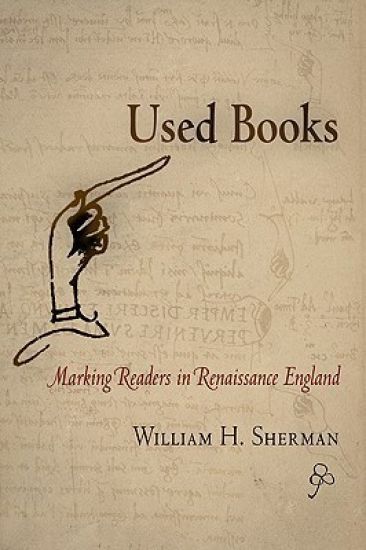
Used Books

Used Books

William H. Sherman

University of Pennsylvania Press
2009
pokkari
In a recent sale catalog, one bookseller apologized for the condition of a sixteenth-century volume as "rather soiled by use." When the book was displayed the next year, the exhibition catalogue described it as "well and piously used [with] marginal notations in an Elizabethan hand [that] bring to life an early and earnest owner"; and the book's buyer, for his part, considered it to be "enlivened by the marginal notes and comments." For this collector, as for an increasing number of cultural historians and historians of the book, a marked-up copy was more interesting than one in pristine condition. William H. Sherman recovers a culture that took the phrase "mark my words" quite literally. Books from the first two centuries of printing are full of marginalia and other signs of engagement and use, such as customized bindings, traces of food and drink, penmanship exercises, and doodles. These marks offer a vast archive of information about the lives of books and their place in the lives of their readers. Based on a survey of thousands of early printed books, Used Books describes what readers wrote in and around their books and what we can learn from these marks by using the tools of archaeologists as well as historians and literary critics. The chapters address the place of book-marking in schools and churches, the use of the "manicule" (the ubiquitous hand-with-pointing-finger symbol), the role played by women in information management, the extraordinary commonplace book used for nearly sixty years by Renaissance England's greatest lawyer-statesman, and the attitudes toward annotated books among collectors and librarians from the Middle Ages to the present. This wide-ranging, learned, and often surprising book will make the marks of Renaissance readers more visible and legible to scholars, collectors, and bibliophiles.
Used Books

Used Books

William H. Sherman

University of Pennsylvania Press
2007
sidottu
In a recent sale catalog, one bookseller apologized for the condition of a sixteenth-century volume as "rather soiled by use." When the book was displayed the next year, the exhibition catalogue described it as "well and piously used [with] marginal notations in an Elizabethan hand [that] bring to life an early and earnest owner"; and the book's buyer, for his part, considered it to be "enlivened by the marginal notes and comments." For this collector, as for an increasing number of cultural historians and historians of the book, a marked-up copy was more interesting than one in pristine condition. William H. Sherman recovers a culture that took the phrase "mark my words" quite literally. Books from the first two centuries of printing are full of marginalia and other signs of engagement and use, such as customized bindings, traces of food and drink, penmanship exercises, and doodles. These marks offer a vast archive of information about the lives of books and their place in the lives of their readers. Based on a survey of thousands of early printed books, Used Books describes what readers wrote in and around their books and what we can learn from these marks by using the tools of archaeologists as well as historians and literary critics. The chapters address the place of book-marking in schools and churches, the use of the "manicule" (the ubiquitous hand-with-pointing-finger symbol), the role played by women in information management, the extraordinary commonplace book used for nearly sixty years by Renaissance England's greatest lawyer-statesman, and the attitudes toward annotated books among collectors and librarians from the Middle Ages to the present. This wide-ranging, learned, and often surprising book will make the marks of Renaissance readers more visible and legible to scholars, collectors, and bibliophiles.

John Dee

John Dee

William H. Sherman

University of Massachusetts Press
1997
nidottu
This text presents a reassessment of the career and cultural background of John Dee (1527-1609), one of Elizabethan England's most interesting figures. Challenging the conventional image of the isolated eccentric philosopher, Sherman situates Dee in a fresh context, revealing that he was a well-connected adviser to the academic, courtly and commercial circles of his day. The centrepiece of Dee's life is shown to be the massive library and museum at Mortlake, perhaps the first modern ""think tank"". There he lived, worked and entertained some of the period's most influential intellectuals and politicians. Sherman discusses Dee's household arrangements, reading practices, and writings on subjects ranging from calendar reform to imperial policy. He also offers an account of the broad network of scholars and other experts who, along with Dee, operated behind the political scenes, providing textual and technological support during this time of unprecedented intellectual and global expansion.
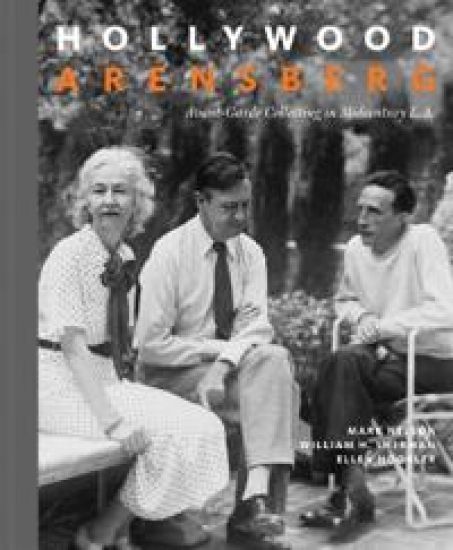
Hollywood Arensberg - Avant-Garde Collecting in Midcentury L.A.

Hollywood Arensberg - Avant-Garde Collecting in Midcentury L.A.

Mark Nelson; William H. Sherman; Ellen Hoobler

Getty Publications
2020
sidottu
This comprehensive reconstruction and interpretation of Louise and Walter Arensberg's groundbreaking collection of modern and pre-Columbian art takes readers room by room, wall by wall, object by object through the couple's Los Angeles home in which their collection was displayed. Following the Armory Show of 1913, Louise and Walter Arensberg began assembling one of the most important private collections of art in the United States, as well as the world's largest private library of works by and about the philosopher Sir Francis Bacon. By the time Louise and Walter died--in 1953 and 1954, respectively--they had acquired some four thousand rare books and manuscripts and nearly one thousand works of art, including world-class specimens of Cubism, Surrealism, and Primitivism, the bulk of Marcel Duchamp's oeuvre, and hundreds of pre-Columbian objects. These exceptional works filled nearly all available space in every room of their house--including the bathrooms. The Arensbergs have long had a central role in the histories of Modernism and collecting, but images of their collection in situ have never been assembled or examined comprehensively until now. Presenting new research on how the Arensbergs acquired pre-Columbian art and featuring never-before-seen images, Hollywood Arensberg demonstrates the value of seeing the Arensbergs' collection as part of a single vision, framed by a unique domestic space at the heart of Hollywood's burgeoning artistic scene.