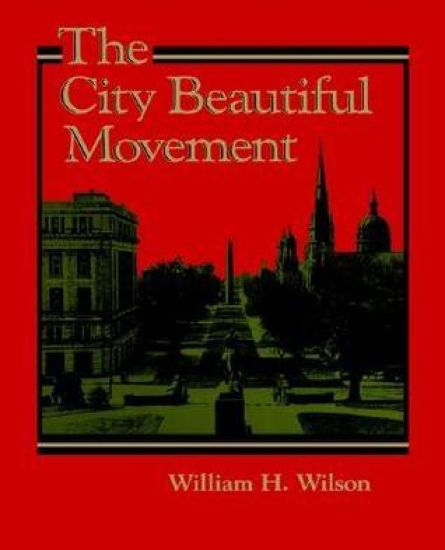
Critics of the turn-of-the-century's City Beautiful Movement denounced its projects-broad, tree-lined boulevards and monumental but low-lying civic buildings-as grandiose and unnecessary. In this masterful analysis, William H. Wilson sees the movement as its founders did: as an exercise in participatory politics aimed at changing the way citizens thought about cities.
World War II brought staggering changes to Dallas, Texas, as the city became a banking, commercial, and transportation center. The growing population strained available housing and put particular pressure on already overcrowded African-American neighborhoods. In Hamilton Park,William Wilson brings to light the stirring history of how both black and white citizens of Dallas worked together to create a thriving African-American planned community. Through interviews with pioneer residents and development planners coupled with research into the politics and problems they faced, Wilson traces the evolution of Hamilton Park from idealistic plans to true residential community. Placing this movement by Dallas blacks to obtain decent housing into the broader context of rapid postwar growth in the United States, Wilson examines how the assault on housing segregation waged by Dallas's black leadership matched the struggles of African-American leaders throughout the nation. He outlines the dilemma of identifying and procuring a suitable tract of land-one large enough, near African-American employment, and far enough from whites' neighborhoods that the development would not be opposed. He also examines individual struggles, from procuring utilities in the new neighborhood to arranging financing for new home buyers to choosing street names. Beyond these practical issues faced by early planners and pioneer residents, Wilson meticulously describes and evaluates the evolution of the community of Hamilton Park. He looks at the roles that neighborhood covenants-and residents' challenges to them-as well as civic organizations, garden clubs, public schools, and churches played in defining and redefining a dominant culture in Hamilton Park. His short biographical sketches of residents and of white elites add a compelling personal narrative to traditional landscape history and the history of planning. Hamilton Park will interest scholars of Texas history, urban studies, environmental studies, American studies, African-American studies, and sociology. Published in cooperation with the Center for American Places, Harrisonburg, Virginia.
His achievements are woven into Seattle and the surrounding region so durably that they are taken for granted even as Puget Sound, Lake Washington, and Mount Rainier." - Roy O. HadleyYoung, ambitious, and college-educated, Reginald Heber Thomson was eager to make a big impression. But when his steamer docked at Seattle's Yesler's Wharf in 1881, the view was dismal. Nondescript buildings and plank sidewalks sprawled along muddy streets. Utilities were crude to nonexistent. Pipes dumped untreated sewage straight into Elliott Bay. Rats scurried around the piers. Surveying for his cousin's firm, Thomson quickly rose to partner and mingled with Seattle's elite. In 1884 he was appointed city surveyor, and in 1892, city engineer. The booming population was in dire need of a workable sewage system and a clean, reliable water supply. He delivered both and more. He installed drain pipes and sewers where others had failed, and his gravity-powered Cedar River project replaced water pumped from turbid Lake Washington. To improve transportation of goods, he leveled several steep hills and filled the worst hollows. His municipal power plant lit homes, businesses, and streets. The progressive, legendary engineer also straightened and dredged waterways, reclaimed tideflats, and installed countless miles of tunnels, bridges, and pavement.Thomson became a civic leader and was involved with the Port of Seattle and the Chittenden locks. He is responsible for much of the Emerald City's existing infrastructure, succeeding despite a tenure filled with intense financial pressure, meticulous audits, and political and public controversy. A workaholic and a devoted family man driven by his religious and political convictions, he possessed extraordinary intelligence, energy, integrity, and perseverance. A comprehensive, critical examination, Shaper of Seattle explores the key events and forces that shaped his youth, career, personal life, and waning years.
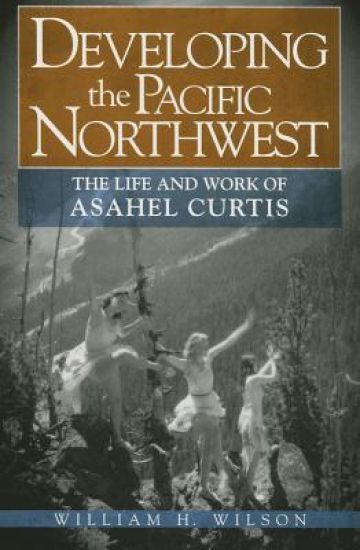
Asahel Curtis arrived on the Puget Sound in 1888. The teenager labored on farms and later in his brother Edward's successful Seattle photography studio. By 1895 his extended family resided together in the city. With their support, Asahel set out for Skagway, Alaska, in 1897. Armed with a box camera, he captured numerous images of the Klondike gold rush, recording the trail, miners, gold creeks, and Dawson City. After he returned home in 1899 he found himself at odds with Edward over those very photographs, leading to a lifelong estrangement. Asahel formed a studio with William P. Romans, and in time opened the Asahel Curtis Photo Co. Although he earned his living as a commercial photographer, his major focus was outside the camera. He married Florence Etta Carney and in 1907 purchased a small, irrigated Yakima Valley farm. Asahel did not drive, but he became a dedicated good roads movement member. With a goal of economic development and increased Washington tourism, he battled issues surrounding highway beautification, crumbling roads caused by a burgeoning trucking industry, an international highway connecting Puget Sound with Alaska, and Yellowstone Trail Association activities. Asahel held an enduring passion for Mount Rainier, and climbed its spectacular heights on multiple occasions. A founder of the Seattle Mountaineers Club, he also chaired the Mount Rainier Advisory Board, vigorously fighting for the advancement of Mount Rainier National Park.Developing the Pacific Northwest is the first full-length biography of the photographer/booster/mountaineer. Along with comparisons to work by his brother and other contemporaries, the author devotes attention to Asahel's earlier years, his family and business relationships, his involvement with irrigation and cooperative marketing in eastern Washington, and his beliefs about resource development. Together, they provide a comprehensive study of this premier Pacific Northwest photographer.
Architect Carl F. Gould (1873-1939) was one of the major shapers of modern Seattle. In the early part of the century he was responsible for some of the city's most distinguished homes and public buildings. He and his partner Charles Herbert Bebb developed the University of Washington campus plan and designed and executed many of its finest buildings, including the renowned Suzzallo Library and the Henry Art Gallery. Gould founded the university's Department of Architecture; was active in the Washington State Chapter of the American Institute of Architects and the Seattle Fine Arts Society (and its successor the Seattle Art Institute); and was a member of the city's first planning commission. In this first biography of Gould the architect, teacher, civic leader, and family man, authors T. William Booth and William H. Wilson trace his life and work during almost thirty years of architectural practice in Seattle.Utilizing numerous drawings held in family, university, and Seattle Art Museum collections, the authors explore the full range of Gould's work, from student Beaux-Arts projects to over 150 extant buildings, and other important though unbuilt projects. Gould's homes and commercial buildings are profusely illustrated. Booth and Wilson follow the evolution of Gould's ideas through his publications, lecture notes, correspondence, diaries, speeches, and public activities.Gould moved from New York to Seattle in 1908, when the city was undergoing vigorous expansion in population, industry, and civic awareness. Well traveled and educated, the 34-year-old Gould brought with him a cosmopolitan sensibility, a gregarious nature, a highly developed civic consciousness, and talent. In the first years of his practice, domestic structures in traditional style formed the major portion of his work. His noble interiors, naturally lighted and elegantly proportioned, remain among the most satisfactory of living spaces.Essentially a regionalist and traditionalist in the design of homes, in the last decade of his life Gould embraced modernism for commercial structures. These affirm his skill in utilizing new concepts and materials. His consummate achievement in the modern idiom was the Seattle Art Museum in Volunteer Park.This book explores Gould's intellectual and aesthetic commitment to ideas he considered essential to the life of architecture. He advocated the concept of beauty as fundamental in architecture, comprising elements of balance, site appropriateness, suitability for the client, generosity of spirit, and a human response of ease and delight in the entire architectural ensemble. Gould worked in the great age of the generalist--he concerned himself with site, landscape, and interior design as well as with the architectural envelope. Throughout his career he searched for elements of an American and regional style.This biography reviews Gould's life and career, capturing the setting in which he worked and thrived, and the vision and sense of obligation that supported his private and public actions.