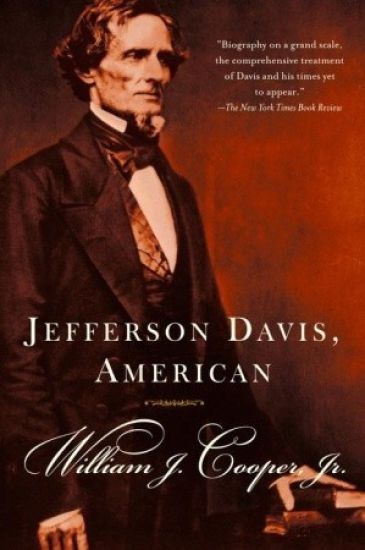
From a distinguished historian of the America South comes this thoroughly human portrait of the complex man at the center of our nation's most epic struggle. Jefferson Davis initially did not wish to leave the Union-as the son of a veteran of the American Revolution and as a soldier and senator, he considered himself a patriot. William J. Cooper shows us how Davis' initial reluctance turned into absolute commitment to the Confederacy. He provides a thorough account of Davis' life, both as the Confederate President and in the years before and after the war. Elegantly written and impeccably researched, Jefferson Davis, American""is the definitive examination of one of the most enigmatic figures in our nation's history.
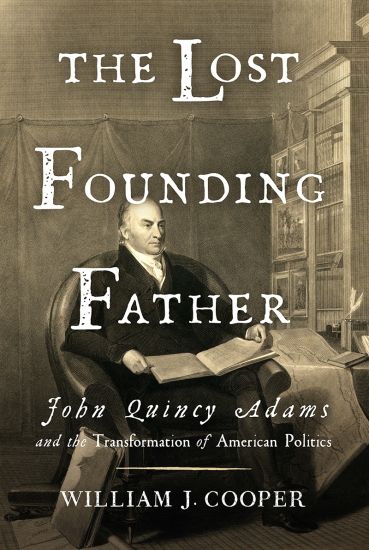
Overshadowed by both his brilliant father and the brash and bold Andrew Jackson, John Quincy Adams has long been dismissed as hyper-intellectual. Viciously assailed by Jackson and his populist mobs for being both slippery and effete, Adams nevertheless recovered from the malodorous 1828 presidential election to lead the nation as a lonely Massachusetts congressman in the fight against slavery. Now, William J. Cooper insightfully demonstrates that Adams should be considered a lost Founding Father, his moral and political vision the final link to the great visionaries who created the American nation. This game-changing biography reveals Adams to be one of the most battered but courageous and inspirational politicians in American history.
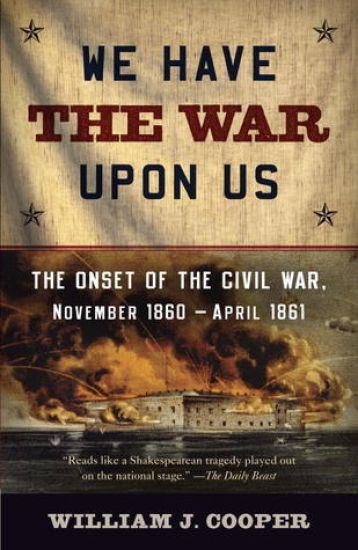
In this carefully researched book William J. Cooper gives us a fresh perspective on the period between Abraham Lincoln's election in November 1860 and the firing on Fort Sumter in April 1861, during which all efforts to avoid or impede secession and prevent war failed. Here is the story of the men whose decisions and actions during the crisis of the Union resulted in the outbreak of the Civil War. Sectional compromise had been critical in the history of the country, from the Constitutional Convention of 1787 through to 1860, and was a hallmark of the nation. On several volatile occasions political leaders had crafted solutions to the vexing problems dividing North and South. During the postelection crisis many Americans assumed that once again a political compromise would settle yet another dispute. Instead, in those crucial months leading up to the clash at Fort Sumter, that tradition of compromise broke down and a rapid succession of events led to the great cataclysm in American history, the Civil War. All Americans did not view this crisis from the same perspective. Strutting southern fire-eaters designed to break up the Union. Some Republicans, crowing over their electoral triumph, evinced little concern about the threatened dismemberment of the country. Still others--northerners and southerners, antislave and proslave alike--strove to find an equitable settlement that would maintain the Union whole. Cooper captures the sense of contingency, showing Americans in these months as not knowing where decisions would lead, how events would unfold. The people who populate these pages could not foresee what war, if it came, would mean, much less predict its outcome. We Have the War Upon Us helps us understand what the major actors said and did: the Republican party, the Democratic party, southern secessionists, southern Unionists; why the pro-compromise forces lost; and why the American tradition of sectional compromise failed. It reveals how the major actors perceived what was happening and the reasons they gave for their actions: Lincoln and Jefferson Davis, Stephen A. Douglas, William Henry Seward, John J. Crittenden, Charles Francis Adams, John Tyler, James Buchanan, and a host of others. William J. Cooper has written a full account of the North and the South, Republicans and Democrats, sectional radicals and sectional conservatives that deepens our insight into what is still one of the most controversial periods in American history.
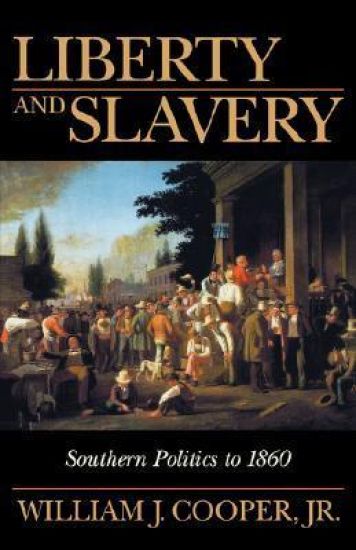
An exploration of the American South's paradoxical devotion to liberty and the practice of slavery. Cooper contends that southerners defined their notions of liberty in terms of its opposite - slavery. He assesses how abolitionism, in the eyes of white southerners, threatened the death of liberty.
First published in 1968, The Conservative Regime was the inaugural work from the prolific Cooper. An investigation of the way in which South Carolinians redefined their state in the wake of the Civil War and Reconstruction, the volume addresses two divergent political eras and the powerful figures who shaped them. The 1876 election of General Wade Hampton as governor marked the end of Reconstruction and the withdrawal of federal troops from South Carolina and returned the state to one-party Democratic rule under Hampton's ""Redeemers"" or ""Bourbons."" Bourbon rule brought limited cooperation with African American leadership, but little in the way of economic growth and what profits of industry were to be had remained securely in the hands of the Old Guard. Reaction to the do-nothing policies of Hampton and the Bourbons brought the rise of Ben Tillman to the state's highest office and the evocation of more progressive thinking in the late 1880s.
Overshadowed by both his brilliant father and the brash and bold Andrew Jackson, John Quincy Adams has long been dismissed as an aloof intellectual. Viciously assailed by Jackson and his populist mobs for being both slippery and effete, Adams nevertheless recovered from defeat in 1828’s presidential election to lead the nation as a lonely Massachusetts congressman in the fight against slavery. Award-winning historian William J. Cooper’s “balanced, wellsourced, and accessible work” (Publishers Weekly) demonstrates that Adams should be considered our lost Founding Father, his moral and political vision the final link to the visionaries who created our nation. With his heroic arguments in the Amistad trial forever memorialized, Adams stood strong against the expansion of slavery that would send the nation hurtling into war. This “well-crafted” (William McFeely) biography reveals Adams to be one of the most battered, but courageous and inspirational, politicians in American history.
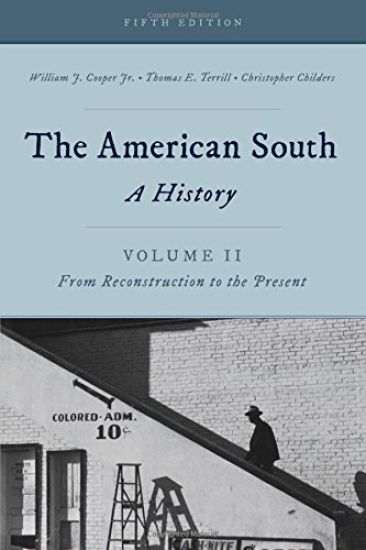
In The American South: A History, Fifth Edition, William J. Cooper, Jr., Thomas E. Terrill, and Christopher Childers demonstrate their belief that it is impossible to divorce the history of the South from the history of the United States. The authors' analysis underscores the complex interaction between the South as a distinct region and the South as an inescapable part of America. Cooper and Terrill show how the resulting tension has often propelled section and nation toward collision. In supporting their thesis, the authors draw on the tremendous amount of profoundly new scholarship in Southern history. Each volume includes a substantial bibliographical essay—completely updated for this edition—which provides the reader with a guide to literature on the history of the South. This first volume also includes updated chapters, tables, preface, and prologue.
In The American South: A History, Fifth Edition, William J. Cooper, Jr. and Thomas E. Terrill demonstrate their belief that it is impossible to divorce the history of the South from the history of the United States. The authors' analysis underscores the complex interaction between the South as a distinct region and the South as an inescapable part of America. Cooper and Terrill show how the resulting tension has often propelled section and nation toward collision. In supporting their thesis, the authors draw on the tremendous amount of profoundly new scholarship in Southern history. Each volume includes a substantial bibliographical essay—completely updated for this edition—which provides the reader with a guide to literature on the history of the South. This volume contains updated chapters, and tables.
In The American South: A History, Fifth Edition, William J. Cooper, Jr., Thomas E. Terrill, and Christopher Childers demonstrate their belief that it is impossible to divorce the history of the South from the history of the United States. The autIn The American South: A History, Fifth Edition, William J. Cooper, Jr., Thomas E. Terrill, and Christopher Childers demonstrate their belief that it is impossible to divorce the history of the South from the history of the United States. The authors' analysis underscores the complex interaction between the South as a distinct region and the South as an inescapable part of America. Cooper and Terrill show how the resulting tension has often propelled section and nation toward collision. In supporting their thesis, the authors draw on the tremendous amount of profoundly new scholarship in Southern history. Each volume includes a substantial bibliographical essay—completely updated for this edition—which provides the reader with a guide to literature on the history of the South. This first volume also includes updated chapters, tables, preface, and prologue.