Kirjojen hintavertailu. Mukana 11 699 587 kirjaa ja 12 kauppaa.

Kirjahaku

Etsi kirjoja tekijän nimen, kirjan nimen tai ISBN:n perusteella.

545 kirjaa tekijältä William James

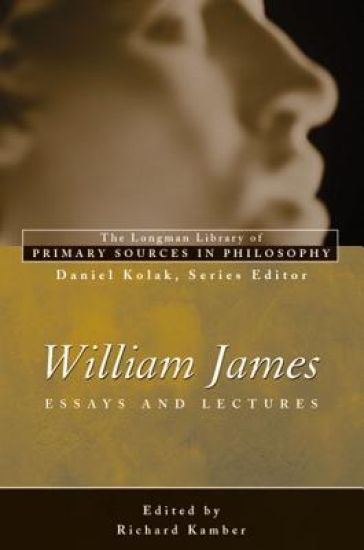
William James: Essays and Lectures

William James: Essays and Lectures

William James

Routledge Member of the Taylor and Francis Group
2006
nidottu
Part of the “Longman Library of Primary Sources in Philosophy,” this edition of the William James' Selected Essays is framed by a pedagogical structure designed to make this important work of philosophy more accessible and meaningful for undergraduates.
Brazil through the Eyes of William James

Brazil through the Eyes of William James

William James

Harvard University, The David Rockefeller Center for Latin American Studies
2006
sidottu
In 1865, twenty-three-year-old William James began his studies at the Harvard Medical School. When he learned that one of his most esteemed professors, Louis Agassiz, then director of the recently established Museum of Comparative Zoology, was preparing a research expedition to Brazil, James offered his services as a voluntary collector. Over the course of a year, James kept a diary, wrote letters to his family, and sketched the plants, animals, and people he observed. During this journey, James spent time primarily in Rio de Janeiro, Belem, and Manaus, and along the rivers and tributaries of the Amazon Basin.This volume is a critical, bilingual (English–Portuguese) edition of William James’s diaries and letters and also includes reproductions of his drawings. This original material belongs to the Houghton Archives at Harvard University and is of great interest to both William James scholars and Brazilian studies experts.
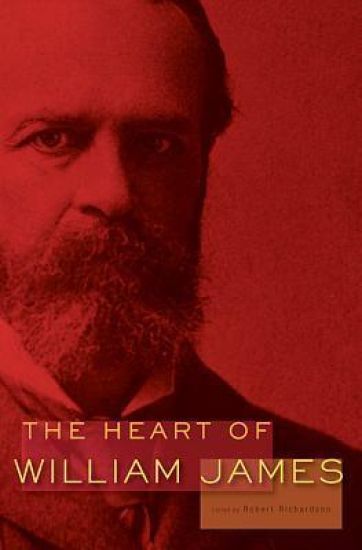
The Heart of William James

The Heart of William James

William James

Harvard University Press
2012
nidottu
On the one hundredth anniversary of the death of William James, Robert Richardson, author of the magisterial William James: In the Maelstrom of American Modernism, assembles a wide-ranging selection of essays and writings that reveal the evolution of James’s thought over time, especially as it was continually being shaped by the converging influences of psychology, philosophy, and religion throughout his life.Proceeding chronologically, the volume begins with “What Is an Emotion,” James’s early, notable, and still controversial argument that many of our emotions follow from (rather than cause) physical or physiological reactions. The book concludes with “The Moral Equivalent of War,” one of the greatest anti-war pieces ever written, perhaps even more relevant now than when it was first published. In between, in essays on “The Dilemma of Determinism,” “The Hidden Self,” “Habit,” and “The Will”; in chapters from The Principles of Psychology and The Varieties of Religious Experience; and in such pieces as “On a Certain Blindness in Human Beings,” “What Makes a Life Significant,” and “Philosophical Conceptions and Practical Results,” we witness the evolution of James’s philosophical thinking, his pragmatism, and his radical empiricism. Throughout, Richardson’s deeply informed introductions place James’s work in its proper biographical, historical, and philosophical context.In essay after essay, James calls us to live a fuller, richer, better life, to seek out and use our best energies and sympathies. As every day is the day of creation and judgment, so every age was once the new age—and as this book makes abundantly clear, William James’s writings are still the gateway to many a new world.
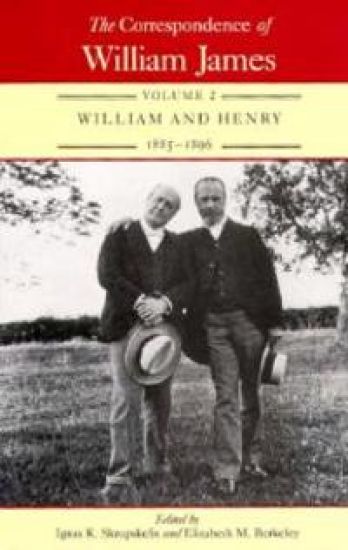
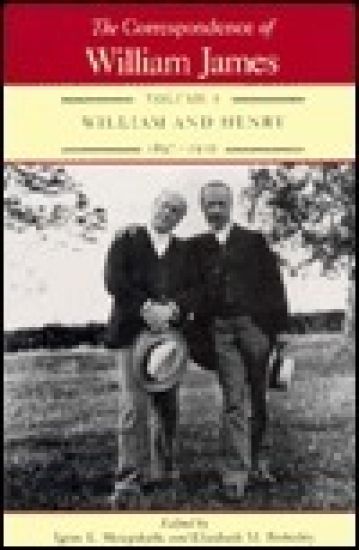
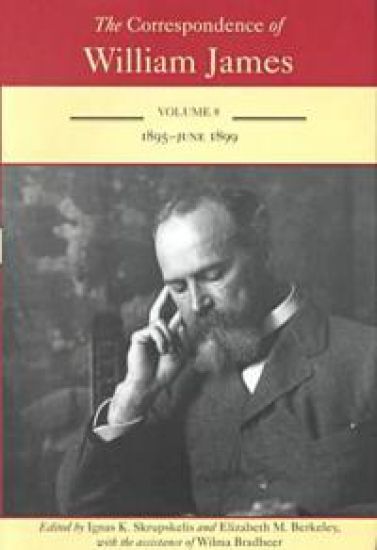
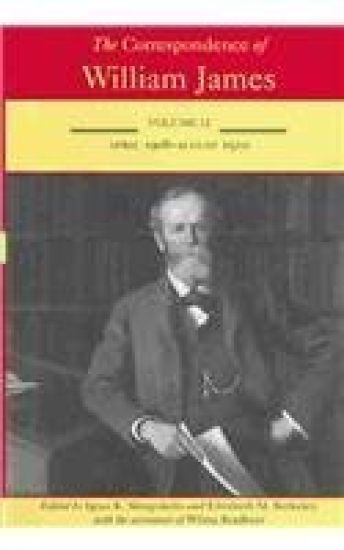
The Correspondence of William James v. 2; William and Henry, 1885-96
William James, known for his contributions to psychology and philosophy, occupies a secure place in American intellectual history. The 12 volumes of ""The Correspondence of William James"" present his vast and entertaining correspondence with his brother Henry, with other members of his family, with friends and colleagues, as well as with enthusiasts and detractors among readers of his work. The publication of James's private letters complements the 17 titles of ""The Works of William James"". During the years covered in this second of 3 volumes devoted to the letters of William and Henry, each of the brothers underwent a period of trial or testing as a writer. Henry's attempts at fame as a playwright failed, and his 1880s novels did not receive the popular reception he had hoped for. William struggled for years to complete ""The Principles of Psychology"", while burdened by many responsibilities, intermittent depression and eye troubles, finally to have it published in 1890, 12 years after the contract date. These letters offer glimpses of the diverse academic, literary, and social worlds in which the brothers circulated, of Henry's friendship with Robert Louis Stevenson, William Dean Howells, Rudyard Kipling, and the American writer Constance Fenimore Woolson, who may have been in love with him. In William's letters he expresses pleasure and progress in his work, comments on Henry's writing, describes his meetings with and reactions to Paul Bourget and other continental writers, and even reports an attack of crab lice and an experiment with peyote. After the death of both parents in 1882 and of brother Garth Wilkinson in 1883, the famous family had dwindled to William, Henry, the unstable and alcoholic Robertson and the invalid Alice. The anxieties of William and Henry over the troubles of Robertson and Alice are a recurrent theme of these letters, particularly up to the time of Alice's death from breast cancer in 1892. William's letter show his continuous concern for and frustration with the philandering, alcholic Robertson. But it is Alice who elicits the most extensive and moving commentary. After her move to England in 1884, Henry writes at great length and poignancy of her difficulties. She emerges as an example of how American civilization laid crippling constraints on the development of young women. The correspondence in this volume also covers the birth of William's daughter, Margaret Mary (Peggy), and his fourth son, Francis Tweedy, later renamed Alexander Robertson, and the poignant death of 18-month-old Herman. It details William's purchase of a large farmhouse in New Hampshire and his building of a home in Cambridge, the two residences that afforded him some solitude for his periods of moodiness, melancholia and insomnia. Henry's letters, though occasionally hinting at some regret over his life as a confirmed bachelor, reveal how he cherished his solitude, because it suited him and was conducive to his literary art. Altogether, this volume is a window into the lives of two brothers who stood out as accomplished and influential figures in their generation.
The Correspondence of William James, Volume 3

The Correspondence of William James, Volume 3

William James

University of Virginia Press
1994
sidottu
This volume presents the correspondence between William James, known for his contributions to psychology and philosophy, and his brother Henry. It covers their most productive years, when William was writing The Varieties of Religious Experience and Henry was writing his late masterpieces.
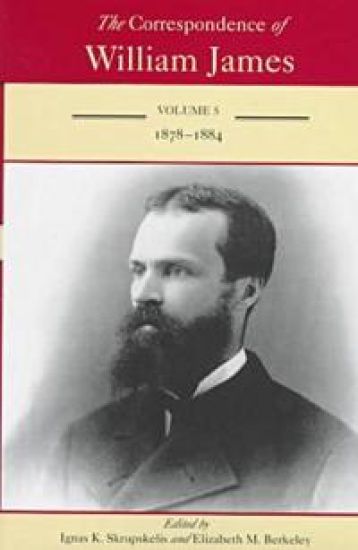
The Correspondence of William James v. 5; 1878-84

The Correspondence of William James v. 5; 1878-84

William James

University of Virginia Press
1997
sidottu
This fifth volume of letters chronicles James's emergence into professional and personal maturity. The correspondence is dominated by letters to his wife, Alice, and they reflect difficult events of the period such as the death of his parents and the responsibility he took for heading the family.
The Correspondence of William James v. 10; July 1902-March 1905
Consisting of some 572 letters, with another 460 calendared, this tenth volume in a projected series of twelve offers a complete accounting of William James's known correspondence-with family, friends, and colleagues-from the beginning of 1902 through March 1905. For James these were hopeful years of recovery. The end of the depressing cure at Nauheim, the successful conclusion of the arduous Gifford Lectures in Edinburgh, the reaching maturity and independence of his two eldest children, and the gradual withdrawal from teaching responsibilities at Harvard allowed him to hope that he would at long last present his philosophical message to the world in the shape of a treatise on metaphysics. Philosophy was in a state of unrest, with old alliances breaking up and new ones forming, and was ripe for a more fruitful reformulation of its traditional questions. Intellectualism, philosophical and scientific, was waning, making room for the emergence of an empiricism congenial to humane values. As reflected in the letters of this period, James comes to recognize that Dewey and the Chicago school were his allies and that the Frenchman Henri Bergson was moving in the same direction. Consequently, Bergson is the major new correspondent of the present volume, and, because he emerges during this period as James's leading supporter, Ferdinand Schiller is another dominant correspondent. Often boisterous and irreverent, Schiller saw himself as a general about to overwhelm an aged and sleepy, but still dangerous, enemy. James, in the meantime, had to call upon all of his diplomatic skills to keep on good terms with the people Schiller irritated, while remaining Schiller's friend and defender. Scholars will find much material in this volume that will help them judge whether the common view of pragmatism as a capricious subjectivism largely reflected a widespread lack of respect for Schiller. While continuing his involvement with anti-imperialism, James takes a more critical stance toward existing social conditions during this period, proclaiming his admiration for the small and insisting on the connection between great size and social evil. In 1904 he tours the American South. There are hints that he was acting as a scout for his brother Henry, which perhaps caused William James to see more of the meanness and shabbiness of the region than he would have otherwise. Along with Bergson and Schiller, prominent intellectuals represented in this volume include Theodore Flournoy, Wincenty Lutoslawski, Carl Stumpf, Hugo Munsterberg, Josiah Royce, Charles Sanders Peirce, Oliver Lodge, John Dewey, George Herbert Palmer, Charles William Eliot, James Mark Baldwin, and Edwin Godkin.
The Correspondence of William James v. 12; April 1908-August 1910
This twelfth and final volume of The Correspondence of William James concludes the series of William James's correspondence with family, friends, and colleagues that began with volume 4. The first three volumes were devoted to the letters exchanged between the brothers William and Henry James. Consisting of some 600 letters, with an additional 650 letters calendared, this final volume gives a complete accounting of James's known correspondence from April of 1908 to 21 August 1910, inclusive, the last letter having been written five days before James's death on 26 August 1910. The volume also accounts for undated letters, as well as letters located too late to be included in their proper chronological place in the preceding volumes. Professionally there are three major events during this period in James's life. First was the delivery at Manchester College, Oxford, of the Hibbert Lectures on the present condition of philosophy, published in 1908 as A Pluralistic Universe. As was his habit, James sent numerous complimentary copies of his book and received many thoughtful responses, which provide a rare opportunity to see how differently diverse readers interpret the same book. Next came publication of The Meaning of Truth, which forced James to return to the defense of the pragmatic conception of truth. The third was his work on a textbook in metaphysics that was to become the posthumously published Some Problems of Philosophy. Most of James's philosophical correspondents remain the same as in the previous volume: John Dewey, Henri Bergson, Francis Herbert Bradley, Ferdinand Canning Schiller, Charles Sanders Peirce, Ralph Barton Perry, William Pepperell Montague, Horace Meyer Kallen, Arthur Oncken Lovejoy, Charles Augustus Strong, and Dickinson Sergeant Miller. With the French philosopher Emile Boutroux and the German pragmatist Julius Goldstein there is more extensive correspondence in this volume than in the previous one.
Letters of William James

Letters of William James

William James

Literary Licensing, LLC
2014
sidottu
The book ""Letters of William James"" is a collection of personal letters written by the famous American philosopher and psychologist, William James. The letters span over four decades, from the 1860s to the early 1900s, and provide a unique insight into James' personal life, thoughts, and ideas.The letters are addressed to a wide range of recipients, including family members, friends, colleagues, and fellow intellectuals. They cover a variety of topics, from James' academic and professional pursuits to his personal relationships, travels, and philosophical musings.The book is divided into several sections, each focusing on a different period in James' life. The letters are organized chronologically within each section, providing a clear and cohesive narrative of James' life and work.Throughout the book, readers will encounter James' signature wit, humor, and intellectual curiosity. They will also gain a deeper understanding of James' philosophical and psychological ideas, as well as his influence on American thought and culture.Overall, ""Letters of William James"" is a fascinating and engaging read for anyone interested in the life and work of one of America's most important intellectuals.This Is A New Release Of The Original 1920 Edition.This scarce antiquarian book is a facsimile reprint of the old original and may contain some imperfections such as library marks and notations. Because we believe this work is culturally important, we have made it available as part of our commitment for protecting, preserving, and promoting the world's literature in affordable, high quality, modern editions, that are true to their original work.