Kirjojen hintavertailu. Mukana 12 390 323 kirjaa ja 12 kauppaa.

Kirjahaku

Etsi kirjoja tekijän nimen, kirjan nimen tai ISBN:n perusteella.

4 kirjaa tekijältä William Jay Smith

Words by the Water

Words by the Water

William Jay Smith

Johns Hopkins University Press
2008
sidottu
William Jay Smith has been one of the most respected figures on the literary scene for more than half a century. Two of his thirteen poetry collections were finalists for the National Book Award, and the present volume is clearly the work of a true American master. The volume opens with a poetic sequence, "The Atoll," concerning the tiny coral island of Palmyra during World War II. Finding himself on the narrow rim of an extinct volcano at almost the exact center of the Pacific, water on all sides, breakers pounding the reef, the poet evokes the distinct sensation that he had of being at the heart of Herman Melville's "oceans vast." In lines resonant and memorable, he recalls the "terrifying beauty" of standing at night on what seemed then the very edge of the earth. The poet next addresses our current daily terror-war and destruction. In "Invitation to Ground Zero" he presents a moving tribute to a victim of the September 11 disaster, while in "Willow Wood" a soldier, having recently lost both his legs in a roadside blast, utters without a trace of self-pity strong words on future wars. Tragedy marks many of these pages, but Smith does not forget his lifelong commitment to witty and satiric verse. To introduce several hilarious pieces, he reprints the celebrated poem "Dachshunds." Simplicity and musicality have given his wedding songs a wide audience. Several of them are here, including an extraordinary new one, "The Bouquet." Variety has always characterized Smith's work. Words by the Water is particularly varied and unusually youthful and fresh.
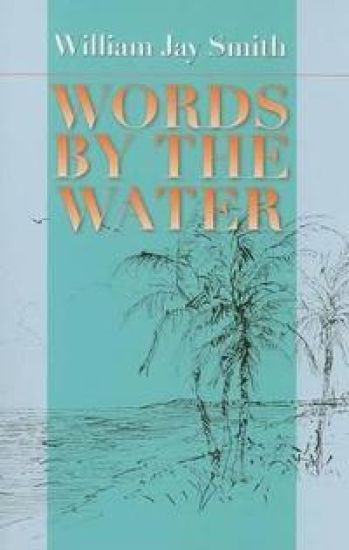
Words by the Water

Words by the Water

William Jay Smith

Johns Hopkins University Press
2008
pokkari
William Jay Smith has been one of the most respected figures on the literary scene for more than half a century. Two of his thirteen poetry collections were finalists for the National Book Award, and the present volume is clearly the work of a true American master. The volume opens with a poetic sequence, "The Atoll," concerning the tiny coral island of Palmyra during World War II. Finding himself on the narrow rim of an extinct volcano at almost the exact center of the Pacific, water on all sides, breakers pounding the reef, the poet evokes the distinct sensation that he had of being at the heart of Herman Melville's "oceans vast." In lines resonant and memorable, he recalls the "terrifying beauty" of standing at night on what seemed then the very edge of the earth. The poet next addresses our current daily terror-war and destruction. In "Invitation to Ground Zero" he presents a moving tribute to a victim of the September 11 disaster, while in "Willow Wood" a soldier, having recently lost both his legs in a roadside blast, utters without a trace of self-pity strong words on future wars. Tragedy marks many of these pages, but Smith does not forget his lifelong commitment to witty and satiric verse. To introduce several hilarious pieces, he reprints the celebrated poem "Dachshunds." Simplicity and musicality have given his wedding songs a wide audience. Several of them are here, including an extraordinary new one, "The Bouquet." Variety has always characterized Smith's work. Words by the Water is particularly varied and unusually youthful and fresh.
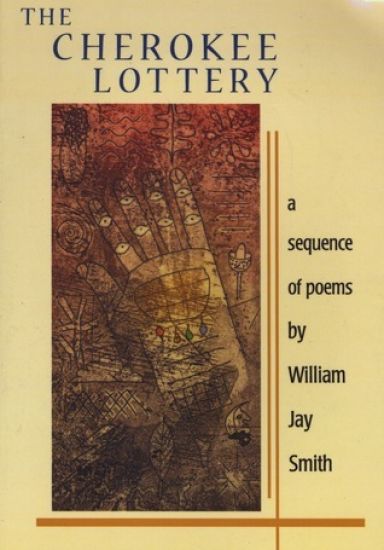
The Cherokee Lottery

The Cherokee Lottery

William Jay Smith

Curbstone Press,U.S.
2000
nidottu
For the first time in poetic form, The Cherokee Lottery treats one of the greatest tragedies in American history, the forced removal of the Southern Indian tribes east of the Mississippi. When gold was discovered on Cherokee land in northern Georgia in 1828, the U.S. Government passed the Removal Act, and 18,000 Cherokees, along with other southern tribes--Choctaws, Chickasaws, and Creeks--were forcibly relocated to Oklahoma territory. Herded along under armed guard, they traveled in bitter cold weather and as many as a quarter died on what became known as "The Trail of Tears."In powerful poetry of epic proportions, which Harold Bloom has called his best work, Smith paints a stark and vivid picture of this ordeal and its principal participants, among them Sequoyah, the inventor of the Cherokee alphabet, and Osceola, the Seminole chief.