
Kirjahaku
Etsi kirjoja tekijän nimen, kirjan nimen tai ISBN:n perusteella.
162 kirjaa tekijältä William Jones
Supplemental Volumes to the Works of Sir William Jones
William Jones
Hutson Street Press
2025
sidottu
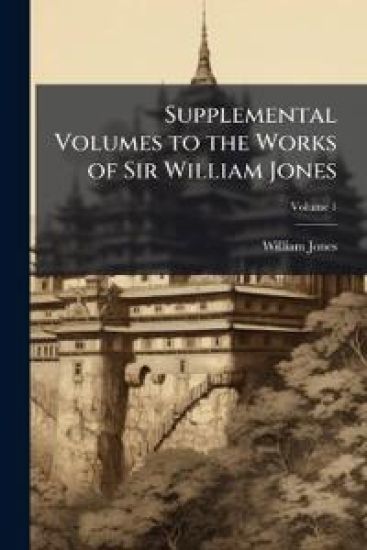
Supplemental Volumes to the Works of Sir William Jones
William Jones
Hutson Street Press
2025
nidottu
"Supplemental Volumes to the Works of Sir William Jones, Volume 1" contains a compilation of writings from the Asiatick Researches, excluding those papers already incorporated into Jones's collected works. This volume offers insights into the early scholarship of Asia, reflecting the interests of British orientalists in the late 18th and early 19th centuries. The Asiatick Researches, a journal published by the Asiatic Society, includes articles on the history, languages, and cultures of Asia. This supplemental volume provides a valuable resource for understanding the development of oriental studies and the intellectual context of British involvement in India. It remains a significant primary source for scholars interested in the history of ideas, linguistics, and anthropology. This work has been selected by scholars as being culturally important, and is part of the knowledge base of civilization as we know it. This work was reproduced from the original artifact, and remains as true to the original work as possible. Therefore, you will see the original copyright references, library stamps (as most of these works have been housed in our most important libraries around the world), and other notations in the work. This work is in the public domain in the United States of America, and possibly other nations. Within the United States, you may freely copy and distribute this work, as no entity (individual or corporate) has a copyright on the body of the work. As a reproduction of a historical artifact, this work may contain missing or blurred pages, poor pictures, errant marks, etc. Scholars believe, and we concur, that this work is important enough to be preserved, reproduced, and made generally available to the public. We appreciate your support of the preservation process, and thank you for being an important part of keeping this knowledge alive and relevant.
Memoirs Of The Life, Ministry, And Character Of William Jones, Late Wesleyan Minister
William Jones
KESSINGER PUBLISHING CO
2009
pokkari
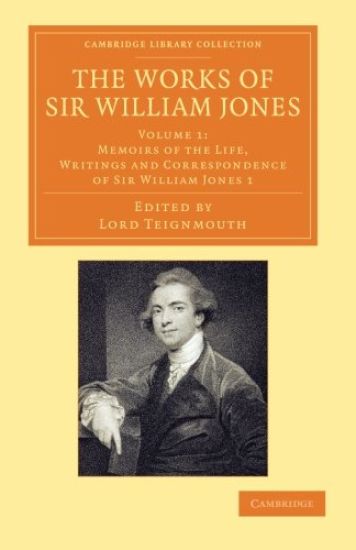
A renowned Enlightenment polymath, Sir William Jones (1746–94) was a lawyer, translator and poet who wrote authoritatively on politics, comparative linguistics and oriental literature. Known initially for his Persian translations and political radicalism, Jones became further celebrated for his study and translation of ancient Sanskrit texts following his appointment to the supreme court in Calcutta in 1783. He spent the next eleven years introducing Europe to the mysticism and rationality of Hinduism, becoming a pioneer in comparative religion. Through works such as his nine 'Hymns' to Hindu deities and his translation of the Sanskrit classic Sacontalá, Jones inspired and influenced Romantic writers from William Blake to August Wilhelm Schlegel. These thirteen volumes of his works, published in 1807, begin with a memoir by his friend and editor Lord Teignmouth (1751–1834). Volume 1 explores Jones' heritage and birth through to his departure for India.
A renowned Enlightenment polymath, Sir William Jones (1746–94) was a lawyer, translator and poet who wrote authoritatively on politics, comparative linguistics and oriental literature. Known initially for his Persian translations and political radicalism, Jones became further celebrated for his study and translation of ancient Sanskrit texts following his appointment to the supreme court in Calcutta in 1783. He spent the next eleven years introducing Europe to the mysticism and rationality of Hinduism, becoming a pioneer in comparative religion. Through works such as his nine 'Hymns' to Hindu deities and his translation of the Sanskrit classic Sacontalá, Jones inspired and influenced Romantic writers from William Blake to August Wilhelm Schlegel. These thirteen volumes of his works, published in 1807, begin with a memoir by his friend and editor Lord Teignmouth (1751–1834). Volume 2 covers Jones' life and death in India, and includes important correspondence and unpublished work.
A renowned Enlightenment polymath, Sir William Jones (1746–94) was a lawyer, translator and poet who wrote authoritatively on politics, comparative linguistics and oriental literature. Known initially for his Persian translations and political radicalism, Jones became further celebrated for his study and translation of ancient Sanskrit texts following his appointment to the supreme court in Calcutta in 1783. He spent the next eleven years introducing Europe to the mysticism and rationality of Hinduism through works such as his nine 'Hymns' to Hindu deities and his translation of the Sanskrit classic Sacontalá, influencing Romantic writers from William Blake to August Wilhelm Schlegel. Volume 3 of his thirteen-volume works, published in 1807, contains Jones' 'Anniversary Discourses' (1784–94) addressed to the Asiatick Society as its president - including 'On the Hindus' (1786), a seminal work of comparative linguistics. It also contains his landmark essay of cultural comparison, 'On the Gods of Greece, Italy, and India' (1784).
A renowned Enlightenment polymath, Sir William Jones (1746–94) was a lawyer, translator and poet who wrote authoritatively on politics, comparative linguistics and oriental literature. Known initially for his Persian translations and political radicalism, Jones became further celebrated for his study and translation of ancient Sanskrit texts following his appointment to the supreme court in Calcutta in 1783. He spent the next eleven years introducing Europe to the mysticism and rationality of Hinduism through works such as his nine 'Hymns' to Hindu deities and his translation of the Sanskrit classic Sacontalá, influencing Romantic writers from William Blake to August Wilhelm Schlegel. Volume 4 of his thirteen-volume works, published in 1807, contains Jones' extensive Indic scholarship and translations published in British periodicals such as Asiatick Researches and The Asiatick Miscellany, and includes the unprecedented 'On the Musical Modes of the Hindus' (1792) and 'On the Mystical Poetry of the Persians and Hindus' (1791).
A renowned Enlightenment polymath, Sir William Jones (1746–94) was a lawyer, translator and poet who wrote authoritatively on politics, comparative linguistics and oriental literature. Known initially for his Persian translations and political radicalism, Jones became further celebrated for his study and translation of ancient Sanskrit texts following his appointment to the supreme court in Calcutta in 1783. He spent the next eleven years introducing Europe to the mysticism and rationality of Hinduism through works such as his nine 'Hymns' to Hindu deities and his translation of the Sanskrit classic Sacontalá, influencing Romantic writers from William Blake to August Wilhelm Schlegel. Volume 5 of his thirteen-volume works, published in 1807, contains Jones' researches into Indian botany - including the comparative 'Botanical Observations on Select Indian Plants' - coupled with his groundbreaking Grammar of the Persian Language (1771), the work which established Jones as one of the eighteenth century's greatest orientalists.
A renowned Enlightenment polymath, Sir William Jones (1746–94) was a lawyer, translator and poet who wrote authoritatively on politics, comparative linguistics and oriental literature. Known initially for his Persian translations and political radicalism, Jones became further celebrated for his study and translation of ancient Sanskrit texts following his appointment to the supreme court in Calcutta in 1783. He spent the next eleven years introducing Europe to the mysticism and rationality of Hinduism through works such as his nine 'Hymns' to Hindu deities and his translation of the Sanskrit classic Sacontalá. Volume 6 of his thirteen-volume works, published in 1807, contains Jones' Poeseos Asiaticae Commentariorum (1774). A work of comparative literature after mentor Robert Lowth's De Sacra Poesi Hebraeorum (1753) - in which Lowth established the Old Testament as a masterpiece of oriental literature - Poeseos provides detailed Latin commentary on the language and techniques of Arabic, Hebrew, Persian and Turkish poetry.
A renowned Enlightenment polymath, Sir William Jones (1746–94) was a lawyer, translator and poet who wrote authoritatively on politics, comparative linguistics and oriental literature. Known initially for his Persian translations and political radicalism, Jones became further celebrated for his study and translation of ancient Sanskrit texts following his appointment to the supreme court in Calcutta in 1783. He spent the next eleven years introducing Europe to the mysticism and rationality of Hinduism through works such as his nine 'Hymns' to Hindu deities and his translation of the Sanskrit classic Sacontalá. Volume 7 of his thirteen-volume works, published in 1807, addresses Jones' significant jurisprudential work, containing his 'Charges' as a supreme court judge. It also contains Jones's most controversial work, his Institutes of Hindu Law (1794), a translation from Sanskrit which Jones considered his masterpiece, although postcolonial scholars argue that it cemented Britain's imperial control over India.
A renowned Enlightenment polymath, Sir William Jones (1746–94) was a lawyer, translator and poet who wrote authoritatively on politics, comparative linguistics and oriental literature. Known initially for his Persian translations and political radicalism, Jones became further celebrated for his study and translation of ancient Sanskrit texts following his appointment to the supreme court in Calcutta in 1783. He spent the next eleven years introducing Europe to the mysticism and rationality of Hinduism through works such as his nine 'Hymns' to Hindu deities and his translation of the Sanskrit classic Sacontalá. Volume 8 of his thirteen-volume works, published in 1807, contains more of Jones' legal work, including his pre-India tracts on Islamic laws of succession and inheritance - culturally comparative works debunking prejudiced claims that Islamic cultures denied private property. Also included is his formative 'Essay on the Law of Bailments' (1781), a work still cited in some legal cases today.
A renowned Enlightenment polymath, Sir William Jones (1746–94) was a lawyer, translator and poet who wrote authoritatively on politics, comparative linguistics and oriental literature. Known initially for his Persian translations and political radicalism, Jones became further celebrated for his study and translation of ancient Sanskrit texts following his appointment to the supreme court in Calcutta in 1783. He spent the next eleven years introducing Europe to the mysticism and rationality of Hinduism through works such as his nine 'Hymns' to Hindu deities and his translation of the Sanskrit classic Sacontalá. Volume 9 of his thirteen-volume works, published in 1807, contains Jones' translation of the Speeches of Isaeus (1779) and perhaps his most influential translation, Sacontalá (1789), a Hindu love fable that explores the depths of Hindu mythology and philosophy. Lauded throughout Europe, Sacontalá would inspire Goethe to write that once it is mentioned, 'everything is said'.