Kirjojen hintavertailu. Mukana 12 390 323 kirjaa ja 12 kauppaa.

Kirjahaku

Etsi kirjoja tekijän nimen, kirjan nimen tai ISBN:n perusteella.

33 kirjaa tekijältä William Kennedy

William Kennedy: The Albany Trilogy (Loa #397): Legs / Billy Phelan's Greatest Game / Ironweed
A landmark of American historical fiction for the first time in a deluxe collector's edition Prohibition-Era Albany comes to life in a trilogy of novels of crime and corruption, hope and redemption Unfolding in Albany during Prohibition and the Depression, here are three intertwined tales of thwarted yearning, doomed ambition, and hard-won resilience that are now "among the most exuberant literary feats of the past half-century," as Colum McCann writes in this volume's Introduction. Legs (1975) brilliantly envisions the exploits of infamous gangster Jack "Legs" Diamond in the early 1930s. Mining the "truths and secret lies" of Legs's story, the novel delves deeply into our collective fascination with the underworld, casting Legs's criminal career as an alternative version of the American Dream--"the dream," Kennedy writes, "that you can grow up and shoot your way to fame and fortune." Billy Phelan's Greatest Game (1978) strips criminality of all illicit glamour, as its hero, a gambler and pool hustler at the end of his luck, runs afoul of the corrupt Irish American machine that calls the shots in Depression-era Albany. Ironweed (1983) catapulted Kennedy into overnight literary stardom, earning him a Pulitzer Prize, and a National Book Critics Circle Award. Francis Phelan, Billy's father and once a promising ballplayer, is now a homeless alcoholic, a haunted wraith of a man who returns to Albany looking to make peace with his life's misfortunes. The Albany Trilogy also includes, in an appendix, an essay about Legs Diamonds and the speculation about who might have killed him, along with useful explanatory notes and a newly researched Chronology of Kennedy's life and career.
Billy Phelan's Greatest Game

Billy Phelan's Greatest Game

William Kennedy

PENGUIN BOOKS LTD
1983
pokkari
The second novel in William Kennedy’s much-loved Albany cycle depicts Billy Phelan, a slightly tarnished poker player, pool hustler, and small-time bookie. A resourceful man full of Irish pluck, Billy works the fringes of the Albany sporting life with his own particular style and private code of honor, until he finds himself in the dangerous position of potential go-between in the kidnapping of a political boss’s son.
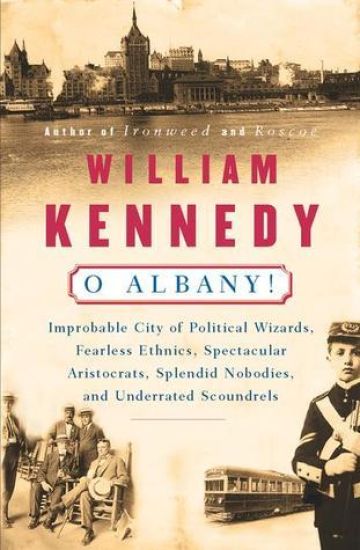
O Albany!: Improbable City of Political Wizards, Fearless Ethnics, Spectacular, Aristocrats, Splendid Nobodies, and Underrated Scoundrels
The Pulitzer Prize-winning author of Ironweed offers an eloquent history of his colorful hometown in this marvelous book that's part journalism and part memoir. William Kennedy's celebrated cycle of novels has put Albany on the literary map. In O Albany we visit the city's ethnic and social neighborhoods. We meet uncommon characters who tread on Kennedy's stage--Erastus Corning, America's longest-running mayor (forty-three years in office); the Prohibition celebrity Jack "Legs" Diamond; the black matriarch Olivia Rorie, who transformed Albany's slums; Nelson Rockefeller and the "greatest marble project in the history of the world"; the political boss Dan O'Connell, who took City Hall in 1921 and never let go, even after he died. Embellished with fifty-five vintage photographs and eleven maps drawn for this book, O Albany is a historical lover letter from Kennedy to his native city. "A nice blend of nostalgia and serious history...You come away from this book's fascinating view of the American experience, the human experience, feeling hopeful."--The New York Times Book Review
Quinn's Book

Quinn's Book

William Kennedy

PENGUIN BOOKS
1989
nidottu
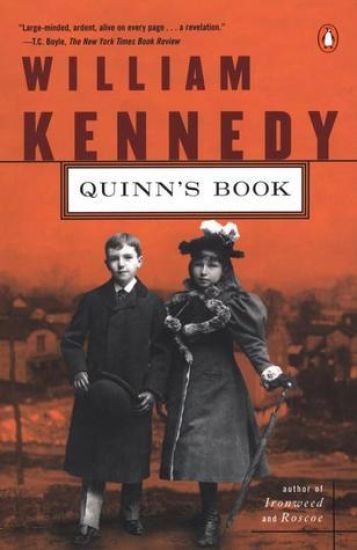
Filled with Dickensian characters, a vivid sense of history, and marvelously inventive humor, Quinn's Book is an engaging delight from the Pulitzer Prize-winning author of Ironweed "Kennedy writes with verve and nerve. His wit, always sharp, has rarely been sharper. He paints a full and lively canvas...Quinn's Book casts a lovely light, indeed."--Stephen King From the moment he rescues the beautiful, passionate Maud Fallon from the icy waters of the Hudson one wintry day in 1849, Daniel Quinn, a twelve-year-old orphan, is thrust into a bewildering, adventure-filled journey through the tumult of nineteenth-century America. As he quests after the beguiling and elusive Maud (she's fourteen), Daniel will witness the rise and fall of great dynasties in upstate New York, epochal prize fights, exotic life in the theater, visitations from spirits beyond the grave, horrific battles between Irish immigrants and the "Know-Nothings," the vicious New York draft riots, heroic passages through the Underground Railroad, and the bloody despair of the Civil War. William Kennedy's Albany Cycle of novels reflect what he once described as the fusion of his imagination with a single place. A native and longtime resident of Albany, New York, his work moves from the mid-nineteenth to the mid-twentieth century, chronicling family life, the city's netherworld, and its spheres of power--financial, ethnic, political--often among the Irish-Americans who dominated the city in this period. The novels in his cycle include, Legs, Billy Phelan's Greatest Game, Ironweed, Quinn's Book, Very Old Bones, The Flaming Corsage, and Roscoe.
The Flaming Corsage

The Flaming Corsage

William Kennedy

Penguin Putnam Inc
1997
pokkari
Moving back and forth between the 1880s and 1912, this sixth novel in William Kennedy's acclaimed Albany cycle follows the lives of Edward Daugherty, a first generation Irish American who will break out beyond Albany as a playwright, and Katrina Taylor, a beautiful, seductive woman with complex attitudes towards life. Their marriage is a passionate one, but a cataclysmic hotel fire changes it into something else altogether. The Flaming Corsage evocatively portrays the seething, contradictory impulses of our humanity, lusts and furies that know no bounds of time or place.
An Albany Trio

An Albany Trio

William Kennedy

PENGUIN BOOKS
1996
nidottu
"Kennedy's justly acclaimed Albany Cycle is] one of the imperishable products of American literature since the Second World War. These books can be read singly or in sequence, but read they must be. Kennedy is one of our necessary writers."--GQ Legs inaugurated William Kennedy's celebrated cycle of novels set in Albany, New York. True to both life and myth. Legs evokes the flamboyant career of the legendary gangster Jack "Legs" Diamond, who was finally murdered in Albany, and his showgirl mistress as they blaze a trail across the tabloid pages of the 1920s and 1930s. The second novel in the Albany cycle depicts Billy Phelan, a slightly tarnished poker player, pool hustler, and small-time bookie, as he moves through the lurid nighttime glare of a tough Depression-era town. Full of Irish pluck, he works the fringes of Albany sporting life with his own particular style--until he falls from underworld grace. In the Pulitzer Prize-winning novel, Ironweed, Francis Phelan, ex-ballplayer, part-time gravedigger, and full-time drunk, has hit bottom. Years ago he left Albany after killing a scab during a workers' strike, and again after he accidentally--and fatally--dropped his infant son. Now, in 1938, Francis is back, roaming familiar streets and trying to make peace with ghosts of the past and present. William Kennedy's Albany Cycle of novels reflect what he once described as the fusion of his imagination with a single place. A native and longtime resident of Albany, New York, his work moves from the mid-nineteenth to the mid-twentieth century, chronicling family life, the city's netherworld, and its spheres of power--financial, ethnic, political--often among the Irish-Americans who dominated the city in this period. The novels in his cycle include, Legs, Billy Phelan's Greatest Game, Ironweed, Quinn's Book, Very Old Bones, The Flaming Corsage, and Roscoe.
Roscoe

Roscoe

William Kennedy

PENGUIN BOOKS
2002
nidottu
"Thick with crime, passion, and backroom banter" (The New Yorker), Roscoe is an odyssey of great scope and linguistic verve, a deadly, comic masterpiece from the Pulitzer Prize-winning author of Ironweed It's V-J Day, the war is over, and Roscoe Conway, after twenty-six years as the second in command of Albany's notorious political machine, decides to quit politics forever. But there's no way out, and only his Machiavellian imagination can help him cope with the erupting disasters. Every step leads back to the past--to the early loss of his true love, the takeover of city hall, the machine's fight with FDR and Al Smith to elect a governor, and the methodical assassination of gangster Jack "Legs" Diamond. William Kennedy's Albany Cycle of novels reflect what he once described as the fusion of his imagination with a single place. A native and longtime resident of Albany, New York, his work moves from the mid-nineteenth to the mid-twentieth century, chronicling family life, the city's netherworld, and its spheres of power--financial, ethnic, political--often among the Irish-Americans who dominated the city in this period. The novels in his cycle include, Legs, Billy Phelan's Greatest Game, Ironweed, Quinn's Book, Very Old Bones, The Flaming Corsage, and Roscoe.
Chango's Beads and Two-Tone Shoes

Chango's Beads and Two-Tone Shoes

William Kennedy

PENGUIN BOOKS
2012
nidottu
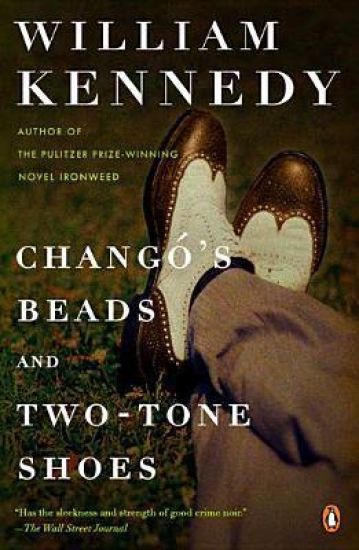
A dramatic novel of love, revolution, and redemption from the Pulitzer Prize-winning author of IronweedWhen journalist Daniel Quinn meets Ernest Hemingway at the Floridita bar in Havana, Cuba, he has no idea that his own affinity for simple, declarative sentences will change his life radically overnight. So begins a tale of revolutionary intrigue, heroic journalism, crooked politicians, drug-running gangsters, Albany race riots, and the improbable rise of Fidel Castro. Quinn's epic journey carries him through the nightclubs and jungles of Cuba and into the newsrooms and racially charged streets of Albany on the day Robert Kennedy is fatally shot in 1968. The odyssey brings Quinn, and his unpredictable Cuban wife, Renata, face-to-face with the darkest facets of human nature and illuminates the power of love in the presence of death. Kennedy masterfully gathers together an unlikely cast of vivid characters in a breathtaking adventure full of music, mysticism, and murder. This is an unforgettably riotous story set against the landscape of the civil rights movement as it challenges the legendary and vengeful Albany political machine. William Kennedy's Albany Cycle of novels reflect what he once described as the fusion of his imagination with a single place. A native and longtime resident of Albany, New York, his work moves from the mid-nineteenth to the mid-twentieth century, chronicling family life, the city's netherworld, and its spheres of power--financial, ethnic, political--often among the Irish-Americans who dominated the city in this period. The novels in his cycle include, Legs, Billy Phelan's Greatest Game, Ironweed, Quinn's Book, Very Old Bones, The Flaming Corsage, and Roscoe.
Student Services for Adults in Southeastern Community and Junior Colleges
Abstract: The purpose of this research was to identify and to describe examples of student services programs which were designed to serve the special needs of older (24 years and older) students by community and junior colleges. The data were collected from a questionnaire and interview with the chief student personnel administrator at each of 18 community and junior colleges in the Southeastern United States. Based on a review of the literature, five categories of student services were selected for study. These categories included admissions, counseling, financial aid, career planning and placement, and support services. The questionnaire and interview items were developed from questionnaires and information found in the literature concerning adults and higher education. An analysis of the data revealed the following facts. 1. One half of the student personnel administrators surveyed were unable to supply enrollment data by full-time or part-time, male or female students. 2. Services were not offered adults in all five of the categories studied. 3. Of those services offered most often, counseling and financial aid services received the greatest amount of institutional support and emphasis for serving adult learners. Career planning and support services received the least amount. 4. When addressing the needs of older students, as identified in the literature, community and junior college student services divisions have, on the average, made some attempt to meet those needs. None of them is attempting to meet all of their needs. 5. The chief student personnel officer of each institution perceived the services being offered adults as effective in meeting adults' needs. 6. None of the student personnel administrators could supply institutional research data confirming their positive perceptions of the impact services had had on increased enrollment and retention of older students. 7. Community and junior colleges generally did not officially differentiate between their traditional and non-traditional students, although the student services staffs normally did. Colleges which do not differentiate are less likely to have special services for older students. 3. Institutions in this study are not making adequate attempts to meet the non-academic needs of older students in all the service categories studied. Therefore, many of the needs for services held by lifelong learners are not being met by many community and junior college student services divisions. Dissertation Discovery Company and University of Florida are dedicated to making scholarly works more discoverable and accessible throughout the world. This dissertation, "Student Services for Adults in Southeastern Community and Junior Colleges" by William Cottrell Kennedy, was obtained from University of Florida and is being sold with permission from the author. A digital copy of this work may also be found in the university's institutional repository, IR@UF. The content of this dissertation has not been altered in any way. We have altered the formatting in order to facilitate the ease of printing and reading of the dissertation.
Student Services for Adults in Southeastern Community and Junior Colleges
Abstract: The purpose of this research was to identify and to describe examples of student services programs which were designed to serve the special needs of older (24 years and older) students by community and junior colleges. The data were collected from a questionnaire and interview with the chief student personnel administrator at each of 18 community and junior colleges in the Southeastern United States. Based on a review of the literature, five categories of student services were selected for study. These categories included admissions, counseling, financial aid, career planning and placement, and support services. The questionnaire and interview items were developed from questionnaires and information found in the literature concerning adults and higher education. An analysis of the data revealed the following facts. 1. One half of the student personnel administrators surveyed were unable to supply enrollment data by full-time or part-time, male or female students. 2. Services were not offered adults in all five of the categories studied. 3. Of those services offered most often, counseling and financial aid services received the greatest amount of institutional support and emphasis for serving adult learners. Career planning and support services received the least amount. 4. When addressing the needs of older students, as identified in the literature, community and junior college student services divisions have, on the average, made some attempt to meet those needs. None of them is attempting to meet all of their needs. 5. The chief student personnel officer of each institution perceived the services being offered adults as effective in meeting adults' needs. 6. None of the student personnel administrators could supply institutional research data confirming their positive perceptions of the impact services had had on increased enrollment and retention of older students. 7. Community and junior colleges generally did not officially differentiate between their traditional and non-traditional students, although the student services staffs normally did. Colleges which do not differentiate are less likely to have special services for older students. 3. Institutions in this study are not making adequate attempts to meet the non-academic needs of older students in all the service categories studied. Therefore, many of the needs for services held by lifelong learners are not being met by many community and junior college student services divisions. Dissertation Discovery Company and University of Florida are dedicated to making scholarly works more discoverable and accessible throughout the world. This dissertation, "Student Services for Adults in Southeastern Community and Junior Colleges" by William Cottrell Kennedy, was obtained from University of Florida and is being sold with permission from the author. A digital copy of this work may also be found in the university's institutional repository, IR@UF. The content of this dissertation has not been altered in any way. We have altered the formatting in order to facilitate the ease of printing and reading of the dissertation.
English Taxation, 1640-1799

English Taxation, 1640-1799

William Kennedy

CRC Press Inc
2018
sidottu
This work, first published in 1913, deals with the causes which led to the imposition of the various taxes which were levied down to and including the first income tax act (1799). Indeed, for an understanding of the system of taxation of the nineteenth century a knowledge of that which preceded it is necessary. The author begins by an explanation of the Tudor and Stuart finances before the time of the civil war at which point the break-down of the former system, as well as the need for a much larger revenue, resulted in important changes in the method of taxation.
English Taxation, 1640-1799

English Taxation, 1640-1799

William Kennedy

CRC Press Inc
2019
nidottu
This work, first published in 1913, deals with the causes which led to the imposition of the various taxes which were levied down to and including the first income tax act (1799). Indeed, for an understanding of the system of taxation of the nineteenth century a knowledge of that which preceded it is necessary. The author begins by an explanation of the Tudor and Stuart finances before the time of the civil war at which point the break-down of the former system, as well as the need for a much larger revenue, resulted in important changes in the method of taxation.
My Secret Life

My Secret Life

William Kennedy

Austin Macauley Publishers
2024
nidottu
My Secret Life is the author's account of his personal struggle to overcome societal norms that overwhelmed him throughout his life and almost defeated him. His struggle, while unique and personal, required courage, resilience, and strength and is one that can be related to and recognized by all. His powerful, open, and compelling account of his battle to overcome the psychological, mental, and emotional effects caused by living a secret life, and how he almost lost that battle, is a story of monumental triumph over adversity. The informal and very personal writing style draws the reader into a personal, historical, yet contemporary history, very relevant for the times we are living in today. A strong bond is formed between the reader and the author as they share in the moments of despair, pain, and fear, but also hope and joy, climaxing in the triumph of life over adversity. Like a phoenix from the flames, the author's captivating, engrossing account of his life hopes to inspire and liberate others, setting them free to live an open, fully authentic life, free from the shame and fear of living with a secret.
A Short Narrative of the Second Voyage of the Prince Albert, in Search of Sir John Franklin
William Kennedy (1814–1890) was an explorer and fur trader. In 1851 he was recommended to Lady Franklin as the commander of her second sponsored expedition in search of her husband, Arctic explorer Sir John Franklin (1786–1847), who had not returned from his 1845 expedition to chart the remaining unexplored section of the Arctic and the Northwest Passage. This volume, first published in 1853, contains Kennedy's account of his 1851 Arctic expedition to rescue Sir John Franklin. Written in the form of a diary, Kennedy describes in detail the hazardous conditions of the Arctic. The crew's experiences including snow blindness, frostbite, scurvy and explorations of land on foot accompanied by Husky dogs are described in detail. Kennedy's use of Inuit survival methods and the type of provisions which were used are also described, providing valuable insights into early nineteenth century methods of Arctic exploration.