Kirjahaku
Etsi kirjoja tekijän nimen, kirjan nimen tai ISBN:n perusteella.
23 kirjaa tekijältä William L. Benoit
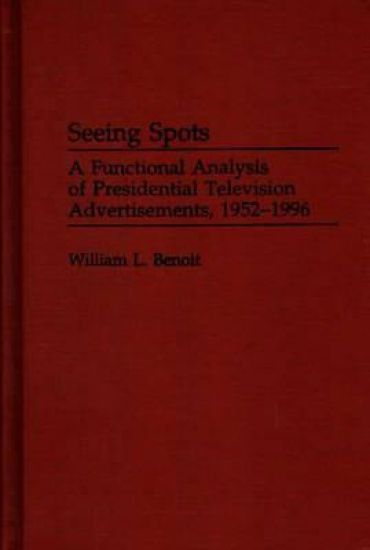
Benoit provides a comprehensive analysis of presidential television spots from every campaign that used this important message form, from the 1952 campaign through the last national campaign in 1996. More than 1,600 presidential spots are analyzed, from both primary and general campaigns. Republican, Democratic, and third party candidate advertisements are analyzed. He uses the Functional Theory of Political Campaign Discourse, analyzing themes in spots as acclaims (self-praise), attacks (criticism), and defenses (responses to attacks). Themes are classified according to topic. Each of these topics is broken down further (policy: past deeds, future plans, general goals; character: personal qualities, leadership ability, ideals). Contrasts are made between spots from Republicans and Democrats as well as third parties, incumbents and challengers, and winners and losers. The spots from candidates who led, trailed, or were in close races also are contrasted.Spots are becoming more negative over time, Benoit concludes, in both primary and general campaigns. General campaigns are more negative than primary campaigns, Democrats are more negative than Republicans, and challengers are more negative than incumbents. There are no differences between winners and losers. However, candidates who trailed throughout the campaign were most negative, while candidates in close races were most positive. An important analysis for scholars and researchers in political communication and American presidential politics.
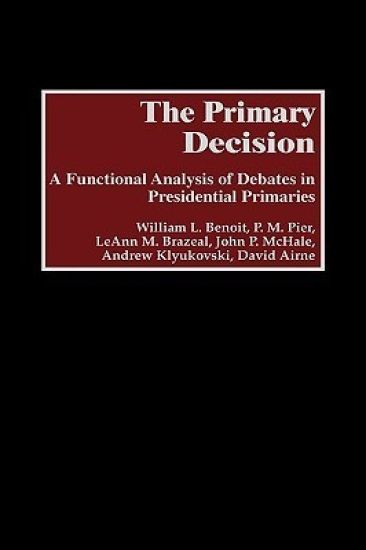
Benoit and his colleagues apply the functional theory of political campaign discourse to 25 presidential primary debates beginning with the 1948 American presidential primary campaign. They conclude with the 2000 presidential primaries.They identify the functions, topics, and targets of attacks, and the results are compared with research on primary TV spots and with general debates. An important resource for scholars and students of American presidential and party elections and political communications.
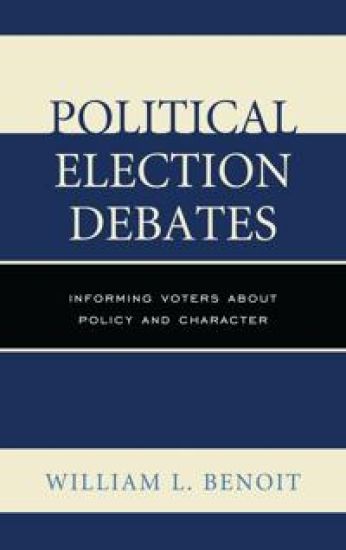
Political debates are an important facet of modern election campaigns. How politicians frame an argument, how the audience perceives it, and how the media decides to display it are key components in analyzing the outcome of a political debate, and ultimately, an election. Drawing mainly on the functional theory of political campaign discourse, William L. Benoit examines a wide variety of debates not only in the United States but across the globe. Because each phase of election offers new challenges, specific attention is paid to how primary versus general and incumbency influence the content of political leaders’ debate practices. Specifically, the book delves into the history and nature of debates in various United States elections, including presidential, vice presidential, senatorial, gubernatorial, and mayoral candidates. Also examined are debates ranging from the United Kingdom to South Korea to Australia. Benoit also employs the issues ownership theory and functional federalism theory as a deeper part of the analysis. This book offers a critical examination and comprehensive overview of election debate theory.
A Functional Analysis of Political Television Advertisements
William L. Benoit
Lexington Books
2014
sidottu
A Functional Analysis of Political Television Advertisements examines theory and research on election advertisements. William Benoit employs the Functional Theory of Political Campaign Discourse to understand the nature or content of television spots in election campaigns. Beginning with a look at American presidential spots from 1952–2012, Benoit investigates the three functions—acclaims, attacks, and defenses—and the topics of policy and character for these groups of political commercials. The following chapters are devoted to reporting similar data on presidential primary advertisements, presidential third party spots, other theories including Issue Ownership Theory and Functional Federalism Theory, as well as nonpresidential and non-U.S. election advertising. Benoit considers the data, discusses the development of political advertising over time, and finally, presents areas for further research. This book is a uniquely comprehensive examination of the value and use of television spots in political election rhetoric.
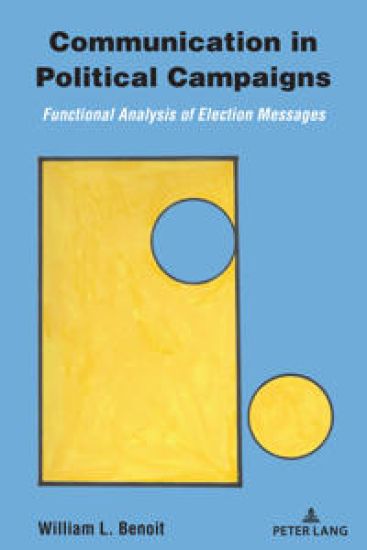
This book offers a comprehensive guide to political campaign communication using functional theory as a framework. An authoritative account packed with real life examples from campaigns across the globe, the book examines all of the important variables in political campaign communication. Considering campaign media - from television spots and debates to candidate webpages and direct-mail advertising - it looks closely at news coverage of campaigns, and examines the sources of campaign messages, the various ways of responding to scandal, the process of voter decision-making, and the ways in which context affects a political campaign. Chapters consider a full range of races, from presidential to congressional to gubernatorial, and look at political campaigns in the United States and many other countries including France, Israel, South Korea, and Taiwan. Communication in Political Campaigns introduces readers to both theory and research on the topic, and is an ideal text for courses on political campaigns.
This book is based on the Functional Theory of Political Campaign Discourse. It adopts a communication perspective to campaigns for public office. It discusses medium (e.g., speeches TV spots, debates, social media), sources of campaign messages, context (e.g., primary vs. general campaign), audience (voters and how they process messages), news coverage of election campaigns, and non-presidential and non-U.S. election messages.
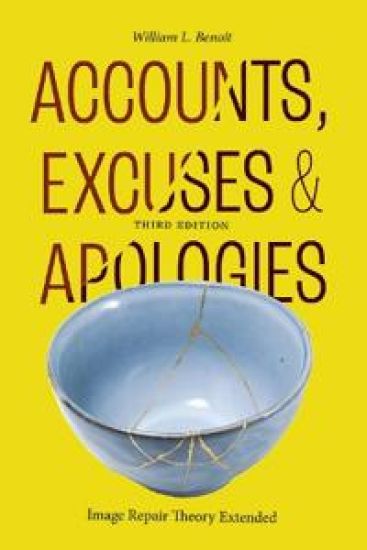
Proposes a theory and case studies on repairing a damaged or threatened image or reputation.In our constantly plugged-in and connected world, image is everything. People, groups, organizations, and countries frequently come under suspicion of wrongdoing and sometimes require defense. Accounts, Excuses, and Apologies describes the image-repair strategies that may be used to help defuse these threats.The Third Edition of this classic book builds on theories for rehabilitating a damaged reputation by adding two new forms of denial: straw denial (appearing to deny an accusation by sidestepping it) and deflecting attention (trying to get the audience to focus on something other than the accusations against you). Five contexts for image repair are examined: corporate, political, sports/entertainment, international, and third party (when one person or organization tries to repair the image of another). The book's case studies include current instances of reputation repair, including Vladimir Putin on Ukraine and President Joe Biden on Afghanistan; Southwest Airlines on flight cancellations; Kobe Bryant on accusations of rape; and Donald Trump on the January 6 hearings.
Political debates are an important facet of modern election campaigns. How politicians frame an argument, how the audience perceives it, and how the media decides to display it are key components in analyzing the outcome of a political debate, and ultimately, an election. Drawing mainly on the functional theory of political campaign discourse, William L. Benoit examines a wide variety of debates not only in the United States but across the globe. Because each phase of election offers new challenges, specific attention is paid to how primary versus general and incumbency influence the content of political leaders’ debate practices. Specifically, the book delves into the history and nature of debates in various United States elections, including presidential, vice presidential, senatorial, gubernatorial, and mayoral candidates. Also examined are debates ranging from the United Kingdom to South Korea to Australia. Benoit also employs the issues ownership theory and functional federalism theory as a deeper part of the analysis. This book offers a critical examination and comprehensive overview of election debate theory.
A Functional Analysis of Political Television Advertisements
William L. Benoit
Lexington Books
2015
nidottu
A Functional Analysis of Political Television Advertisements examines theory and research on election advertisements. William Benoit employs the Functional Theory of Political Campaign Discourse to understand the nature or content of television spots in election campaigns. Beginning with a look at American presidential spots from 1952–2012, Benoit investigates the three functions—acclaims, attacks, and defenses—and the topics of policy and character for these groups of political commercials. The following chapters are devoted to reporting similar data on presidential primary advertisements, presidential third party spots, other theories including Issue Ownership Theory and Functional Federalism Theory, as well as nonpresidential and non-U.S. election advertising. Benoit considers the data, discusses the development of political advertising over time, and finally, presents areas for further research. This book is a uniquely comprehensive examination of the value and use of television spots in political election rhetoric.
Benoit, Blaney, and Pier apply the functional theory of political campaign discourse to the 1996 presidential campaign. When a citizen casts a vote, he or she makes a decision about which candidate is preferable. There are only three types of rhetorical strategies for persuading voters to believe a candidate is the better choice: acclaiming or self-praise, attacking or criticizing an opponent, and defending or responding to attacks. As they illustrate, acclaims, if accepted by the audience, make the candidate appear better. Attacks can make the opponent seem worse, improving the source's apparent preferability. If attacked, a candidate can attempt to restore—or prevent—lost credibility by defending against that attack.As Benoit, Blaney, and Pier point out, the functional theory of political communication is relatively new, and their book illustrates it with a detailed analysis of the most recent presidential campaign. One of the major strengths of the study is the variety of message forms examined: television spots, debates, talk radio appearances, keynote speeches, acceptance speeches, speeches by spouses, radio addresses, and free television time remarks. It also examines all three parts of the campaign—primary, nominating conventions, and general campaign. This comprehensive analysis of the '96 presidential campaign will be of considerable use to students, scholars, and other researchers dealing with contemporary American electioneering.
Campaign 2000
William L. Benoit; John P. McHale; Glenn J. Hansen; P. M. Pier; John P. McGuire
Rowman Littlefield Publishers
2003
sidottu
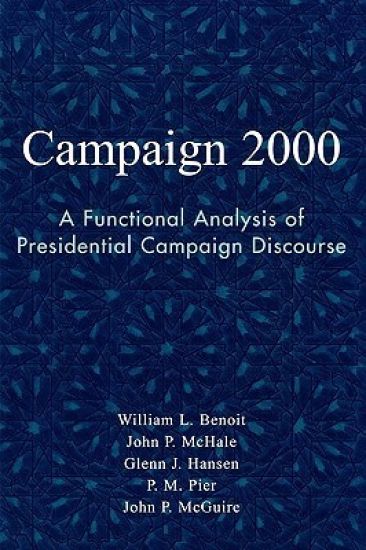
Campaign 2000 applies the functional theory of political campaign discourse—analyzing how messages acclaim, attack, or defend—to several different forms of campaign communication in the 2000 U.S. presidential primary and general election. These forms include political advertisements on television and radio, debates, television talk show appearances, campaign web pages, and convention speeches by candidates and their spouses. The authors also look at the election outcomes and explore lessons to apply to future campaign discourse.
Campaign 2000
William L. Benoit; John P. McHale; Glenn J. Hansen; P. M. Pier; John P. McGuire
Rowman Littlefield Publishers
2003
nidottu
Campaign 2000 applies the functional theory of political campaign discourse—analyzing how messages acclaim, attack, or defend—to several different forms of campaign communication in the 2000 U.S. presidential primary and general election. These forms include political advertisements on television and radio, debates, television talk show appearances, campaign web pages, and convention speeches by candidates and their spouses. The authors also look at the election outcomes and explore lessons to apply to future campaign discourse.
Bush Versus Kerry
William L. Benoit; Kevin A. Stein; John P. McHale; Sumana Challopadhyay
Peter Lang Publishing Inc
2007
sidottu
Bush versus Kerry analyzes the 2004 presidential campaign using the functional theory of political campaign communication. After an introduction and explication of political campaign communication theory, chapters investigate the content of candidate messages - for example, television spots, debates, webpages, and acceptance addresses - and media coverage of the campaign.
The Rise and Fall of Mass Communication
William L. Benoit; Andrew C. Billings
Peter Lang Publishing Inc
2020
nidottu
Mass communication theories were largely built when we had mass media audiences. The number of television, print, film or other forms of media audiences were largely finite, concentrating people on many of the same core content offerings, whether that be the nightly news or a popular television show. What happens when those audiences splinter? The Rise and Fall of Mass Communication surveys the aftermath of exactly that, noting that very few modern media products have audiences above 1–2% of the population at any one time. Advancing a new media balkanization theory, Benoit and Billings neither lament nor embrace the new media landscape, opting instead to pinpoint how we must consider mass communication theories and applications in an era of ubiquitous choice.
The Rise and Fall of Mass Communication
William L. Benoit; Andrew C. Billings
Peter Lang Publishing Inc
2020
sidottu
Mass communication theories were largely built when we had mass media audiences. The number of television, print, film or other forms of media audiences were largely finite, concentrating people on many of the same core content offerings, whether that be the nightly news or a popular television show. What happens when those audiences splinter? The Rise and Fall of Mass Communication surveys the aftermath of exactly that, noting that very few modern media products have audiences above 1–2% of the population at any one time. Advancing a new media balkanization theory, Benoit and Billings neither lament nor embrace the new media landscape, opting instead to pinpoint how we must consider mass communication theories and applications in an era of ubiquitous choice.
Presidential Campaigns in the Age of Social Media
William L. Benoit; Mark J. Glantz
Peter Lang Publishing Inc
2019
sidottu
This book offers content analyses of the 2016 presidential candidate campaign messages from the primary and the general election. The chapters examine both new (Twitter, Facebook) and traditional (TV spots, debates, speeches) media employed in this contest. This allows comparison of campaign phases (primary versus general), candidates (Republican primary and Democratic primary candidates; general election candidates), and message forms. The results are compared with data from analyses of previous presidential campaigns.
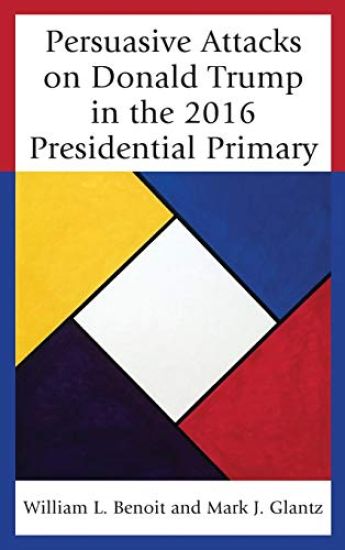
Persuasive Attacks on Donald Trump in the 2016 Presidential Primary
William L. Benoit; Mark J. Glantz
Lexington Books
2017
sidottu
Persuasive Attacks on Donald Trump in the 2016 Presidential Primary investigates the nature of persuasive attacks on Donald Trump during the 2016 presidential primary campaign. It begins by extending the Theory of Persuasive Attack to include attacks on character as well as attacks on actions. William L. Benoit & Mark J. Glantz use topical analysis to understand humor (late night television jokes; video from SNL, Colbert, and Oliver; articles in The Onion, and political cartoons) and Republican “establishment” attacks from Mitt Romney and the National Review. Quantitative content analysis examines attacks in primary debates and primary TV spots. The book concludes with criticisms found on social media platforms and TV talk shows.
Persuasive Attacks on Donald Trump in the 2016 Presidential Primary
William L. Benoit; Mark J. Glantz
Lexington Books
2018
nidottu
Persuasive Attacks on Donald Trump in the 2016 Presidential Primary investigates the nature of persuasive attacks on Donald Trump during the 2016 presidential primary campaign. It begins by extending the Theory of Persuasive Attack to include attacks on character as well as attacks on actions. William L. Benoit & Mark J. Glantz use topical analysis to understand humor (late night television jokes; video from SNL, Colbert, and Oliver; articles in The Onion, and political cartoons) and Republican “establishment” attacks from Mitt Romney and the National Review. Quantitative content analysis examines attacks in primary debates and primary TV spots. The book concludes with criticisms found on social media platforms and TV talk shows.