Kirjojen hintavertailu. Mukana 11 342 296 kirjaa ja 12 kauppaa.

Kirjahaku

Etsi kirjoja tekijän nimen, kirjan nimen tai ISBN:n perusteella.

6 kirjaa tekijältä William L. Rowe

Can God Be Free?

Can God Be Free?

William L. Rowe

Clarendon Press
2004
sidottu
In the three major religions of the West, God is understood to be a being whose goodness, knowledge, and power is such that it is impossible for any being, including God himself, to have a greater degree of goodness, knowledge, and power. This book focuses on God's freedom and praiseworthiness in relation to his perfect goodness. Given his necessary perfections, if there is a best world for God to create he would have no choice other than to create it. For, as Leibniz tells us, 'to do less good than one could is to be lacking in wisdom or in goodness.' But if God could not do otherwise than create the best world, he created the world of necessity, not freely. And, if that is so, it may be argued that we have no reason to be thankful to God for creating us, since, as parts of the best possible world, God was simply unable to do anything other than create us - he created us of necessity, not freely. Moreover, we are confronted with the difficulty of having to believe that this world, with its Holocaust, and innumerable other evils, is the best that an infinitely powerful, infinitely good being could do in creating a world. Neither of these conclusions, taken by itself, seems at all plausible. Yet each conclusion appears to follow from the conception of God now dominant in the great religions of the West. William Rowe presents a detailed study of this important problem, both historically in the writings of Gottfried Leibniz, Samuel Clarke, Thomas Aquinas, and Jonathan Edwards, as well as in the contemporary philosophical literature devoted to the issue. Rowe argues that this problem is more serious than is commonly thought and may require some significant revision in contemporary thinking about the nature of God.
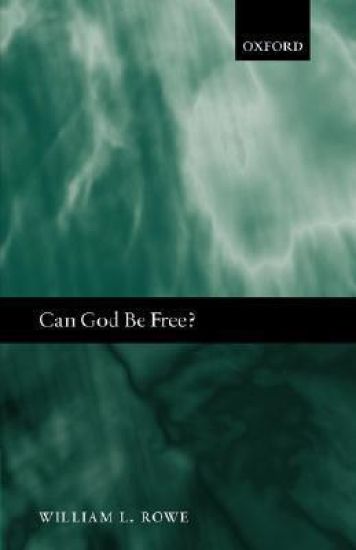
Can God Be Free?

Can God Be Free?

William L. Rowe

Clarendon Press
2006
nidottu
In the three major religions of the West, God is understood to be a being whose goodness, knowledge, and power are such that it is impossible for any being, including God himself, to have a greater degree of goodness, knowledge, and power. This book focuses on God's freedom and praiseworthiness in relation to his perfect goodness. Given his necessary perfections, if there is a best world for God to create he would have no choice other than to create it. For, as Leibniz tells us, 'to do less good than one could is to be lacking in wisdom or in goodness'. But if God could not do otherwise than create the best world, he created the world of necessity, not freely. And, if that is so, it may be argued that we have no reason to be thankful to God for creating us, since, as parts of the best possible world, God was simply unable to do anything other than create us---he created us of necessity, not freely. Moreover, we are confronted with the difficulty of having to believe that this world, with its Holocaust, and innumerable other evils, is the best that an infinitely powerful, infinitely good being could do in creating a world. Neither of these conclusions, taken by itself, seems at all plausible. Yet each conclusion appears to follow from the conception of God now dominant in the great religions of the West. William Rowe presents a detailed study of this important problem, both historically in the writings of Gottfried Leibniz, Samuel Clarke, Thomas Aquinas, and Jonathan Edwards, and in the contemporary philosophical literature devoted to the issue. Rowe argues that this problem is more serious than is commonly thought and may require some significant revision in contemporary thinking about the nature of God.
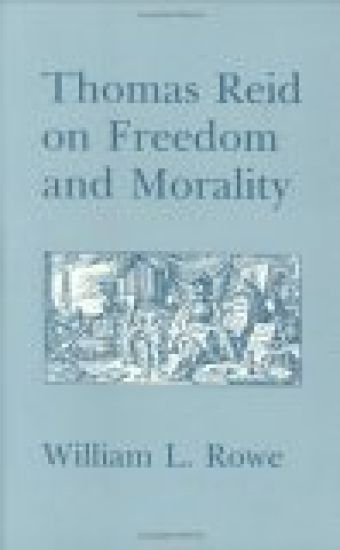
Thomas Reid on Freedom and Morality

Thomas Reid on Freedom and Morality

William L. Rowe

Cornell University Press
1991
sidottu
In this succinct and well-written book, one of our most eminent philosophers provides a fresh reading of the view of freedom and morality developed by Thomas Reid (1710-1796). Although contemporary theorists have written extensively about the Scottish philosopher's contributions to the theory of knowledge, this is the first book-length study of his contributions to the controversy over freedom and necessity. William L. Rowe argues that Reid developed a subtle, systematic theory of moral freedom based on the idea of the human being as a free and morally responsible agent. He carefully reconstructs the theory and explores the intellectual background to Reid's views in the work of John Locke, Samuel Clarke, and Anthony Collins. Rowe develops a novel account of Reid's conception of free action and relates it to contemporary arguments that moral responsibility for an action implies the power to have done otherwise. Distilling from Reid's work a viable version of the agency theory of freedom and responsibility, he suggests how Reid's theory can be defended against the major objections—both historical and contemporary—that have been advanced against it. Blending to good effect historical and philosophical analysis, Thomas Reid on Freedom and Morality should interest philosophers, political theorists, and intellectual historians.
The Cosmological Argument

The Cosmological Argument

William L. Rowe

Fordham University Press
1998
sidottu
This book provides a comprehensive, critical study of the oldest and most famous argument for the existence of God: the Cosmological Argument. Professor Rowe examines and interprets historically significant versions of the argument from Aquinas to Samuel Clarke and explores the major objections that have been advances against it. Beginning with analyses of the Cosmological Argument as expressed by Aquinas and Duns Scotus in the thirteenth century, the author seeks to uncover, clairfy , and critically explore the philosophical concepts and theses essential to the reasoning exhibited in the principal versions of the Cosmological Argument. The major focus of the book is on the form that the argument takes in the eighteenth century, principally in the writings of Samuel Clarke. The author concludes with a discussion of the extent to which the Cosmological Argument may provide a justification for the belief in God. In a new Preface, the author offers some updates on his own thinking as well as that of others who have grappled with this topic.
The Cosmological Argument

The Cosmological Argument

William L. Rowe

Fordham University Press
1998
pokkari
This book provides a comprehensive, critical study of the oldest and most famous argument for the existence of God: the Cosmological Argument. Professor Rowe examines and interprets historically significant versions of the argument from Aquinas to Samuel Clarke and explores the major objections that have been advances against it. Beginning with analyses of the Cosmological Argument as expressed by Aquinas and Duns Scotus in the thirteenth century, the author seeks to uncover, clairfy , and critically explore the philosophical concepts and theses essential to the reasoning exhibited in the principal versions of the Cosmological Argument. The major focus of the book is on the form that the argument takes in the eighteenth century, principally in the writings of Samuel Clarke. The author concludes with a discussion of the extent to which the Cosmological Argument may provide a justification for the belief in God. In a new Preface, the author offers some updates on his own thinking as well as that of others who have grappled with this topic.