Kirjojen hintavertailu. Mukana 12 016 292 kirjaa ja 12 kauppaa.

Kirjahaku

Etsi kirjoja tekijän nimen, kirjan nimen tai ISBN:n perusteella.

40 kirjaa tekijältä William Malpas

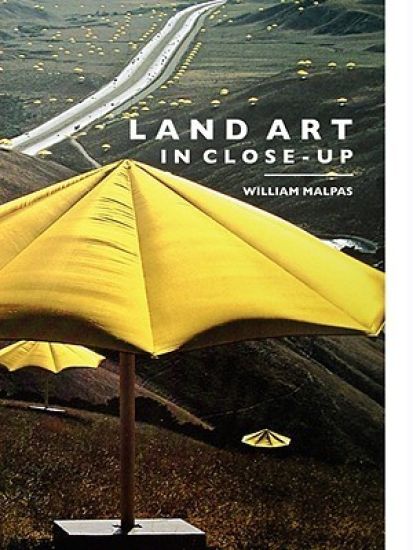
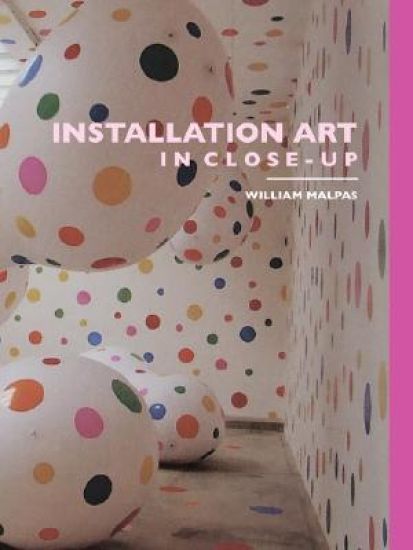
Installation Art in Close-Up

Installation Art in Close-Up

William Malpas

Joe's Press
2007
pokkari
INSTALLATION ART IN CLOSE-UP A huge array of contemporary artists are studied and illustrated in this new book on installation and environmental art, including: Andy Goldsworthy, Mark Rothko, Barnett Newman, David Nash, Richard Long, Hamish Fulton, Hans Haacke, Wolfgang Laib, Joseph Beuys, Ad Reinhardt, Louise Nevelson, Tony Cragg, Cornelia Parker, Rebecca Horn, Constantin Brancusi, James Turrell, Donald Judd, Christo, Robert Morris, Lawrence Weiner, Robert Irwin, Jannis Kounellis, Donna Dennis, Ian Hamilton Finlay, Alan Sonfist, Alice Aycock, Mary Miss, Nancy Holt, Walter de Maria, Dennis Oppenheim, Jackie Winsor, Richard Serra, Carl Andre, Frank Stella, Robert Ryman, Robert Smithson, Dan Flavin, Eva Hesse, Sol LeWitt, and Barbara Kruger. This is a book of rows of steel cubes, lightning fields, galleries of soil and horses, leaf sculptures, entropy, earthworks, floor-to-ceiling slogans, snow circles, floor spreads, mapworks, walks, reshaped volcanoes, birds in space, fluorescent lamps, TV monitors, mirrors, interior lakes, wrapped buildings, spiral jetties, underground labyrinths, stellar observatories, steam pieces, gardens, embankments, holes, concrete poetry, slate stacks, artificial rivers, and stoves. An installation is the management of a whole space or environment - floor, walls, ceiling, furnishings, lighting and doorways, as in Rebecca Horn's Ballet of the Woodpecker, a room full of mirrors, or Sylvia Stone's Crystal Palace. Artists aren't content anymore to demurely hang paintings on walls, or peacefully place sculptures on pedestals. Art exhibitions now are an art of environments, with TV monitors, computers, scaffolding, video cameras, supports, bones, wire mesh and a zillion other items everywhere (though video screens are the favourite installation media). The classic type of installation art developed out of the 1960s, out of performance art, Process art, ABC art, Minimal and Postminimal art. Even today one of the most common forms of installation art is a bunch of TV monitors hooked up together (or often a video projector) showing grainy video images of people accompanied by an atmospheric soundtrack. Art in Close-Up Series. Bibliography, notes. Fully illustrated. 320pp.
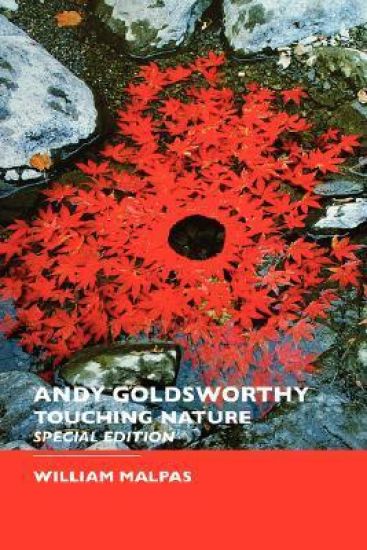
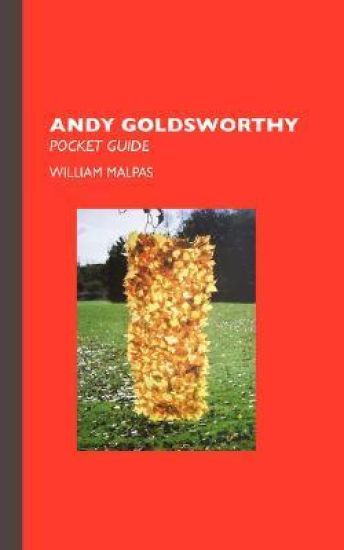
Andy Goldsworthy

Andy Goldsworthy

William Malpas

CRESCENT MOON PUBLISHING
2007
sidottu
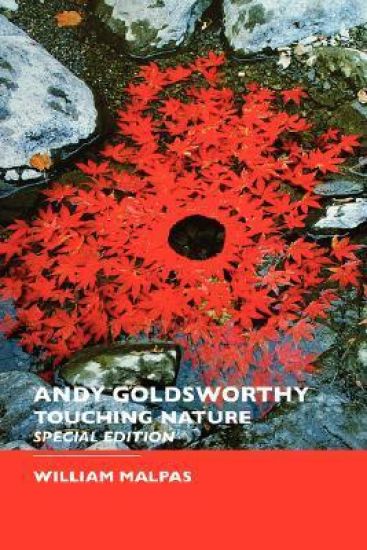
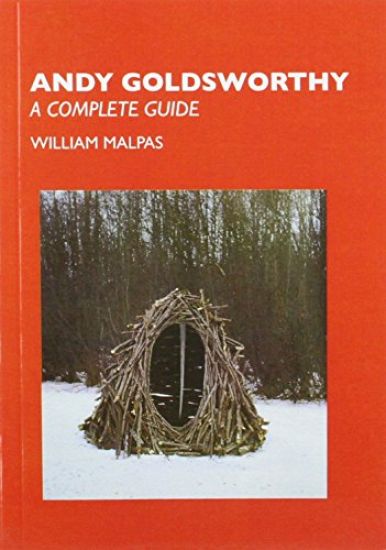
ANDY GOLDSWORTHY: TOUCHING NATURE DESCRIPTION A new and revised edition of our best-selling book on Andy Goldsworthy. A completely rewritten exploration of the sculptor, updated to include recent works such as Night Path (2002) and Chalk Stones (2003) in Sussex, Three Cairns (2002) on the American East and West coasts, Stone Houses (2004) and Garden of Stones (2003) in Gotham, Passage (2005) in London, and Slate Domes (2005) in Washington, DC. Known as a 'land', 'earth', 'nature' or 'environmental' artist, Andy Goldsworthy works with(in) nature. He uses natural materials in natural shapes and forms often set in natural contexts (but also in cities, towns, parks, sculpture parks, and many spaces created or adapted by people). FROM THE INTRODUCTION In the 1990s, Andy Goldsworthy's art began to rise in popularity: the glossy coffee table book Stone became a bestseller (bear in mind it was then priced at $55). In 1994 Goldsworthy took over some West End galleries with a large one-man show. In 1995 he was part of an intriguing group show at the British Museum (Time Machine), creating sculptures, along with Richard Deacon, Peter Randall-Page and others, in amongst the monumental statuary of the famous Egyptian Hall. Also in 1995, Goldsworthy designed a set of Royal Mail stamps (and again in 2003). Digne in France became an increasingly important Goldsworthy location, with shows in 1995, 1997 and 2000). Prestigious commissions occurred in the US from the mid-1990s onwards. For instance: the giant Wall at Storm King Art Center in 1998; the Three Cairns on the East and West Coasts and Iowa in 2001-02; the 'stone houses' at the Metropolitan Museum in Gotham in 2004; the monument to the Holocaust (also in New York) in 2003; and the slate domes in Washington, DC in 2005. Goldsworthy continues to work in countries such as Japan, Australia, Holland, Canada, North America and France (with France and the US becoming primary centres of Goldsworthy activity), but his home ground of Dumfriesshire in Scotland remains (at) the heart of his work. AUTHOR BIOGRAPHY William Malpas has written books on Richard Long and land art, as well as three books on Andy Goldsworthy, including the forthcoming Andy Goldsworthy In America. Malpas's books on Richard Long and Andy Goldsworthy are the only full-length studies of these artists available.
Land Art in the U.K.

Land Art in the U.K.

William Malpas

Crescent Moon Publishing
2008
sidottu
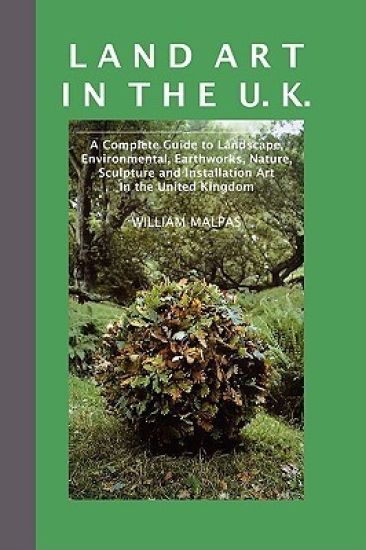
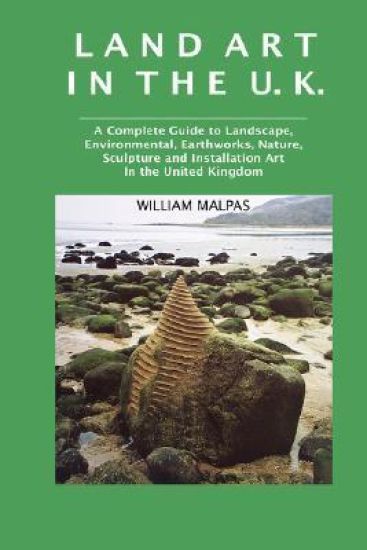
A new book on land art in Great Britain Chapters on land artists such as Chris Drury, Hamish Fulton, David Nash, Richard Long and Andy Goldsworthy. All of the major practitioners of land and environmental art in the U.K. are discussed.
Land Art

Land Art

William Malpas

CRESCENT MOON PUBLISHING
2008
sidottu
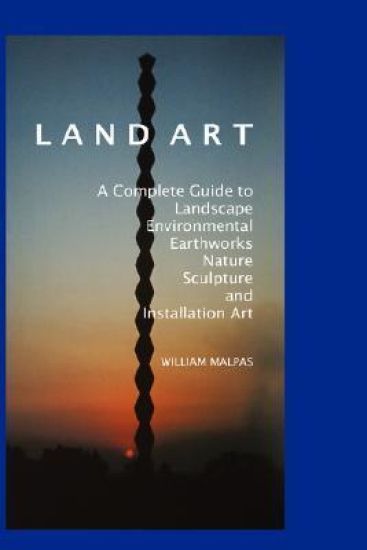
LAND ART A fully illustrated guide to land and environmental art. For the land artist, the whole planet is an artist's studio. The land artist ranges over the whole globe. A desert, a beach, a field, a forest becomes a studio, a place of creative activity. This means the very texture and colour and shape and dampness and springiness and strength and size of moss, for instance. Or a stone. Or a crevice in a rock formation. The way the light falls on a patch of grass, the little bits of dead, yellowish grass on top of the newer, green grass. Pine cones, closed-up. Flowers turning sunward in the late afternoon. These are the things land artists deal with in making art. These are the actualities that artists employ when they create artworks. ? This new book explores all of the major land, environmental and earthwork artists of the past 40 years, including James Turrell and his vast volcano site - Hans Haacke's Conceptual art - Michael Heizer's Mid-West earthworks - Robert Smithson and his giant spiral, entropic earthworks - Christo's wrapped buildings and islands, - Robert Morris's environments - Walter de Maria's Romantic Lightning Field - David Nash's stoves, stones, trees and North Wales environments - Hamish Fulton's walks and words - Dennis Oppenheim's concentric snow circles - Richard Long and his art of walking - Andy Goldsworthy's natural, spontaneous, eco-friendly sculptures - Alice Aycock's mysterious underground mazes - Mary Miss's sunken pools and pavilions - Wolfgang Laib's delicate, luminous pollen spreads - Nancy Holt and her observation sculptures - and the enigmatic floor sculptures of Carl Andre. Here are towers, stars, stones, pools, tunnels, pipes, maps, chasms, ladders, mounds, scars, mirrors, cones, furrows, mazes, circles, hills and gardens. ?
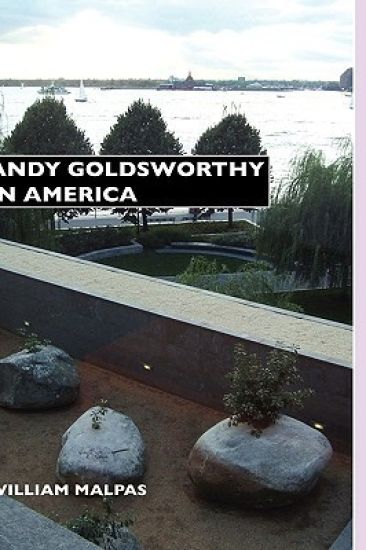
Andy Goldsworthy in America

Andy Goldsworthy in America

William Malpas

CRESCENT MOON PUBLISHING
2010
sidottu
ANDY GOLDSWORTHY IN AMERICA This study looks at the contemporary British artist, Andy Goldsworthy, and his work in the United States of America. Goldsworthy's presence in America grew steadily with a series of exhibitions beginning in the late Nineties with the Storm King Wall and show. This was followed by: Cornell University in 2000; the Three Cairns show and installations in 2002-03; Austin Museum in 2003; the Garden of Stone and Stone Houses in New York City in 2003-04; and Roof in Washington in 2005. There are a number of essential sites to visit for Andy Goldsworthy's art in America: (1) the slate mounds in Washington's National Gallery of Art; (2) Garden of Stones in New York's Museum of Jewish Heritage; (3) the cracked stones at the de Young Museum in San Francisco; (4) the Storm King Wall in New York; and (5) Three Cairns in Des Moines, Iowa. Fully illustrated, including images of the American landscape, and Goldsworthy's contemporaries. Includes photographs taken by the author of Andy Goldsworthy's works in America, including in Washington, DC, San Francisco, New York State and Iowa. Bibliography and notes. WILLIAM MALPAS has written books on Richard Long and land art, as well as three books on Andy Goldsworthy, including the forthcoming Andy Goldsworthy In America. Malpas's books on Richard Long and Andy Goldsworthy are the only full-length studies of these artists available. EXTRACT Andy Goldsworthy works with the natural world, and within nature. He uses natural materials in natural shapes and forms set in natural contexts. Goldsworthy takes his cue from nature: as Jan Dibbets put it in 1969: 'I realized that if you want to use nature, you have to derive the appropriate structure from nature too'. Nature may be the starting-point but, as we'll see, the end-point - art - is entirely cultural and not something you'll ever find in the natural world. Andy Goldsworthy seems to be a particularly gentle and sensitive artist, compared to many sculptors and land artists: he stitches together leaves to form lines (which're often placed in water, or over branches), or makes circular slabs of snow, or entwines twigs in an arc. He creates a delicate spiral of chestnut leaves, called Autumn Horn (1986); he pins bright yellow dandelions on willowherb stalks in a circle, on bluebells (1987); he makes lines and cairns of pebbles; a horizontal line of red sumach leaves was pinned to a willow (at Storm King in 1998); he rubs red stones to stain rockpools; he pins leaves to tree trunks; he fashions a zigzag line of hogweed stalks along a fallen elm tree (2002); he makes hollow, circular structures, recalling igloos, from slate, leaves, driftwood and bracken; he creates long wavy ridges in Arizonan and Australian desert sand; he throws sand and sticks in the air and photographs the moment.
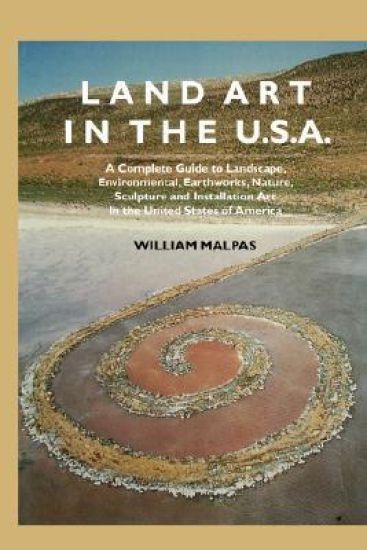
Land Art in the U.S.A.

Land Art in the U.S.A.

William Malpas

CRESCENT MOON PUBLISHING
2010
sidottu
LAND ART IN THE U.S.A. A new study of land art in America, featuring all of the well-known land artists from the 'golden age' of land art - the 1960s - to the present day. Fully illustrated, with a bibliography. EXTRACT FROM THE CHAPTER ON ROBERT SMITHSON Robert Smithson is the key land artist, the premier artist in the world of land art. And he's been a big favourite with art critics since the early Seventies. Smithson was the chief mouthpiece of American earth/ site sthetics, and is probably the most important artist among all land artists. For Robert Smithson, Carl Andre, Walter de Maria, Michael Heizer, Dennis Oppenheim and Tony Smith were 'the more compelling artists today, concerned with 'Place' or 'Site''. Smithson was impressed by Tony Smith's vision of the mysterious aspects of a dark unfinished road and called Smith 'the agent of endlessness'. Smith's sthetic became part of Smithson's view of art as a complete 'site', not simply an sthetic of sculptural objects. Smithson was not inspired by ancient religious sculpture, by burial mounds, for example, so much as by decayed industrial sites. He visited some in the mid-1960s that were 'in some way disrupted or pulverized'. He said he was looking for a 'denaturalization rather than built up scenic beauty'. Robert Smithson said he was concerned, like many land (and contemporary artists with the thing in itself, not its image, its effect, its critical significance: 'I am for an art that takes into account the direct effect of the elements as they exist from day to day apart from representation'. Smithson's theory of the 'non-site' was based on 'absence, a very ponderous, weighty absence'. Smithson proposed a theory of a dialectic between absence and presence, in which the 'non-site' and 'site' are both interacting. In the 'non-site' work, presence and absence are there simultaneously. 'The land or ground from the Site is placed in the art (Non-Site) rather than the art is placed on the ground. The Non-Site is a container within another container - the room'. William Malpas has written books on Richard Long and land art, as well as three books on Andy Goldsworthy, including the forthcoming Andy Goldsworthy In America. Malpas's books on Richard Long and Andy Goldsworthy are the only full-length studies of these artists available.