Kirjojen hintavertailu. Mukana 12 016 292 kirjaa ja 12 kauppaa.

Kirjahaku

Etsi kirjoja tekijän nimen, kirjan nimen tai ISBN:n perusteella.

11 kirjaa tekijältä William March

Company K

Company K

William March

The University of Alabama Press
1989
nidottu
With an Introduction by Philip D. Beidler This book was originally published in 1933. It is the first novel by William March, pen name for William Edward Campbell. Stemming directly from the author's experiences with the U.S. Marines in France during World War I, the book consists of 113 sketches, or chapters, tracing the fictional Company K's war exploits and providing an emotional history of the men of the company that extends beyond the boundaries of the war itself. William Edward Campbell served courageously in France as evidenced by his chestful of medals and certificates, including the Croix de Guerre, the Distinguished Service Cross, and the Navy Cross. However, without the medals and citations we would know of his bravery. For it is clear in the pages of Company K that this book was written by a man who had been to war, who had clearly seen his share of the worst of it, who had somehow survived, and who had committed himself afterward to the new bravery of sense-making embodied in the creation of major literary art. It is of that bravery that we still have the record of magnificent achievement, the brave terrible gift of Company K.
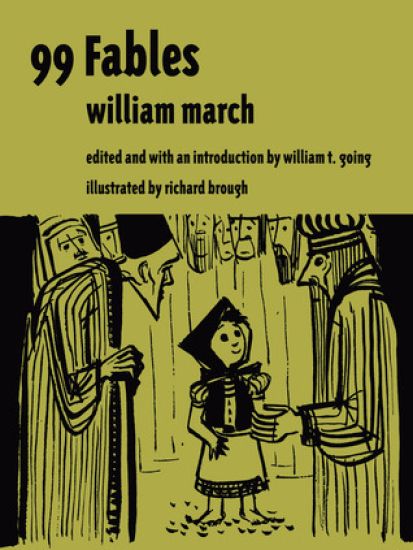
99 Fables

99 Fables

William March

The University of Alabama Press
2011
nidottu
Superb stories, meaningful themes, and powerful effects At the time of his death, the longest manuscript still in William March's possession was a collection of fables, which he had completed for the first time in 1938. While Company K, The Tallons, The Bad Seed, and all the rest were in progress, March culled and rewrote, polished and revised these fables, always finding them "too good to destroy," yet never finding them a good venture for a commercial publisher. Now, posthumously, the collection appears in this book, and readers can enjoy the fabulous world of William March. This is not to imply that it is a "pretty world." The fables themselves are an immediate delight, and everyone will find many favorites among the 99. But in the end, March's view of the world is a hard one, and the morals, however charmingly expressed are bitter enough to rival the themes of his novels.
The Tallons

The Tallons

William March

The University of Alabama Press
2015
nidottu
William March's debut novel, Company K, introduced him to the reading public as a gifted writer of modern fiction. Of that World War I classic, Graham Greene wrote: ""It is the only war book I have read which has found a new form to fit the novelty of the protest. The prose is bare, lucid, without literary echoes."" After Company K, March brought his same unerring style to a cycle of novels and short stories–his ""Pearl County"" series–inspired in part by his childhood in the vicinity of Mobile, Alabama. The University of Alabama Press is pleased to be bringing these three novels back into print.In The Tallons, the second novel in the ""Pearl County"" series, March tells the story of two farm boys, Andrew and Jim Tallon. Their placid and predictable life is upended by a girl from Georgia, Myrtle Bickerstaff. The conflict which engulfs these three arises from a series of carefully chosen and extraordinarily telling incidents to a dramatic climax which will be remembered long after the book is set aside. March framed the novel as ""a study in paranoia"" and to the end of his life considered it one of his strongest works.
Come in at the Door

Come in at the Door

William March

The University of Alabama Press
2015
nidottu
William March's debut novel, Company K, introduced him to the reading public as a gifted writer of modern fiction. Of that World War I classic, Graham Greene wrote: “It is the only war book I have read which has found a new form to fit the novelty of the protest. The prose is bare, lucid, without literary echoes.” After Company K, March brought his same unerring style to a cycle of novels and short stories—his “Pearl County” series—inspired in part by his childhood in the vicinity of Mobile, Alabama.Come in at the Door is the first in March’s “Pearl County” collection, and it tells the story of Chester, a boy who lives with his withholding, widowed father, and Mitty, who keeps house and serves as a surrogate wife to Chester’s father and a mother to Chester. One morning before dawn, Mitty takes Chester to the Athlestan courthouse to watch the hanging of a man who’d killed “a grotesque, dwarflike creature” he thought had “laid a conjure” on him. Throughout Chester’s rambunctious young manhood, the gruesome memory hovers just below the surface of his mind, recalled in detail only at his father’s death, when the book sweeps forward to its shattering denouement. A classic of Southern Gothic that illuminates family, class, race, and gender, Come in at the Door marks the homecoming of a Southern storyteller at the peak of his craft.
The Looking-Glass

The Looking-Glass

William March

The University of Alabama Press
2015
nidottu
William March's debut novel, Company K, introduced him to the reading public as a gifted writer of modern fiction. Of that World War I classic, Graham Greene wrote: ""It is the only war book I have read which has found a new form to fit the novelty of the protest. The prose is bare, lucid, without literary echoes."" After Company K, March brought his same unerring style to a cycle of novels and short stories?his ""Pearl County"" series?inspired in part by his childhood in the vicinity of Mobile, Alabama. The University of Alabama Press is pleased to be bringing these three novels back into print. Third in the ""Pearl County"" series, The Looking-Glass is March's story of a small Alabama town in the early days of the twentieth century. Connected by relationships that bind, support, and strangle, the citizens of Reedyville are drawn ineluctably toward a single climactic night. March's skillful blend of humor and pathos evinces his deep insights and empathy into the problems of the mind and heart that are both peculiar to Reedyville yet found in every town and family.
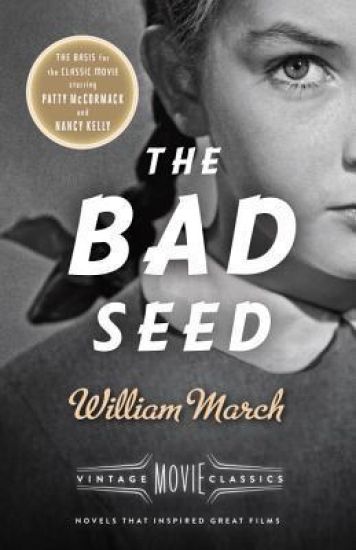
The Bad Seed

The Bad Seed

William March

Vintage Books
2015
pokkari
The bestselling novel that inspired Mervyn LeRoy's classic horror film about the little girl who can get away with anything--even murder. There's something special about eight-year-old Rhoda Penmark. With her carefully plaited hair and her sweet cotton dresses, she's the very picture of old-fashioned innocence. But when their neighborhood suffers a series of terrible accidents, her mother begins to wonder: Why do bad things seem to happen when little Rhoda is around? Originally published in 1954, William March's final novel was an instant bestseller and National Book Award finalist before it was adapted for the stage and made into a 1956 film. The Bad Seed is an indelible portrait of an evil that wears an innocent face, one which still resonates in popular culture today. With a new foreword by Anna Holmes. Vintage Movie Classics spotlights classic films that have stood the test of time, now rediscovered through the publication of the novels on which they were based.
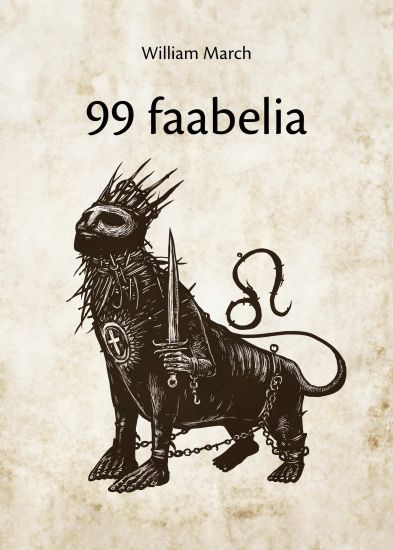
99 faabelia

99 faabelia

William March

Oppian
2025
nidottu
99 faabelia on amerikkalaisen nykykirjallisuuden klassikko. William Marchin lyhyet, aikuisille tarkoitetut tarinat ovat oivaltavia pistoja ihmisyyden ytimeen. Synkän humoristiset kertomukset yhdistävät Aisopoksen perinteeseen runsaasti kafkamaisia piirteitä. Lopputuloksena on lyhyen proosan mestariteos, johon kaikkien kirjallisuuden ystävien kannattaa tutustua.