Kirjojen hintavertailu. Mukana 12 016 292 kirjaa ja 12 kauppaa.

Kirjahaku

Etsi kirjoja tekijän nimen, kirjan nimen tai ISBN:n perusteella.

42 kirjaa tekijältä William Morgan

An Examination of Dr. Crawford's Theory of Heat and Combustion. By William Morgan
The 18th century was a wealth of knowledge, exploration and rapidly growing technology and expanding record-keeping made possible by advances in the printing press. In its determination to preserve the century of revolution, Gale initiated a revolution of its own: digitization of epic proportions to preserve these invaluable works in the largest archive of its kind. Now for the first time these high-quality digital copies of original 18th century manuscripts are available in print, making them highly accessible to libraries, undergraduate students, and independent scholars.Medical theory and practice of the 1700s developed rapidly, as is evidenced by the extensive collection, which includes descriptions of diseases, their conditions, and treatments. Books on science and technology, agriculture, military technology, natural philosophy, even cookbooks, are all contained here.++++The below data was compiled from various identification fields in the bibliographic record of this title. This data is provided as an additional tool in helping to insure edition identification: ++++British LibraryT099583With a half-title. The final leaf contains errata and an advertisement.London: printed for T. Cadell, 1781. 4],70, 2]p., plate; 8
Morgan's Freemasonry exposed and explained
Morgan's Freemasonry exposed and explained: - Showing the origin, history and nature of Masonry, its effects on the government, and the Christian religion and containing a key to all the degrees of Freemasonry, giving a clear and correct view of the ma is an unchanged, high-quality reprint of the original edition of 1882. Hansebooks is editor of the literature on different topic areas such as research and science, travel and expeditions, cooking and nutrition, medicine, and other genres. As a publisher we focus on the preservation of historical literature. Many works of historical writers and scientists are available today as antiques only. Hansebooks newly publishes these books and contributes to the preservation of literature which has become rare and historical knowledge for the future.
Morgan'S Freemasonry Exposed And Explained; Showing The Origin, History And Nature Of Masonry, Its Effects On The Government, And The Christian Religion And Containing A Key To All The Degrees Of Freemasonry, Giving A Clear And Correct View Of The Manner O
This book has been considered by academicians and scholars of great significance and value to literature. This forms a part of the knowledge base for future generations. So that the book is never forgotten we have represented this book in a print format as the same form as it was originally first published. Hence any marks or annotations seen are left intentionally to preserve its true nature.
Diabetes Mellitus: Its History, Chemistry, Anatomy, Pathology, Physiology, and Treatment
Physician and diagnostician William Morgan worked in the late 19th century: this book offers an understanding of diabetes mellitus in his time.Although many of the diagnostic tenets and symptoms of diabetes were discovered and known, the methods of treating the illness were sorely lacking. The discovery of insulin was decades away; as such the remedies noted within this text are obsolete - chemical concoctions consisting of ingredients like Sulphur, opium, phosphates, and the inhalation of oxygen gas. A chapter is devoted to now-discredited homeopathic treatments.While the general symptoms of the illness are known, distinctions between Type 1 and Type 2 diabetes was mpt. The author notes the connection of diabetes with sugar, and is able to make recommendations with respect to dietary intake and nutrition that carry some relevance to the modern-day clinic. Recipes are appended, attested by other physicians as favorable. Overwhelmingly however, we find 19th century medicine lacking for diabetes.
Diabetes Mellitus: Its History, Chemistry, Anatomy, Pathology, Physiology, and Treatment (Hardcover)
Physician and diagnostician William Morgan worked in the late 19th century: this book offers an understanding of diabetes mellitus in his time.Although many of the diagnostic tenets and symptoms of diabetes were discovered and known, the methods of treating the illness were sorely lacking. The discovery of insulin was decades away; as such the remedies noted within this text are obsolete - chemical concoctions consisting of ingredients like Sulphur, opium, phosphates, and the inhalation of oxygen gas. A chapter is devoted to now-discredited homeopathic treatments.While the general symptoms of the illness are known, distinctions between Type 1 and Type 2 diabetes was mpt. The author notes the connection of diabetes with sugar, and is able to make recommendations with respect to dietary intake and nutrition that carry some relevance to the modern-day clinic. Recipes are appended, attested by other physicians as favorable. Overwhelmingly however, we find 19th century medicine lacking for diabetes.
Why Sports Morally Matter

Why Sports Morally Matter

William Morgan

Routledge
2006
sidottu
When we accept that advertisers and sponsors dictate athletic schedules, that success in sport is measured by revenue, that athletes’ loyalties lie with their commercial agents instead of teams and that game rules exist to be tested and broken in the pursuit of a win, what does our regard for sport say about the moral and political well-being of our society?Why Sports Morally Matter is a deeply critical examination of pressing ethical issues in sports – and in society as a whole. Exploring the broad historical context of modern America, William J. Morgan argues that the current state of sports is a powerful indictment of our wealth-driven society and hyper-individualistic way of life. Taking on critics from all sides of the political debate, Morgan makes the case that, despite the negating effect of free market values, sport still possesses important features that encourage social, moral and political values crucial to the flourishing of a democratic polity. It is this potential to transform society and the individual that makes sport a key battleground in the struggle for the moral soul of twenty-first century America.
Why Sports Morally Matter

Why Sports Morally Matter

William Morgan

Routledge
2006
nidottu
When we accept that advertisers and sponsors dictate athletic schedules, that success in sport is measured by revenue, that athletes’ loyalties lie with their commercial agents instead of teams and that game rules exist to be tested and broken in the pursuit of a win, what does our regard for sport say about the moral and political well-being of our society?Why Sports Morally Matter is a deeply critical examination of pressing ethical issues in sports – and in society as a whole. Exploring the broad historical context of modern America, William J. Morgan argues that the current state of sports is a powerful indictment of our wealth-driven society and hyper-individualistic way of life. Taking on critics from all sides of the political debate, Morgan makes the case that, despite the negating effect of free market values, sport still possesses important features that encourage social, moral and political values crucial to the flourishing of a democratic polity. It is this potential to transform society and the individual that makes sport a key battleground in the struggle for the moral soul of twenty-first century America.
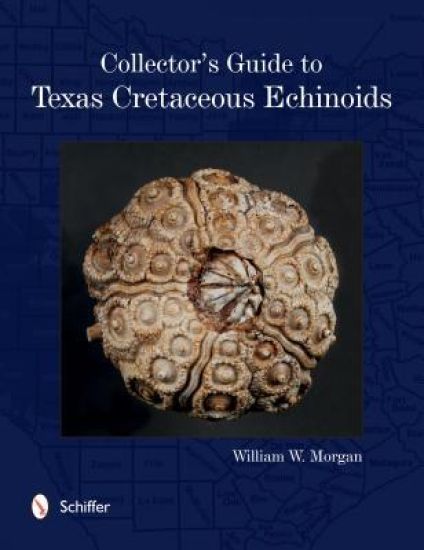
Collector's Guide to Texas Cretaceous Echinoids

Collector's Guide to Texas Cretaceous Echinoids

William Morgan

Schiffer Publishing Ltd
2016
nidottu
Texas is known worldwide as a rich resource for the intricate Cretaceous-age echinoids widely sought by professional and amateur paleontologists. With much of the scientific literature on Texas Cretaceous echinoids decades old, here is an updated and detailed guide for identifying this rich fossil fauna. After a brief description of the climatic events that led to the formation of these marine deposits, readers are introduced to the terminology needed to understand the morphology and biology of echinoids. More than 350 high-quality color photographs and detailed descriptions provide a visual guide to identifying, usually to the species level, most of the Cretaceous echinoids found in Texas. The information will be of interest to nature lovers, new and advanced collectors, and students of invertebrate paleontology looking for in-depth, updated insights into the morphology, classification, and identification of these striking fossils.
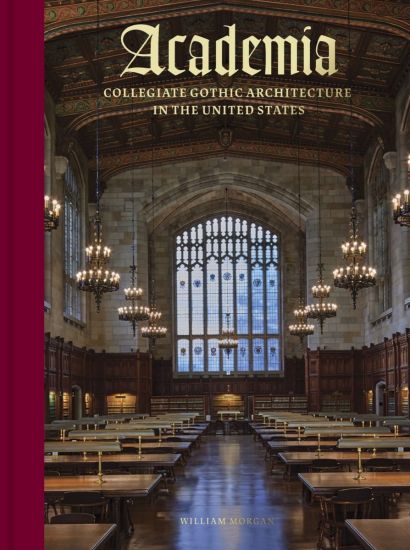
Academia

Academia

William Morgan

ABBEVILLE PRESS INC.,U.S.
2023
sidottu
"This is a volume that will be informative to specialists, but also a visual delight for the average reader. An indispensable addition to the field." - John Wilmerding, Sarofim Professor of American Art, emeritus, Princeton University "William Morgan offers an overview of the flowering of the collegiate Gothic style in America between the Civil War and the crash of 1929. Here is a splendidly illustrated book full of insight." - New Criterion Explore America's most breathtaking college campuses - where Gilded Age wealth found a Gothic inspiration. The Collegiate Gothic style, which flourished between the Gilded Age and the Jazz Age, was intended to lend an air of dignified history to America’s relatively youthful seats of higher learning. In fact, this mash-up of Oxbridge quaintness with piles of new money gave rise - at schools like Princeton and Vassar, Yale and Chicago - to unprecedented architectural fantasies that reshaped the image of the college campus. Today the ivy-covered monuments of Collegiate Gothic still exercise a powerful hold on the public imagination - as evidenced, for example, by their prominent place in the Dark Academia aesthetic that has swept social media. In Academia, the noted architectural historian William Morgan traces the entire arc of Collegiate Gothic, from its first emergence at campuses like Kenyon and Bowdoin to its apotheosis in James Gamble Rogers’s intricately detailed confections at Yale. Ever alert to the complicated cultural and social implications of this style, Morgan devotes special sections to its manifestations at prep schools and in the American South, and to contemporary revivals by architects like Robert A. M. Stern. Illustrated throughout with well-chosen color photographs, Academia offers the ultimate campus tour of our faux-medieval cathedrals of learning.