Kirjojen hintavertailu. Mukana 11 342 296 kirjaa ja 12 kauppaa.

Kirjahaku

Etsi kirjoja tekijän nimen, kirjan nimen tai ISBN:n perusteella.

694 kirjaa tekijältä William Morris

William Morris ABC

William Morris ABC

William Morris

Puffin
2017
pahvisivuinen
Learn first words with William Morris' iconic designs in this beautifully illustrated board book. Starting with a for apple and ending with z for zebra, this is a stylish introduction to first words for very young children - the perfect gift for art and design-loving parents. Published in association with the V&A Museum, your purchase helps the V&A to enrich people's lives as the world's leading museum of art and design.
William Morris 123

William Morris 123

William Morris

Puffin
2017
pahvisivuinen
Learn first numbers with William Morris' iconic designs in this beautifully illustrated board book. Starting with one tree and ending with ten butterflies, this is a stylish introduction to counting for very young children - the perfect gift for art and design-loving parents. Published in association with the V&A Museum, your purchase helps the V&A to enrich people's lives as the world's leading museum of art and design.
William Morris Stained Glass Coloring Book

William Morris Stained Glass Coloring Book

William Morris

Dover Publications Inc.
2000
muu
Sixteen handsome renderings based on projects by one of Victorian England's foremost leaders of the Arts and Crafts movement. Includes adaptations of wallpaper and textile designs as well as scenes of Adam Naming the Beasts, Sleeping Apostles, Angel and Woman, and many more.
The Collected Letters of William Morris, Volume III

The Collected Letters of William Morris, Volume III

William Morris

Princeton University Press
2014
pokkari
These volumes bring to a close the only comprehensive edition of the surviving correspondence of William Morris (1834-1896), a protean figure who exerted a major influence as poet, craftsman, master printer, and designer. Volumes III and IV, taken together, give in detail the comments and observations that articulate his problematic political and artistic stands and equally problematic position within the aesthetic movement as it developed in the 1890s. Most eloquently voiced also are the complexities of his troubled marriage and his devotion to his epileptic daughter, Jenny, and his other daughter, May. But dominating all these themes, organizing and structuring them, are the Kelmscott Press and the building of Morris's important library of medieval manuscripts and early printed books. The letters record the way in which the Press becomes not only the center of Morris's aesthetic ambitions and achievements but also the site for his closest human relations and for much of his connecting with the makers of early modernism. The letters in Volumes III and IV are thoroughly annotated, and through texts and notes provide a new assessment of Morris's career. Included also, as appendices to Volume IV, are two important documents: the first, never before published, is F. S. Ellis's Valuation List of Morris's library, made after Morris's death, and the second, never before reprinted, is the text of what was to be Morris's final essay on socialism, published in April 1896. Originally published in 1995. The Princeton Legacy Library uses the latest print-on-demand technology to again make available previously out-of-print books from the distinguished backlist of Princeton University Press. These editions preserve the original texts of these important books while presenting them in durable paperback and hardcover editions. The goal of the Princeton Legacy Library is to vastly increase access to the rich scholarly heritage found in the thousands of books published by Princeton University Press since its founding in 1905.
The Collected Letters of William Morris, Volume II, Part A

The Collected Letters of William Morris, Volume II, Part A

William Morris

Princeton University Press
2014
pokkari
These volumes continue the only complete edition of the surviving correspondence of William Morris (1834- 1896), a protean figure who exerted a major influence as poet, craftsman, master printer, and designer. Covering the years 1881 through 1888, they treat the most dramatic period in another facet of Morris's career: his work as a political activist. Originally published in 1988. The Princeton Legacy Library uses the latest print-on-demand technology to again make available previously out-of-print books from the distinguished backlist of Princeton University Press. These editions preserve the original texts of these important books while presenting them in durable paperback and hardcover editions. The goal of the Princeton Legacy Library is to vastly increase access to the rich scholarly heritage found in the thousands of books published by Princeton University Press since its founding in 1905.
The Collected Letters of William Morris, Volume II, Part B

The Collected Letters of William Morris, Volume II, Part B

William Morris

Princeton University Press
2014
pokkari
These volumes continue the only complete edition of the surviving correspondence of William Morris (1834- 1896), a protean figure who exerted a major influence as poet, craftsman, master printer, and designer. Covering the years 1881 through 1888, they treat the most dramatic period in another facet of Morris's career: his work as a political activist. Originally published in 1988. The Princeton Legacy Library uses the latest print-on-demand technology to again make available previously out-of-print books from the distinguished backlist of Princeton University Press. These editions preserve the original texts of these important books while presenting them in durable paperback and hardcover editions. The goal of the Princeton Legacy Library is to vastly increase access to the rich scholarly heritage found in the thousands of books published by Princeton University Press since its founding in 1905.
The Collected Letters of William Morris, Volume IV

The Collected Letters of William Morris, Volume IV

William Morris

Princeton University Press
2014
pokkari
These volumes bring to a close the only comprehensive edition of the surviving correspondence of William Morris (1834-1896), a protean figure who exerted a major influence as poet, craftsman, master printer, and designer. Volumes III and IV, taken together, give in detail the comments and observations that articulate his problematic political and artistic stands and equally problematic position within the aesthetic movement as it developed in the 1890s. Most eloquently voiced also are the complexities of his troubled marriage and his devotion to his epileptic daughter, Jenny, and his other daughter, May. But dominating all these themes, organizing and structuring them, are the Kelmscott Press and the building of Morris's important library of medieval manuscripts and early printed books. The letters record the way in which the Press becomes not only the center of Morris's aesthetic ambitions and achievements but also the site for his closest human relations and for much of his connecting with the makers of early modernism. The letters in Volumes III and IV are thoroughly annotated, and through texts and notes provide a new assessment of Morris's career. Included also, as appendices to Volume IV, are two important documents: the first, never before published, is F. S. Ellis's Valuation List of Morris's library, made after Morris's death, and the second, never before reprinted, is the text of what was to be Morris's final essay on socialism, published in April 1896. Originally published in 1996. The Princeton Legacy Library uses the latest print-on-demand technology to again make available previously out-of-print books from the distinguished backlist of Princeton University Press. These editions preserve the original texts of these important books while presenting them in durable paperback and hardcover editions. The goal of the Princeton Legacy Library is to vastly increase access to the rich scholarly heritage found in the thousands of books published by Princeton University Press since its founding in 1905.
The Collected Letters of William Morris, Volume I

The Collected Letters of William Morris, Volume I

William Morris

Princeton University Press
2014
pokkari
The life of William Morris (1834-1896) is revealed in significant new detail by his complete surviving correspondence, brought together here for the first time and including many previously unpublished letters. This collection not only bears witness to Morris's day-to-day activities and friendships, but also reflects his keen response to landscape and architecture, his sense of social responsibility, and his interest in the techniques of the applied arts. Volume I covers Morris's student days at Oxford and marriage to Jane Burden; the first twenty years of Morris and Co.; his success as a poet with the publication of The Earthly Paradise; his two trips to Iceland; the moves to Kelmscott Manor and Kelmscott House; and the start of his socialist career. Originally published in 1984. The Princeton Legacy Library uses the latest print-on-demand technology to again make available previously out-of-print books from the distinguished backlist of Princeton University Press. These editions preserve the original texts of these important books while presenting them in durable paperback and hardcover editions. The goal of the Princeton Legacy Library is to vastly increase access to the rich scholarly heritage found in the thousands of books published by Princeton University Press since its founding in 1905.
The Collected Letters of William Morris, Volume III

The Collected Letters of William Morris, Volume III

William Morris

Princeton University Press
2016
sidottu
These volumes bring to a close the only comprehensive edition of the surviving correspondence of William Morris (1834-1896), a protean figure who exerted a major influence as poet, craftsman, master printer, and designer. Volumes III and IV, taken together, give in detail the comments and observations that articulate his problematic political and artistic stands and equally problematic position within the aesthetic movement as it developed in the 1890s. Most eloquently voiced also are the complexities of his troubled marriage and his devotion to his epileptic daughter, Jenny, and his other daughter, May. But dominating all these themes, organizing and structuring them, are the Kelmscott Press and the building of Morris's important library of medieval manuscripts and early printed books. The letters record the way in which the Press becomes not only the center of Morris's aesthetic ambitions and achievements but also the site for his closest human relations and for much of his connecting with the makers of early modernism. The letters in Volumes III and IV are thoroughly annotated, and through texts and notes provide a new assessment of Morris's career. Included also, as appendices to Volume IV, are two important documents: the first, never before published, is F. S. Ellis's Valuation List of Morris's library, made after Morris's death, and the second, never before reprinted, is the text of what was to be Morris's final essay on socialism, published in April 1896. Originally published in 1995. The Princeton Legacy Library uses the latest print-on-demand technology to again make available previously out-of-print books from the distinguished backlist of Princeton University Press. These editions preserve the original texts of these important books while presenting them in durable paperback and hardcover editions. The goal of the Princeton Legacy Library is to vastly increase access to the rich scholarly heritage found in the thousands of books published by Princeton University Press since its founding in 1905.
The Collected Letters of William Morris, Volume II, Part A

The Collected Letters of William Morris, Volume II, Part A

William Morris

Princeton University Press
2016
sidottu
These volumes continue the only complete edition of the surviving correspondence of William Morris (1834- 1896), a protean figure who exerted a major influence as poet, craftsman, master printer, and designer. Covering the years 1881 through 1888, they treat the most dramatic period in another facet of Morris's career: his work as a political activist. Originally published in 1988. The Princeton Legacy Library uses the latest print-on-demand technology to again make available previously out-of-print books from the distinguished backlist of Princeton University Press. These editions preserve the original texts of these important books while presenting them in durable paperback and hardcover editions. The goal of the Princeton Legacy Library is to vastly increase access to the rich scholarly heritage found in the thousands of books published by Princeton University Press since its founding in 1905.
The Collected Letters of William Morris, Volume II, Part B

The Collected Letters of William Morris, Volume II, Part B

William Morris

Princeton University Press
2016
sidottu
These volumes continue the only complete edition of the surviving correspondence of William Morris (1834- 1896), a protean figure who exerted a major influence as poet, craftsman, master printer, and designer. Covering the years 1881 through 1888, they treat the most dramatic period in another facet of Morris's career: his work as a political activist. Originally published in 1988. The Princeton Legacy Library uses the latest print-on-demand technology to again make available previously out-of-print books from the distinguished backlist of Princeton University Press. These editions preserve the original texts of these important books while presenting them in durable paperback and hardcover editions. The goal of the Princeton Legacy Library is to vastly increase access to the rich scholarly heritage found in the thousands of books published by Princeton University Press since its founding in 1905.
The Collected Letters of William Morris, Volume IV

The Collected Letters of William Morris, Volume IV

William Morris

Princeton University Press
2016
sidottu
These volumes bring to a close the only comprehensive edition of the surviving correspondence of William Morris (1834-1896), a protean figure who exerted a major influence as poet, craftsman, master printer, and designer. Volumes III and IV, taken together, give in detail the comments and observations that articulate his problematic political and artistic stands and equally problematic position within the aesthetic movement as it developed in the 1890s. Most eloquently voiced also are the complexities of his troubled marriage and his devotion to his epileptic daughter, Jenny, and his other daughter, May. But dominating all these themes, organizing and structuring them, are the Kelmscott Press and the building of Morris's important library of medieval manuscripts and early printed books. The letters record the way in which the Press becomes not only the center of Morris's aesthetic ambitions and achievements but also the site for his closest human relations and for much of his connecting with the makers of early modernism. The letters in Volumes III and IV are thoroughly annotated, and through texts and notes provide a new assessment of Morris's career. Included also, as appendices to Volume IV, are two important documents: the first, never before published, is F. S. Ellis's Valuation List of Morris's library, made after Morris's death, and the second, never before reprinted, is the text of what was to be Morris's final essay on socialism, published in April 1896. Originally published in 1996. The Princeton Legacy Library uses the latest print-on-demand technology to again make available previously out-of-print books from the distinguished backlist of Princeton University Press. These editions preserve the original texts of these important books while presenting them in durable paperback and hardcover editions. The goal of the Princeton Legacy Library is to vastly increase access to the rich scholarly heritage found in the thousands of books published by Princeton University Press since its founding in 1905.
The Collected Letters of William Morris, Volume I

The Collected Letters of William Morris, Volume I

William Morris

Princeton University Press
2016
sidottu
The life of William Morris (1834-1896) is revealed in significant new detail by his complete surviving correspondence, brought together here for the first time and including many previously unpublished letters. This collection not only bears witness to Morris's day-to-day activities and friendships, but also reflects his keen response to landscape and architecture, his sense of social responsibility, and his interest in the techniques of the applied arts. Volume I covers Morris's student days at Oxford and marriage to Jane Burden; the first twenty years of Morris and Co.; his success as a poet with the publication of The Earthly Paradise; his two trips to Iceland; the moves to Kelmscott Manor and Kelmscott House; and the start of his socialist career. Originally published in 1984. The Princeton Legacy Library uses the latest print-on-demand technology to again make available previously out-of-print books from the distinguished backlist of Princeton University Press. These editions preserve the original texts of these important books while presenting them in durable paperback and hardcover editions. The goal of the Princeton Legacy Library is to vastly increase access to the rich scholarly heritage found in the thousands of books published by Princeton University Press since its founding in 1905.
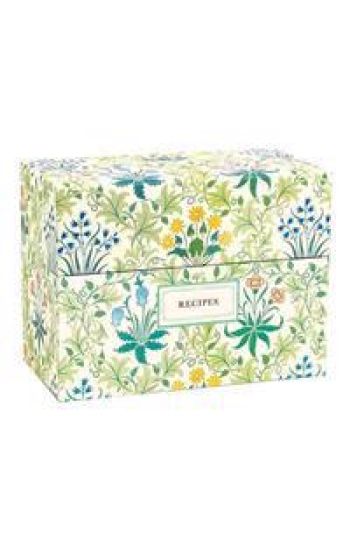
V&A William Morris Recipe Box
Keep favourite recipes at hand yet neatly filed in a decorative Galison recipe file box. Eight glossy tabbed dividers organize recipes into Fruits and Vegetables, Breads and Pasta, Eggs and Dairy, Soups and Salads, Meats and Poultry, Fish and Seafood, Desserts, and Beverages. Fifty 4 x 6" fill-in recipe cards are included, and printable blank recipe card templates are available online. The hinged box measures 6-1/4 x 3-1/4 x 8".
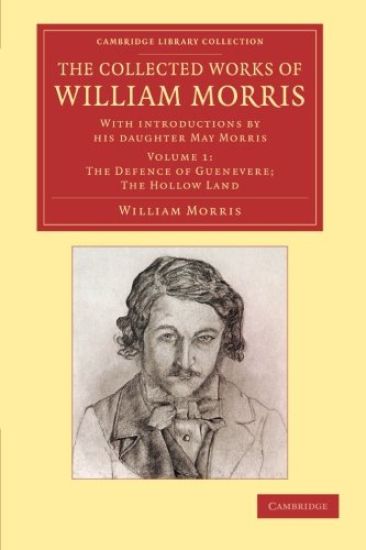
The Collected Works of William Morris

The Collected Works of William Morris

William Morris

Cambridge University Press
2012
pokkari
A creative titan of the Victorian age, William Morris (1834–96) produced a prodigious variety of literary and artistic work in his lifetime. In addition to his achievements as a versatile designer at the forefront of the arts and crafts movement, Morris distinguished himself as a poet, translated Icelandic sagas and classical epics, wrote a series of influential prose romances, and gave lectures promoting his socialist principles. His collected works, originally published in 24 volumes between 1910 and 1915, were edited by his daughter Mary (May) Morris (1862–1938), whose introductions to each volume chart with insight and sympathy the development of her father's literary, aesthetic and political passions. Volume 1 contains Morris' early verse, including The Defence of Guenevere (1858), as well as prose contributions to the short-lived Oxford and Cambridge Magazine.