Kirjojen hintavertailu. Mukana 11 342 296 kirjaa ja 12 kauppaa.

Kirjahaku

Etsi kirjoja tekijän nimen, kirjan nimen tai ISBN:n perusteella.

7 kirjaa tekijältä William O. Stephens

Stoic Ethics

Stoic Ethics

William O. Stephens

Continuum International Publishing Group Ltd.
2007
sidottu
Shortly after Aristotle's death, ancient philosophy shifted away from abstract technical issues and focused on the more practical moral question of how to be happy. While many schools of thought arose on the subject, Stoicism and Epicureanism dominated the philosophical landscape for nearly 500 years, often locked in bitter rivalry with each other. Epicureanism advised pursing pleasure as a means to happiness, and Stoicism held that true happiness could only be achieved by accepting one's assigned lot in life. The lasting impact of these philosophies is seen from that fact that even today 'Stoic' and 'Epicurean' are household words. Although the founder of Stoicism was an obscure Greek philosopher who wrote nothing on the subject, his school consistently attracted more followers than its Epicurean counterpart. Little, in fact, survives of early Stoicism, and our knowledge of it comes largely from a few later Stoics. In this unique book, William O. Stephens explores the moral philosophy of Epictetus, a former Roman slave and dynamic Stoic teacher whose writings are the most compelling defence of ancient Stoicism that exists. Epictetus' philosophy dramatically captures the spirit of Stoicism by examining our greatest human disappointments, such as the death of a loved one. Stephens shows how, for Epictetus, happiness results from focusing our concern on what is up to us while not worrying about what is beyond our control. He concludes that the strength of Epictetus' philosophy lies in his conception of happiness as freedom from fear, worry, grief, and dependence upon luck.
Stoic Ethics

Stoic Ethics

William O. Stephens

Bloomsbury Academic
2017
nidottu
Soon after Aristotle's death, several schools of ancient philosophy arose, each addressing the practical question of how to live a good, happy life. The two biggest rivals, Stoicism and Epicureanism, came to dominate the philosophical landscape for the next 500 years. Epicureans advised pursuing pleasure to be happy, and Stoics held that true happiness could only be achieved by living according to nature, which required accepting what happens and fulfilling one's roles. Stoicism, more than Epicureanism, attracted followers from many different walks of life: slaves, laborers, statesmen, intellectuals, and an emperor. The lasting impact of these philosophies is seen from the fact that even today 'Stoic' and 'Epicurean' are household words. Although very little of the writings of the early Stoics survive, our knowledge of Stoicism comes largely from a few later Stoics. In this unique book, William O. Stephens explores the moral philosophy of Epictetus, a former Roman slave and dynamic Stoic teacher whose teachings are the most compelling defense of ancient Stoicism that exists. Epictetus' philosophy dramatically captures the spirit of Stoicism by examining and remedying our greatest human disappointments, such as the death of a loved one. Stephens shows how, for Epictetus, happiness results from focusing our concern on what is up to us while not worrying about what is beyond our control. He concludes that the strength of Epictetus' thought lies in his conception of happiness as freedom from fear, worry, grief, and dependence upon luck.
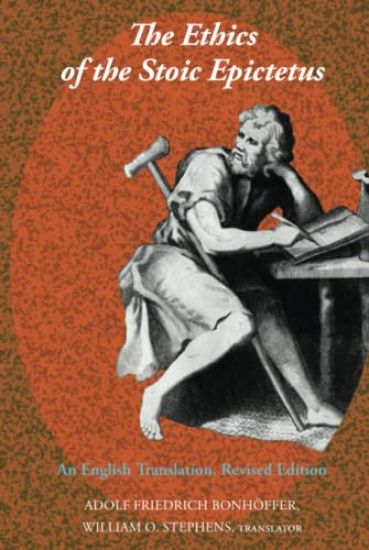
The Ethics of the Stoic Epictetus

The Ethics of the Stoic Epictetus

William O. Stephens

Peter Lang Publishing Inc
2021
nidottu
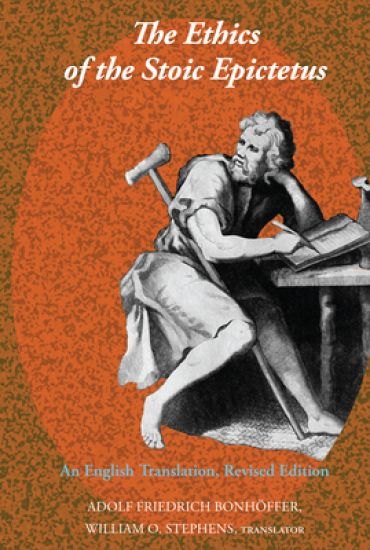
This text remains the only English translation of Bonhöffer’s classic, definitive examination of Epictetus’s ethics. Thorough, knowledgeable, perceptive, and accessible, the unity of this book and its thematic presentation make it an invaluable resource for both scholars and general readers eager to apply Stoic thinking in their daily lives. The translation is crisp, clear, consistent, and very readable. Careful attention to the details and nuances of the German as well as the Greek of Epictetus make this an excellent achievement. This new edition includes a useful biography of Bonhöffer, a new overview of the last twenty years of scholarship on Epictetus, and an extensive bibliography. It is essential reading for students taking courses on ancient Hellenistic or Roman philosophy, their instructors, and any non-academics who want to learn Stoicism.
The Ethics of the Stoic Epictetus

The Ethics of the Stoic Epictetus

William O. Stephens

Peter Lang Publishing Inc
2021
sidottu
This text remains the only English translation of Bonhöffer’s classic, definitive examination of Epictetus’s ethics. Thorough, knowledgeable, perceptive, and accessible, the unity of this book and its thematic presentation make it an invaluable resource for both scholars and general readers eager to apply Stoic thinking in their daily lives. The translation is crisp, clear, consistent, and very readable. Careful attention to the details and nuances of the German as well as the Greek of Epictetus make this an excellent achievement. This new edition includes a useful biography of Bonhöffer, a new overview of the last twenty years of scholarship on Epictetus, and an extensive bibliography. It is essential reading for students taking courses on ancient Hellenistic or Roman philosophy, their instructors, and any non-academics who want to learn Stoicism.
Marcus Aurelius: A Guide for the Perplexed

Marcus Aurelius: A Guide for the Perplexed

William O. Stephens

Continuum Publishing Corporation
2012
nidottu
This title presents the exploration of the life and philosophical reflections of this complex Stoic philosopher and Roman emperor. This book is a clear and concise introduction to the Roman Emperor Marcus Aurelius Antoninus. His one major surviving work, often titled 'meditations' but literally translated simply as 'to himself', is a series of short, sometimes enigmatic reflections divided seemingly arbitrarily into twelve books and apparently written only to be read by him. For these reasons Marcus is a particularly difficult thinker to understand. His musings, framed as 'notes to self' or 'memoranda', are the exhortations of an earnest, conscientious Stoic burdened with the onerous responsibilities of ruling an entire empire. William O. Stephens lucidly sketches Marcus Aurelius' upbringing, family relations, rise to the throne, military campaigns, and legacy, situating his philosophy amidst his life and times, explicating the factors shaping Marcus' philosophy, and clarifying key themes in the Memoranda. Specifically designed to meet the needs of students seeking a thorough understanding of this key figure and his major work, "Marcus Aurelius: A Guide for the Perplexed" is the ideal guide for understanding this Stoic author - the only philosopher who was also an emperor. "Continuum's Guides for the Perplexed" are clear, concise and accessible introductions to thinkers, writers and subjects that students and readers can find especially challenging - or indeed downright bewildering. Concentrating specifically on what it is that makes the subject difficult to grasp, these books explain and explore key themes and ideas, guiding the reader towards a thorough understanding of demanding material.
Marcus Aurelius: A Guide for the Perplexed

Marcus Aurelius: A Guide for the Perplexed

William O. Stephens

Continuum Publishing Corporation
2012
sidottu
This title presents an exploration of the life and philosophical reflections of this complex Stoic philosopher and Roman emperor. This book is a clear and concise introduction to the Roman Emperor Marcus Aurelius Antoninus. His one major surviving work, often titled 'meditations' but literally translated simply as 'to himself', is a series of short, sometimes enigmatic reflections divided seemingly arbitrarily into twelve books and apparently written only to be read by him. For these reasons Marcus is a particularly difficult thinker to understand. His musings, framed as 'notes to self' or 'memoranda', are the exhortations of an earnest, conscientious Stoic burdened with the onerous responsibilities of ruling an entire empire. William O. Stephens lucidly sketches Marcus Aurelius' upbringing, family relations, rise to the throne, military campaigns, and legacy, situating his philosophy amidst his life and times, explicating the factors shaping Marcus' philosophy, and clarifying key themes in the Memoranda. Specifically designed to meet the needs of students seeking a thorough understanding of this key figure and his major work, "Marcus Aurelius: A Guide for the Perplexed" is the ideal guide for understanding this Stoic author - the only philosopher who was also an emperor. "Continuum's Guides for the Perplexed" are clear, concise and accessible introductions to thinkers, writers and subjects that students and readers can find especially challenging - or indeed downright bewildering. Concentrating specifically on what it is that makes the subject difficult to grasp, these books explain and explore key themes and ideas, guiding the reader towards a thorough understanding of demanding material.
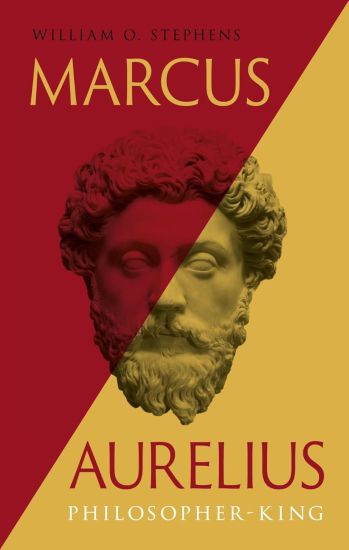
Marcus Aurelius

Marcus Aurelius

William O. Stephens

REAKTION BOOKS
2025
sidottu
This book guides us through the fascinating life and writings of Marcus Aurelius, the only Roman emperor celebrated for centuries for his decency and earnest Stoic philosophy. Philosopher William O. Stephens explores Marcus’s reluctant rise to power, his marriage and his efforts to mould his son into a just successor. He examines Marcus’s Stoic tenets as he describes the struggles of dealing with a fifteen-year pandemic, the betrayal of a trusted general, social upheaval centred on a new ‘superstition’ – Christianity – and how Marcus’s determination to stabilize the empire’s borders met with strife, broken treaties and protracted wars. This gripping narrative of Marcus’ life, times and thought, as well as his complex legacy, will appeal to all those interested in Roman history and to aspiring Stoics.