Kirjojen hintavertailu. Mukana 11 377 343 kirjaa ja 12 kauppaa.

Kirjahaku

Etsi kirjoja tekijän nimen, kirjan nimen tai ISBN:n perusteella.

6 kirjaa tekijältä William P. Fox

Nonlinear Optimization

Nonlinear Optimization

William P. Fox

CRC Press
2020
sidottu
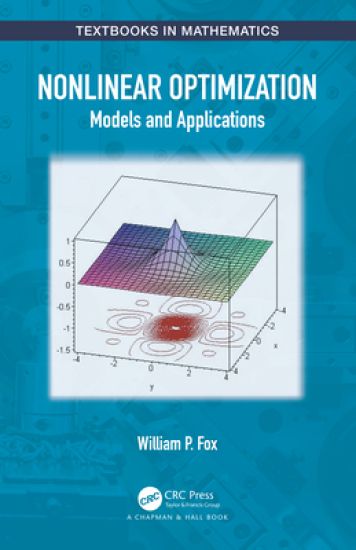
Optimization is the act of obtaining the "best" result under given circumstances. In design, construction, and maintenance of any engineering system, engineers must make technological and managerial decisions to minimize either the effort or cost required or to maximize benefits. There is no single method available for solving all optimization problems efficiently. Several optimization methods have been developed for different types of problems. The optimum-seeking methods are mathematical programming techniques (specifically, nonlinear programming techniques).Nonlinear Optimization: Models and Applications presents the concepts in several ways to foster understanding. Geometric interpretation: is used to re-enforce the concepts and to foster understanding of the mathematical procedures. The student sees that many problems can be analyzed, and approximate solutions found before analytical solutions techniques are applied. Numerical approximations: early on, the student is exposed to numerical techniques. These numerical procedures are algorithmic and iterative. Worksheets are provided in Excel, MATLAB®, and Maple™ to facilitate the procedure. Algorithms: all algorithms are provided with a step-by-step format. Examples follow the summary to illustrate its use and application. Nonlinear Optimization: Models and Applications: Emphasizes process and interpretation throughout Presents a general classification of optimization problems Addresses situations that lead to models illustrating many types of optimization problems Emphasizes model formulations Addresses a special class of problems that can be solved using only elementary calculus Emphasizes model solution and model sensitivity analysisAbout the author:William P. Fox is an emeritus professor in the Department of Defense Analysis at the Naval Postgraduate School. He received his Ph.D. at Clemson University and has taught at the United States Military Academy and at Francis Marion University where he was the chair of mathematics. He has written many publications, including over 20 books and over 150 journal articles. Currently, he is an adjunct professor in the Department of Mathematics at the College of William and Mary. He is the emeritus director of both the High School Mathematical Contest in Modeling and the Mathematical Contest in Modeling.
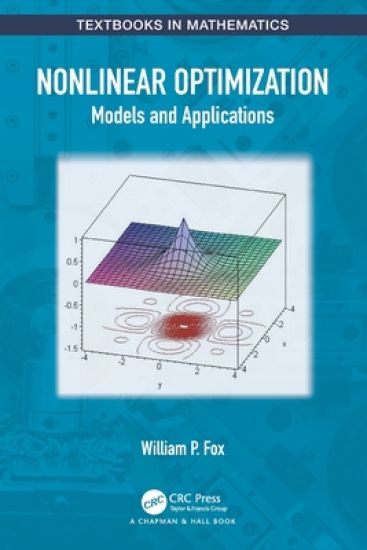
Nonlinear Optimization

Nonlinear Optimization

William P. Fox

TAYLOR FRANCIS LTD
2024
nidottu
Optimization is the act of obtaining the "best" result under given circumstances. In design, construction, and maintenance of any engineering system, engineers must make technological and managerial decisions to minimize either the effort or cost required or to maximize benefits. There is no single method available for solving all optimization problems efficiently. Several optimization methods have been developed for different types of problems. The optimum-seeking methods are mathematical programming techniques (specifically, nonlinear programming techniques).Nonlinear Optimization: Models and Applications presents the concepts in several ways to foster understanding. Geometric interpretation: is used to re-enforce the concepts and to foster understanding of the mathematical procedures. The student sees that many problems can be analyzed, and approximate solutions found before analytical solutions techniques are applied. Numerical approximations: early on, the student is exposed to numerical techniques. These numerical procedures are algorithmic and iterative. Worksheets are provided in Excel, MATLAB®, and Maple™ to facilitate the procedure. Algorithms: all algorithms are provided with a step-by-step format. Examples follow the summary to illustrate its use and application. Nonlinear Optimization: Models and Applications: Emphasizes process and interpretation throughout Presents a general classification of optimization problems Addresses situations that lead to models illustrating many types of optimization problems Emphasizes model formulations Addresses a special class of problems that can be solved using only elementary calculus Emphasizes model solution and model sensitivity analysisAbout the author:William P. Fox is an emeritus professor in the Department of Defense Analysis at the Naval Postgraduate School. He received his Ph.D. at Clemson University and has taught at the United States Military Academy and at Francis Marion University where he was the chair of mathematics. He has written many publications, including over 20 books and over 150 journal articles. Currently, he is an adjunct professor in the Department of Mathematics at the College of William and Mary. He is the emeritus director of both the High School Mathematical Contest in Modeling and the Mathematical Contest in Modeling.
Mathematical Modeling in the Age of the Pandemic

Mathematical Modeling in the Age of the Pandemic

William P. Fox

TAYLOR FRANCIS LTD
2021
nidottu
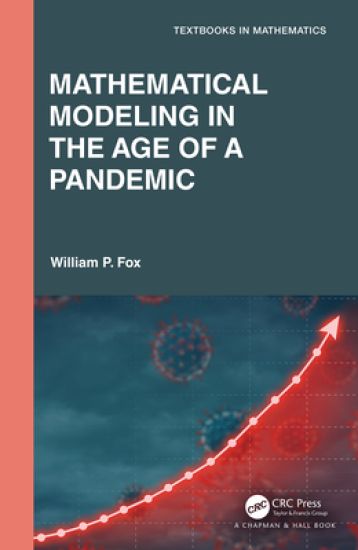
One cannot watch or read about the news these days without hearing about the models for COVID-19 or the testing that must occur to approve vaccines or treatments for the disease.The purpose of Mathematical Modeling in the Age of a Pandemic is to shed some light on the meaning and interpretations of many of the types of models that are or might be used in the presentation of analysis. Understanding the concepts presented is essential in the entire modeling process of a pandemic.From the virus itself and its infectious rates and deaths rates to explain the process for testing a vaccine or eventually a cure, the author builds, presents, and shows model testing. This book is an attempt, based on available data, to add some validity to the models developed and used, showing how close to reality the models are to predicting "results" from previous pandemics such as the Spanish flu in 1918 and more recently the Hong Kong flu. Then the author applies those same models to Italy, New York City, and the United States as a whole. Modeling is a process. It is essential to understand that there are many assumptions that go into the modeling of each type of model. The assumptions influence the interpretation of the results. Regardless of the modeling approach the results generally indicate approximately the same results. This book reveals how these interesting results are obtained.
Mathematical Modeling in the Age of the Pandemic
One cannot watch or read about the news these days without hearing about the models for COVID-19 or the testing that must occur to approve vaccines or treatments for the disease.The purpose of Mathematical Modeling in the Age of a Pandemic is to shed some light on the meaning and interpretations of many of the types of models that are or might be used in the presentation of analysis. Understanding the concepts presented is essential in the entire modeling process of a pandemic.From the virus itself and its infectious rates and deaths rates to explain the process for testing a vaccine or eventually a cure, the author builds, presents, and shows model testing. This book is an attempt, based on available data, to add some validity to the models developed and used, showing how close to reality the models are to predicting "results" from previous pandemics such as the Spanish flu in 1918 and more recently the Hong Kong flu. Then the author applies those same models to Italy, New York City, and the United States as a whole. Modeling is a process. It is essential to understand that there are many assumptions that go into the modeling of each type of model. The assumptions influence the interpretation of the results. Regardless of the modeling approach the results generally indicate approximately the same results. This book reveals how these interesting results are obtained.
Decision Analysis through Modeling and Game Theory
This unique book presents decision analysis in the context of mathematical modeling and game theory. The author emphasizes and focuses on the model formulation and modeling-building skills required for decision analysis, as well as the technology to support the analysis.The primary objective of Decision Analysis through Modeling and Game Theory is illustrative in nature. It sets the tone through the introduction to mathematical modeling. The text provides a process for formally thinking about the problem and illustrates many scenarios and illustrative examples.These techniques and this approach center on the fact (a) decision makers at all levels must be exposed to the tools and techniques available to help them in the decision process, (b) decision makers as well as analysts need to have and use technology to assist in the entire analysis process, (c) the interpretation and explanation of the results are crucial to understanding the strengths and limitations of modeling, and (d) the interpretation and use of sensitivity analysis is essential.The book begins with a look at decision-making methods, including probability and statistics methods under risk of uncertainty. It moves to linear programming and multi-attribute decision-making methods with a discussion of weighting methods. Game theory is introduced through conflict games and zero-sum or constant-sum games. Nash equilibriums are next, followed by utility theory. Evolutionary stable strategies lead to Nash arbitration and cooperation methods and N-person methods presented for both total and partial conflict games.Several real-life examples and case studies using game theory are used throughout. This book would be best used for a senior-level course in mathematics, operations research, or graduate-level courses or decision modeling courses offered in business schools. The book will be of interest to departments offering mathematical modeling courses with any emphasis on modeling for decision making.
Decision Analysis through Modeling and Game Theory
This unique book presents decision analysis in the context of mathematical modeling and game theory. The author emphasizes and focuses on the model formulation and modeling-building skills required for decision analysis, as well as the technology to support the analysis.The primary objective of Decision Analysis through Modeling and Game Theory is illustrative in nature. It sets the tone through the introduction to mathematical modeling. The text provides a process for formally thinking about the problem and illustrates many scenarios and illustrative examples.These techniques and this approach center on the fact (a) decision makers at all levels must be exposed to the tools and techniques available to help them in the decision process, (b) decision makers as well as analysts need to have and use technology to assist in the entire analysis process, (c) the interpretation and explanation of the results are crucial to understanding the strengths and limitations of modeling, and (d) the interpretation and use of sensitivity analysis is essential.The book begins with a look at decision-making methods, including probability and statistics methods under risk of uncertainty. It moves to linear programming and multi-attribute decision-making methods with a discussion of weighting methods. Game theory is introduced through conflict games and zero-sum or constant-sum games. Nash equilibriums are next, followed by utility theory. Evolutionary stable strategies lead to Nash arbitration and cooperation methods and N-person methods presented for both total and partial conflict games.Several real-life examples and case studies using game theory are used throughout. This book would be best used for a senior-level course in mathematics, operations research, or graduate-level courses or decision modeling courses offered in business schools. The book will be of interest to departments offering mathematical modeling courses with any emphasis on modeling for decision making.