Kirjojen hintavertailu. Mukana 11 699 587 kirjaa ja 12 kauppaa.

Kirjahaku

Etsi kirjoja tekijän nimen, kirjan nimen tai ISBN:n perusteella.

4 kirjaa tekijältä William R. Thompson

American Global Pre-Eminence

American Global Pre-Eminence

William R. Thompson

OXFORD UNIVERSITY PRESS INC
2022
sidottu
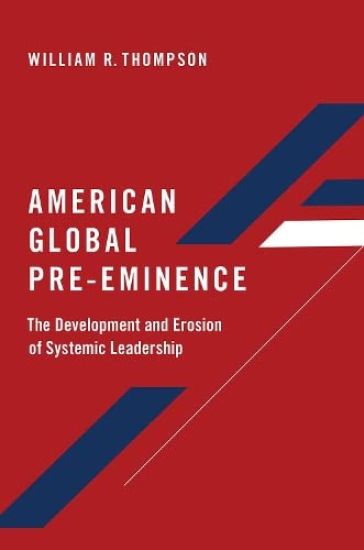
A unique analysis that assesses how we can determine which country will be the next world leader. Will China surpass the United States as the world's leader? In American Global Pre-eminence, William R. Thompson argues that the answer depends on leads in technological innovation, energy, and global reach. These are the forces that influence the hierarchy of global power--a system which began emerging a thousand years ago and started becoming more evident after the 1490s, especially after Dutch activities in the seventeenth century and British operations in the nineteenth century. The US followed in this fashion after 1945. Yet leads do not last forever. Ironically, as it becomes clearer how technological innovation, military force, and energy power interact, the processes under scrutiny may themselves be fundamentally transforming. Thus, Thompson contends, the real policy question is not whether the US is ahead or behind China but, rather, whether it will remain possible for a single state to lead the global system. As technological innovation, energy consumption, and global reach capability grow less concentrated, the prospects for systemic leadership shrink--even as global problems become more complex and acute. With a sweeping analysis of global power, Thompson provides a foundation for understanding the realities and possibilities of lead states past, present, and future.
American Global Pre-Eminence

American Global Pre-Eminence

William R. Thompson

OXFORD UNIVERSITY PRESS INC
2022
nidottu
A unique analysis that assesses how we can determine which country will be the next world leader. Will China surpass the United States as the world's leader? In American Global Pre-eminence, William R. Thompson argues that the answer depends on leads in technological innovation, energy, and global reach. These are the forces that influence the hierarchy of global power--a system which began emerging a thousand years ago and started becoming more evident after the 1490s, especially after Dutch activities in the seventeenth century and British operations in the nineteenth century. The US followed in this fashion after 1945. Yet leads do not last forever. Ironically, as it becomes clearer how technological innovation, military force, and energy power interact, the processes under scrutiny may themselves be fundamentally transforming. Thus, Thompson contends, the real policy question is not whether the US is ahead or behind China but, rather, whether it will remain possible for a single state to lead the global system. As technological innovation, energy consumption, and global reach capability grow less concentrated, the prospects for systemic leadership shrink--even as global problems become more complex and acute. With a sweeping analysis of global power, Thompson provides a foundation for understanding the realities and possibilities of lead states past, present, and future.
Power Concentration in World Politics

Power Concentration in World Politics

William R. Thompson

Springer Nature Switzerland AG
2020
sidottu
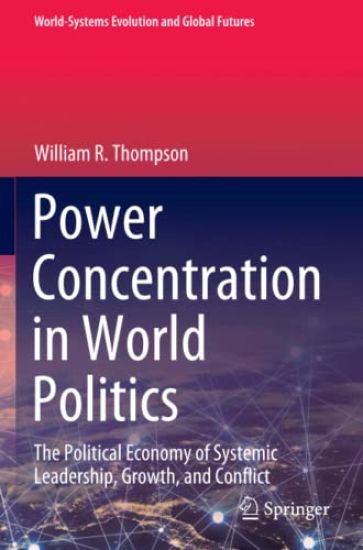
This book discusses the role of space, time and cyclical behavior in world politics. More specifically, the political-economic role of lead economies – the world’s most innovative economies for finite periods of time – in world politics. These represent unusual concentrations of new technologies, energy sources, and military capabilities of global reach that play disproportional roles in the conduct of international affairs and the provision of limited governance at the most macro level. They also possess close links to economic growth and intense conflict. The book describes the economic, military and political processes behind the systemic leadership of a state at the international level. It also highlights the economic preconditions of systemic leadership, such as economic monopoly of new technologies and energy, which underlie the system leader’s material advantage over others. Analyzing lead economies and the evolution of power over a number of centuries,the author demonstrates how disruptions wrought by the emergence of new technologies and energy sources are partly responsible for global conflicts. This book appeals to international relations scholars as well as anyone interested in the political economy of systemic leadership, growth, and conflict in world politics.
Power Concentration in World Politics

Power Concentration in World Politics

William R. Thompson

Springer Nature Switzerland AG
2021
nidottu
This book discusses the role of space, time and cyclical behavior in world politics. More specifically, the political-economic role of lead economies – the world’s most innovative economies for finite periods of time – in world politics. These represent unusual concentrations of new technologies, energy sources, and military capabilities of global reach that play disproportional roles in the conduct of international affairs and the provision of limited governance at the most macro level. They also possess close links to economic growth and intense conflict. The book describes the economic, military and political processes behind the systemic leadership of a state at the international level. It also highlights the economic preconditions of systemic leadership, such as economic monopoly of new technologies and energy, which underlie the system leader’s material advantage over others. Analyzing lead economies and the evolution of power over a number of centuries,the author demonstrates how disruptions wrought by the emergence of new technologies and energy sources are partly responsible for global conflicts. This book appeals to international relations scholars as well as anyone interested in the political economy of systemic leadership, growth, and conflict in world politics.