Kirjojen hintavertailu. Mukana 11 699 587 kirjaa ja 12 kauppaa.

Kirjahaku

Etsi kirjoja tekijän nimen, kirjan nimen tai ISBN:n perusteella.

4 kirjaa tekijältä William Seraile

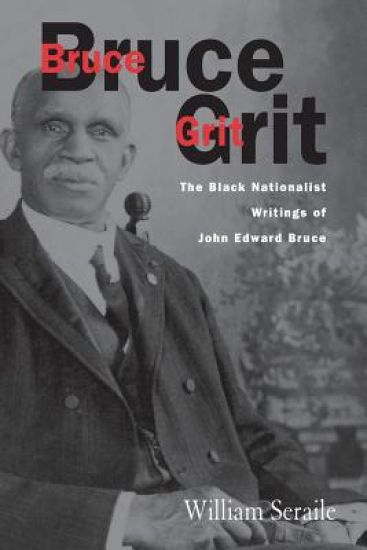
Angels of Mercy

Angels of Mercy

William Seraile

Fordham University Press
2011
sidottu
William Seraile uncovers the history of the colored orphan asylum, founded in New York City in 1836 as the nation's first orphanage for African American children. It is a remarkable institution that is still in the forefront aiding children. Although no longer an orphanage, in its current incarnation as Harlem-Dowling West Side Center for Children and Family Services it maintains the principles of the women who organized it nearly 200 years ago. The agency weathered three wars, two major financial panics, a devastating fire during the 1863 Draft Riots, several epidemics, waves of racial prejudice, and severe financial difficulties to care for orphaned, neglected, and delinquent children. Eventually financial support would come from some of New York's finest families, including the Jays, Murrays, Roosevelts, Macys, and Astors. While the white female managers and their male advisers were dedicated to uplifting these black children, the evangelical, mainly Quaker founding managers also exhibited the extreme paternalistic views endemic at the time, accepting the advice or support of the African American community only grudgingly. It was frank criticism in 1913 from W. E. B. Du Bois that highlighted the conflict between the orphanage and the community it served, and it wasn't until 1939 that it hired the first black trustee. More than 15,000 children were raised in the orphanage, and throughout its history letters and visits have revealed that hundreds if not thousands of "old boys and girls" looked back with admiration and respect at the home that nurtured them throughout their formative years. Weaving together African American history with a unique history of New York City, this is not only a painstaking study of a previously unsung institution of black history but a unique window onto complex racial dynamics during a period when many failed to recognize equality among all citizens as a worthy purpose.
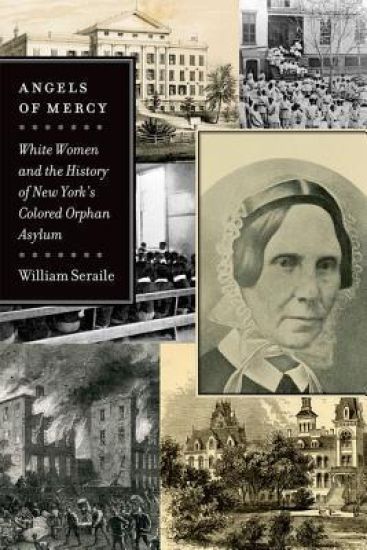
Angels of Mercy

Angels of Mercy

William Seraile

Fordham University Press
2013
pokkari
William Seraile uncovers the history of the colored orphan asylum, founded in New York City in 1836 as the nation's first orphanage for African American children. It is a remarkable institution that is still in the forefront aiding children. Although no longer an orphanage, in its current incarnation as Harlem-Dowling West Side Center for Children and Family Services it maintains the principles of the women who organized it nearly 200 years ago. The agency weathered three wars, two major financial panics, a devastating fire during the 1863 Draft Riots, several epidemics, waves of racial prejudice, and severe financial difficulties to care for orphaned, neglected, and delinquent children. Eventually financial support would come from some of New York's finest families, including the Jays, Murrays, Roosevelts, Macys, and Astors. While the white female managers and their male advisers were dedicated to uplifting these black children, the evangelical, mainly Quaker founding managers also exhibited the extreme paternalistic views endemic at the time, accepting the advice or support of the African American community only grudgingly. It was frank criticism in 1913 from W. E. B. Du Bois that highlighted the conflict between the orphanage and the community it served, and it wasn't until 1939 that it hired the first black trustee. More than 15,000 children were raised in the orphanage, and throughout its history letters and visits have revealed that hundreds if not thousands of "old boys and girls" looked back with admiration and respect at the home that nurtured them throughout their formative years. Weaving together African American history with a unique history of New York City, this is not only a painstaking study of a previously unsung institution of black history but a unique window onto complex racial dynamics during a period when many failed to recognize equality among all citizens as a worthy purpose.
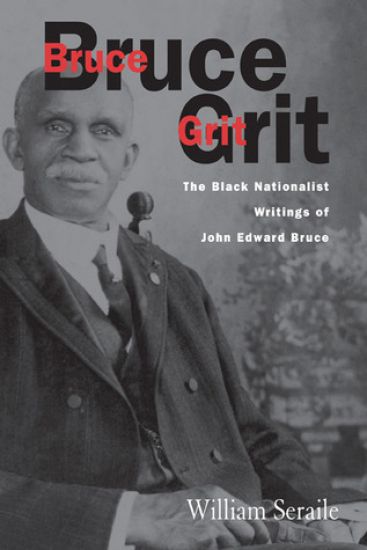
Bruce Grit

Bruce Grit

William Seraile

University of Tennessee Press
2003
sidottu
John Edward Bruce (1856 1924) witnessed the dying days of American slavery, the turbulence of the Civil War and Reconstruction, the rise of Jim Crow, and the development of American imperialism. As a journalist, historian, and bibliophile, he was a major figure in African American history and politics during his lifetime. In this first intellectual biography of Bruce a prolific writer and correspondent who published most frequently under the name Bruce Grit William Seraile explores Bruce s tireless advocacy on behalf of African peoples everywhere, particularly in the United States. Bruce wrote for more than a hundred different newspapers and founded several of them, including the Argus, the Sunday Item, and Washington Grit in Washington, D.C., and the Weekly Standard in Yonkers, New York. A cultural nationalist and Pan-Africanist, Bruce was known as a race-first proponent. In his quest to see that African Americans were granted full political and civil rights, he championed the contributions of African civilization to western culture as a whole, amassing an impressive collection of books, articles, and other scholarly documentation. For most of his career, he believed that African Americans would eventually be able to claim an equal share of the American Dream. However, by the end of his life, he became disillusioned and concluded that the best hope for their future lay in emigration back to Africa. Seraile traces Bruce s shifting strategies and tactics and his alliances with famous contemporaries such as Arthur A. Schomburg, Carter G. Woodson, Booker T. Washington, and Marcus Garvey. He argues that underlying all of Bruce s work was what would become his greatest legacy: his promotion of history and culture of African people in the diaspora as valuable fields of study. The Author: William Seraile is professor of black studies at Lehman College. He is the author of Voice of Dissent: Theophilus Gould Steward and Black America, Fire in His Heart: Bishop Benjamin Tucker Tanner and the A.M.E. Church, and New York s Black Regiments During the Civil War. "
Bruce Grit

Bruce Grit

William Seraile

University of Tennessee Press
2011
nidottu
Bruce Grit will prove extremely valuable to scholars who do not have access to the Schomburg's Bruce collection or the time necessary for the daunting task of sifting through its contents. - African American Review John Edward Bruce (1856–1924) witnessed the dying days of American slavery, the turbulence of the Civil War and Reconstruction, the rise of Jim Crow, and the development of American imperialism. As a journalist, historian, and bibliophile, he was a major figure in African American history and politics during his lifetime. In this first intellectual biography of Bruce- a prolific writer and correspondent who published most frequently under the name Bruce Grit- William Seraile explores Bruce's tireless advocacy on behalf of African peoples everywhere, particularly in the United States. William Seraile traces Bruce's shifting strategies and tactics and his alliances with famous contemporaries such as Arthur A. Schomburg, Carter G. Woodson, Booker T. Washington, and Marcus Garvey. He argues that underlying all of Bruce's work was what would become his greatest legacy: his promotion of history and culture of African people in the diaspora as valuable fields of study. William Seraile is professor emeritus of Lehman College. He is the author of Voice of Dissent: Theophilus Gould Steward and Black America, Fire in His Heart: Bishop Benjamin Tucker Tanner and the A.M.E. Church, and New York's Black Regiments During the Civil War.