Kirjojen hintavertailu. Mukana 11 699 587 kirjaa ja 12 kauppaa.

Kirjahaku

Etsi kirjoja tekijän nimen, kirjan nimen tai ISBN:n perusteella.

5 kirjaa tekijältä William T. Hagan

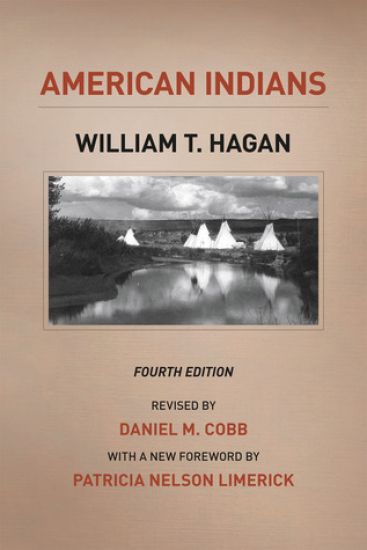
American Indians

American Indians

William T. Hagan

University of Chicago Press
2012
nidottu
In 1957, the University of Chicago Press asked acclaimed best-selling historian Daniel J. Boorstin to oversee a series of accessible yet authoritative books that, together, would tell the whole history of the American people. The result, published over the course of nearly half a century, is the "Chicago History of American Civilization" series, which provides a nuanced and vibrant portrait of the United States from its inception through the twentieth century. Scholars across many disciplines contributed, and the series covers a broad range of topics, as disparate as the War of 1812, immigration, and American folklore. While the series is certainly eclectic, the books share both ambition and authority - they have been staples for teachers and general readers alike. The authors included in this series represent some of the greatest academic talents ever to turn their mind to the American past. Thus the University of Chicago Press is excited to offer new editions of three of the series' best-known books. William T. Hagan's classic "American Indians" has become standard reading in the field of Native American history. Daniel M. Cobb, who studied with Hagan, has taken over the task of updating and revising the material, enabling the book to respond to the times. Spanning the arrival of white settlers in the Americas through the twentieth century, this concise account includes more than twenty new maps and illustrations, as well as a bibliographic essay that surveys the most recent research in Indian-white relations. With an introduction by Cobb, and a foreword by eminent historian Patricia Nelson Limerick, this fourth edition marks the fiftieth anniversary of the original publication of "American Indians".
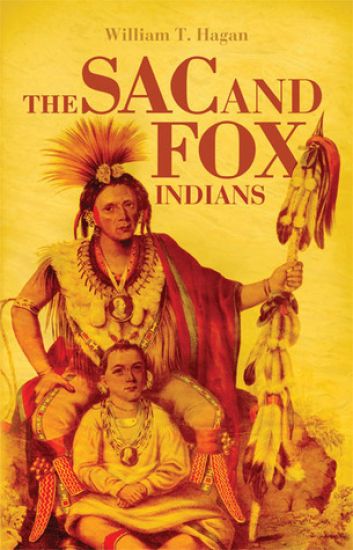
The Sac and Fox Indians

The Sac and Fox Indians

William T. Hagan

University of Oklahoma Press
1988
nidottu
Of all the aboriginal tribes of the Americas none had a more courageous or tragic destiny than the twin tribes of the Mississippi Valley, the Sacs and the Foxes.Occupying a parkland area midway between the powerful Iroquois and Sioux tribes in present Illinois and Wisconsin, the Sacs and the Foxes were prosperous agrarian people who held their own against their more numerous neighbors. The white frontier moved threateningly closer, and in the War of 1812 the Sacs and the Foxes, resisting the Americans' encroachment on their lands, joined forces with the British.Black Hawk, the great Sac and Fox leader, refused to accept land cessions to the whites, and in 1832 the tribe's worst fears came true: a group of white squatters claimed the site of Black Hawk's village in Illinois. In the ""war"" that followed, Black Hawk and his force retreated before an overwhelming force of whites and were virtually wiped out in a battle at the mouth of the Bad Axe River in Wisconsin.Pushed out onto the plains, the remnants of the tribes had to content with the dominant Comanches. Their destiny had been changed forever.
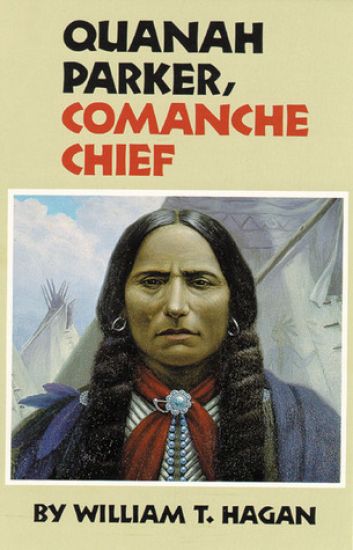
Quanah Parker, Comanche Chief

Quanah Parker, Comanche Chief

William T. Hagan

University of Oklahoma Press
1995
nidottu
The son of white captive Cynthia Ann Parker, Quanah Parker rose from able warrior to tribal leader on the Comanche reservation. Between 1875 and his death in 1911, Quanah dealt with local Indian agents and with presidents and other high officials in Washington, facing the classic dilemma of a leader caught between the dictates of an occupying power and the wrenching physical and spiritual needs of his people. He maintained a remarkable blend of progressive and traditional beliefs, and contrary to government policy, he practiced polygamy and the peyote religion. In this crisp and readable biography, William T Hagan presents a well-balanced portrait of Quanah Parker, the chief, and Quanah, the man torn between two worlds.
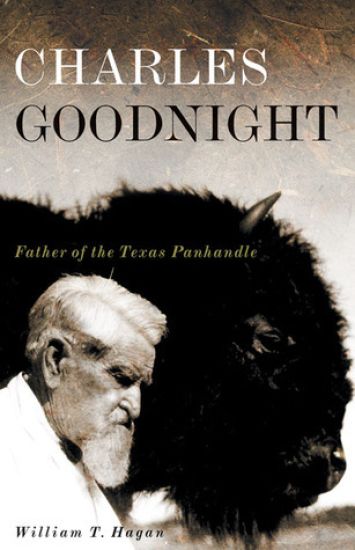
Charles Goodnight

Charles Goodnight

William T. Hagan

University of Oklahoma Press
2011
nidottu
Charles Goodnight was a pioneer of the early range cattle industry - an opinionated and profane but energetic and well-liked rancher.Goodnight's story is now re-examined by William T. Hagan in this brief, authoritative account that considers the role of ranching in general - and Goodnight in particular - in the development of the Texas Panhandle. The first major reassessment of his life in seventy years, Charles Goodnight: Father of the Texas Panhandle traces its subject's life from hardscrabble farmer to cattle baron, giving close attention to lesser-known aspects of his last thirty years.Goodnight came up in the days when much of Texas was free range and open to occupancy by any cattleman brave enough to stake a claim. Hagan shows how Goodnight learned the cattle business and became one of the most famous ranchers of the Southwest. Hagan also presents a clearer picture than ever before of Goodnight's business arrangements and investments, including the financial setbacks of his later life.As entertaining as it is informative, Hagan's account takes readers back to the Palo Duro Canyon and the Staked Plains to share insights into the cattleman's life - riding the range, fighting grass fires, driving cattle to the nearest railhead - the very stuff of cowboy legend and lore. This fascinating biography enriches our understanding of a Texas icon.
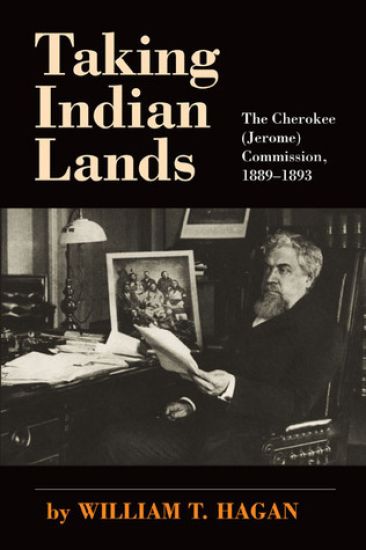
Taking Indian Lands

Taking Indian Lands

William T. Hagan

University of Oklahoma Press
2011
nidottu
Authorized by Congress in 1889, the Cherokee Commission was formed to negotiate the purchase of huge areas of land from the Cherokees, Ioways, Pawnees, Poncas, Tonakawas, Wichitas, Cheyennes, Arapahos, Sac and Fox, and other tribes in Indian Territory. Some humanitarian reformers argued that dissolving tribal holdings into individual private properties would help ""civilize"" the Indians and speed their assimilation into American culture. Whatever the hoped-for effects, the coerced sales opened to white settlement the vast ""unused"" expanses of land that had been held communally by the tribes. In Taking Indian Lands, William T. Hagan presents a detailed and disturbing account of the deliberations between the Cherokee Commission and the tribes.Often called the Jerome Commission after its leading negotiator, David H. Jerome, the commission intimidated Indians into first accepting allotment in severalty and then selling to the United States, at it price, the fifteen million acres declared surplus after allotment. This land then went to white settlers, making possible the state of Oklahoma at the expense of the Indian tribes who had held claim to it.Hagan has mined nearly two thousand pages of commission journals in the National Archives to reveal the commissioners' dramatic rhetoric and strategies and the Indian responses. He also records the words of tribal leaders as they poignantly defended their attachment to the land and expressed their fears of how their lives would be changed.