Kirjojen hintavertailu. Mukana 12 016 292 kirjaa ja 12 kauppaa.

Kirjahaku

Etsi kirjoja tekijän nimen, kirjan nimen tai ISBN:n perusteella.

9 kirjaa tekijältä William Whyte

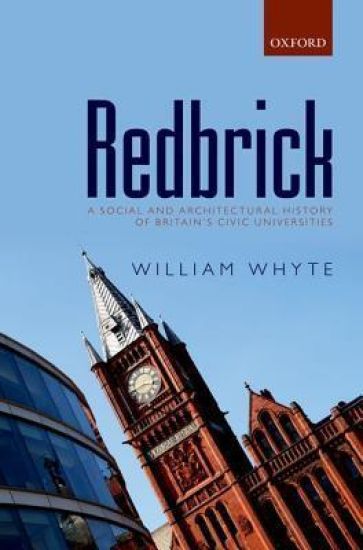
Redbrick

Redbrick

William Whyte

Oxford University Press
2015
sidottu
In the last two centuries Britain has experienced a revolution in higher education, with the number of students rising from a few hundred to several million. Yet the institutions that drove -- and still drive -- this change have been all but ignored by historians. Drawing on a decade's research, and based on work in dozens of archives, many of them used for the very first time, this is the first full-scale study of the civic universities -- new institutions in the nineteenth century reflecting the growth of major Victorian cities in Britain, such as Liverpool, Manchester, and Birmingham -- for more than 50 years. Tracing their story from the 1780s until the 2010s, it is an ambitious attempt to write the Redbrick revolution back into history. William Whyte argues that these institutions created a distinctive and influential conception of the university -- something that was embodied in their architecture and expressed in the lives of their students and staff. It was this Redbrick model that would shape their successors founded in the twentieth century: ensuring that the normal university experience in Britain is a Redbrick one. Using a vast range of previously untapped sources, Redbrick is not just a new history, but a new sort of university history: one that seeks to rescue the social and architectural aspects of education from the disregard of previous scholars, and thus provide the richest possible account of university life. It will be of interest to students and scholars of modern British history, to anyone who has ever attended university, and to all those who want to understand how our higher education system has developed -- and how it may evolve in the future.
Redbrick

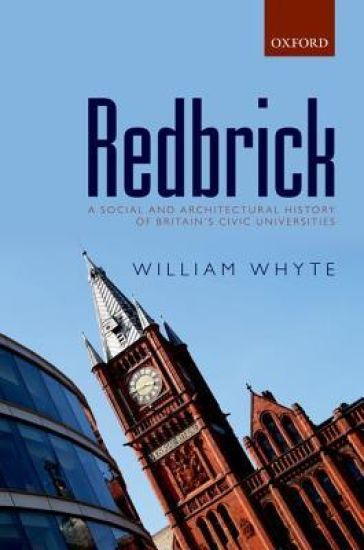
Redbrick

William Whyte

Oxford University Press
2016
nidottu
In the last two centuries Britain has experienced a revolution in higher education, with the number of students rising from a few hundred to several million. Yet the institutions that drove - and still drive - this change have been all but ignored by historians. Drawing on a decade's research, and based on work in dozens of archives, many of them used for the very first time, this is the first full-scale study of the civic universities - new institutions in the nineteenth century reflecting the growth of major Victorian cities in Britain, such as Liverpool, Manchester, Birmingham, York, and Durham - for more than 50 years. Tracing their story from the 1780s until the 2010s, it is an ambitious attempt to write the Redbrick revolution back into history. William Whyte argues that these institutions created a distinctive and influential conception of the university - something that was embodied in their architecture and expressed in the lives of their students and staff. It was this Redbrick model that would shape their successors founded in the twentieth century: ensuring that the normal university experience in Britain is a Redbrick one. Using a vast range of previously untapped sources, Redbrick is not just a new history, but a new sort of university history: one that seeks to rescue the social and architectural aspects of education from the disregard of previous scholars, and thus provide the richest possible account of university life. It will be of interest to students and scholars of modern British history, to anyone who has ever attended university, and to all those who want to understand how our higher education system has developed - and how it may evolve in the future.
Unlocking the Church

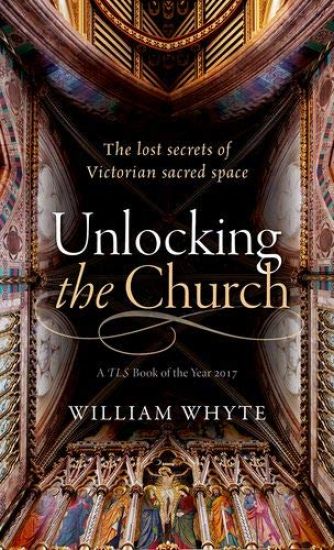
Unlocking the Church

William Whyte

Oxford University Press
2020
nidottu
The Victorians built tens of thousands of churches in the hundred years between 1800 and 1900. Wherever you might be in the English-speaking world, you will be close to a Victorian built or remodelled ecclesiastical building. Contemporary experience of church buildings is almost entirely down to the zeal of Victorians such as John Henry Newman, Henry Wilberforce and Augustus Pugin, and their ideas about the role of architecture in our spiritual life and well-being. In Unlocking the Church, William Whyte explores a forgotten revolution in social and architectural history and in the history of the Church. He details the architectural and theological debates of the day, explaining how the Tractarians of Oxford and the Ecclesiologists of Cambridge were embroiled in the aesthetics of architecture, and how the Victorians profoundly changed the ways in which buildings were understood and experienced. No longer mere receptacles for worship, churches became active agents in their own rights, capable of conveying theological ideas and designed to shape people's emotions. These church buildings are now a challenge: their maintenance, repair or repurposing are pressing problems for parishes in age of declining attendance and dwindling funds. By understanding their past, unlocking the secrets of their space, there might be answers in how to deal with the legacy of the Victorians now and into the future.
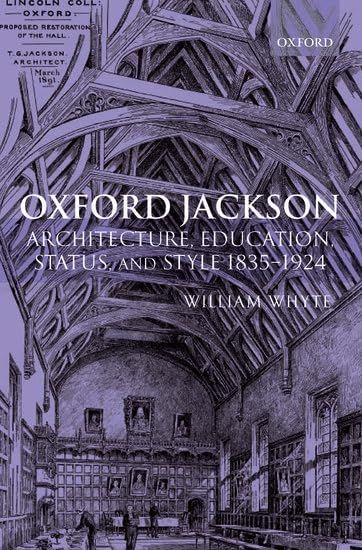
Oxford Jackson

Oxford Jackson

William Whyte

Oxford University Press
2025
nidottu
In the late nineteenth century one man changed Oxford forever. T. G. Jackson built the Examination Schools, the Bridge of Sighs, worked at a dozen colleges, and restored a score of other Oxford icons. He also built for many of the major public schools, for the University of Cambridge, and at the Inns of Court. A friend of William Morris, he was a pioneering member of the arts and crafts moment. A distinguished historian, he also restored dozens of houses and churches - and ensured the survival of Winchester Cathedral. As an architectural theorist he was a leader of the generation that rejected the Gothic Revival and sought to develop a new and modern style of building. Drawing on extensive archival work, and illustrated with a hundred images, this is the first in-depth analysis of Jackson's career ever written. It sheds light on a little-known architect and reveals that his buildings, his books, and his work as an arts and craftsman were not just important in their own right, they were also part of a wider social change. Jackson was the architect of choice for a particular group of people, for the 'intellectual aristocracy' of late Victorian England. His buildings were a means by which they could articulate their identity and demonstrate their distinctiveness. They reformed the universities and the schools whilst he refashioned their image. Essential reading for anyone interested in Victorian architecture and nineteenth-century society, this book will also be of interest to all those who know and love Oxford or Cambridge.
Oxford Jackson

Oxford Jackson

William Whyte

Clarendon Press
2006
sidottu
In the late nineteenth century one man changed Oxford forever. T. G. Jackson built the Examination Schools, the Bridge of Sighs, worked at a dozen colleges, and restored a score of other Oxford icons. He also built for many of the major public schools, for the University of Cambridge, and at the Inns of Court. A friend of William Morris, he was a pioneering member of the arts and crafts moment. A distinguished historian, he also restored dozens of houses and churches - and ensured the survival of Winchester Cathedral. As an architectural theorist he was a leader of the generation that rejected the Gothic Revival and sought to develop a new and modern style of building. Drawing on extensive archival work, and illustrated with a hundred images, this is the first in-depth analysis of Jackson's career ever written. It sheds light on a little-known architect and reveals that his buildings, his books, and his work as an arts and craftsman were not just important in their own right, they were also part of a wider social change. Jackson was the architect of choice for a particular group of people, for the 'intellectual aristocracy' of late Victorian England. His buildings were a means by which they could articulate their identity and demonstrate their distinctiveness. They reformed the universities and the schools whilst he refashioned their image. Essential reading for anyone interested in Victorian architecture and nineteenth-century society, this book will also be of interest to all those who know and love Oxford or Cambridge.
Cleanroom Technology

Cleanroom Technology

William Whyte

John Wiley Sons Inc
2010
sidottu
A self-contained and practical book providing step-by-step guidance to the design and construction of cleanrooms, appropriate testing methodologies, and operation for the minimization of contamination… This second edition has been comprehensively revised and includes extensive updates to the two chapters that contain information on cleanroom standards and guidelines. The chapter on risk management has been extensively revised, especially the section on risk assessment. Other new subjects that have been added to the various chapters are those on clean-build, determination of air supply volumes for non-unidirectional airflow cleanrooms, RABS (Restricted Access Barrier Systems), contamination recovery test methods, entry of large items into a cleanroom, glove allergy problems, and how to develop a cleanroom cleaning programme. Used for in-house training and a textbook in colleges, this volume is for cleanroom personnel at all levels. It provides novices with an introduction to the state-of-the-art technology and professionals with an accessible reference to the current practices. It is particularly useful in the semiconductor, pharmaceutical, biotechnology and life sciences industries. William Whyte is an international authority in cleanrooms, with over 45 years experience in research, teaching and consulting in the electronic, healthcare and pharmaceutical industries. He is a member of British and International standards committees writing the International Cleanroom standards, and has received numerous awards for his work in Cleanroom Technology. A comment on the first edition: "...extremely useful and helpful...very well-written, highly organized, easy to understand and follow..." (Environmental Geology, 2003)