Kirjojen hintavertailu. Mukana 12 083 983 kirjaa ja 12 kauppaa.

Kirjahaku

Etsi kirjoja tekijän nimen, kirjan nimen tai ISBN:n perusteella.

9 kirjaa tekijältä Willy Conley

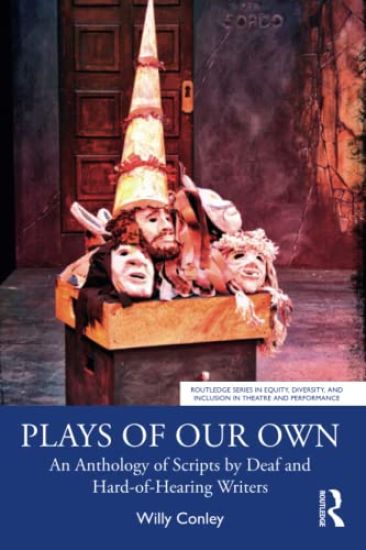
Plays of Our Own

Plays of Our Own

Willy Conley

TAYLOR FRANCIS LTD
2022
nidottu
Plays of Our Own is the first anthology of its kind containing an eclectic range of plays by Deaf and hard-of-hearing writers. These writers have made major, positive contributions to world drama or Deaf theatre arts. Their topics range from those completely unrelated to deafness to those with strong Deaf-related themes such as a dreamy, headstrong girl surviving a male-dominated world in Depression-era Ireland; a famous Spanish artist losing his hearing while creating his most controversial art; a Deaf African-American woman dealing with AIDS in her family; and a Deaf peddler ridiculed and rejected by his own kind for selling ABC fingerspelling cards. The plays are varied in style – a Kabuki western, an ensemble-created variety show, a visual-gestural play with no spoken nor signed language, a cartoon tragicomedy, historical and domestic dramas, and a situation comedy. This volume contains the well-known Deaf theatre classics, My Third Eye and A Play of Our Own.At long last, directors, producers, Deaf and hearing students, professors, and researchers will be able to pick up a book of "Deaf plays" for production consideration, Deaf culture or multicultural analysis, or the simple pleasure of reading.

Plays of Our Own

Plays of Our Own

Willy Conley

TAYLOR FRANCIS LTD
2022
sidottu
Plays of Our Own is the first anthology of its kind containing an eclectic range of plays by Deaf and hard-of-hearing writers. These writers have made major, positive contributions to world drama or Deaf theatre arts. Their topics range from those completely unrelated to deafness to those with strong Deaf-related themes such as a dreamy, headstrong girl surviving a male-dominated world in Depression-era Ireland; a famous Spanish artist losing his hearing while creating his most controversial art; a Deaf African-American woman dealing with AIDS in her family; and a Deaf peddler ridiculed and rejected by his own kind for selling ABC fingerspelling cards. The plays are varied in style – a Kabuki western, an ensemble-created variety show, a visual-gestural play with no spoken nor signed language, a cartoon tragicomedy, historical and domestic dramas, and a situation comedy. This volume contains the well-known Deaf theatre classics, My Third Eye and A Play of Our Own.At long last, directors, producers, Deaf and hearing students, professors, and researchers will be able to pick up a book of "Deaf plays" for production consideration, Deaf culture or multicultural analysis, or the simple pleasure of reading.
Visual-Gestural Communication

Visual-Gestural Communication

Willy Conley

Routledge
2019
sidottu
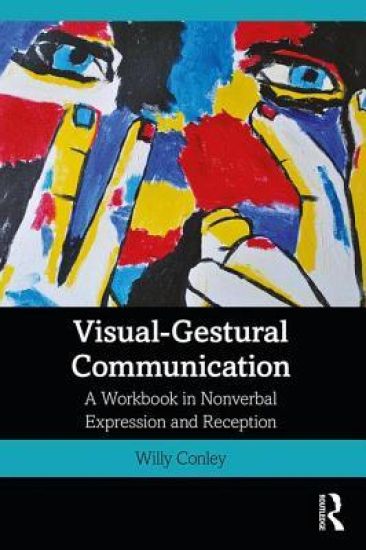
Visual-Gestural Communication is a truly unique volume in non-language communication devoted to the study of universal gestures, facial expressions, body language, and pantomime. Readers develop the skill and confidence to interact -- sans shared language -- with individuals, such as someone who is deaf or hard of hearing, or who speaks a foreign language. The text and accompanying online resources feature a wealth of icebreakers, sequenced yet modular activities and assignments, as well as resources, student exercises, and teacher-guided tasks that explore aspects and amalgamations of nonverbal communication, theatre, and sign language. It is a tremendous resource for students of visual-gestural communication, sign language interpretation, American Sign Language (and other foreign sign languages), nonverbal communication, theatre, and performance studies, as well as community educators in deaf awareness and advocacy. In addition to the text's vital use in the theatrical arena, it is also applicable to teachers who wish to help their students maximize the use of their facial expressions, gestures, and body language as a prerequisite to learning ASL.
Visual-Gestural Communication

Visual-Gestural Communication

Willy Conley

Routledge
2019
nidottu
Visual-Gestural Communication is a truly unique volume in non-language communication devoted to the study of universal gestures, facial expressions, body language, and pantomime. Readers develop the skill and confidence to interact -- sans shared language -- with individuals, such as someone who is deaf or hard of hearing, or who speaks a foreign language. The text and accompanying online resources feature a wealth of icebreakers, sequenced yet modular activities and assignments, as well as resources, student exercises, and teacher-guided tasks that explore aspects and amalgamations of nonverbal communication, theatre, and sign language. It is a tremendous resource for students of visual-gestural communication, sign language interpretation, American Sign Language (and other foreign sign languages), nonverbal communication, theatre, and performance studies, as well as community educators in deaf awareness and advocacy. In addition to the text's vital use in the theatrical arena, it is also applicable to teachers who wish to help their students maximize the use of their facial expressions, gestures, and body language as a prerequisite to learning ASL.
Vignettes of the Deaf Character and Other Plays

Vignettes of the Deaf Character and Other Plays

Willy Conley

Gallaudet University Press,U.S.
2009
nidottu
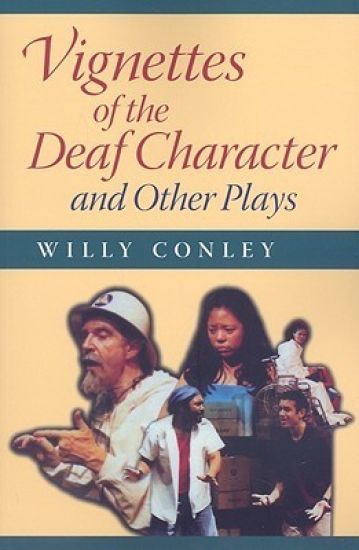
After spending three years in The National Theatre of the Deaf performing plays by hearing authors featuring hearing characters, Willy Conley realized that he wanted to write plays with deaf, hard-of- hearing, and hearing characters created from the Deaf perspective. Vignettes of the Deaf Character and Other Plays presents the result of his desire in twelve masterful plays. "I write for the eye, always searching for live, mobile, provocative images that would fill and illuminate the entire stage space with the complexities, the pathos, and the humor involved when deaf and hearing cultures merge or collide," writes Conley in his introduction. His plays depict a wide range of Deaf characters, including two brothers locked in a tragic rivalry familiar to families of all backgrounds; the broadly comedic Deaf Guide and hearing Techie interspersing laughs with cultural lessons in their Museum of Signs for People with Communication Disorders; Everyone searching for her Good Deeds as she faces imminent Death in an updating of the classic morality play, plus many others. These works explore a broad palette of circumstances with and without hearing characters, allowing Deaf characters to interact minus the direct influence that the dominant culture might exert. Vignettes of the Deaf Character and Other Plays presents the drama and passion of a master playwright who, through his perceptions, reveals facets of the Deaf character in all of us.
The Deaf Heart

The Deaf Heart

Willy Conley

Gallaudet University Press,U.S.
2015
nidottu
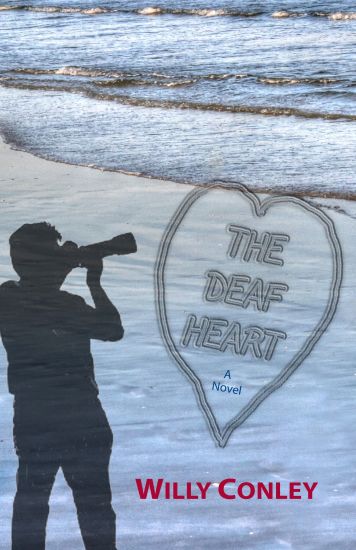
Told through a series of quirky, irreverent short stories and letters home during the early 1980s, The Deaf Heart chronicles a year in the life of Dempsey "Max" McCall, a Deaf biomedical photography resident at a teaching hospital on the island of Galveston, Texas. Max strives to become certified as a Registered Biological Photographer while straddling the deaf and hearing worlds. He befriends Reynaldo, an impoverished Deaf Mexican, and they go on a number of unusual escapades around the island. At the hospital, Max has to contend with hearing doctors, nurses, scientists, and teachers. While struggling through the rigors of his residency and running into bad luck in meeting women, Max discovers an ally in his hearing housemate Zag, a fellow resident who is also vying for certification. Toward the end of his residency, Max meets Maddy, a Deaf woman who helps bring balance to his life. Author Willy Conley's stories, some humorous, some poignant, reveal Max's struggles and triumphs as he attempts to succeed in the hearing world while at the same time navigating the multicultural and linguistic diversity within the Deaf world.
The World of White Water

The World of White Water

Willy Conley

Kelsay Books
2021
pokkari
In The World of White Water, Willy Conley is a capable, energetic, and sometimes humorous guide, inviting us to share in his experience of the Deaf and hearing worlds, showing us how these worlds co-exist and collide. Combining the powers of ASL and English, Conley navigates the swirling 'white water' of these poems using precise and striking images to share his thoughtful observations. You'll want to read this book from cover to cover, and return often to savor your favorite discoveries.Helen Frost, author of All He Knew The deaf eye, to paraphrase the deaf poet David Wright describing his own work, typically makes eye music of language. In Conley's hands, however, the deaf eye captures nearly photographic imagery. The depiction of a deaf child riding his pedal car through a puzzling world of suburban household objects stops cold on an image of sidewalk snow melted by rock salt. Raucous boys filling a skateboard park with "leaping / testosterone" are caught as though in mid-leap by Conley's camera at the moment a little girl "rolls in nonchalantly / on a pink Razor scooter." Some of the verse collected here is rendered in American Sign Language mentalese that may surprise some readers, but much of it focuses, instead, on using the English language to take achingly beautiful stills.Edna Sayers, editor of Outcasts and Angels: The New Anthology of Deaf Characters in LiteratureThis delightful collection of poems by Willy Conley-a deaf man who is also a poet, an actor, a teacher, and a father-offers up poignant insights with clarity and humor. The poems are a pleasure to read for their own sake, but for hearing people like myself, they also provide a window into the lived experience of a person with hearing loss, with all its frustrations and its compensations.Alexa Selph, Poet and Poetry Instructor, Emory Continuing Education
Listening through the Bone – Collected Poems

Listening through the Bone – Collected Poems

Willy Conley

Gallaudet University Press,U.S.
2018
nidottu
I don't write "with the ear" as most poets do, but with the eye. As Deaf people are apt to do, we become attuned to our world through tactile means, listening through the bone for vibrations, sensing shifts in air currents, recognizing wafting odors, observing fluctuations and reflections of light and movements in the water. In Listening through the Bone, Willy Conley bears witness to life's moments and renders them into poems that are at once irreverent and tender. His poetry examines life cycles, the natural world, and his experiences as a Deaf individual. It is presented in five parts: InaudiblesExistentialsQuizzicalsIrrevocablesEnvironmentals Conley's thoughts on the banal and the bizarre include translations of poetry from American Sign Language to English. His identity as a Deaf poet lends a strong visual aspect to his work. This collection is accompanied by the author's photographs, including "watergraphs" that reveal inverted images reflected in pools of water.
Photographic Memories – Selected Essays, Playlets, and Stories
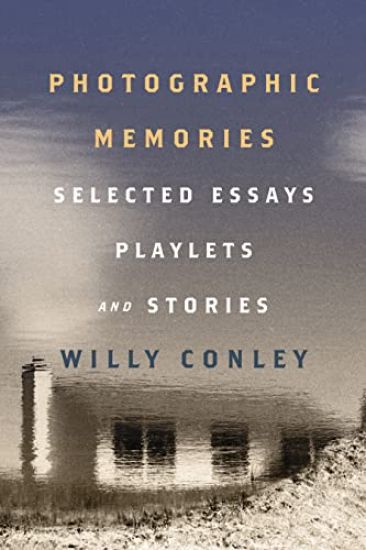
Photographic Memories is an anthology of essays, playlets, and short fiction by writer and photographer Willy Conley. The pieces in this collection are grounded in Deaf experiences, a hallmark of Conley's work. Written from the unique perspective of a Deaf artist who navigates between the Deaf and hearing worlds, Conley depicts a variety of topics, settings, and characters: a day in the life of a traveling Deaf theater company, a nail salon, a baseball player trying to go pro. Conley also addresses critical issues at the heart of his Deaf identity, such as creating professional opportunities for Deaf theater artists, the need for better standards in sign language interpreting, and ableism. Original photographs taken by the author accompany his writings and invite the reader to contemplate the often-blurred lines between reality and memory.