Kirjojen hintavertailu. Mukana 11 244 527 kirjaa ja 12 kauppaa.

Kirjahaku

Etsi kirjoja tekijän nimen, kirjan nimen tai ISBN:n perusteella.

6 kirjaa tekijältä Winnifred Fallers Sullivan

A Ministry of Presence

A Ministry of Presence

Winnifred Fallers Sullivan

University of Chicago Press
2019
pokkari
Most people in the United States today no longer live their lives under the guidance of local institutionalized religious leadership, such as rabbis, ministers, and priests; rather, liberals and conservatives alike have taken charge of their own religious or spiritual practices. This shift, along with other social and cultural changes, has opened up a perhaps surprising space for chaplains--spiritual professionals who usually work with the endorsement of a religious community but do that work away from its immediate hierarchy, ministering in a secular institution, such as a prison, the military, or an airport, to an ever-changing group of clients of widely varying faiths and beliefs. In A Ministry of Presence, Winnifred Fallers Sullivan explores how chaplaincy works in the United States--and in particular how it sits uneasily at the intersection of law and religion, spiritual care, and government regulation. Responsible for ministering to the wandering souls of the globalized economy, the chaplain works with a clientele often unmarked by a specific religious identity, and does so on behalf of a secular institution, like a hospital. Sullivan's examination of the sometimes heroic but often deeply ambiguous work yields fascinating insights into contemporary spiritual life, the politics of religious freedom, and the never-ending negotiation of religion's place in American institutional life.
A Ministry of Presence

A Ministry of Presence

Winnifred Fallers Sullivan

University of Chicago Press
2014
sidottu
Most people in the United States today no longer live their lives under the guidance of local institutionalized religious leadership, such as rabbis, ministers, and priests; rather, liberals and conservatives alike have taken charge of their own religious or spiritual practices. This shift, along with other social and cultural changes, has opened up a perhaps surprising space for chaplains-spiritual professionals who usually work with the endorsement of a religious community but do that work away from its immediate hierarchy, ministering in a secular institution, such as a prison, the military, or an airport, to an ever-changing group of clients of widely varying faiths and beliefs. In A Ministry of Presence, Winnifred Fallers Sullivan explores how chaplaincy works in the United States - and in particular how it sits uneasily at the intersection of law and religion, spiritual care and government regulation. Responsible for ministering to the wandering souls of the globalized economy, the chaplain works with a clientele often unmarked by a specific religious identity, and does so on behalf of a secular institution, like a hospital. Chaplains' examination of the sometimes heroic but often deeply ambiguous work yields fascinating insights into contemporary spiritual life, the politics of religious freedom, and the never ending negotiation of religion's place in American institutional life.
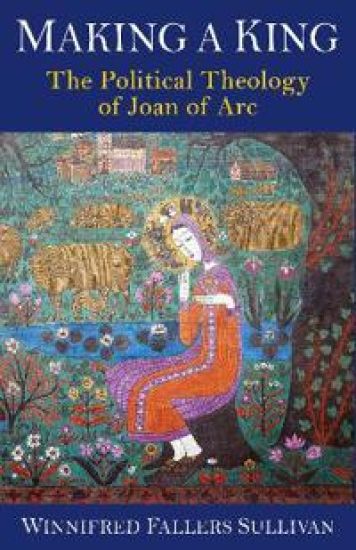
Making a King

Making a King

Winnifred Fallers Sullivan

Columbia University Press
2026
sidottu
There is an enduring fascination with Joan of Arc, yet she is almost always seen alone, as a victim or martyr. A strikingly different person is heard in her letters and the testimony of her companions. To the king of England, she wrote, “I am a commander of war, and in whatever place I come upon your men in France, I will make them leave . . . And if they do not wish to obey, I will have them all killed.” She wrote to the people of the towns she defended, giving them news and seeking their support. Her companions spoke of her intelligence, bravery, and military competence. Hers was a collective mission to rescue the people from the depredations of war. Focusing on her life rather than her death, Winnifred Fallers Sullivan offers an interpretation of Joan of Arc as a political thinker and actor who sought, during her meteoric presence in fifteenth-century France, to legitimate a king, channel God’s word, convene a coronation, and speak for the people in an alternative legal order. She assembled sacred kingship, mystical experience, and the press of political and economic chaos into a vernacular political theology that still speaks to our moment. Making a King illuminates Joan’s extraordinary life and vision—her conception of sovereignty from below, her form of female masculinity, and her power as kingmaker—and shows why she can help us find a deeper understanding of religion and politics today.
Making a King

Making a King

Winnifred Fallers Sullivan

Columbia University Press
2026
pokkari
There is an enduring fascination with Joan of Arc, yet she is almost always seen alone, as a victim or martyr. A strikingly different person is heard in her letters and the testimony of her companions. To the king of England, she wrote, “I am a commander of war, and in whatever place I come upon your men in France, I will make them leave . . . And if they do not wish to obey, I will have them all killed.” She wrote to the people of the towns she defended, giving them news and seeking their support. Her companions spoke of her intelligence, bravery, and military competence. Hers was a collective mission to rescue the people from the depredations of war. Focusing on her life rather than her death, Winnifred Fallers Sullivan offers an interpretation of Joan of Arc as a political thinker and actor who sought, during her meteoric presence in fifteenth-century France, to legitimate a king, channel God’s word, convene a coronation, and speak for the people in an alternative legal order. She assembled sacred kingship, mystical experience, and the press of political and economic chaos into a vernacular political theology that still speaks to our moment. Making a King illuminates Joan’s extraordinary life and vision—her conception of sovereignty from below, her form of female masculinity, and her power as kingmaker—and shows why she can help us find a deeper understanding of religion and politics today.
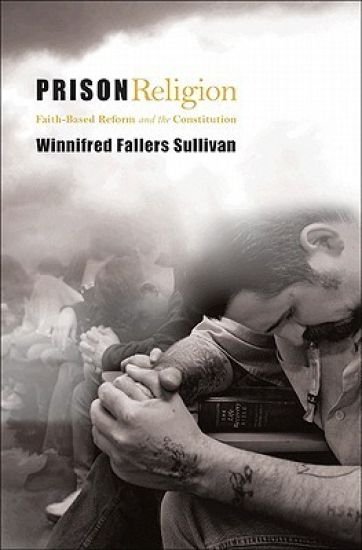
Prison Religion

Prison Religion

Winnifred Fallers Sullivan

Princeton University Press
2011
pokkari
More than the citizens of most countries, Americans are either religious or in jail--or both. But what does it mean when imprisonment and evangelization actually go hand in hand, or at least appear to? What do "faith-based" prison programs mean for the constitutional separation of church and state, particularly when prisoners who participate get special privileges? In Prison Religion, law and religion scholar Winnifred Fallers Sullivan takes up these and other important questions through a close examination of a 2005 lawsuit challenging the constitutionality of a faith-based residential rehabilitation program in an Iowa state prison. Americans United for the Separation of Church and State v. Prison Fellowship Ministries, a trial in which Sullivan served as an expert witness, centered on the constitutionality of allowing religious organizations to operate programs in state-run facilities. Using the trial as a case study, Sullivan argues that separation of church and state is no longer possible. Religious authority has shifted from institutions to individuals, making it difficult to define religion, let alone disentangle it from the state. Prison Religion casts new light on church-state law, the debate over government-funded faith-based programs, and the predicament of prisoners who have precious little choice about what kind of rehabilitation they receive, if they are offered any at all.
The Impossibility of Religious Freedom

The Impossibility of Religious Freedom

Winnifred Fallers Sullivan

Princeton University Press
2018
pokkari
The Constitution may guarantee it. But religious freedom in America is, in fact, impossible. So argues this timely and iconoclastic work by law and religion scholar Winnifred Sullivan. Sullivan uses as the backdrop for the book the trial of Warner vs. Boca Raton, a recent case concerning the laws that protect the free exercise of religion in America. The trial, for which the author served as an expert witness, concerned regulations banning certain memorials from a multiconfessional nondenominational cemetery in Boca Raton, Florida. The book portrays the unsuccessful struggle of Catholic, Protestant, and Jewish families in Boca Raton to preserve the practice of placing such religious artifacts as crosses and stars of David on the graves of the city-owned burial ground.Sullivan demonstrates how, during the course of the proceeding, citizens from all walks of life and religious backgrounds were harassed to define just what their religion is. She argues that their plight points up a shocking truth: religion cannot be coherently defined for the purposes of American law, because everyone has different definitions of what religion is. Indeed, while religious freedom as a political idea was arguably once a force for tolerance, it has now become a force for intolerance, she maintains.A clear-eyed look at the laws created to protect religious freedom, this vigorously argued book offers a new take on a right deemed by many to be necessary for a free democratic society. It will have broad appeal not only for religion scholars, but also for anyone interested in law and the Constitution.Featuring a new preface by the author, The Impossibility of Religious Freedom offers a new take on a right deemed by many to be necessary for a free democratic society.