Kirjojen hintavertailu. Mukana 11 244 527 kirjaa ja 12 kauppaa.

Kirjahaku

Etsi kirjoja tekijän nimen, kirjan nimen tai ISBN:n perusteella.

6 kirjaa tekijältä Winston James

Claude McKay

Claude McKay

Winston James

Columbia University Press
2022
sidottu
Finalist, Pauli Murray Book Prize in Black Intellectual History, African American Intellectual History SocietyShortlisted, 2023 Historical Nonfiction Legacy Award, Hurston / Wright FoundationOne of the foremost Black writers and intellectuals of his era, Claude McKay (1889–1948) was a central figure in Caribbean literature, the Harlem Renaissance, and the Black radical tradition. McKay’s life and writing were defined by his class consciousness and anticolonialism, shaped by his experiences growing up in colonial Jamaica as well as his early career as a writer in Harlem and then London. Dedicated to confronting both racism and capitalist exploitation, he was a critical observer of the Black condition throughout the African diaspora and became a committed Bolshevik.Winston James offers a revelatory account of McKay’s political and intellectual trajectory from his upbringing in Jamaica through the early years of his literary career and radical activism. In 1912, McKay left Jamaica to study in the United States, never to return. James follows McKay’s time at the Tuskegee Institute and Kansas State University, as he discovered the harshness of American racism, and his move to Harlem, where he encountered the ferment of Black cultural and political movements and figures such as Hubert Harrison and Marcus Garvey. McKay left New York for London, where his commitment to revolutionary socialism deepened, culminating in his transformation from Fabian socialist to Bolshevik.Drawing on a wide variety of sources, James offers a rich and detailed chronicle of McKay’s life, political evolution, and the historical, political, and intellectual contexts that shaped him.
Claude McKay

Claude McKay

Winston James

Columbia University Press
2022
pokkari
Finalist, Pauli Murray Book Prize in Black Intellectual History, African American Intellectual History SocietyShortlisted, 2023 Historical Nonfiction Legacy Award, Hurston / Wright FoundationOne of the foremost Black writers and intellectuals of his era, Claude McKay (1889–1948) was a central figure in Caribbean literature, the Harlem Renaissance, and the Black radical tradition. McKay’s life and writing were defined by his class consciousness and anticolonialism, shaped by his experiences growing up in colonial Jamaica as well as his early career as a writer in Harlem and then London. Dedicated to confronting both racism and capitalist exploitation, he was a critical observer of the Black condition throughout the African diaspora and became a committed Bolshevik.Winston James offers a revelatory account of McKay’s political and intellectual trajectory from his upbringing in Jamaica through the early years of his literary career and radical activism. In 1912, McKay left Jamaica to study in the United States, never to return. James follows McKay’s time at the Tuskegee Institute and Kansas State University, as he discovered the harshness of American racism, and his move to Harlem, where he encountered the ferment of Black cultural and political movements and figures such as Hubert Harrison and Marcus Garvey. McKay left New York for London, where his commitment to revolutionary socialism deepened, culminating in his transformation from Fabian socialist to Bolshevik.Drawing on a wide variety of sources, James offers a rich and detailed chronicle of McKay’s life, political evolution, and the historical, political, and intellectual contexts that shaped him.
The Struggles of John Brown Russwurm

The Struggles of John Brown Russwurm

Winston James

New York University Press
2010
sidottu
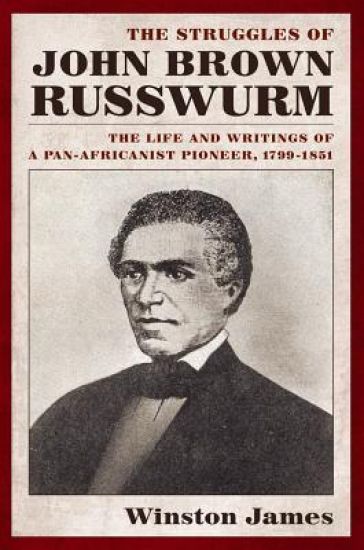
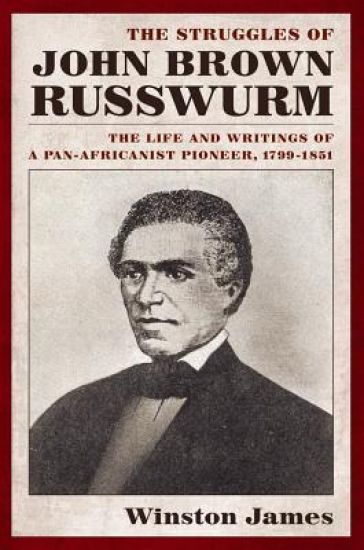
"If I know my own heart, I can truly say, that I have not a selfish wish in placing myself under the patronage of the [American Colonization] Society; usefulness in my day and generation, is what I principally court." "Sensible then, as all are of the disadvantages under which we at present labour, can any consider it a mark of folly, for us to cast our eyes upon some other portion of the globe where all these inconveniences are removed where the Man of Colour freed from the fetters and prejudice, and degradation, under which he labours in this land, may walk forth in all the majesty of his creation—a new born creature—a Free Man!" —John Brown Russwurm, 1829. John Brown Russwurm (1799-1851) is almost completely missing from the annals of the Pan-African movement, despite the pioneering role he played as an educator, abolitionist, editor, government official, emigrationist and colonizationist. Russwurm's life is one of "firsts": first African American graduate of Maine's Bowdoin College; co-founder of Freedom's Journal, America's first newspaper to be owned, operated, and edited by African Americans; and, following his emigration to Africa, first black governor of the Maryland section of Liberia. Despite his accomplishments, Russwurm struggled internally with the perennial Pan-Africanist dilemma of whether to go to Africa or stay and fight in the United States, and his ordeal was the first of its kind to be experienced and resolved before the public eye. With this slim, accessible biography of Russwurm, Winston James makes a major contribution to the history of black uplift and protest in the Early American Republic and the larger Pan-African world. James supplements the biography with a carefully edited and annotated selection of Russwurm's writings, which vividly demonstrate the trajectory of his political thinking and contribution to Pan-Africanist thought and highlight the challenges confronting the peoples of the African Diaspora. Though enormously rich and powerfully analytical, Russwurm's writings have never been previously anthologized. The Struggles of John Brown Russwurm is a unique and unparalleled reflection on the Early American Republic, the African Diaspora and the wider history of the times. An unblinking observer of and commentator on the condition of African Americans as well as a courageous fighter against white supremacy and for black emancipation, Russwurm's life and writings provide a distinct and articulate voice on race that is as relevant to the present as it was to his own lifetime.
The Struggles of John Brown Russwurm

The Struggles of John Brown Russwurm

Winston James

New York University Press
2010
pokkari
"If I know my own heart, I can truly say, that I have not a selfish wish in placing myself under the patronage of the [American Colonization] Society; usefulness in my day and generation, is what I principally court." "Sensible then, as all are of the disadvantages under which we at present labour, can any consider it a mark of folly, for us to cast our eyes upon some other portion of the globe where all these inconveniences are removed where the Man of Colour freed from the fetters and prejudice, and degradation, under which he labours in this land, may walk forth in all the majesty of his creation—a new born creature—a Free Man!" —John Brown Russwurm, 1829. John Brown Russwurm (1799-1851) is almost completely missing from the annals of the Pan-African movement, despite the pioneering role he played as an educator, abolitionist, editor, government official, emigrationist and colonizationist. Russwurm's life is one of "firsts": first African American graduate of Maine's Bowdoin College; co-founder of Freedom's Journal, America's first newspaper to be owned, operated, and edited by African Americans; and, following his emigration to Africa, first black governor of the Maryland section of Liberia. Despite his accomplishments, Russwurm struggled internally with the perennial Pan-Africanist dilemma of whether to go to Africa or stay and fight in the United States, and his ordeal was the first of its kind to be experienced and resolved before the public eye. With this slim, accessible biography of Russwurm, Winston James makes a major contribution to the history of black uplift and protest in the Early American Republic and the larger Pan-African world. James supplements the biography with a carefully edited and annotated selection of Russwurm's writings, which vividly demonstrate the trajectory of his political thinking and contribution to Pan-Africanist thought and highlight the challenges confronting the peoples of the African Diaspora. Though enormously rich and powerfully analytical, Russwurm's writings have never been previously anthologized. The Struggles of John Brown Russwurm is a unique and unparalleled reflection on the Early American Republic, the African Diaspora and the wider history of the times. An unblinking observer of and commentator on the condition of African Americans as well as a courageous fighter against white supremacy and for black emancipation, Russwurm's life and writings provide a distinct and articulate voice on race that is as relevant to the present as it was to his own lifetime.
Holding aloft the Banner of Ethiopia

Holding aloft the Banner of Ethiopia

Winston James

Verso Books
2020
nidottu
Marcus Garvey, Claude McKay, Claudia Jones, C.L.R. James, Stokely Carmichael, Louis Farakhan-the roster of immigrants from the Caribbean who have made a profound impact on the development of radical politics in the United States is extensive. In this magisterial and lavishly illustrated work, Winston James focuses on the twentieth century's first waves of immigrants from the Caribbean and their contribution to political dissidence in America.This diligently researched, wide-ranging and sophisticated book will be welcomed by all those interested in the Caribbean and its émigrés, the Afro-American current within America's radical tradition, and the history, politics, and culture of the African diaspora.
Holding aloft the Banner of Ethiopia

Holding aloft the Banner of Ethiopia

Winston James

Verso Books
1999
nidottu
Marcus Garvey, Claude McKay, Claudia Jones, C.L.R. James, Stokely Carmichael, Louis Farakhan-the roster of immigrants from the Caribbean who have made a profound impact on the development of radical politics in the United States is extensive. In this magisterial and lavishly illustrated work, Winston James focuses on the twentieth century's first waves of immigrants from the Caribbean and their contribution to political dissidence in America.Examining the way in which the characteristics of the societies they left shaped their perceptions of the land to which they traveled, Winston James draws sharp differences between Hispanic, Anglophone, and other non-Hispanic arrivals. He explores the interconnections between the Cuban independence struggle, Puerto Rican nationalism, Afro-American feminism, and black communism in the first turbulent decades of the twentieth century. He also provides fascinating insights into the peculiarities of Puerto Rican radicalism's impact in New York City and recounts the remarkable story of Afro-Cuban radicalism in Florida. Virgin Islander Hubert Harrison, whom A. Philip Randolph dubbed 'the father of Harlem radicalism', is rescued from the historical shadows by James's analysis of his pioneering contribution to Afro-America's radical tradition. In addition to a subtle re-examination of Garvey's Universal Negro Movement Association-including the exertions and contributions of its female members-James provides the most detailed exploration so far undertaken of Cyril Briggs and his little-known but important African Blood Brotherhood.This diligently researched, wide ranging and sophisticated book will be welcomed by all those interested in the Caribbean and its émigrés, the Afro-American current within America's radical tradition, and the history, politics, and culture of the African diaspora.