Kirjojen hintavertailu. Mukana 11 244 527 kirjaa ja 12 kauppaa.

Kirjahaku

Etsi kirjoja tekijän nimen, kirjan nimen tai ISBN:n perusteella.

7 kirjaa tekijältä Winthrop Wetherbee

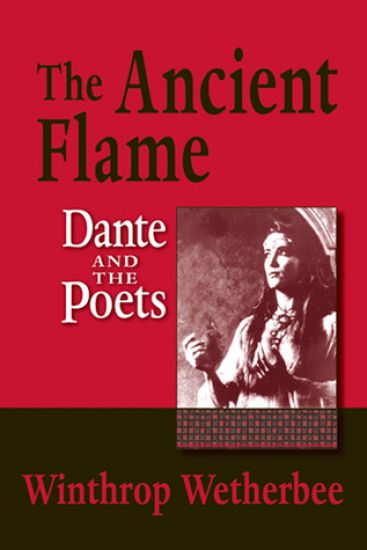
The Ancient Flame

The Ancient Flame

Winthrop Wetherbee

University of Notre Dame Press
2016
nidottu
While the structure and themes of the Divine Comedy are defined by the narrative of a spiritual pilgrimage guided by Christian truth, Winthrop Wetherbee's remarkable new study reveals that Dante's engagement with the great Latin poets Vergil, Ovid, Lucan, and Statius constitutes a second, complementary narrative centered on psychological and artistic self-discovery. This fresh, illuminating approach departs from the usual treatment of classical poets in Dante criticism, which assigns them a merely allegorical function. Their true importance to Dante's project is much greater. As Wetherbee meticulously shows, Dante's use of the poets is grounded in an astute understanding of their historical situation and a deeply sympathetic reading of their poetry. Dante may have been motivated to correct pagan thought and imagery, but more pervasive was his desire to recreate classical style and to restore classical auctoritas to his own times. Dante's journey in the Commedia, beginning with the pilgrim's assumption of a tragic view of the human condition, progresses with the great poetry of the classical past as an intrinsic component of—not just a foil to—the spiritual experience. Dante ultimately recognizes classical poetry as an essential means to his discovery of truth. A stunning contribution by one of the nation's leading medievalists, Wetherbee's investigation of the poem's classicism makes possible an ethical and spiritual but non-Christian reading of Dante, one that will spur new research and become an indispensable tool for teaching the Commedia.
Chaucer: The Canterbury Tales

Chaucer: The Canterbury Tales

Winthrop Wetherbee

Cambridge University Press
2003
pokkari
This introductory guide places the Canterbury Tales in the context of the crisis in English society in the fourteenth century. It examines the social diversity of Chaucer’s pilgrims, the stylistic range of their tales and the psychological richness of their interaction. The volume offers students a clear image of the powerful representation of the social reality that makes the Canterbury Tales one of the most important texts in English literature. Emphasis is placed on the language of the poem, the place of Chaucer in subsequent literary tradition, and an entire chapter is devoted to the General Prologue which is widely studied on undergraduate courses. Finally, the volume offers a helpful chronology of the period and an invaluable guide to further reading.
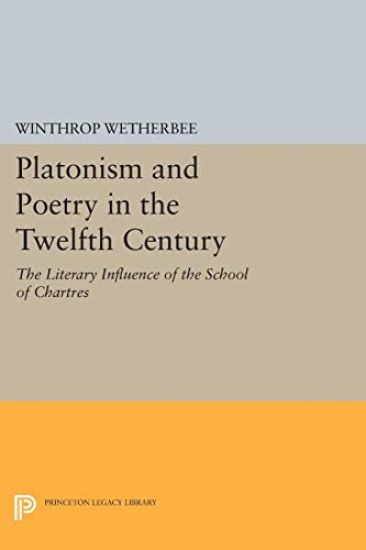
Platonism and Poetry in the Twelfth Century

Platonism and Poetry in the Twelfth Century

Winthrop Wetherbee

Princeton University Press
2015
pokkari
Chartres as an intellectual and cultural force in the Renaissance of the twelfth century has engaged the attention of critics and scholars from R. L. Poole through Gilson, Curtius, and Huizinga to, most recently, Peter Dronke. Its importance as a poetic tradition is now reviewed by Winthrop Wetherbee, first as it developed at Chartres, then as it influenced later poetry, French as well as Latin. Mr. Wetherbee analyzes, and supports with his own translations, the poetry notably of Bernardus Silvestrus and Alain dc Lille: he defines the intellectual milieu of the Chartrian poets and their Platonic conception of nature, man, and poetry. Myth, philosophy, and the literary statement that gives them poetic being are Mr. Wetherbee's essential concern, as they were in fact the concern of the poets he discusses. Originally published in 1972. The Princeton Legacy Library uses the latest print-on-demand technology to again make available previously out-of-print books from the distinguished backlist of Princeton University Press. These editions preserve the original texts of these important books while presenting them in durable paperback and hardcover editions. The goal of the Princeton Legacy Library is to vastly increase access to the rich scholarly heritage found in the thousands of books published by Princeton University Press since its founding in 1905.
Platonism and Poetry in the Twelfth Century

Platonism and Poetry in the Twelfth Century

Winthrop Wetherbee

Princeton University Press
2016
sidottu
Chartres as an intellectual and cultural force in the Renaissance of the twelfth century has engaged the attention of critics and scholars from R. L. Poole through Gilson, Curtius, and Huizinga to, most recently, Peter Dronke. Its importance as a poetic tradition is now reviewed by Winthrop Wetherbee, first as it developed at Chartres, then as it influenced later poetry, French as well as Latin. Mr. Wetherbee analyzes, and supports with his own translations, the poetry notably of Bernardus Silvestrus and Alain dc Lille: he defines the intellectual milieu of the Chartrian poets and their Platonic conception of nature, man, and poetry. Myth, philosophy, and the literary statement that gives them poetic being are Mr. Wetherbee's essential concern, as they were in fact the concern of the poets he discusses. Originally published in 1972. The Princeton Legacy Library uses the latest print-on-demand technology to again make available previously out-of-print books from the distinguished backlist of Princeton University Press. These editions preserve the original texts of these important books while presenting them in durable paperback and hardcover editions. The goal of the Princeton Legacy Library is to vastly increase access to the rich scholarly heritage found in the thousands of books published by Princeton University Press since its founding in 1905.
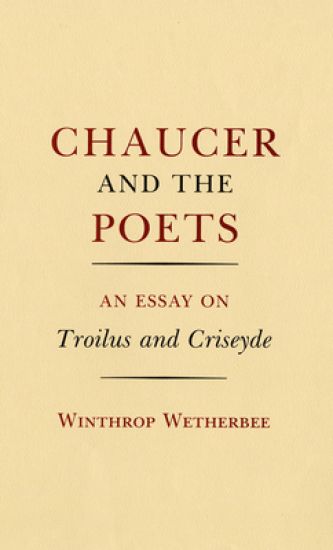
Chaucer and the Poets

Chaucer and the Poets

Winthrop Wetherbee

Cornell University Press
2016
pokkari
In this sensitive reading of Chaucer's Troilus and Criseyde, Winthrop Wetherbee redefines the nature of Chaucer's poetic vision. Using as a starting point Chaucer's profound admiration for the achievement of Dante and the classical poets, Wetherbee sees the Troilus as much more than a courtly treatment of an event in ancient history—it is, he asserts, a major statement about the poetic tradition from which it emerges. Wetherbee demonstrates the evolution of the poet-narrator of the Troilus, who begins as a poet of romance, bound by the characters' limited worldview, but who in the end becomes a poet capable of realizing the tragic and ultimately the spiritual implications of his story.