Kirjojen hintavertailu. Mukana 11 342 296 kirjaa ja 12 kauppaa.

Kirjahaku

Etsi kirjoja tekijän nimen, kirjan nimen tai ISBN:n perusteella.

4 kirjaa tekijältä Winton U Solberg

Reforming Medical Education

Reforming Medical Education

Winton U Solberg

University of Illinois Press
2009
sidottu
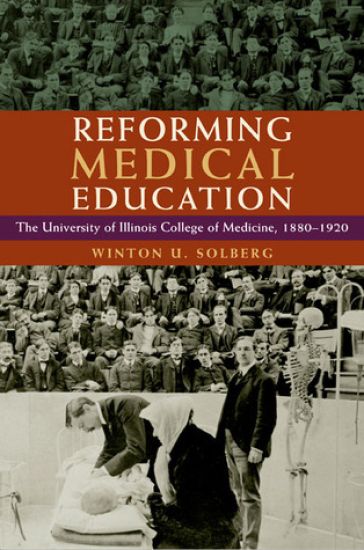
The University of Illinois College of Medicine has its origins in the 1882 opening of the College of Physicians and Surgeons of Chicago. In 1897 the College of Physicians and Surgeons became affiliated with the University of Illinois and began a relationship that endured its fair share of trials, successes, and even a few bitter fights. In this fact-filled volume, Winton U. Solberg places the early history of the University of Illinois College of Medicine in a national and international context, tracing its origins, crises, and reforms through its first tumultuous decades. This history details the efforts of various men and women who worked out the finances, governance, and policies that would balance the College of Medicine’s commitments to patient care, research, and medical education for the twentieth century. In particular, Solberg focuses on two individuals whose efforts were especially instrumental in establishing the University of Illinois College of Medicine. University President Edmund J. James had long been committed to the reform of medical education, and he exerted himself mightily to integrate the College of Medicine within the University. Although not directly affiliated with the University of Illinois, Abraham Flexner’s famous Flexner Report on medical education reform detailed the specific improvements that the University and state of Illinois would need to make to develop the College of Medicine into a major institution. Solberg discusses the role of the College of Medicine and the city of Chicago in the historic transformation from the late nineteenth century, when Germany was the acknowledged world center of medicine and the germ theory of disease was not yet widely accepted, to 1920, by which time the United States had emerged as the leader in modern medical research and education. With meticulous scholarship and attention to detail, this volume chronicles the long and difficult struggle to achieve that goal.
Creating the Big Ten

Creating the Big Ten

Winton U Solberg

University of Illinois Press
2018
sidottu
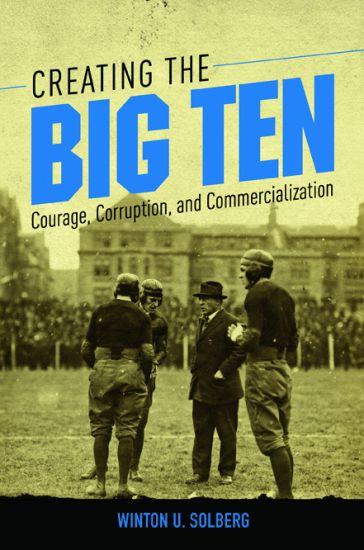
Big Ten football fans pack gridiron cathedrals that hold up to 100,000 spectators. The conference's fourteen member schools share a broadcast network and a 2016 media deal worth $2.64 billion. This cultural and financial colossus grew out of a modest 1895 meeting that focused on football's brutality and encroaching professionalism in the game. Winton U. Solberg explores the relationship between higher education and collegiate football in the Big Ten's first fifty years. This formative era saw debates over eligibility and amateurism roil the sport. In particular, faculty concerned with academics clashed with coaches, university presidents, and others who played to win. Solberg follows the conference's successful early efforts to put the best interests of institutions and athletes first. Yet, as he shows, commercial concerns undid such work after World War I as sports increasingly eclipsed academics. By the 1940s, the Big Ten's impact on American sports was undeniable. It had shaped the development of intercollegiate athletics and college football nationwide while serving as a model for other athletic conferences.
Creating the Big Ten

Creating the Big Ten

Winton U Solberg

University of Illinois Press
2018
nidottu
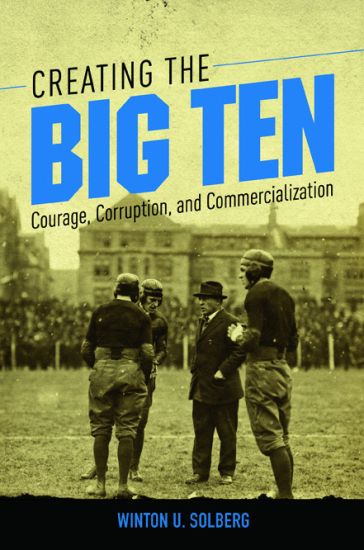
Big Ten football fans pack gridiron cathedrals that hold up to 100,000 spectators. The conference's fourteen member schools share a broadcast network and a 2016 media deal worth $2.64 billion. This cultural and financial colossus grew out of a modest 1895 meeting that focused on football's brutality and encroaching professionalism in the game. Winton U. Solberg explores the relationship between higher education and collegiate football in the Big Ten's first fifty years. This formative era saw debates over eligibility and amateurism roil the sport. In particular, faculty concerned with academics clashed with coaches, university presidents, and others who played to win. Solberg follows the conference's successful early efforts to put the best interests of institutions and athletes first. Yet, as he shows, commercial concerns undid such work after World War I as sports increasingly eclipsed academics. By the 1940s, the Big Ten's impact on American sports was undeniable. It had shaped the development of intercollegiate athletics and college football nationwide while serving as a model for other athletic conferences.