Kirjojen hintavertailu. Mukana 11 616 962 kirjaa ja 12 kauppaa.

Kirjahaku

Etsi kirjoja tekijän nimen, kirjan nimen tai ISBN:n perusteella.

8 kirjaa tekijältä Wyatt Prunty

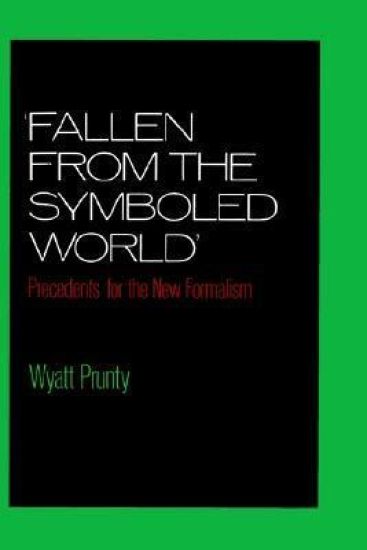
'Fallen from the Symboled World'

'Fallen from the Symboled World'

Wyatt Prunty

Oxford University Press Inc
1990
sidottu
Prunty's book is a reading of contemporary American poets using the phenomenological approaches of Heidegger and Husserl. His argument, begun with the reading of the work of Robert Lowell, is that contemporary poets, unlike their modernist predecessors, have adopted a sceptical stance and expressed that stance through the use of literary tropes that liken (simile) rather than tropes that equate (symbol and allegory). Prunty provides close readings of the works of such poets as Ammons, Nemerov, Justice, Cunningham, Creeley, and others.
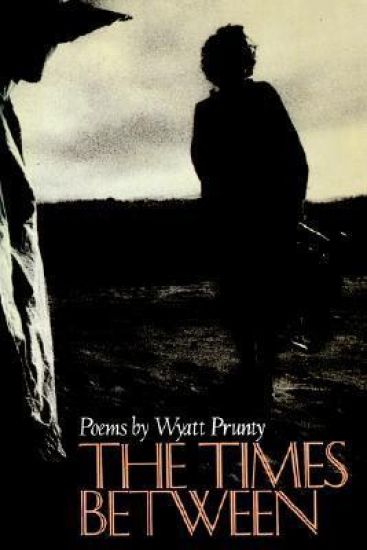
The Times Between

The Times Between

Wyatt Prunty

Johns Hopkins University Press
1982
pokkari
"In Wyatt Prunty's poetry, familiar things and places, old things and new things, lost things, lost faces are recovered and illumined by a language both skewed and precise".--Walker Percy. (Poetry)
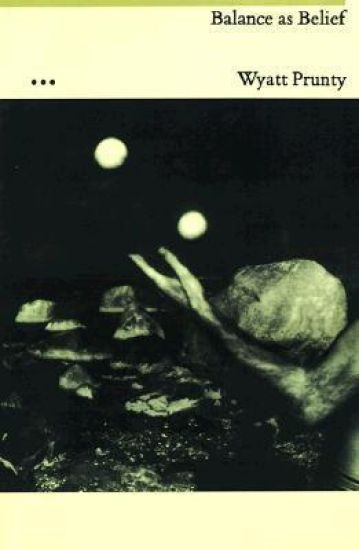
Balance As Belief

Balance As Belief

Wyatt Prunty

Johns Hopkins University Press
1989
pokkari
In Wyatt Prunty's new collection of poems, people either keep their balance or, doubting it, tip and fall. A small girl struggles to ride her bike among older children already 'stable as little gyros.' Ice-skating with friends, a boy suddenly drops from sight, and drowns. The poet of Paterson stands at the edge of his Jersey waterfall and knows that 'good balance is belief.' Poising and counterpoising themselves in settings at once fixed and erosive, the people in these poems move through 'one long revisionary river that curls back against itself, as if the only way to move ahead was by deflecting back.'
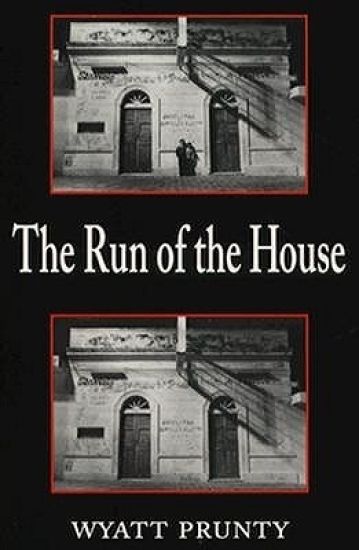
The Run of the House

The Run of the House

Wyatt Prunty

Johns Hopkins University Press
1993
pokkari
In his latest book of poems, Wyatt Pruncy finds beauty, violence, mystery, and humour in a variety of public and private worlds. Wyatt Prunty's previous collections of poems, "The Times Between, What Women Know, What Men Believe", and "Balance as Belief" are also available from Johns Hopkins.
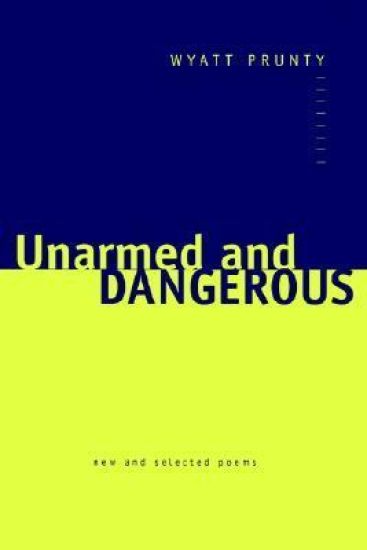
Unarmed and Dangerous

Unarmed and Dangerous

Wyatt Prunty

Johns Hopkins University Press
2003
pokkari
Wyatt Prunty's poems have been described as "quiet, reflective, and of unexpected depth" (Howard Nemerov), "both artful and truthful" (Donald Justice), "a triumph of controlled and understated but powerful emotion" (Anthony Hecht), and "illuminated by a language both skewed and precise" (Walker Percy). As a poet, Prunty-who is also the founder and director of the Sewanee Writers' Conference-has been praised for "his powerful imagination in the specifics of ordinary details, suggesting persuasively that the near at hand is as unexplored and full of wonder as the far ends of the universe" ( Publishers Weekly) and called "one of the most gifted and technically accomplished American poets of the post-World War II generation" ( Southern Review). An elegant overview of his career until now, Unarmed and DANGEROUS: New and Selected Poems features selections from Wyatt Prunty's five previous books- The Times Between (1982); What Women Know, What Men Believe (1986); Balance as Belief (1989); Run of the House (1993); and Since the Noon Mail Stopped (1997), all published by the Johns Hopkins University Press-as well as new poems that demonstrate the poet's wide-ranging and sympathetic imagination. Prunty's new work includes moving evocations of childhood ("A Child's Christmas in Georgia, 1953"), richly detailed poems about ordinary people and situations ("The Downtown Bus"), and even a probing meditation on the fairy tale "Jack and the Beanstalk" ("Annals of Jack"). Together, the poems gathered in this volume afford a clear portrait of a major American poet whose distinctive voice and vision have earned him the admiration and respect of such contemporaries as Richard Wilbur, X. J. Kennedy, and Mark Strand and marked him as "a writer who has mastered his craft, [a] poet [who] can look at the life most of us take for granted and show us what is most real, most precious in it" ( The Commercial Appeal).
The Lover’s Guide to Trapping

The Lover’s Guide to Trapping

Wyatt Prunty

Johns Hopkins University Press
2009
sidottu
Wyatt Prunty's eighth collection, The Lover's Guide to Trapping, opens with a Homeric mole who tunnels the yard then disappears, a nervous alpha dog convinced she gets less food than her sister because she eats faster, and a house wren whose loud expectation is that she be let in. And there are others who populate the pages of this book, one stray cat, one ghost, but many who are human-soldiers, prisoners, wide-eyed children, matriarchs, Verdi in despair over having cast a plump Violetta who cannot play her role as a consumptive. All of those described here are vulnerable, some of them searingly so, and all are acutely aware of just how angular their worlds can be, whether accompanied by terror or hilarity.
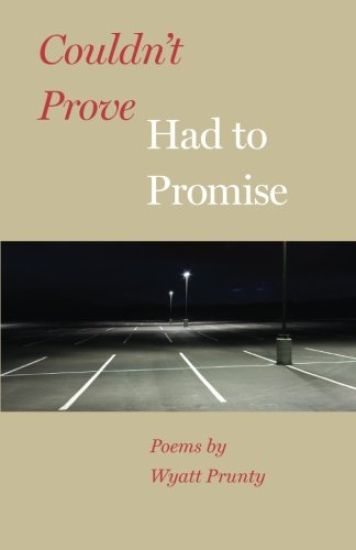
Couldn't Prove, Had to Promise

Couldn't Prove, Had to Promise

Wyatt Prunty

Johns Hopkins University Press
2015
pokkari
In Couldn't Prove, Had to Promise, Wyatt Prunty ushers readers into a seesaw world, one that teeters between small fables of childish misgivings and adult assurances. Alternately shadowed and illuminated by nostalgia, this deft, witty volume brings together seventeen of Prunty's recent poems, seven of which have been previously published in Poetry, the Hopkins Review, the Kenyon Review, and Blackbird. In "Crescent Theater, Schenectady, NY," a silent-movie accompanist reads his foreign newspaper after work as he listens, ever the outsider, "to his children using English / For everything they wish." In "Rules," a small girl, told she can't go to the school nurse "every time some bad thing happens," plaintively wonders, "Where do you go?" And in "Making Frankenstein," a boy who has cajoled his parents into letting him see The Curse of Frankenstein wakes to a nightmare. His father bans horror films as "too anatomical"; "What's anatomical?" the boy wonders. Given a book that catalogs diseases, the worst of which come "from intimate contact," he is horrified by his father's explanation of grownup intimacy: "That's how you made your way into this world." Moving from a wry portrait of a husband- musing on mortality - whose Christmas tie lands in the gravy, to "Reading the Map," which grapples with the cartography of love, to "ad lib," a farewell that redefines farewell, these poems burnish the small triumphs and fears that fill our daily lives with humor and pathos. The book closes with a long, four-part poem, "Nod," which transports readers to a parking lot in July: an asphalt-as-inferno where Cain the cracker, or adversary-as-initiator, the pleuritic voice of disappointment, names the ways inversion makes a lie reliable and works people best as, like a joke or discount price, "It makes you feel you're getting more by giving less." Funny, raw, and colorfully musical, "Nod" plays what teeters, like a tuning fork.