Kirjojen hintavertailu. Mukana 12 390 323 kirjaa ja 12 kauppaa.

Kirjahaku

Etsi kirjoja tekijän nimen, kirjan nimen tai ISBN:n perusteella.

8 kirjaa tekijältä Wyn Q. Bowen

Libya and Nuclear Proliferation

Libya and Nuclear Proliferation

Wyn Q. Bowen

Routledge
2006
nidottu
This Adelphi Paper examines the motives behind Libya’s pursuit of a nuclear weapons capability, from Gadhafi’s rise to power in 1969 through to the end of 2003. It also assesses the proliferation pathways that the regime followed during this period, including early dependence on Soviet technology and assistance, subsequently relying on technological infusions from the A.Q. Khan network. Wyn Q. Bowen clearly analyzes the decision to give up the quest for nuclear weapons, focusing on the main factors that influenced the Gadhafi regime’s calculations, including the perceived need to re-engage, both politically and economically, with the international community, particularly the United States. It explores the process of dismantling the nuclear programme and the question of whether Libya constitutes a ‘model’ for addressing the challenges posed by other proliferators.
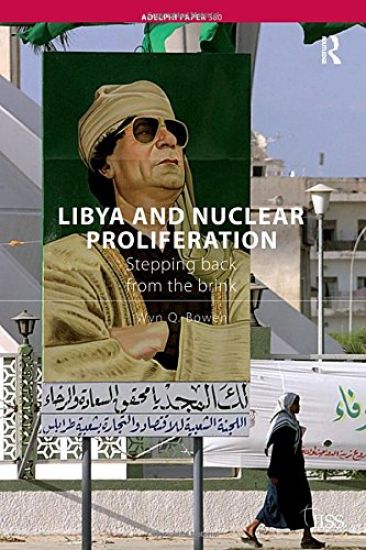
Libya and Nuclear Proliferation

Libya and Nuclear Proliferation

Wyn Q. Bowen

Routledge
2017
sidottu
This Adelphi Paper examines the motives behind Libya‘s pursuit of a nuclear weapons capability, from Gadhafi‘s rise to power in 1969 through to the end of 2003. It also assesses the proliferation pathways that the regime followed during this period, including early dependence on Soviet technology and assistance, subsequently relying on technological infusions from the A.Q. Khan network. Wyn Q. Bowen clearly analyzes the decision to give up the quest for nuclear weapons, focusing on the main factors that influenced the Gadhafi regime‘s calculations, including the perceived need to re-engage, both politically and economically, with the international community, particularly the United States. It explores the process of dismantling the nuclear programme and the question of whether Libya constitutes amodel for addressing the challenges posed by other proliferators.
Trust in Nuclear Disarmament Verification

Trust in Nuclear Disarmament Verification

Wyn Q. Bowen; Hassan Elbahtimy; Matthew Moran

Springer International Publishing AG
2018
sidottu
This book explores how human factors, in particular the contested notion of trust, influence the conduct and practice of arms control verification. In the nuclear arena, disarmament verification is often viewed purely in terms of a dispassionate, scientific process. Yet this view is fundamentally flawed since the technical impossibility of 100 per cent verification opens the door to a host of complex issues and questions regarding the process and its outcomes. Central among these is the fact that those involved in any verification inspection process must inevitably conduct their work in a space that falls well short of absolute certainty. The lines between scientific enquiry and human psychology can become blurred and outcomes have the potential to be influenced by perceptions. Drawing on extensive empirical evidence, the authors explore the complex interplay between evidence-based judgements and perceptions of intentions that frames the science of verification. The book provides new insights into the role and influence of human factors in the verification process, shedding light on this ‘blind spot’ of verification research. It is an invaluable resource for practitioners, academics and students working in arms control and disarmament.
Trust in Nuclear Disarmament Verification

Trust in Nuclear Disarmament Verification

Wyn Q. Bowen; Hassan Elbahtimy; Christopher Hobbs; Matthew Moran

Springer International Publishing AG
2019
nidottu
This book explores how human factors, in particular the contested notion of trust, influence the conduct and practice of arms control verification. In the nuclear arena, disarmament verification is often viewed purely in terms of a dispassionate, scientific process. Yet this view is fundamentally flawed since the technical impossibility of 100 per cent verification opens the door to a host of complex issues and questions regarding the process and its outcomes. Central among these is the fact that those involved in any verification inspection process must inevitably conduct their work in a space that falls well short of absolute certainty. The lines between scientific enquiry and human psychology can become blurred and outcomes have the potential to be influenced by perceptions. Drawing on extensive empirical evidence, the authors explore the complex interplay between evidence-based judgements and perceptions of intentions that frames the science of verification. The book provides new insights into the role and influence of human factors in the verification process, shedding light on this ‘blind spot’ of verification research. It is an invaluable resource for practitioners, academics and students working in arms control and disarmament.
Coercing Syria on Chemical Weapons

Coercing Syria on Chemical Weapons

Matthew Moran; Wyn Q. Bowen; Jeffrey W. Knopf

OXFORD UNIVERSITY PRESS INC
2025
sidottu
In 2012, US President Barack Obama stated that Syrian government usage of chemical weapons on its population would cross a red line that would require the US government to reconsider its approach to the civil war then underway in Syria. Syria subsequently used such weapons, creating a policy dilemma for the United States about how to respond to Syrian President Bashar al-Assad's violation of the red line. In Coercing Syria on Chemical Weapons, Matthew Moran, Wyn Q. Bowen, and Jeffrey W. Knopf examine efforts by the United States, sometimes acting with France and the United Kingdom, to respond to Syria's possession and use of chemical weapons over the course of its civil war. In particular, they focus on US strategy, covering the presidencies of both Barack Obama and Donald Trump, which relied heavily on coercion involving both deterrent and compellent variants of that strategy. As the authors show, policies directed at the ruling Assad regime in Syria attempted to deter chemical weapons attacks and to compel Syria into giving up its chemical arsenal with mixed outcomes. Drawing on existing literature on deterrence and coercive diplomacy to identify three propositions--involving credibility, motivations, and assurances--the book explains the mixed record of coercive success and failure and examines how effective coercive strategies were at different points and why. Deriving lessons from the most significant attempt in the post-Cold War era to deter use of a weapon of mass destruction, this book offers theoretical and practical lessons for both security studies scholars and policymakers.
Coercing Syria on Chemical Weapons

Coercing Syria on Chemical Weapons

Matthew Moran; Wyn Q. Bowen; Jeffrey W. Knopf

OXFORD UNIVERSITY PRESS INC
2025
nidottu
In 2012, US President Barack Obama stated that Syrian government usage of chemical weapons on its population would cross a red line that would require the US government to reconsider its approach to the civil war then underway in Syria. Syria subsequently used such weapons, creating a policy dilemma for the United States about how to respond to Syrian President Bashar al-Assad's violation of the red line. In Coercing Syria on Chemical Weapons, Matthew Moran, Wyn Q. Bowen, and Jeffrey W. Knopf examine efforts by the United States, sometimes acting with France and the United Kingdom, to respond to Syria's possession and use of chemical weapons over the course of its civil war. In particular, they focus on US strategy, covering the presidencies of both Barack Obama and Donald Trump, which relied heavily on coercion involving both deterrent and compellent variants of that strategy. As the authors show, policies directed at the ruling Assad regime in Syria attempted to deter chemical weapons attacks and to compel Syria into giving up its chemical arsenal with mixed outcomes. Drawing on existing literature on deterrence and coercive diplomacy to identify three propositions--involving credibility, motivations, and assurances--the book explains the mixed record of coercive success and failure and examines how effective coercive strategies were at different points and why. Deriving lessons from the most significant attempt in the post-Cold War era to deter use of a weapon of mass destruction, this book offers theoretical and practical lessons for both security studies scholars and policymakers.
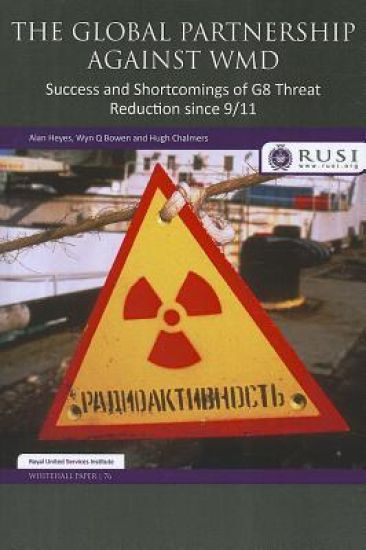
The Global Partnership Against WMD

The Global Partnership Against WMD

Alan Heyes; Wyn Q. Bowen; Hugh Chalmers

Routledge
2012
nidottu
The 9/11 terrorist attacks prompted a new urgency in efforts to deal with chemical, biological, radiological and nuclear proliferati on. The potential acquisition and use by terrorist groups of such weaponry was suddenly a much increased threat. The G8 Global Partnership against the Spread of Weapons and Materials of Mass Destruction subsequently encouraged some twenty-two countries and the European Union to pledge up to $20 billion to address this challenge. The creation of the Global Partnership was the first time so many countries agreed to collaborate on a range of non-proliferation, security and nuclear safety programmes, as well as commit such an amount of resources to them. Based on extensive primary research, this Whitehall Paper assesses the success and shortcomings to date of the Global Partnership, and suggests how the mechanism can be bolstered and taken forward.
The Global Partnership Against WMD

The Global Partnership Against WMD

Alan Heyes; Wyn Q. Bowen; Hugh Chalmers

Routledge
2017
sidottu
The 9/11 terrorist attacks prompted a new urgency in efforts to deal with chemical, biological, radiological and nuclear proliferati on. The potential acquisition and use by terrorist groups of such weaponry was suddenly a much increased threat. The G8 Global Partnership against the Spread of Weapons and Materials of Mass Destruction subsequently encouraged some twenty-two countries and the European Union to pledge up to $20 billion to address this challenge. The creation of the Global Partnership was the first time so many countries agreed to collaborate on a range of non-proliferation, security and nuclear safety programmes, as well as commit such an amount of resources to them. Based on extensive primary research, this Whitehall Paper assesses the success and shortcomings to date of the Global Partnership, and suggests how the mechanism can be bolstered and taken forward.