Kirjojen hintavertailu. Mukana 12 435 690 kirjaa ja 12 kauppaa.

Kirjahaku

Etsi kirjoja tekijän nimen, kirjan nimen tai ISBN:n perusteella.

4 kirjaa tekijältä Xiaofei Kang

Enchanted Revolution

Enchanted Revolution

Xiaofei Kang

OXFORD UNIVERSITY PRESS INC
2023
sidottu
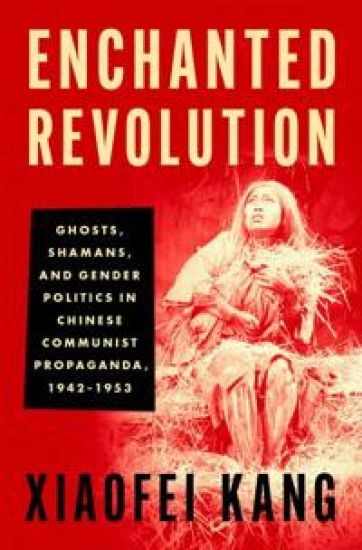
Enchanted Revolution moves religion and gender to center stage in the Chinese Communist revolution, examining the mobilizational dynamics of anti-superstition propaganda in support of the Communist Party's rise from rural backwaters to national dominance. Xiaofei Kang argues that religion was not merely adversary for the revolutionaries-it also served as a model for the ways in which the Party mobilized support and constructed legitimacy. In this parallel and often paradoxical process, the Party attacked “superstitions” that had long supported the foundations of Chinese religious life. At the same time, Party propaganda co-opted these same religious resources for its own political ends. Kang demonstrates that the persuasive power of Party propaganda relied heavily on recasting the cosmic forces of yin and yang that sustained the traditional gender hierarchy and ritual order. Moreover, revolutionary art and literature revamped old narratives of female ghosts and ritual exorcism to inject the people with a new masculinist vision of the Party-state endowed with both scientific potency and the heavenly mandate. Gendered language and symbolism in Chinese religion thus remained central to inspiring pathos, ethos, and logos for the revolution. Enchanted Revolution sheds light on the contemporary significance of the Maoist legacy in China through a deft exploration of the complex interplay of religion, gender, and revolution.
The Cult of the Fox

The Cult of the Fox

Xiaofei Kang

Columbia University Press
2005
sidottu
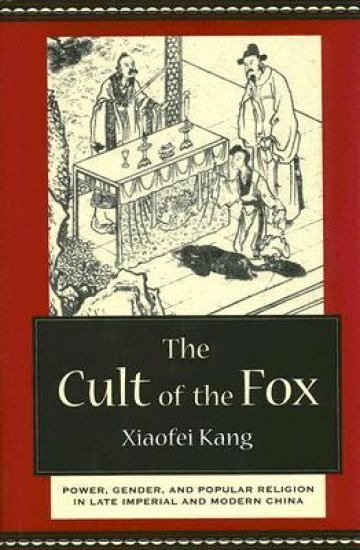
For more than five centuries the shamanistic fox cult has attracted large portions of the Chinese population and appealed to a wide range of social classes. Deemed illicit by imperial rulers and clerics and officially banned by republican and communist leaders, the fox cult has managed to survive and flourish in individual homes and community shrines throughout northern China. In this new work, the first to examine the fox cult as a vibrant popular religion, Xiaofei Kang explores the manifold meanings of the fox spirit in Chinese society. Kang describes various cult practices, activities of worship, and the exorcising of fox spirits to reveal how the Chinese people constructed their cultural and social values outside the gaze of offical power and morality.
Contesting the Yellow Dragon

Contesting the Yellow Dragon

Xiaofei Kang; Donald S. Sutton

BRILL
2016
sidottu
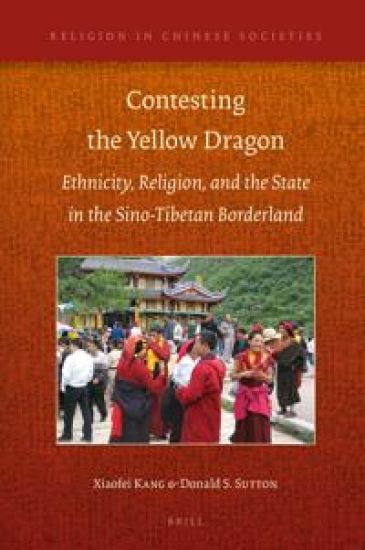
Winner of the 2016 Choice Outstanding Academic Title Award This book is the first long-term study of the Sino-Tibetan borderland. It traces relationships and mutual influence among Tibetans, Chinese, Hui Muslims, Qiang and others over some 600 years, focusing on the old Chinese garrison city of Songpan and the nearby religious center of Huanglong, or Yellow Dragon. Combining historical research and fieldwork, Xiaofei Kang and Donald Sutton examine the cultural politics of northern Sichuan from early Ming through Communist revolution to the age of global tourism, bringing to light creative local adaptations in culture, ethnicity and religion as successive regimes in Beijing struggle to control and transform this distant frontier.
Contesting the Yellow Dragon

Contesting the Yellow Dragon

Xiaofei Kang; Donald S. Sutton

BRILL
2018
nidottu
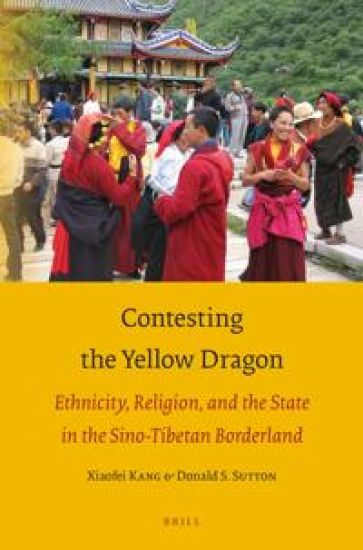
This book is the first long-term study of the cultural politics of the Sino-Tibetan frontier. Combining historical research and fieldwork, Xiaofei Kang and Donald Sutton examine northern Sichuan from early Ming through Communist revolution to the age of global tourism, tracing relationships and mutual influence among Tibetans, Chinese, Hui Muslims, Qiang and others over some 600 years. Their focus is on the old Chinese garrison city of Songpan and the nearby pilgrimage center of Huanglong, or Yellow Dragon. Declining to isolate religious from other social and political expressions, they demonstrate that in its many forms—popular and official, scriptural and unwritten, monastic, priestly and shamanic, personal and informal—religion has long been crucial in imagining, constructing and manipulating local social relations on this frontier. Bon and Buddhist sects sustained communities among Tibetan or proto-Tibetan populations; and Daoism and Chinese Buddhism (and for some, Islam) helped to establish frontier identities in a diverse population of migrants and soldiers. The Chinese state has contended with, exploited and at times tried to extinguish the soft power of religion in its long effort to dominate this region and (more recently) push it towards modernity. A Choice Outstanding Academic Title Winner for 2016 in the anthropology category