Kirjojen hintavertailu. Mukana 12 152 606 kirjaa ja 12 kauppaa.

Kirjahaku

Etsi kirjoja tekijän nimen, kirjan nimen tai ISBN:n perusteella.

6 kirjaa tekijältä Yannick Jacob

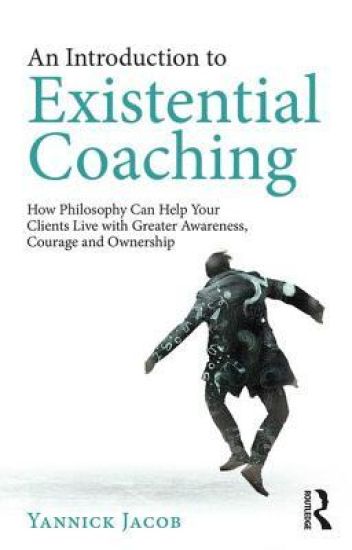
An Introduction to Existential Coaching
In An Introduction to Existential Coaching Yannick Jacob provides an accessible and practical overview of existential thought and its value for coaches and clients.Jacob begins with an introduction to coaching as a powerful tool for change, growth, understanding and transformation before exploring existential philosophy and how it may be integrated into coaching practice. The book goes on to examine key themes in existentialism and how they show up in the coaching space, including practical models as well as their application to organisations and leadership. Jacob concludes by evaluating ethical dimensions of working existentially and offers guidance on how to establish an existential coaching practice, including how to gain clients and build relationships with strategic partners. With reflective questions, exercises, interventions and activities throughout, An Introduction to Existential Coaching will be invaluable for anyone wanting to live and work at greater depth or to succeed as an existential coach. Accessibly written and with a wide selection of references and resources, An Introduction to Existential Coaching is a vital guide for coaches in training as well as an inspiring addition to the repertoir of experienced practitioners. It serves academics and students to understand existential philosophy and allows professionals with coaching responsibilities to access more meaningful conversations.
An Introduction to Existential Coaching
In An Introduction to Existential Coaching Yannick Jacob provides an accessible and practical overview of existential thought and its value for coaches and clients.Jacob begins with an introduction to coaching as a powerful tool for change, growth, understanding and transformation before exploring existential philosophy and how it may be integrated into coaching practice. The book goes on to examine key themes in existentialism and how they show up in the coaching space, including practical models as well as their application to organisations and leadership. Jacob concludes by evaluating ethical dimensions of working existentially and offers guidance on how to establish an existential coaching practice, including how to gain clients and build relationships with strategic partners. With reflective questions, exercises, interventions and activities throughout, An Introduction to Existential Coaching will be invaluable for anyone wanting to live and work at greater depth or to succeed as an existential coach. Accessibly written and with a wide selection of references and resources, An Introduction to Existential Coaching is a vital guide for coaches in training as well as an inspiring addition to the repertoir of experienced practitioners. It serves academics and students to understand existential philosophy and allows professionals with coaching responsibilities to access more meaningful conversations.
Die langfristigen Auswirkungen der Gedächtnisleistung bei der Trauer um den Ehepartner
Es wurde festgestellt, dass der Verlust eines Ehepartners negative Auswirkungen auf die geistige und k rperliche Gesundheit hat, darunter Depressionen und Stress, und auch zu einer erh hten Sterblichkeit f hrt. Bislang wurde kaum untersucht, ob sich der Verlust eines Angeh rigen auf die Ged chtnisleistung auswirkt. Die vorliegende Studie untersucht die Auswirkungen auf die Ged chtnisleistung bei Witwen und Witwern in einer Stichprobe von Personen im Alter von 18 bis 65 Jahren. Die Stichprobe dieser Studie bestand aus 30 Teilnehmern, die einen Angeh rigen verloren hatten, und Teilnehmern, die keinen Angeh rigen verloren hatten. Die Stichprobe wurde nach Alter, Geschlecht und Bildungsstand zusammengestellt. Die Gruppe der Hinterbliebenen bestand aus 15 Teilnehmern, die ihren Partner oder Ehepartner vor mindestens einem Jahr und h chstens sieben Jahren verloren hatten. Die Ged chtnisleistung wurde mit dem Verbal Memory Test gemessen. Die Studie ber cksichtigte auch die Auswirkungen von Bildung, Geschlecht und der seit dem Verlust verstrichenen Zeit auf die Ged chtnisleistung. Die hinterbliebenen Teilnehmer zeigten einen st rkeren R ckgang der Ged chtnisleistung als die nicht hinterbliebenen Teilnehmer, und die Witwer schnitten bei den Tests schlechter ab als die Witwen.
Les effets à long terme des performances mémorielles dans le deuil conjugal
On a remarqu que perdre son conjoint peut vraiment affecter la sant mentale et physique, comme causer de la d pression et du stress, et m me mener la mort. On n'a pas vraiment tudi si le deuil peut aussi avoir un impact sur la m moire. Cette tude regarde comment le veuvage affecte la m moire chez des gens g s de 18 65 ans. L' chantillon de cette tude tait compos de 30 personnes en deuil et d'autres qui ne l' taient pas. L' chantillon a t appari en fonction de l' ge, du sexe et du niveau d' ducation. L' chantillon de personnes endeuill es tait compos de 15 participants qui avaient perdu leur partenaire ou leur conjoint depuis au moins un an et au plus sept ans. Les capacit s m morielles ont t test es l'aide du test de m moire verbale. L' tude a galement contr l les effets sur les capacit s m morielles li s au niveau d' ducation, au sexe et au temps coul depuis la perte. Les participants endeuill s ont montr un d clin plus important de leurs capacit s m morielles que les participants non endeuill s, et les veufs ont obtenu de moins bons r sultats aux tests que les veuves. Cette tude a conclu que la perte d'un conjoint est corr l e un d clin plus important de la m moire en l'absence de d pression par rapport aux personnes qui n'ont pas subi de perte.
Os efeitos a longo prazo do desempenho da memória no luto conjugal

Os efeitos a longo prazo do desempenho da memória no luto conjugal

Jade Maragaki; Yannick Jacob

Edicoes Nosso Conhecimento
2026
nidottu
Descobriram que perder o c njuge pode afetar a sa de mental e f sica, tipo, causar depress o e stress, e at levar morte. Ainda n o se sabe muito bem se o luto afeta a mem ria. Este estudo quer saber como o luto afeta a mem ria em pessoas de 18 a 65 anos. A amostra tinha 30 participantes que perderam o c njuge e outros que n o. A amostra foi pareada por idade, sexo e escolaridade. A amostra enlutada consistiu em 15 participantes que perderam um parceiro ou c njuge h um m nimo de um ano e um m ximo de sete anos. O desempenho da mem ria foi testado usando o Teste de Mem ria Verbal. O estudo tamb m controlou os efeitos no desempenho da mem ria associados escolaridade, sexo e tempo decorrido desde a perda. Os participantes enlutados mostraram um maior decl nio no desempenho da mem ria do que os participantes n o enlutados, e os vi vos tiveram um desempenho pior nos testes do que as vi vas. Este estudo concluiu que a perda de um c njuge est relacionada a um maior decl nio na mem ria na aus ncia de depress o, em compara o com aqueles que n o sofreram uma perda.
Gli effetti a lungo termine delle prestazioni della memoria nel lutto coniugale
stato scoperto che perdere il proprio partner pu avere effetti negativi sulla salute mentale e fisica, come depressione e stress, e pu anche portare alla morte. Non si sa ancora bene se il lutto possa influire sulla memoria. Questo studio guarda come il lutto influisce sulla memoria in un gruppo di persone tra i 18 e i 65 anni. Il gruppo era composto da 30 persone che avevano perso qualcuno e altre che non avevano avuto questa esperienza. Il campione stato selezionato in base all'et , al sesso e al livello di istruzione. Il campione di persone in lutto era composto da 15 partecipanti che avevano perso il partner o il coniuge da un minimo di un anno a un massimo di sette anni. Le capacit mnemoniche sono state testate utilizzando il Verbal Memory Test. Lo studio ha anche controllato gli effetti sulle capacit mnemoniche associati al livello di istruzione, al sesso e al tempo trascorso dalla perdita. I partecipanti in lutto hanno mostrato un calo maggiore delle capacit mnemoniche rispetto ai partecipanti non in lutto e i vedovi hanno ottenuto risultati peggiori nei test rispetto alle vedove. Questo studio ha concluso che la perdita del coniuge correlata a un maggiore calo della memoria in assenza di depressione rispetto a chi non ha subito una perdita.