Kirjojen hintavertailu. Mukana 11 717 486 kirjaa ja 12 kauppaa.

Kirjahaku

Etsi kirjoja tekijän nimen, kirjan nimen tai ISBN:n perusteella.

5 kirjaa tekijältä Yaron Peleg

Israeli Culture between the Two Intifadas

Israeli Culture between the Two Intifadas

Yaron Peleg

University of Texas Press
2008
pokkari
Over the past two decades, profound changes in Israel opened its society to powerful outside forces and the dominance of global capitalism. As a result, the centrality of Zionism as an organizing ideology waned, prompting expressions of anxiety in Israel about the coming of a post-Zionist age. The fears about the end of Zionism were quelled, however, by the Palestinian uprising in 2000, which spurred at least a partial return to more traditional perceptions of homeland. Looking at Israeli literature of the late twentieth century, Yaron Peleg shows how a young, urban class of Israelis felt alienated from the Zionist values of their forebears, and how they adopted a form of escapist romanticism as a defiant response that replaced traditional nationalism. One of the first books in English to identify the end of the post-Zionist era through inspired readings of Hebrew literature and popular media, Israeli Culture between the Two Intifadas examines Israel's ambivalent relationship with Jewish nationalism at the end of the twentieth century.
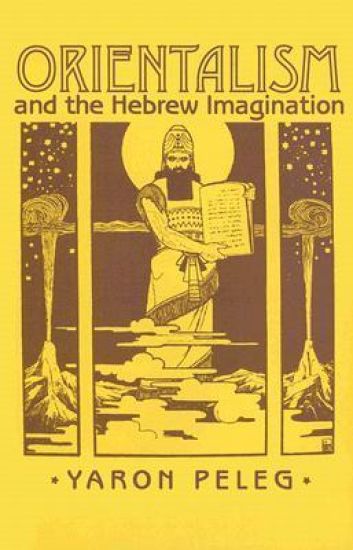
Orientalism and the Hebrew Imagination

Orientalism and the Hebrew Imagination

Yaron Peleg

Cornell University Press
2005
sidottu
Calling into question prevailing notions about Orientalism, Yaron Peleg shows how the paradoxical mixture of exoticism and familiarity with which Jews related to Palestine at the beginning of the twentieth century shaped the legacy of Zionism. In Peleg's view, the tension between romancing the East and colonizing it inspired a revolutionary reform that radically changed Jewish thought during the Hebrew Revival that took place between 1900 and 1930. Orientalism and the Hebrew Imagination introduces a fresh voice to the contentious debate over the concept of Orientalism. Zionism has often been labeled a Western colonial movement that sought to displace and silence Palestinian Arabs. Based on his readings of key texts, Peleg asserts that early Zionists were inspired by Palestinian Arab culture, which in turn helped mold modern Jewish gender, identity, and culture. Peleg begins with the new ways in which the lands of the Bible are formulated as a modern "Orient" in David Frishman's Bamidbar. He continues by showing how in The Sons of Arabia, Moshe Smilansky laid the basis for the literary construction of the "New Jew," modeled after Palestinian Arabs. Peleg concludes with a discussion of L. A. Arielli's 1913 play Allah Karim! in which both the promise and the problems of the Land of Israel as "Orient" marked the end of Hebrew Orientalism as a viable cultural option.
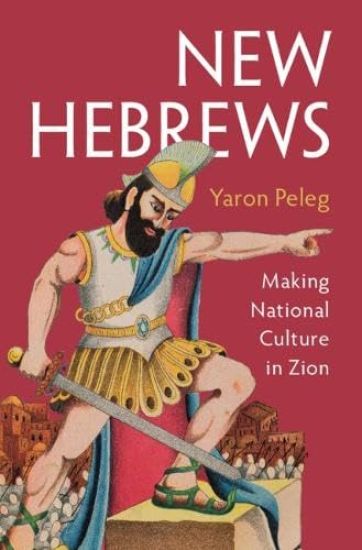
New Hebrews

New Hebrews

Yaron Peleg

Cambridge University Press
2025
sidottu
The literature on Zionism as a political ideology is extensive, but this book takes a different approach by focusing on the cultural dimensions of the movement and their profound impact on the history of Israel and the Jewish people. New Hebrews explores the cultural history of Zionism, starting from the meeting of the first Zionist congress in Basel, Switzerland in 1897, and culminating with the establishment of the State of Israel fifty-one years later in 1948. Yaron Peleg explores how innovative approaches in language, literature, architecture, art, music, and body culture transformed modern Jewish culture. His study delves into the contentious facets of early Zionist culture, such as colonialism, social engineering, minority discourse, and Jewish-Arab relations. New Hebrews presents an interdisciplinary examination of nationalism, drawing from a diverse array of primary sources to uncover the psychology of modern Israel. This title is also available as open access on Cambridge Core.
Directed by God

Directed by God

Yaron Peleg

University of Texas Press
2016
sidottu
As part of its effort to forge a new secular Jewish nation, the nascent Israeli state tried to limit Jewish religiosity. However, with the steady growth of the ultraorthodox community and the expansion of the settler community, Israeli society is becoming increasingly religious. Although the arrival of religious discourse in Israeli politics has long been noticed, its cultural development has rarely been addressed. Directed by God explores how the country’s popular media, principally film and television, reflect this transformation. In doing so, it examines the changing nature of Zionism and the place of Judaism within it.Once the purview of secular culture, Israel’s media initially promoted alternatives to traditional religious expression; however, using films such as Kadosh, Waltz with Bashir, and Eyes Wide Open, Yaron Peleg shows how Israel’s contemporary film and television programs have been shaped by new religious trends and how secular Israeli culture has processed and reflected on its religious heritage. He investigates how shifting cinematic visions of Jewish masculinity and gender track transformations in the nation’s religious discourse. Moving beyond the secular/religious divide, Directed by God explores changing film and television representations of different Jewish religious groups, assessing what these representations may mean for the future of Israeli society.
Directed by God

Directed by God

Yaron Peleg

University of Texas Press
2016
nidottu
As part of its effort to forge a new secular Jewish nation, the nascent Israeli state tried to limit Jewish religiosity. However, with the steady growth of the ultraorthodox community and the expansion of the settler community, Israeli society is becoming increasingly religious. Although the arrival of religious discourse in Israeli politics has long been noticed, its cultural development has rarely been addressed. Directed by God explores how the country’s popular media, principally film and television, reflect this transformation. In doing so, it examines the changing nature of Zionism and the place of Judaism within it.Once the purview of secular culture, Israel’s media initially promoted alternatives to traditional religious expression; however, using films such as Kadosh, Waltz with Bashir, and Eyes Wide Open, Yaron Peleg shows how Israel’s contemporary film and television programs have been shaped by new religious trends and how secular Israeli culture has processed and reflected on its religious heritage. He investigates how shifting cinematic visions of Jewish masculinity and gender track transformations in the nation’s religious discourse. Moving beyond the secular/religious divide, Directed by God explores changing film and television representations of different Jewish religious groups, assessing what these representations may mean for the future of Israeli society.