Kirjojen hintavertailu. Mukana 11 244 527 kirjaa ja 12 kauppaa.

Kirjahaku

Etsi kirjoja tekijän nimen, kirjan nimen tai ISBN:n perusteella.

4 kirjaa tekijältä Yoram Peri

Between Battles and Ballots

Between Battles and Ballots

Yoram Peri

Cambridge University Press
1985
pokkari
The protracted Arab-Israeli war and the central importance of security to Israel have given a major role to senior military personnel. Yoram Peri, a former adviser to Israeli Prime Minister Rabin, demonstrates in this book that state control over the military in Israel has been weak, and a pattern of civil-military partnership has emerged. This changing relationship involved the inner rivalries of Israel's Labour Party in particular. Clashes and accommodation between the politicians and military leaders are traced through the changing Governments from Ben Gurion to Begin, and, finally, Dr Peri examines the situation in Israel in the 1980s. Dr Yoram Peri was European representative of the Israeli Labour Party. He completed his doctorate at the London School of Economics.
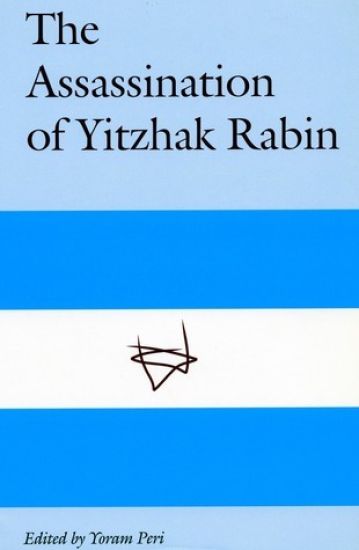
The Assassination of Yitzhak Rabin

The Assassination of Yitzhak Rabin

Yoram Peri

Stanford University Press
2000
sidottu
The three shots fired into the back of Israel's prime minister, Yitzhak Rabin, on the night of November 4, 1995, were a blow to Israel's social body. The shock, horror, and pain caused by the murder found direct and overwhelming expression at the funeral and memorial ceremonies held in Jerusalem, attended by most of the world's leaders. This book deals with the social and political developments in Israel in the painful process of decolonization from the occupied territories, following the late 1980s Palestinian Intifada and its aftermath. Fifteen distinguished contributors from a range of disciplinary viewpoints—historical, psychological, anthropological, political, and cultural—survey the various reactions to the assassination and analyze its ramifications and repercussions, creating a powerful mosaic of Israel with the assassination at its center. The fear that the murder would lead to civil war did not materialize. In fact, with hindsight it seems that the prime minister was a scapegoat, a victim of a deeply divided society split not only over the issue of peace with its neighbors but, more profoundly, over the construction of Israel's collective identity and consciousness. The assassination showed how easy it is for religious fundamentalists to ignore democratic rules and how militant nationalists will resort to violence to prevent the surrender of parts of the Holy Land. The strength of these elements of society was manifested in the general elections of 1996, when Rabin's adherents lost to the nationalist-clerical group. Paradoxically, the reaction to the assassination also revealed Israel's growing desire to pursue the peace process, and when Prime Minister Netanyahu failed to do so, he was replaced before his term ended. Less than four years after the assassination, the Israelis put the reigns of government back into the hands of Rabin's successors, who promised to continue in his path. With the road to peace lengthy, painful, and hazardous, have the fanatics learned a lesson from the aftermath of Rabin's murder? Will he be the last victim? Will Israeli democracy survive the agony of shrinking to the tiny size of the pre-1967 boundaries? Will Israeli society develop into a Western democratic and enlightened model, or will it become a reactionary, ethnocentric, xenophobic backwater? This volume does not propose definitive answers to these questions, but it reflects on them in very thoughtful and knowledgeable ways.
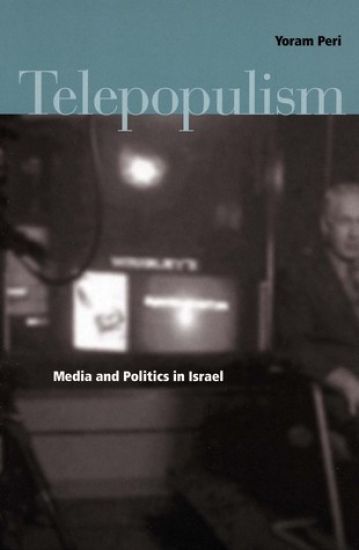
Telepopulism

Telepopulism

Yoram Peri

Stanford University Press
2004
sidottu
Two revolutions occurred in Israel in the last decade of the twentieth century. The first was in the field of communications and the second was in politics. Telepopulism describes the political and cultural processes that took place in Israel during the 1990s, depicting the major political events of this period from a new, original, and provocative angle, based on solid theoretical analyses. The book describes the political and media developments of this period from a historical point of view and analyses the new, symbiotic construct that was created—mediapolitik. The author explores the ways in which the media in Israel became multichannel and commercial, and how visual culture, advanced by television, took the place of written culture and undermined the hegemony of the press. Telepopulism outlines the path that led toward the establishment of Benjamin Netanyahu's new "coalition of the rejected." Finally, this work shows how the media influenced the crystallization of the six new "tribes" of modern Israel.
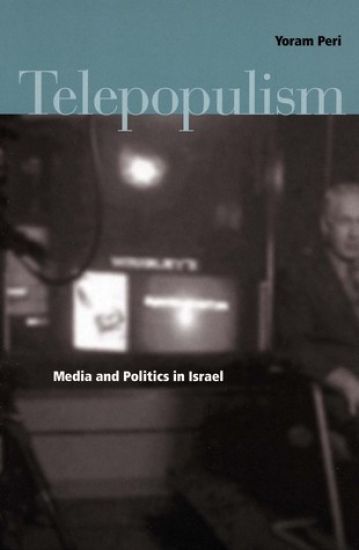
Telepopulism

Telepopulism

Yoram Peri

Stanford University Press
2004
pokkari
Two revolutions occurred in Israel in the last decade of the twentieth century. The first was in the field of communications and the second was in politics. Telepopulism describes the political and cultural processes that took place in Israel during the 1990s, depicting the major political events of this period from a new, original, and provocative angle, based on solid theoretical analyses. The book describes the political and media developments of this period from a historical point of view and analyses the new, symbiotic construct that was created—mediapolitik. The author explores the ways in which the media in Israel became multichannel and commercial, and how visual culture, advanced by television, took the place of written culture and undermined the hegemony of the press. Telepopulism outlines the path that led toward the establishment of Benjamin Netanyahu's new "coalition of the rejected." Finally, this work shows how the media influenced the crystallization of the six new "tribes" of modern Israel.