Kirjojen hintavertailu. Mukana 11 627 220 kirjaa ja 12 kauppaa.

Kirjahaku

Etsi kirjoja tekijän nimen, kirjan nimen tai ISBN:n perusteella.

4 kirjaa tekijältä Yuval Avnur

The Skeptic and the Veridicalist

The Skeptic and the Veridicalist

Yuval Avnur

Cambridge University Press
2024
pokkari
This Element explores the nature and formulation of skepticism about the external world by considering an important anti-skeptical strategy, 'veridicalism.' According to veridicalism, even if you are in a skeptical scenario, your beliefs about the existence of ordinary objects are still true. For example, even if you are in a global simulation, things such as tables exist as simulated objects. Therefore, your ignorance of whether you are in such a scenario does not negate your knowledge that there are tables. This strategy fails because it raises an equally troubling skepticism about what such objects are: is the table you now see a simulated object? That this is equally troubling suggests that the core skeptical problem is about what the causes of our experiences are, regardless of whether they count as ordinary objects like tables. This motivates a reconsideration of the standard formulation of the skeptical argument, and undermines some other anti-skeptical strategies as well.

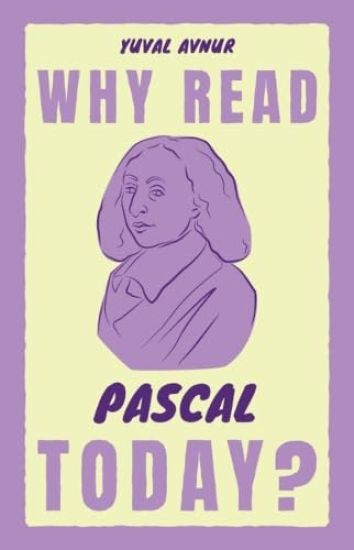
Why Read Pascal Today?

Why Read Pascal Today?

Yuval Avnur

Cambridge University Press
2026
pokkari
Blaise Pascal (1623–1662) made important contributions to mathematics, the theory of probability, and several scientific fields, was one of the inventors of the first mathematical calculator, and was also a deeply religious thinker who grappled with issues concerning the existence of God, the possibility of human salvation, and the sinfulness of human life. His famous Wager is often discussed, but there is much else of interest and relevance in his thought which remains undiscovered. This book provides an accessible yet detailed account of Pascal's philosophy and how it applies to important issues facing all of us today, as well as novel interpretations of Pascal's ideas. It will stimulate and challenge anyone who is interested in the role of the heart in rationality, human nature, our relation to reality and our individual and collective purpose, and the underexplored thoughts of one of history's greatest geniuses.
Why Read Pascal Today?

Why Read Pascal Today?

Yuval Avnur

Cambridge University Press
2026
sidottu
Blaise Pascal (1623–1662) made important contributions to mathematics, the theory of probability, and several scientific fields, was one of the inventors of the first mathematical calculator, and was also a deeply religious thinker who grappled with issues concerning the existence of God, the possibility of human salvation, and the sinfulness of human life. His famous Wager is often discussed, but there is much else of interest and relevance in his thought which remains undiscovered. This book provides an accessible yet detailed account of Pascal's philosophy and how it applies to important issues facing all of us today, as well as novel interpretations of Pascal's ideas. It will stimulate and challenge anyone who is interested in the role of the heart in rationality, human nature, our relation to reality and our individual and collective purpose, and the underexplored thoughts of one of history's greatest geniuses.
The Skeptic and the Veridicalist

The Skeptic and the Veridicalist

Yuval Avnur

Cambridge University Press
2024
sidottu
This Element explores the nature and formulation of skepticism about the external world by considering an important anti-skeptical strategy, 'veridicalism.' According to veridicalism, even if you are in a skeptical scenario, your beliefs about the existence of ordinary objects are still true. For example, even if you are in a global simulation, things such as tables exist as simulated objects. Therefore, your ignorance of whether you are in such a scenario does not negate your knowledge that there are tables. This strategy fails because it raises an equally troubling skepticism about what such objects are: is the table you now see a simulated object? That this is equally troubling suggests that the core skeptical problem is about what the causes of our experiences are, regardless of whether they count as ordinary objects like tables. This motivates a reconsideration of the standard formulation of the skeptical argument, and undermines some other anti-skeptical strategies as well.